Évora Airport Options
Évora, the inland capital of the Alentejo in Portugal, is reached through Lisbon: the city sits about 130 km from the capital by road, and CP's Intercidades trains cover the last leg in about an hour and three quarters.
Short answer
Lisbon is the airport travellers use to reach Évora, Portugal. From Lisboa Oriente station, CP's Intercidades service runs six through trains to Évora, taking about 1 hour 40 to 1 hour 45, with a second-class fare of 13.90 EUR.
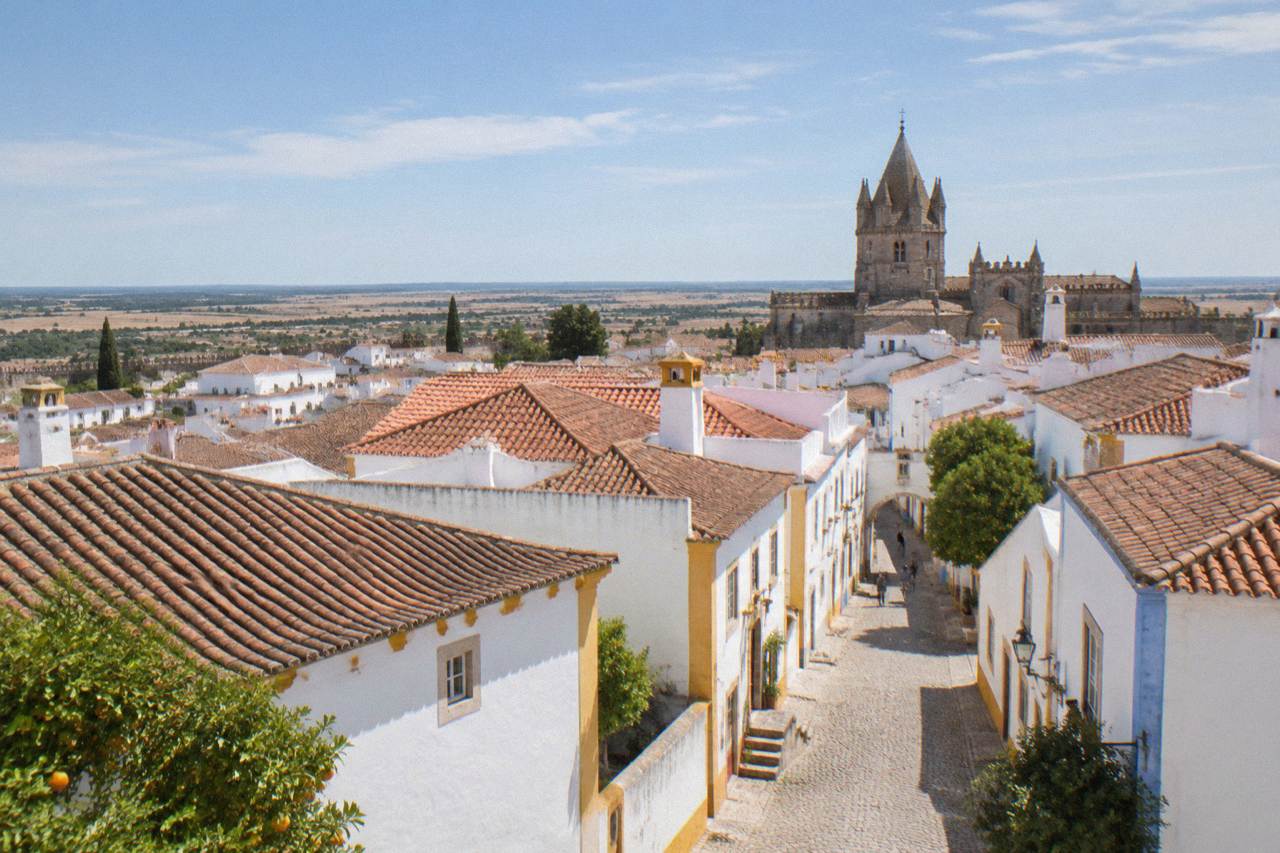
Évora, the capital of the Alentejo region of southern Portugal, is an inland city, and that single fact shapes every plan for reaching it. There is no coastline here, no beach, no sea view: the Atlantic is roughly 90 km away, and the city rises from the open plain of Central Alentejo, a landscape of cork oaks, vineyards and wheat fields. The airport question for Évora therefore has one practical answer, Lisbon, and everything else in this guide is about the last stretch of the journey: the train from Lisboa Oriente, the bus alternatives, the drive, and what to do with your time once you arrive inside the walls of a UNESCO World Heritage centre. The municipality counted about 53,000 residents at the 2021 census, which tells you the scale: this is a small, walkable city where the practical questions are answered quickly once you know where to look.
What Is The Nearest Airport To Évora, Portugal?
Lisbon is the airport visitors fly into to reach Évora, and it is the main gateway to the whole Alentejo. Évora sits inland on the Alentejo plain, about 130 km from Lisbon by road, and the standard arrival pattern is a flight into Lisbon followed by a train, bus or car journey east. For planning purposes, treat Lisbon as your arrival city and Évora as a destination roughly an hour and three quarters away by rail from Lisboa Oriente station.
That pattern is worth stating plainly because search results for "nearest airport to Évora" often wander. The name "Evora" also belongs to a Lotus sports car, a surname and places elsewhere in the world, so a flight search that types the bare word can return results that have nothing to do with this Portuguese city. Keep the accents and the country in mind when booking: Évora, Alentejo, Portugal.
The distance figure that matters is the rounded one: Lisbon is about 130 km from Évora by road. The journey crosses the Tagus plain and climbs gently onto the Alentejo plateau, and the region's name is usually explained as "beyond the Tagus", the river you cross leaving the Lisbon area. Once you are east of that river the landscape changes completely, from suburban sprawl to cork oak montado, and the change is part of why people come.
For a fuller picture of the city before you commit, read what Évora is known for and the overview of where Évora sits in Portugal. Both explain why this small city, inscribed by UNESCO in 1986, draws visitors who could have chosen the coast.
How Do You Get From Lisbon Airport To Évora By Train?
CP's Intercidades service is the train travellers use, running from Lisboa Oriente station to Évora with six through trains a day in the timetable valid since 6 September 2026, taking about 1 hour 40 to 1 hour 45. The fare is 13.90 EUR in second class and 18.50 EUR in first class, and the trains call at Entrecampos, Sete Rios, Pragal, Pinhal Novo, Vendas Novas and Casa Branca before Évora.
The practical detail is getting from the airport to Oriente. Lisbon Airport and Lisboa Oriente sit close to each other on the same side of the city, which is why the train works so well for this route: you are not crossing Lisbon to reach your departure station. Check the operator's own pages for the current connection options between the two, because local transfer details change and this guide does not guess at them.
The timetable itself, in the CP PDF valid since 6 September 2026, lists these through departures and arrivals:
| Depart Lisboa Oriente | Arrive Évora |
|---|---|
| 07:02 | 08:47 |
| 09:02 | 10:45 |
| 09:58 | 11:40 |
| 13:35 | 15:13 |
| 17:02 | 18:41 |
| 19:02 | 20:46 |
The fare table is simple:
| Class | Lisboa Oriente to Évora |
|---|---|
| Second class | 13.90 EUR |
| First class | 18.50 EUR |
Two things to check before you travel. First, the weekday remarks in the CP PDF: some services may carry conditions, so read the notes on the operator's document rather than assuming every listed train runs every day. Second, seat reservations: Intercidades is a reserved-service train, so book ahead in high season. The Évora railway station page on this site covers the arrival end in detail, and the step-by-step guide to Lisbon to Évora by train walks through the whole journey. If you are planning the reverse trip at the end of a stay, see Évora to Lisbon and the specific guide to Évora to Lisbon Airport.
Once the rail leg is sorted, the rest of the visit is easy to arrange, and a guided introduction saves the map-reading. The options below are the tours that start in Évora itself and fit a first afternoon.
Should You Take A Bus Or Drive From Lisbon To Évora?
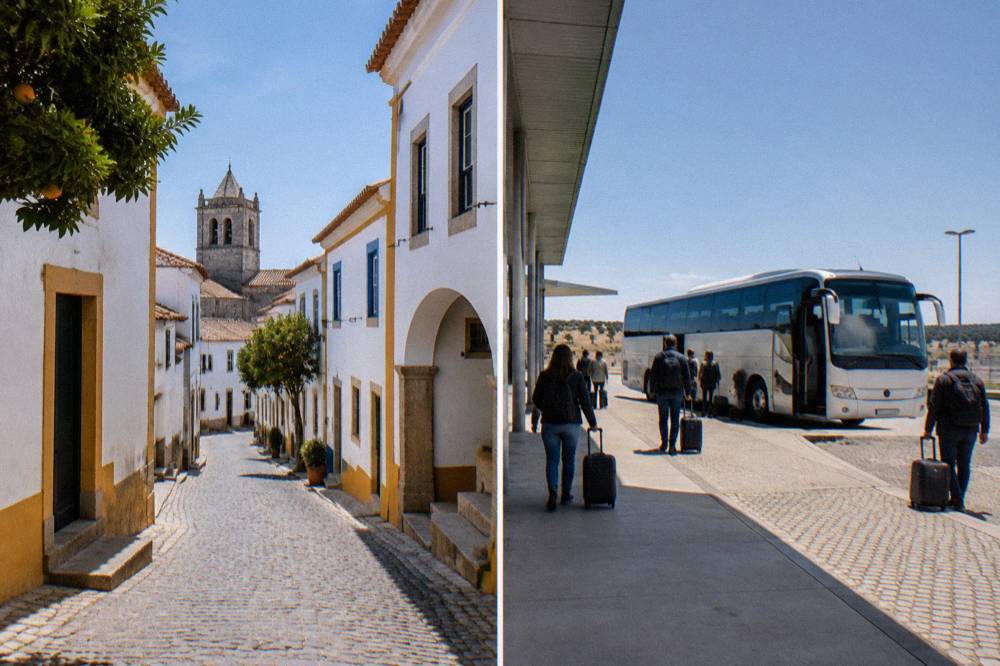
Both work, and the choice comes down to where in Lisbon you start and how much of the Alentejo you want to see. Coach operators run Lisbon to Évora services, and driving covers the about 130 km between the two cities on main roads, but no specific coach fare, timetable or drive time is published here: check the operator's own pages before booking, because those details change with the season.
The bus case is straightforward. Coaches reach Évora's terminal rodoviário, the city's bus station, and for travellers starting near a Lisbon coach stop they can beat the train on convenience. What this guide will not do is print a fare or a journey time for the coach, because the figures floating around online are not confirmed on an operator page. The guide to Lisbon to Évora by bus explains how to check current services and what to expect at the Évora end.
The car case is stronger than many visitors expect. The Alentejo is a region of small towns at real distances from each other, and a car turns a city trip into a circuit: Arraiolos about 20 km away, Estremoz about 45 km, Vila Viçosa about 60 km, Elvas about 80 km, and Monsaraz about 40-45 km, all rounded figures, all worth a day. The trade-off is parking inside Évora's medieval walls, which is restricted; the Évora parking guide covers where to leave the car, and Lisbon to Évora by car covers the drive itself.
A middle path exists, and it is the one many visitors take: arrive by train, spend a day or two inside the walls on foot, then take a guided day trip outward. The best day trips from Évora pages list the destinations, and the guided options handle the driving on the rural roads that lead to them.
For that first day on foot, the private option below is the one most worth considering: it pairs the cathedral and the Chapel of Bones with a guide, which removes the ticket-window guesswork entirely.
Do You Need A Car Once You Arrive In Évora?
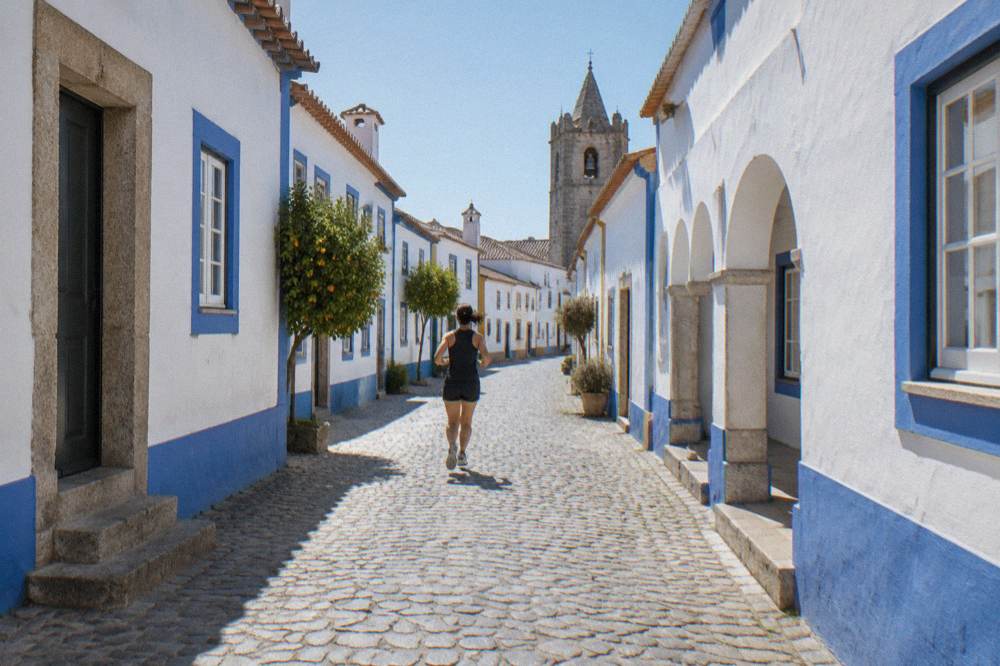
No, and for the historic centre a car is a hindrance rather than a help. Évora's UNESCO-inscribed old town is compact and largely pedestrian in feel, with the Sé, the Templo Romano, Praça do Giraldo and the Capela dos Ossos all within a short walk of one another, and the city's own sights are best reached on foot or with a local guide.
The scale of the place makes this true. The historic centre that UNESCO inscribed in 1986, under criteria (ii) and (iv), is a dense web of lanes inside medieval walls, and the criterion (iv) wording calls it the finest example of a city of the golden age of Portugal, preserved because Évora was largely spared the 1755 earthquake that devastated Lisbon. You do not drive through that; you walk it.
What a car does buy you is the megalithic country around the city. The Cromeleque dos Almendres, the great stone circle on the plain outside Évora, sits down rural roads where a guided tour is genuinely useful, and the Almendres Interpretation Centre in the village of Guadalupe keeps summer hours of 10:00-18:00 from 1 May to 31 October and winter hours of 10:00-17:00 from 1 November to 30 April. The municipal directions say to take the national road toward Lisbon and, after 8 km, follow the turn-off. For the stones themselves, entry is free, though that detail rests on general reporting rather than an official page, so treat it as expected rather than guaranteed.
The practical split, then:
| You want | Best without a car | Best with a car or tour |
|---|---|---|
| Historic centre, Sé, Capela dos Ossos | On foot, entirely | Not needed |
| Cromeleque dos Almendres and dolmens | Guided megaliths tour | Self-drive on rural roads |
| Monsaraz, about 40-45 km | Guided Monsaraz tour | Self-drive |
| Estremoz, about 45 km, Vila Viçosa, about 60 km | Guided day trip | Self-drive |
| Marvão, about 120 km | Long guided day | Self-drive, full day |
The guided options solve the rural-roads problem neatly, and the archaeologist-led half-day megaliths tour is the standout among them for anyone whose interest is the stones rather than the scenery.
What Should You Do With Your First Hours In Évora?
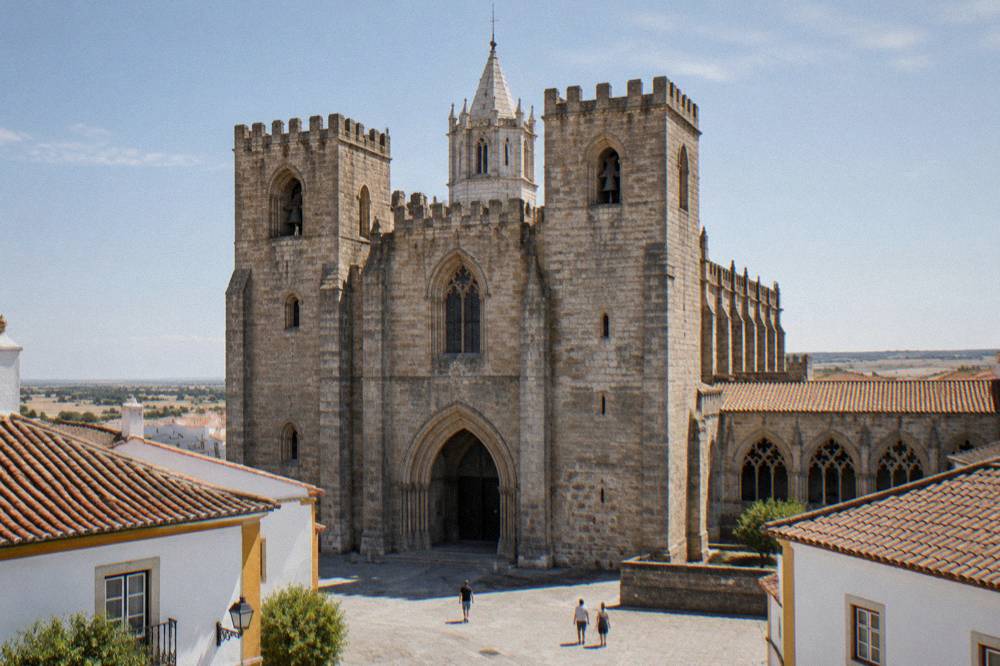
Start with the Sé and the Capela dos Ossos, the two headline monuments, then let the lanes carry you. The cathedral's complete-visit ticket, covering the church, cloister, roof terrace and museum, costs 5.00 EUR with children up to 12 free, and the Capela dos Ossos museum ticket at the Igreja de São Francisco costs 7.00 EUR for an adult, open 9:00-18:30 in summer and 9:00-17:00 in winter.
Those two tickets are the core of a first visit, and their details are stable. The Sé runs 9:00-17:00 with museum admission closing 30 minutes before, and it closes on 24 December afternoon, 25 December and 1 January. The Igreja de São Francisco's museum, which includes the Capela dos Ossos, the Sala do Capítulo, the Presépio, the sacred art nucleus, the Sala da Tribuna Real, the terrace and the nativity collection, is open every day except 1 January, Easter Sunday, 24 December afternoon and 25 December. Youth up to 25 and seniors over 65 pay 5.00 EUR, and a family ticket is 15.00 EUR. The church notes it is a private religious entity and does not apply State Museum discounts. Everything else covered here is indexed on Évora Travel Guide.
The full price picture for the main sights:
| Sight | Adult ticket | Notes |
|---|---|---|
| Sé de Évora, complete visit | 5.00 EUR | Cloister, roof terrace, museum included; children to 12 free |
| Capela dos Ossos museum ticket | 7.00 EUR | Youth to 25 and seniors over 65: 5.00 EUR; family 15.00 EUR |
| Museu de Évora | 8 EUR | Tue-Sun 9:30-13:00 and 14:00-17:30; closed Mondays |
| Évora Ticket, one day | 8 EUR | Two days 10 EUR, three days 12 EUR; free to age 12 |
| Templo Romano | No ticket listed | Open-air monument |
One caution on the Évora Ticket: it does not include the Sé, the Capela dos Ossos or the Museu de Évora, so read its network list before assuming it covers the headline sights. And the Convento dos Lóios shows its price as temporarily unavailable on the official page, so check the notice there before planning a visit.
A guided first walk turns these ticket windows into a single afternoon. For the full range, see Évora tours and the round-up of things to do in Évora.
When Is The Best Time To Fly Into Lisbon For Évora?
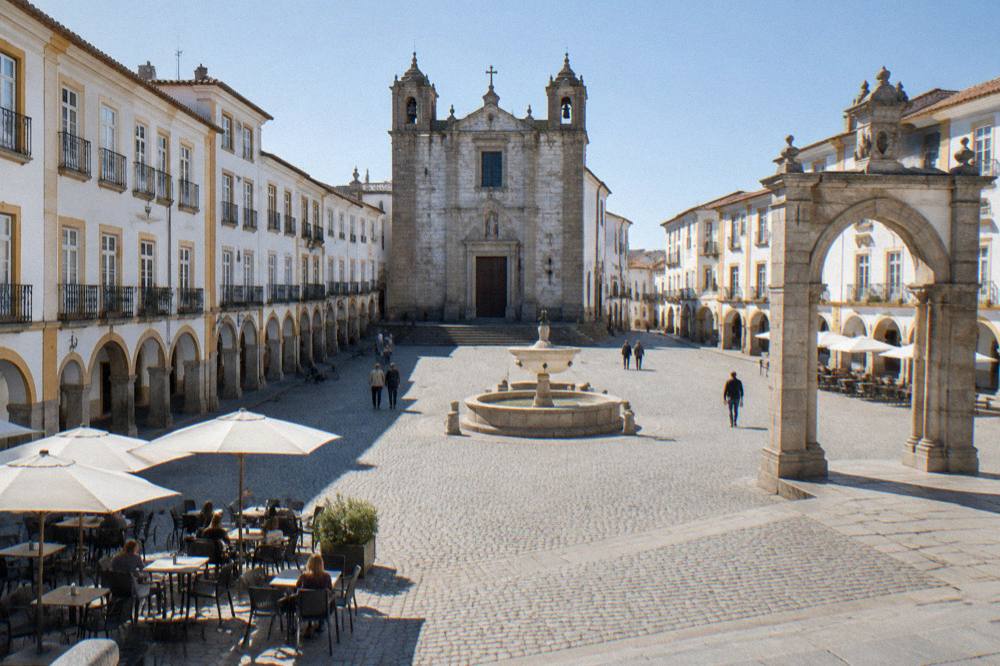
Spring and autumn are the comfortable seasons, and the numbers explain why. IPMA's 1991-2020 normals for the Évora station show a July mean maximum of 33.3 C and an August mean maximum of 33.5 C, with 31.9 days a year reaching 35 C or more, while April and October mean maxima sit at 20.7 C and 24.1 C. The record high for the station is 45.4 C, set on 4 August 2018.
Those are 30-year averages, not forecasts, but they describe the Alentejo honestly: this is the hottest part of Portugal in summer, and an inland plain holds its heat. The same normals show the rainfall pattern, with July averaging 2.7 mm and August 6.0 mm across the 1991-2020 window, against 86.0 mm in November and 85.1 mm in December, so the trade is simple, dry heat against grey wet.
| Month | Mean max (C), 1991-2020 | Mean min (C), 1991-2020 | Rain (mm), 1991-2020 |
|---|---|---|---|
| April | 20.7 | 8.5 | 62.1 |
| May | 25.0 | 10.9 | 46.6 |
| June | 30.2 | 13.8 | 10.6 |
| July | 33.3 | 15.6 | 2.7 |
| August | 33.5 | 16.0 | 6.0 |
| September | 29.5 | 14.6 | 33.9 |
| October | 24.1 | 12.3 | 81.5 |
There is also a cultural calendar pulling in the other direction. Évora and the Alentejo are a European Capital of Culture in 2027, promoted by an executive board led by the municipality, and 2026 is a preparation year built on the concept of "Vagar", with the full 2027 programme not yet published. The Feira de São João ran 23 June to 5 July 2026 at the Rossio de São Brás under the theme "Évora: Capital Europeia ao Sul", and the GUADIANA festival of Afro-Ibero-American literatures held its first edition on 9 to 11 October 2026 with 28 authors from nine countries. Anyone timing a 2027 visit around the culture programme should watch the official Évora 2027 pages rather than assume dates.
The deeper guides to the best time to visit Évora and Évora weather break the seasons down month by month, and the comparison of Évora versus Sintra is useful if you are splitting a Portugal trip between regions.
Where Should You Stay After Arriving In Évora?
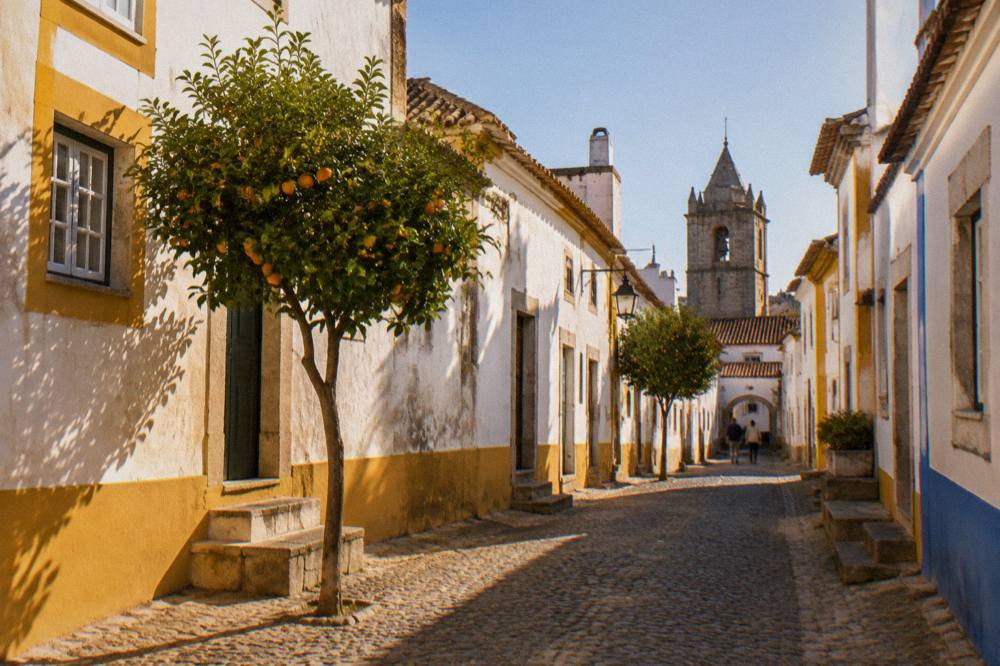
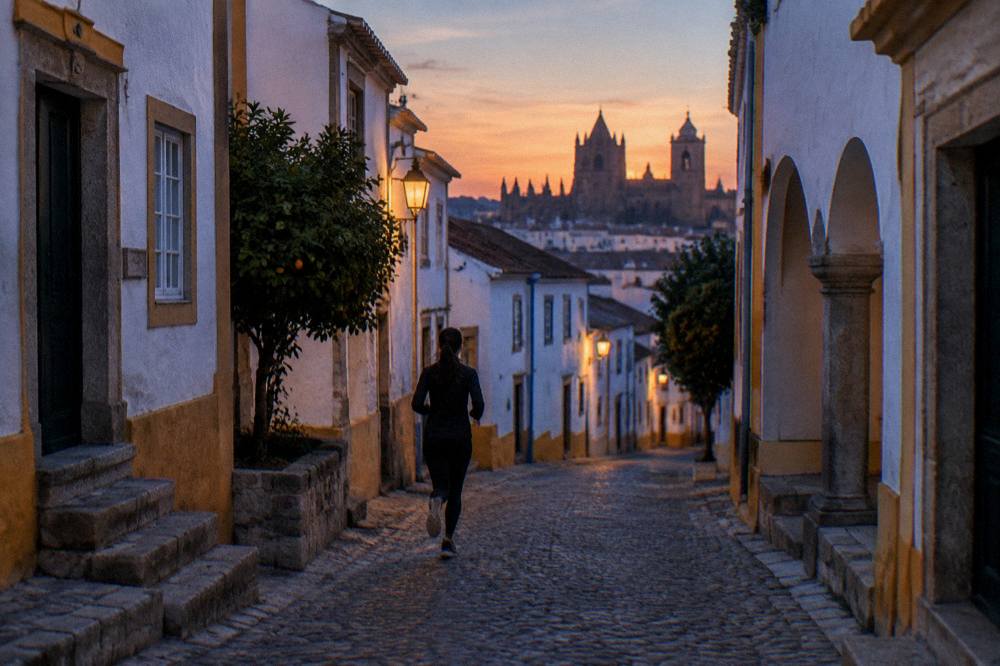
Inside the walls, if the budget allows, because the arrival experience of Évora is the evening and early morning old town, when the lanes empty and the light turns on the whitewash. The practical choices are a historic-centre hotel or guesthouse for walking everything, a stay just outside the walls for easier parking, or a base in the surrounding Alentejo if the trip is really a region tour.
The walls are the dividing line. Inside them, cars are restricted and the sights cluster; outside them, parking is simpler and the walk in takes minutes. The where to stay in Évora guide maps the neighbourhoods properly, and the cost question is handled in the Évora cost and budget breakdown.
One arrival detail worth knowing: a municipal tourist tax applies to stays in Évora, so check with your hotel about the current amount and how it is collected rather than being surprised at check-out. That is the honest way to state it, because the figure is not printed here.
For a trip that extends beyond the city, the Alentejo travel guide covers the wider region, and the three-day itinerary of Évora and the Alentejo shows how the days chain together once a car or a set of guided day trips is in place.
What Does The Journey From Lisbon To Évora Really Cost?
The rail leg is 13.90 EUR second class each way, the two headline monument tickets add 12.00 EUR at the adult rate, and the rest depends on how you arrive and how long you stay. A same-day arrival by train, a cathedral complete visit and a Capela dos Ossos museum ticket come to about 26 EUR in official prices before food, lodging or any guided tour.
That arithmetic is the honest skeleton of an Évora day trip, and it is why the city works as a short visit: the fixed official costs are low and they are published. The variable costs are the ones to plan around.
| Item | Official figure |
|---|---|
| CP Intercidades, Lisboa Oriente to Évora, second class | 13.90 EUR |
| CP Intercidades, first class | 18.50 EUR |
| Sé de Évora complete visit, adult | 5.00 EUR |
| Capela dos Ossos museum ticket, adult | 7.00 EUR |
| Museu de Évora, adult | 8 EUR |
| Évora Ticket, one day | 8 EUR |
Guided tours sit on top of that, priced per person on their own listings, and the small-group cultural walk with Chapel of Bones entry is a good example of the mid-range option: it bundles the guiding with the monument visit and suits a first day.
Whether the whole thing works as a day trip from Lisbon is its own question, and the answer depends on the train times above more than on anything else: the 07:02 arrival at 08:47 and the 19:02 departure from Évora at 17:02 in the reverse direction frame a full day. The is Évora worth visiting and is Évora worth a day trip from Lisbon pages take that question seriously, and the one day in Évora itinerary builds the hours out.
For travellers who would rather not plan the day at all, the tours below cover the arrival-to-evening arc in the city itself.
Common Questions About Évora Airport Options
What is the nearest airport to Évora?
Lisbon is the airport visitors use to reach Évora, Portugal. The city sits inland in the Alentejo, about 130 km from Lisbon by road, and the standard route is a flight into Lisbon followed by a train, coach or car journey east.
Is there a train from Lisbon to Évora?
Yes. CP's Intercidades timetable valid since 6 September 2026 lists six through trains from Lisboa Oriente to Évora, taking about 1 hour 40 to 1 hour 45, with a second-class fare of 13.90 EUR and first class at 18.50 EUR.
How do I get from Lisbon Airport to the train station?
Lisboa Oriente station is on the same side of the city as the airport, which is what makes the train connection work so well. Check the operator's current pages for transfer options between the two, as local details change.
Do I need a car in Évora?
Not for the historic centre, which is compact and best walked. A car or a guided tour is worth having for the surrounding Alentejo: the Cromeleque dos Almendres, Monsaraz at about 40-45 km, Estremoz at about 45 km and Vila Viçosa at about 60 km.
How much do the main sights in Évora cost?
The Sé complete-visit ticket is 5.00 EUR, the Capela dos Ossos museum ticket is 7.00 EUR for an adult, the Museu de Évora is 8 EUR, and the Évora Ticket is 8 EUR for one day, 10 EUR for two and 12 EUR for three, though it does not include the Sé, the Capela dos Ossos or the Museu de Évora.
When is the best time to visit Évora?
Spring and autumn. IPMA's 1991-2020 normals for the Évora station show July and August mean maxima of 33.3 C and 33.5 C, with 31.9 days a year at 35 C or more, while April and October average 20.7 C and 24.1 C.
The short version of all of this: fly into Lisbon, take the 07:02 or 09:02 from Oriente, and you are inside the walls of a UNESCO city before noon, with the whole Alentejo waiting beyond them.