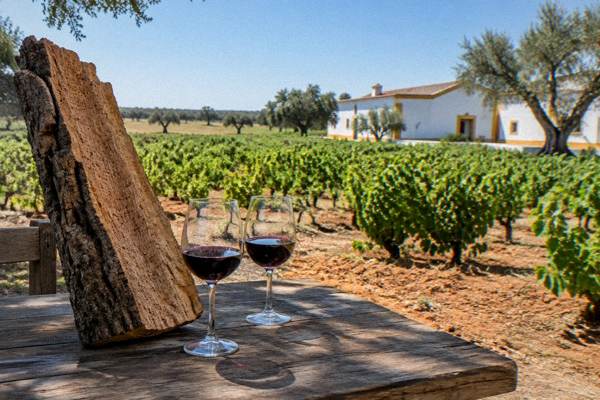
Cartuxa Winery In Évora, Portugal: What To Expect From A Visit
The Cartuxa winery is one of the Alentejo's best-known wine names, tied to the old Carthusian monastery on the edge of Évora. This guide covers how a visit works, which guided tours from Évora include wine tastings, and how to build a full day around the estate.
Short answer
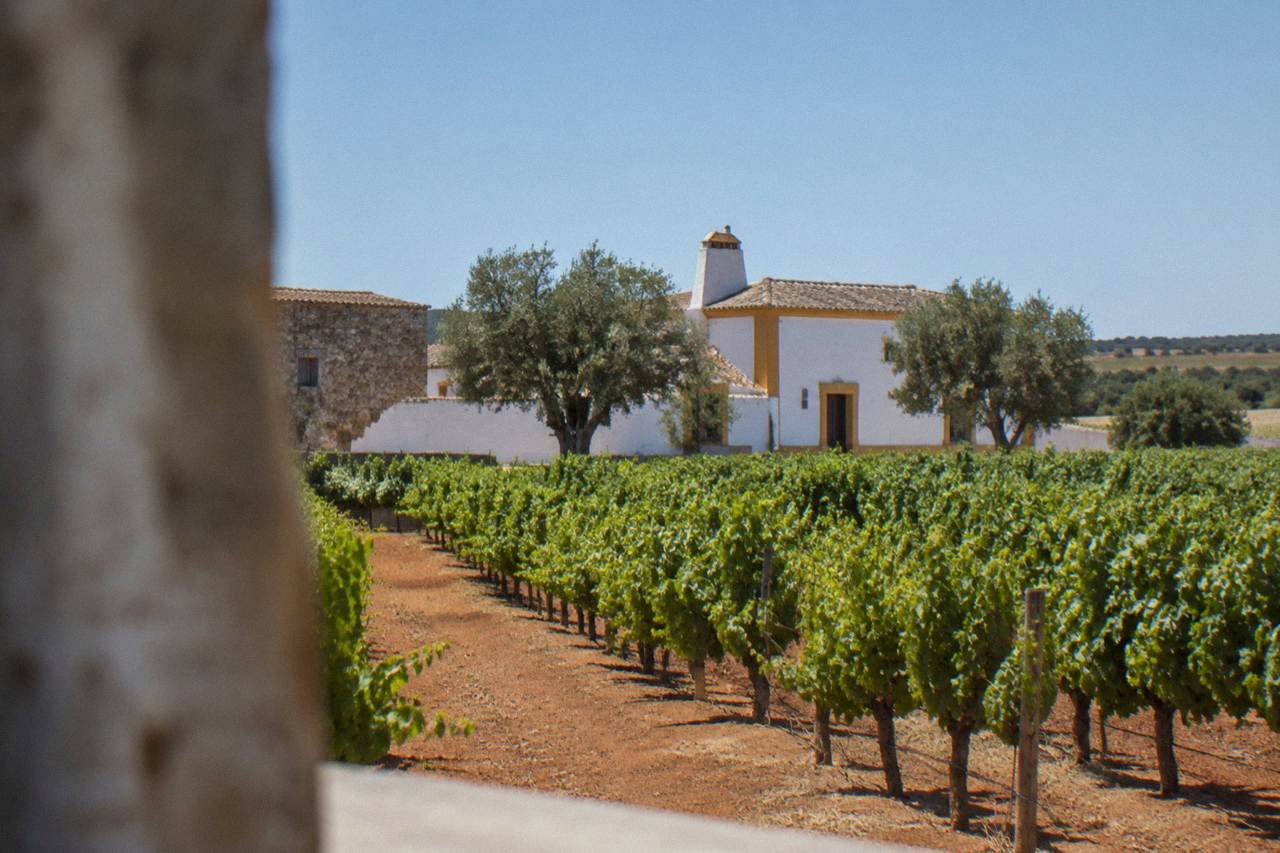
The Cartuxa winery is a wine estate beside the old Carthusian monastery of the same name on the edge of Évora, Portugal. Visits are built around guided tastings rather than drop-in entry, and the most reliable way to experience Alentejo wine country is a guided wine or wine-and-cork tour from Évora, which handles transport and bookings.
The Cartuxa winery in Évora, Portugal, belongs to a city better known for bone chapels and Roman temples than for wine, which is exactly why it surprises people. Évora is the capital of the Alentejo, the country's great wine and cork region, and the Cartuxa estate sits at the point where the historic centre gives way to the vine-covered plain. The name itself comes from the Portuguese word for a Carthusian monastery, a cartuxa, and the monastery that gave the estate its name still stands beside the property. This guide, from the Évora Travel Guide editorial desk, covers what a visit involves, which guided tours from Évora pair the winery with the wider wine country, and how to plan the day around it.
What Is The Cartuxa Winery In Évora?
The Cartuxa winery is a long-established Alentejo wine producer whose estate and name come from the Carthusian monastery beside it on the edge of Évora, and it is one of the labels most closely identified with the city's wine country. The monastery itself, the Mosteiro da Cartuxa, is a separate historic monument with its own story, and the two share a hillside that has been associated with wine for centuries. Tasting visits are the practical way to see the estate, and the monastery can be explored on its own through the Cartuxa monastery guide.
The connection between monastery and wine is the heart of the Cartuxa story. Carthusian monks, like other monastic orders across the Iberian peninsula, were historically associated with vineyards and winemaking on their own lands, and the estate's identity still leans on that monastic heritage. The modern producer carries the name forward, and its labels are among the ones visitors most often encounter when they start tasting Alentejo wine in Évora's restaurants and taverns.
What matters for a visitor is the shape of the experience. A winery visit in this part of the Alentejo is not a self-guided museum walk: it is a hosted tasting, sometimes with a look at the production areas, sometimes simply a seated flight of wines with someone explaining what is in the glass. Because the estate is a working producer rather than a public monument, the practical route in is a booked experience, either directly with the producer or through a guided tour that includes a tasting stop.
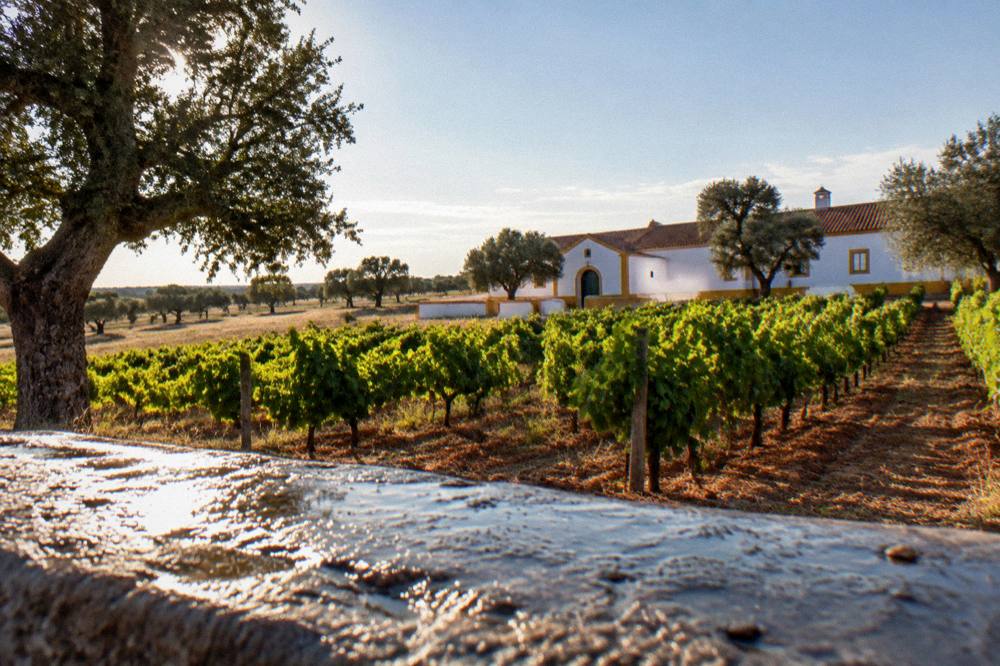
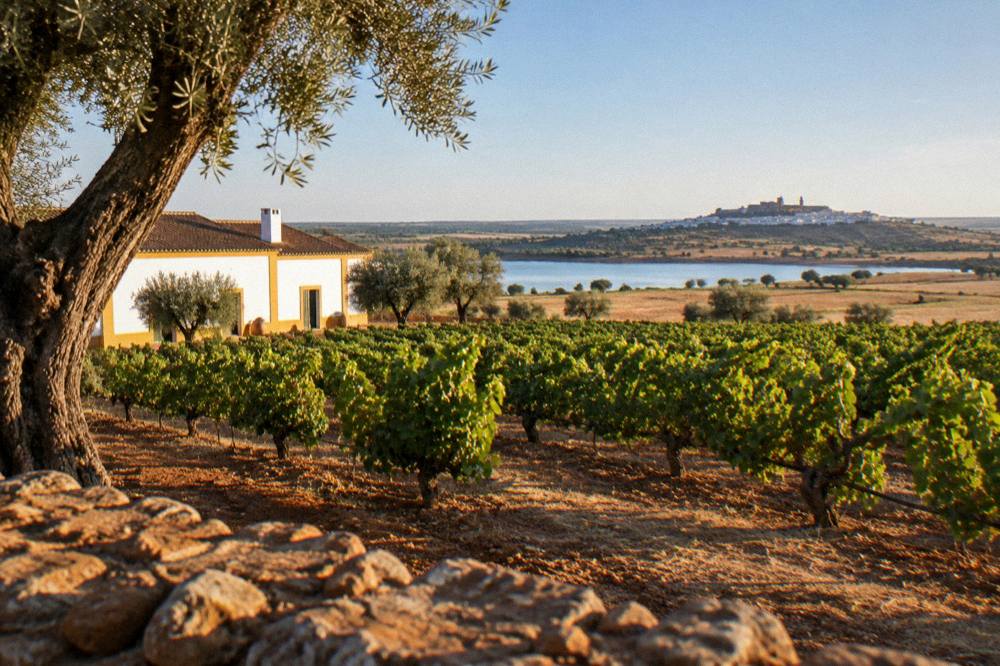
The wider context matters too. Évora sits in the middle of the Central Alentejo, a landscape of cork oaks, vineyards, olive groves and wheat plains, and the city's UNESCO-listed historic centre, inscribed in 1986 under criteria (ii) and (iv), is surrounded by exactly the countryside that produces the region's wine. A tasting at Cartuxa is a doorway into that landscape, not just a drink.
How Do You Visit The Cartuxa Winery From Évora?
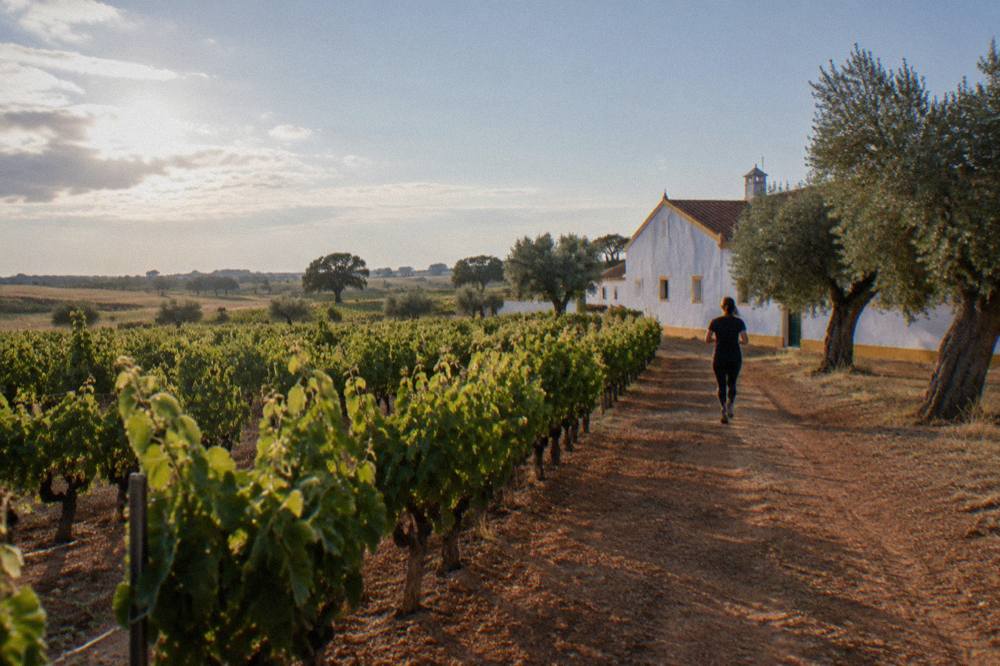
The reliable way to visit is to book a tasting or a guided wine tour from Évora in advance, because the estate is a working winery rather than a drop-in monument, and the guided options handle transport and reservations together. Opening hours, tasting prices and tour formats at the winery itself change with the season and the production calendar, so check the producer's own notice or the operator's listing before you go rather than planning around a fixed schedule.
The guided options are the stress-free route. A wine tour from Évora typically bundles a tasting, the drive through the surrounding estate country and a guide who explains the Alentejo's wine and cork landscape along the way. The tours below are the strongest fits for a Cartuxa-centred day.
The featured option among them is the Alentejo Wine and Cork from Évora tour, a 4-hour guided experience from $78.78 per person, rated 4.7 from 24 reviews on the operator's live listing. It pairs the wine side of the region with its other great crop, cork, which is the honest way to see the Alentejo: the two landscapes are the same landscape. Check availability
Going independently is possible but needs more planning. The estate lies on the edge of the city, close enough that a taxi or short drive covers it, but a tasting still needs a booking, and no verified hours or prices for the winery's own visits are published in a form a traveller can rely on. Ask at your hotel or the tourist office on Praça do Giraldo for the current arrangement, or let a tour operator handle it.
One practical note: wine country around Évora is genuinely rural. If you plan to taste at more than one stop, do not drive. Every guided option listed here removes that question entirely.
Which Guided Wine Tours From Évora Include Tastings?
Four guided experiences from Évora cover the wine country well: a 4-hour wine and cork tour from $78.78, a full-day private wine tour from $321.11, a 4-hour Monsaraz and wine tour from $78.78, and an evening food and wine crawl from $83.28, each with a tasting component and all bookable through the operator's live listing. The table below compares them on the numbers that matter.
| Tour from Évora | Duration | From (per person) | Rating |
|---|---|---|---|
| Alentejo Wine and Cork from Évora | 4 hours | $78.78 | 4.7 from 24 reviews |
| 1 Day Wine Tour Around Évora | Full day | $321.11 | 5 from 11 reviews |
| Monsaraz and Wine guided tour from Évora | 4 hours | $78.78 | 4.6 from 51 reviews |
| Évora: Evening Food & Wine Crawl | 3 hours | $83.28 | 4.6 from 19 reviews |
The choice between them is really a choice about the shape of your day. The 4-hour wine and cork tour is the balanced pick for a first visit, because it shows the two landscapes the Alentejo is built on. The full-day private option suits a group that wants depth, a long lunch and multiple stops. The Monsaraz tour adds one of the region's most photographed hilltop villages, about 40 to 45 km from Évora, with wine on the return. The evening crawl swaps countryside for the city, walking Évora's taverns after dark.
What Is Alentejo Wine Like?
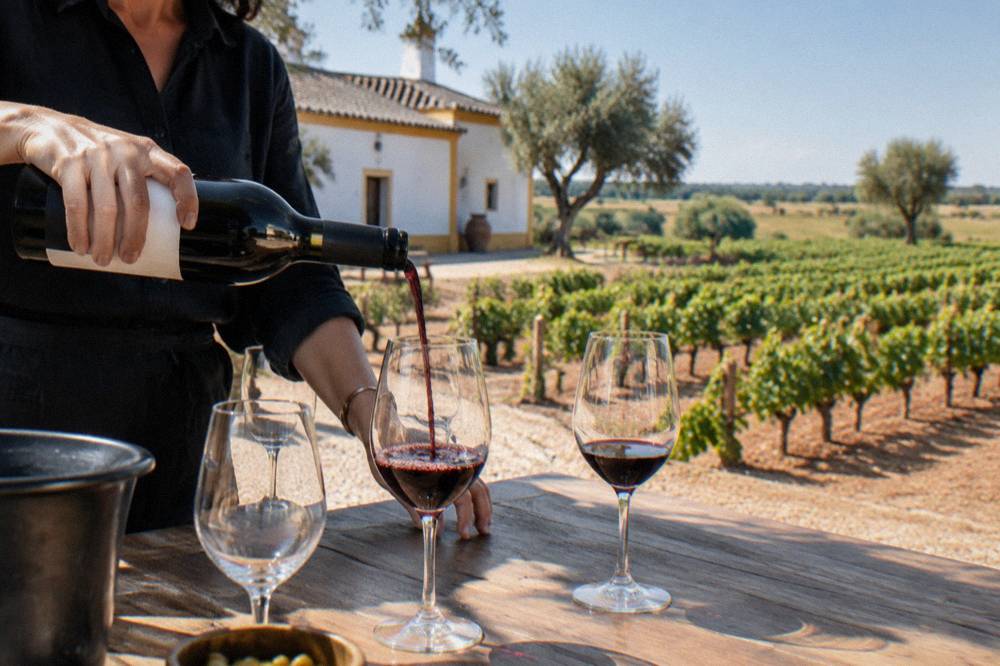
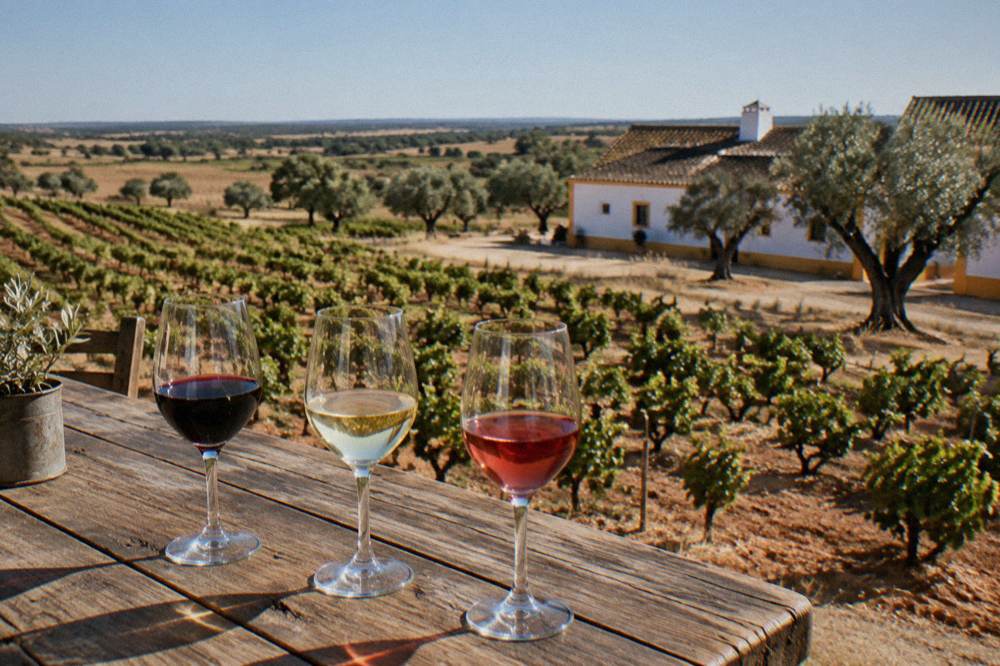
Alentejo wine is warm-climate Portuguese wine: generous, ripe and easy to drink, reds that lean full-bodied and smooth, whites that tend rounder and softer than the crisp Atlantic styles of northern Portugal, and it is the wine you will be served by the glass almost everywhere in Évora. The region's heat, inland and far from any coast, is what shapes the glass, and the Cartuxa estate's output sits squarely in that tradition.
That heat is measurable. IPMA's 1991 to 2020 normals for the Évora station show a July mean maximum of 33.3 C and August 33.5 C, with 31.9 days a year reaching 35 C or more, and the all-time station record of 45.4 C set on 4 August 2018. Grapes ripen fully here, and the resulting style is one reason Alentejo wine travelled from a regional curiosity to a fixture on Portuguese lists.
What a tasting actually gives you is context for that. A guided tasting walks through the differences between the region's reds and whites, the effect of the hot, dry summers on ripeness, and how the local tradition of blending plays out in the glass. The guides on the Évora wine tours do this well, and the Alentejo wine guide goes deeper into the region's styles if you want to read before you taste.
For the food pairing side, the Alentejo's kitchen is built for its own wine: bread-based soups, pork dishes, slow stews and strong cheeses, all of which hold up to ripe reds. The Alentejo food guide covers the dishes worth knowing, and the evening food and wine crawl is the most efficient way to meet several of them in one night.
How Does The Cartuxa Monastery Connect To The Wine?
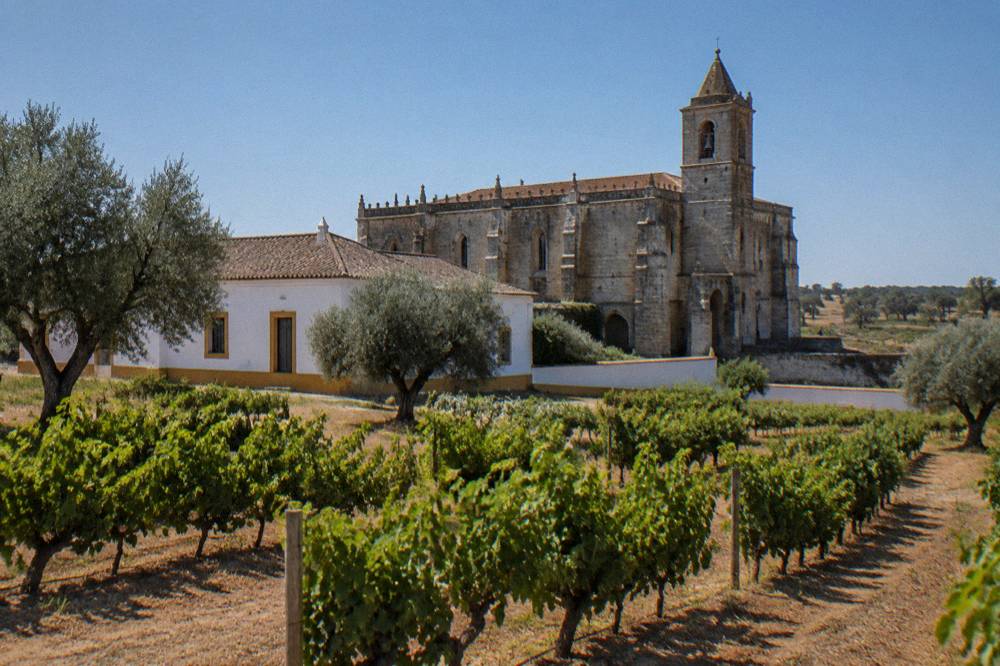
The Cartuxa monastery is the historic Carthusian house whose Portuguese name, cartuxa, gave the wine estate beside it its identity, and the two share the same hillside on the edge of Évora, so a wine-focused half day pairs naturally with a look at the monastery itself. The monastery stands as one of the city's quieter monuments, away from the crowds at the Capela dos Ossos and the Sé de Évora, and it rewards the walk.
The Carthusian order was one of the strictest and most contemplative in European monasticism, and its houses were typically built in quiet, self-sufficient settings where the monks farmed their own land. That self-sufficiency is the historical thread between monastery and vineyard: monastic estates across the Iberian peninsula kept vines, and the Cartuxa property inherited both the land and the name.
For a visitor, the pairing is simple. The monastery gives you the history, the winery gives you the landscape and the glass, and together they explain why Évora's wine country looks the way it does. The Cartuxa monastery guide covers the monument in detail, including what is known about visiting it.
What Does A Winery Day Cost Compared To Évora'S Monuments?
A guided wine tour from Évora runs from $78.78 per person for a 4-hour small-group experience to $321.11 for a full-day private tour, while Évora's major monuments cost far less: the Sé complete visit at 5.00 EUR, the Capela dos Ossos museum ticket at 7.00 EUR and the Museu de Évora at 8 EUR. The two kinds of spending are complementary, not competing.
| Évora sight | Ticket | Notes |
|---|---|---|
| Sé de Évora complete visit | 5.00 EUR | Cathedral, cloister, roof terrace and museum; children up to 12 free |
| Capela dos Ossos / Igreja de São Francisco | 7.00 EUR adult | One museum ticket; youth to 25 and seniors over 65 at 5.00 EUR, family 15.00 EUR |
| Museu de Évora | 8 EUR adult | Tue-Sun 9:30-13:00 and 14:00-17:30, closed Mondays |
| Évora Ticket | 8 EUR one day | 10 EUR two days, 12 EUR three days; does not include the Sé, the Capela dos Ossos or the Museu de Évora |
The pattern is worth understanding before you budget. City monuments are cheap and take an hour or two each; wine tours cost more because they include transport, a guide, tastings and several hours of the countryside. A sensible split for a two-day stay is monuments on one day and a wine tour on the other, which is exactly the shape of the two days in Évora itinerary.
Note the currency distinction, too. The monument prices above are official-site prices in euros. The tour prices in this guide come from the tour cards and are in US dollars, which is how the operators list them.
When Is The Best Time To Visit Wine Country Around Évora?
The best months for wine country around Évora are May, June, September and October, when IPMA's 1991 to 2020 normals for the Évora station show mean maxima of 25.0 C, 30.2 C, 29.5 C and 24.1 C respectively, against 33.3 C in July and 33.5 C in August, and with far more rain-free days than winter. Harvest time, late summer into early autumn, is the most atmospheric period in a working wine region.
| Month (IPMA 1991-2020, Évora station) | Mean max | Mean min | Rain (mm) | Days max 30 C+ |
|---|---|---|---|---|
| May | 25.0 C | 10.9 C | 46.6 | 5.5 |
| June | 30.2 C | 13.8 C | 10.6 | 15.1 |
| July | 33.3 C | 15.6 C | 2.7 | 23.7 |
| August | 33.5 C | 16.0 C | 6.0 | 25.0 |
| September | 29.5 C | 14.6 C | 33.9 | 13.9 |
| October | 24.1 C | 12.3 C | 81.5 | 2.9 |
July and August are the hardest months for anything outdoors here. The same normals show 11.5 days at 35 C or more in July and 10.9 in August, and the record of 45.4 C on 4 August 2018 is a reminder of what the Alentejo plain can do. If summer is your only window, book morning tastings and keep the afternoon for the Sé's roof terrace or the shade of the Jardim Público.
October brings its own draw. Évora and the Alentejo are European Capital of Culture in 2027, and 2026 is the preparation year, so the cultural calendar around the city is building: the GUADIANA festival of Afro-Ibero-American literatures runs 9 to 11 October 2026 with 28 authors from nine countries, and the Feira de São João filled the Rossio de São Brás from 23 June to 5 July 2026. A wine-country day in October can now sit alongside a festival evening.
Can You Combine Wine With Cork On The Same Day?
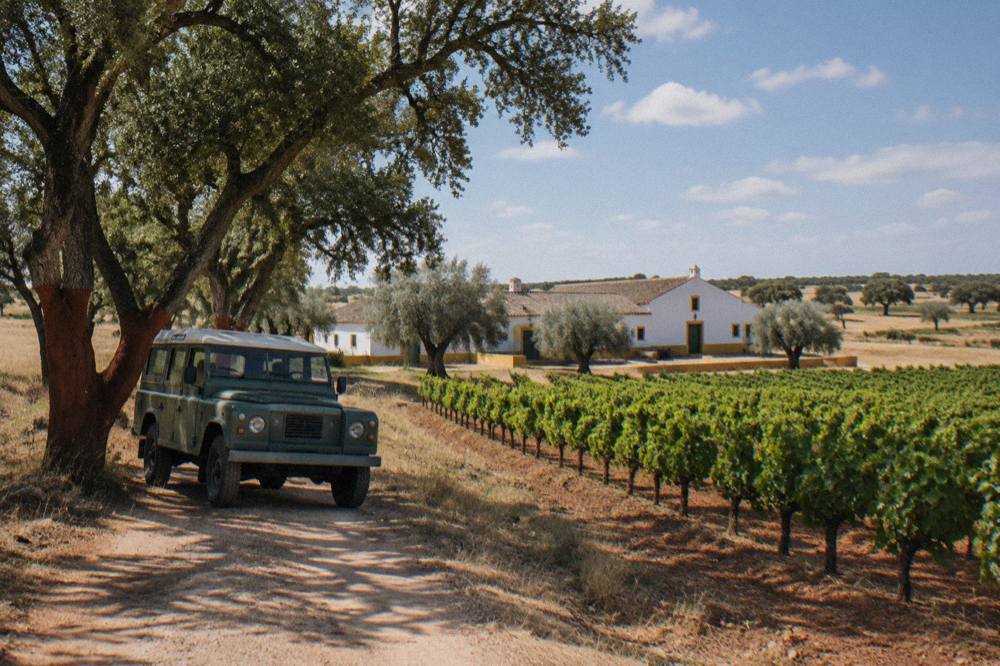
Yes, and it is the natural pairing: the Alentejo's vineyards and its cork oak forests are the same landscape, and guided tours from Évora combine the two, from a 4-hour megalithic and cork forest tour at $50.65 to a 2-hour cork safari in a classic Land Rover at $102.07. Cork is the region's other great crop, and understanding it changes how the whole countryside reads.
Cork oaks are harvested by hand, strip by strip, on cycles of years, and the montado, the mixed cork-and-pasture woodland that covers so much of the Alentejo, is one of the most distinctive managed landscapes in Europe. A cork walk or safari explains how the bark is stripped, how the trees are protected and why the ecosystem matters, and the wine estates sit inside the same picture.
| Cork and wine experience from Évora | Duration | From (per person) | Rating |
|---|---|---|---|
| Megalithic and Cork Forest guided tour | 4 hours | $50.65 | 4.9 from 41 reviews |
| 2hr Walk in a Cork Forest | 2 hours | $71.10 | 4.7 from 43 reviews |
| 2hr Cork Safari in a Classical Land Rover | 2 hours | $102.07 | 4.8 from 33 reviews |
| Évora: Cork Factory and Cork Farm, lunch included | 8 hours | $112.55 | 4.8 from 26 reviews |
Inside the city, the cork museum and cork shops guide covers where the material shows up in Évora itself, from shop windows to architecture. A full day that moves from a morning cork walk to an afternoon tasting is the most complete introduction to the Alentejo that a single day allows.
What Else Should You See Around The Cartuxa Estate?
The Cartuxa estate sits on the edge of a UNESCO-listed city whose whole historic centre is walkable, so the honest answer is the city itself: the Templo Romano, the Sé, the Capela dos Ossos and the Praça do Giraldo are all within a short walk of each other, and the wine country begins where the walls end. The things to do in Évora overview is the full list.
For half-day planning, the one day in Évora itinerary sequences the monuments efficiently, and the Évora half day guide is the compressed version for visitors passing through between trains. CP's timetable valid since 6 September 2026 lists six through trains a day from Lisboa Oriente, arriving in about 1 hour 40 to 1 hour 45, which makes even a half-day wine stop feasible from the capital.
Beyond the city, the Alentejo towns make strong second days. The rounded distances below are the figures to plan with, always as approximations rather than hard numbers.
| Alentejo destination from Évora | Approximate distance | What it is known for |
|---|---|---|
| Arraiolos | About 20 km | Historic hand-stitched carpets |
| Monsaraz | About 40 to 45 km | Walled hilltop village over the Alqueva lake |
| Estremoz | About 45 km | Marble town and castle |
| Vila Viçosa | About 60 km | Ducal palace and marble quarries |
| Elvas | About 80 km | Fortified border city |
| Marvão | About 120 km | Mountain-top walled village |
The Monsaraz and wine tours from Évora, from $78.78 per person, are the best fit if you want a hilltop village and a tasting in one booked afternoon, and the Monsaraz guide covers the village itself.
Should You Take A Free Walking Tour Before The Wine Tour?
Yes, if your day allows it: Évora has several free, tip-based GuruWalk walking tours, including the Essential Free Tour of Évora rated 4.93 from 774 reviews over 2 hours, and a free walk in the morning plus a wine tour in the afternoon is the cheapest full day the city offers. The free walks are hosted on GuruWalk, and the guides, the gurus, work on tips alone.
| Free GuruWalk in Évora | Duration | Rating on GuruWalk |
|---|---|---|
| The Essential Free Tour of Évora | 2 hours | 4.93 from 774 reviews |
| Évora through history and how it shaped the city | 2 hours | 4.88 from 74 reviews |
| Évora Walking Tour: History & Heritage | 2 hours | 5 from 9 reviews |
| Mystical Journeys Évora: Roman Ebora | 2.5 hours | 5 from 1 review |
The logic is straightforward. A free walk in the morning gives you the city's history from the Roman Ebora layer up through the medieval walls, and a paid wine tour in the afternoon takes you out into the landscape that history was built on. The Évora walking tour guide compares the paid options in the same detail.
Common Questions About The Cartuxa Winery
Is the Cartuxa winery in Évora, Portugal?
Yes. The Cartuxa winery is on the edge of Évora, the capital of the Alentejo region of Portugal, beside the old Carthusian monastery that gave the estate its name. Évora is an inland city, so the estate is surrounded by plains, cork oaks and vineyards rather than any coast.
Can you visit the Cartuxa winery without a tour?
Tastings at the estate are booked experiences rather than drop-in visits, and hours and tasting formats change with the season and the production calendar. Check the producer's own notice before you go, or let a guided wine tour from Évora handle the booking and the transport.
How much does a wine tour from Évora cost?
The guided options from Évora start at $50.65 per person for a 4-hour megalithic and cork forest tour, with wine-focused tours from $78.78 for a 4-hour wine and cork experience and $321.11 for a full-day private wine tour. Prices are per person and come from the operators' live listings.
What wine is the Alentejo known for?
The Alentejo is known for warm-climate wines: full, ripe, smooth reds and rounder, softer whites, shaped by hot dry summers. IPMA's 1991 to 2020 normals for the Évora station show a July mean maximum of 33.3 C, which is the heat that defines the style.
Can you combine the Cartuxa winery with the monastery?
Yes. The Cartuxa monastery and the wine estate share the same hillside on the edge of Évora, so a monastery visit and a tasting pair naturally in one half day. The monastery is covered in detail in the Cartuxa monastery guide on this site.
When is the best time of year for wine country around Évora?
May, June, September and October, according to IPMA's 1991 to 2020 normals for the Évora station: mean maxima of 25.0 C, 30.2 C, 29.5 C and 24.1 C respectively, against 33.3 C in July and 33.5 C in August. Harvest season in early autumn is the most atmospheric time in a working wine region.
A wine day built around the Cartuxa estate is the half of Évora most visitors miss: the city inside the walls gives you the monuments, and the estate country outside them gives you the reason the Alentejo tastes the way it does.