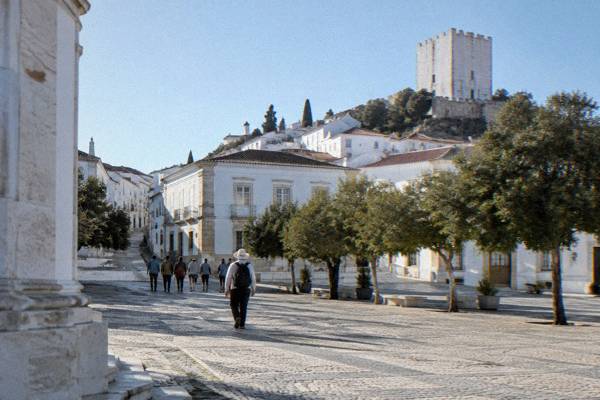
Estremoz Day Trip From Évora
Estremoz, about 45 km from Évora in Portugal's Alentejo, is the marble capital of the region: a castle-crowned hill town whose quarries have shaped its streets, stairs and doorframes for centuries.
Short answer
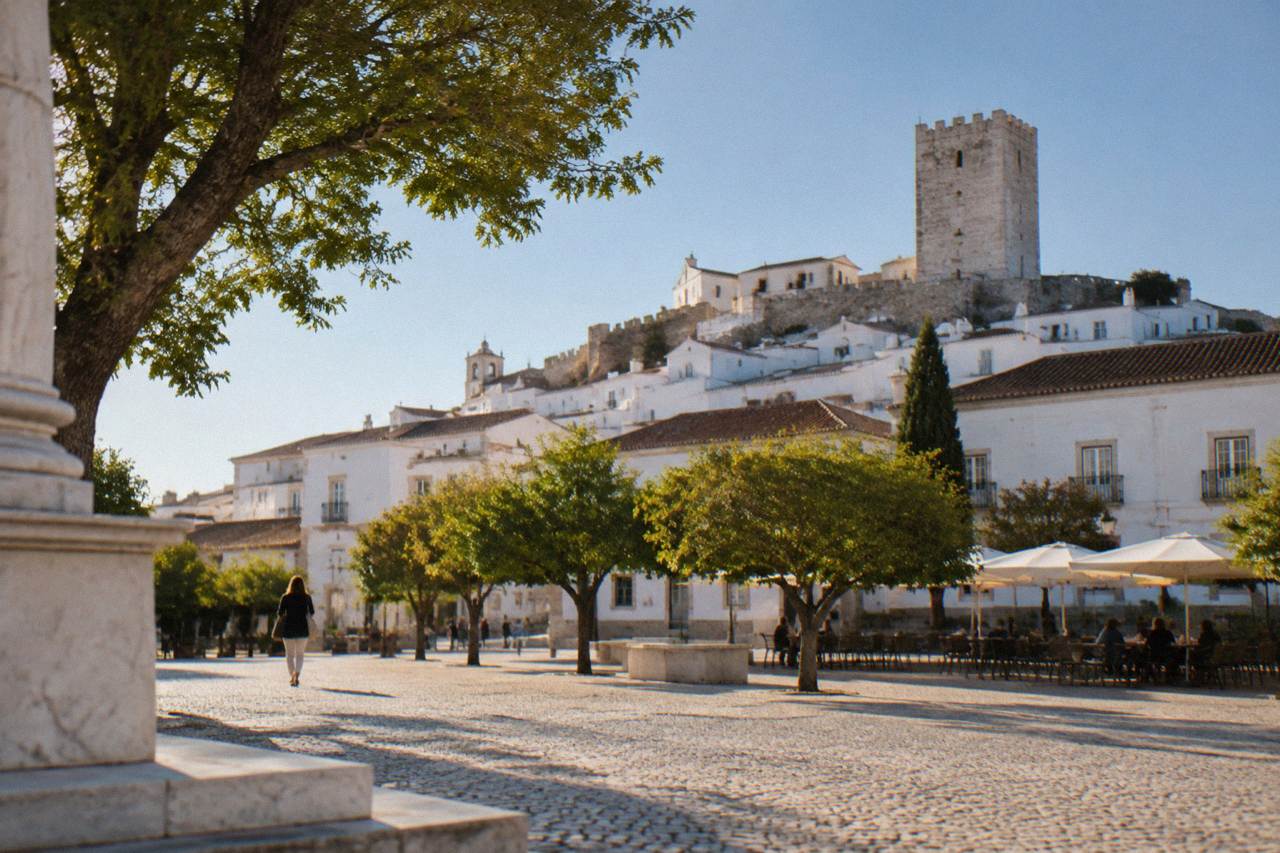
Estremoz lies about 45 km east of Évora and makes an easy half-day or full-day trip. The town is famous for its white marble, its hilltop castle quarter and its weekly market tradition, and it pairs naturally with Vila Viçosa, Borba and Elvas on a loop through the marble and wine country.
Estremoz, in the Alentejo region of Portugal, is the marble town of the Central Alentejo, sitting on a low hill about 45 km east of Évora, the district capital. The settlement divides into two halves: the older medieval upper town gathered around a castle, and the lower town that grew outward along the plain, and nearly everything that can be built from local stone in between, from doorframes to fountains to the kerbs of the pavements, has been cut from the white marble that gave the region its name. Évora, the UNESCO-listed capital an hour's drive west, is the natural base: it holds the region's main railway connection, the widest choice of accommodation and the largest stock of guided day tours into the marble and wine country that surrounds Estremoz.
This page covers what a day trip to Estremoz involves: what the town actually is and what it is known for, how the geography of the marble country fits together, how to think about getting there from Évora, what a realistic day looks like, and which guided options exist for travellers who would rather not drive. Where a figure is verified, it is printed; where nothing was verified, the page says so plainly rather than guessing.
Why Estremoz Makes An Easy Day Trip From Évora?
Estremoz is a compact hill town about 45 km east of Évora, close enough to be reached in a morning and far enough that it feels like a different chapter of the Alentejo, one built on marble rather than on the granite and schist of the Évora plain. It sits inside the same district, Évora, so the drive is a single regional hop, and the town's two halves, the castle quarter above and the market town below, can be walked in a few hours.
The first thing to understand about Estremoz is its position. The Alentejo is Portugal's great southern tableland, and Évora sits near its centre while Estremoz sits towards its eastern edge, where the land begins to fold towards Elvas and the Spanish border. The whole corridor between the two, through Borba and on towards Vila Viçosa, is marble country: the same pale stone that lines Estremoz's streets is quarried across the region and has been exported for centuries. A visitor based in Évora therefore gets two Alentejos in one stay: the Roman and medieval university city, and the marble-and-wine belt to its east.
The town's fame rests on three things. Marble is the first: Estremoz gives its name to a whole class of Portuguese marble, and the stone is visibly everywhere in the streets. The castle and the upper town are the second: a walled medieval quarter on the crest of the hill, dominated by a keep that now houses a pousada, Portugal's state heritage hotel network. The third is the market tradition: Estremoz has long hosted one of the region's most important weekly livestock and produce markets, and the "Rainha Santa" figurines of painted clay, a regional craft, are strongly associated with the town.
For the practical question of whether the trip is worth the effort compared with simply staying in Évora, the honest answer is that it depends on the length of the stay. A visitor with one full day in Évora should spend it inside the walls of the UNESCO historic centre, where the Sé de Évora, the Capela dos Ossos and the Templo Romano stand within a short walk of each other. A visitor with three or more days, or one who has already seen Évora's core, gains a great deal from the eastern Alentejo: the scale of the landscape changes, the architecture changes, and the day-trip options multiply, as the best day trips from Évora show.
What To See In Estremoz On A Day Trip?
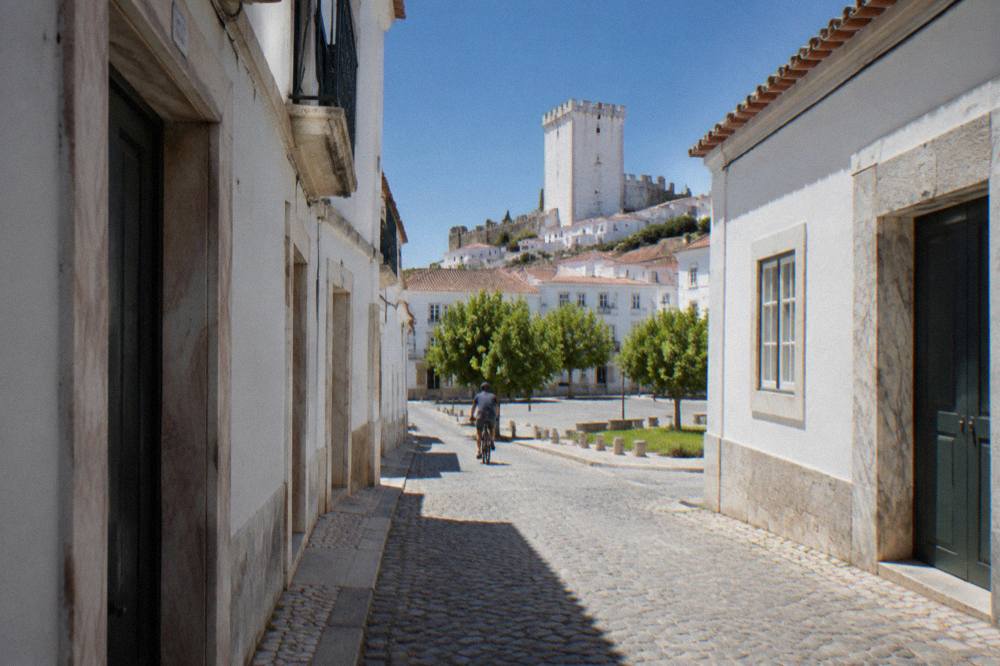
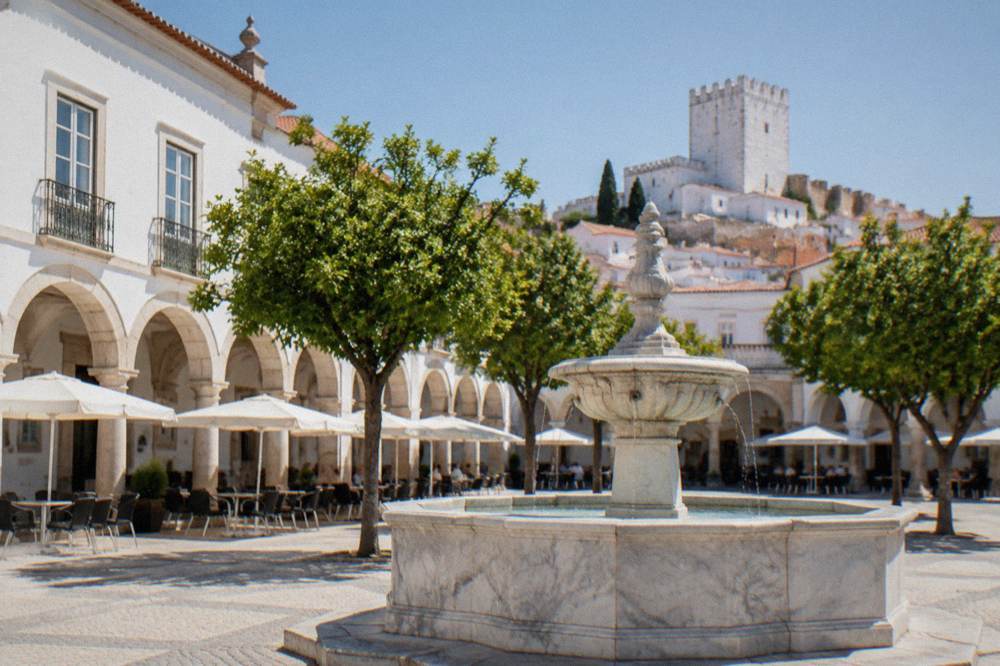
The essentials of Estremoz are the castle and its walled upper town, the marble-lined streets running down to the lower town, the main square with its fountain and arcaded buildings, and the views from the hilltop over the Alentejo plain towards Vila Viçosa and Elvas. None of these needs a ticket to be appreciated from the outside, and the whole set fits comfortably into a half-day of walking, which is why the town works as a morning, an afternoon or a full day depending on appetite.
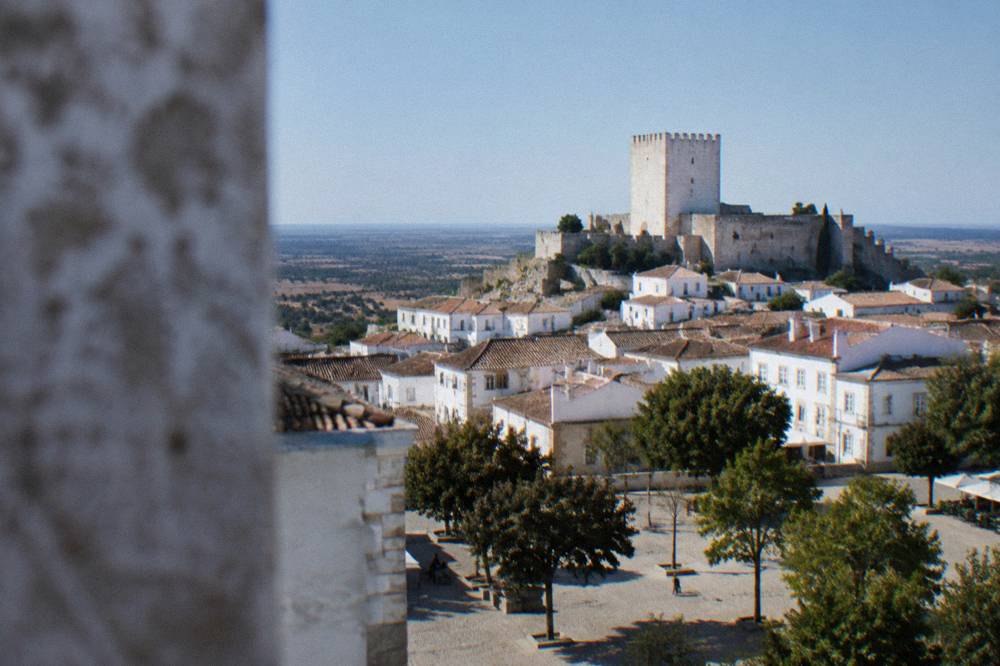
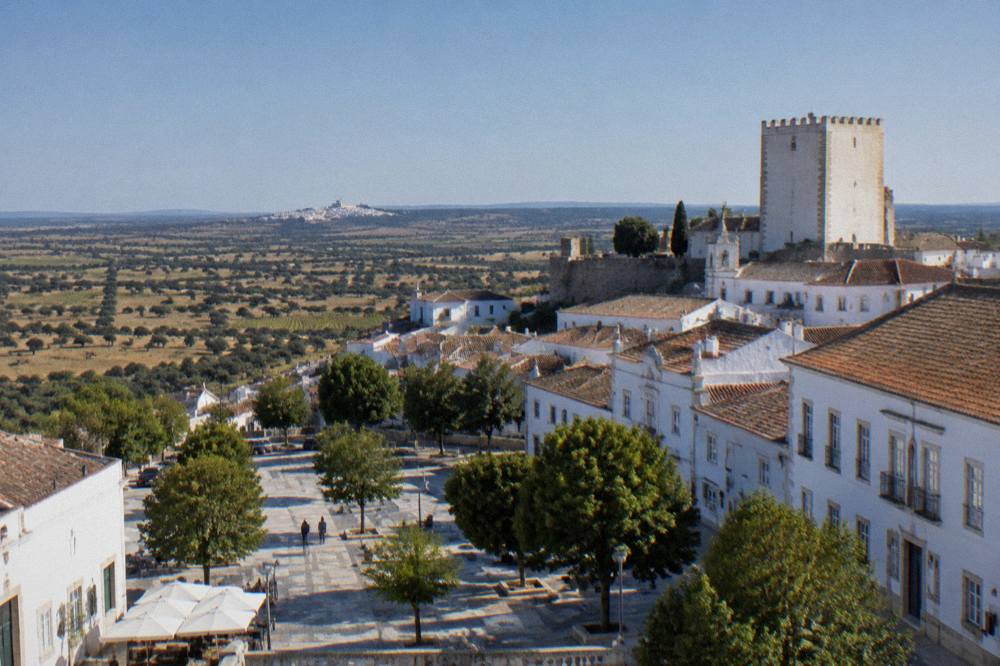
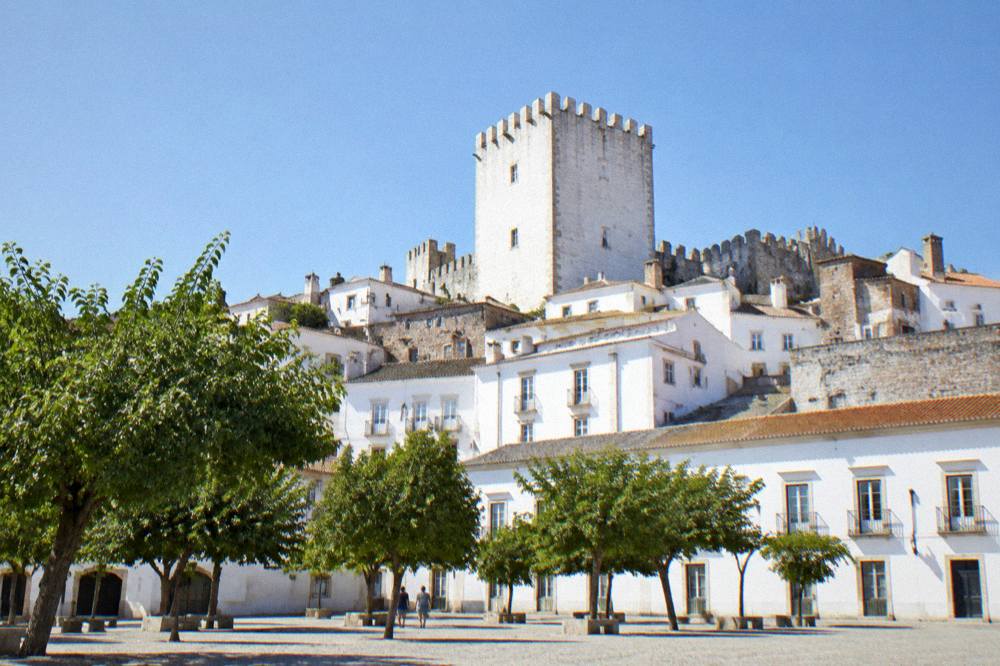
The castle quarter is the natural starting point. The hill of Estremoz has been fortified since the medieval period, and the surviving walls, towers and keep form the most complete high-town ensemble in this part of the Alentejo. The keep is occupied by a pousada, which means the interior is a hotel rather than a ruin, but the immediate surroundings, the ramparts and the gateways, are the reason most visitors climb: from the top of the hill the plain opens out in every direction, and on a clear day the white of the marble towns to the east is visible against the green and gold of the fields.
Below the walls, the town itself is the attraction. Estremoz's streets are an open catalogue of the local stone: window frames, corner stones, benches, church facades and the rims of fountains are all cut from the same pale marble, and the effect in afternoon light is the thing photographers come for. The lower town grew around the market function, and its squares and commercial streets still carry that busier, working character, in contrast to the quieter upper town. The municipal museum, housed in a former hospital building, holds the regional collection, but no verified hours or ticket price was available for it, so treat it as a maybe rather than a plan.
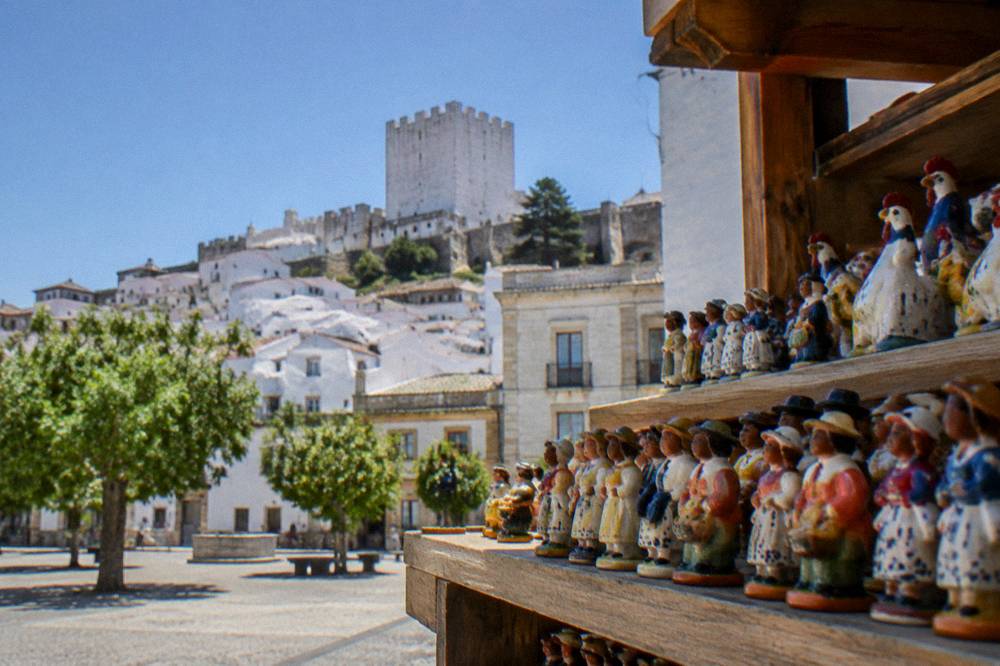
Two crafts define the shopping question in Estremoz. The painted clay figurines known as Rainha Santa figures are made in the town and sold in workshops around the lower streets, and they are the region's signature souvenir, small, light and genuinely local. Marble, unsurprisingly, is the other: from rough offcuts to polished objects, the stone is sold in several forms around town.
How Much Time Do You Need In Estremoz?
A half-day is enough to see the castle quarter, walk the marble streets of the lower town and take in the views, while a full day allows a long lunch, the crafts workshops and a detour to a neighbouring marble or wine town such as Borba or Vila Viçosa. Most travellers from Évora treat Estremoz as one half of a two-town day, pairing it with Vila Viçosa's ducal palace or Borba's wine estates, and that combination is the most satisfying use of the drive east.
The half-day version works like this: arrive in the morning, climb to the castle quarter first while the light is still low on the hill, walk the walls and the viewpoints, then descend slowly through the marble streets to the main square, and finish with the crafts shops before lunch. The full-day version adds the museum if it is open, a proper Alentejo lunch, which in this region is a slow affair built around bread, olive oil, cheese and pork, and then a second town: Vila Viçosa, about 15 minutes further on in the same marble belt, holds the ducal palace of the Bragança dynasty and is covered in detail on the Vila Viçosa day trip page.
The two-town day deserves a note, because it is the pattern most guided tours follow. The marble country is a corridor, not a set of scattered sights: Évora, then Borba, then Estremoz, then Vila Viçosa, then Elvas, roughly in a line heading east. A self-driving visitor can string any two or three of these together, and the distances between them are short, all inside the same district and the neighbouring one. The guided options, described further down this page, mostly run the same logic: one marble town, one quarry or workshop, one wine estate, back to Évora by evening.
For travellers arriving from further afield, Évora itself is the gateway. The rail connection into the region runs from Lisbon, and CP's timetable valid since 6 September 2026 lists six through Intercidades trains from Lisboa Oriente, arriving in Évora between about 1 hour 40 and 1 hour 45 after departure. The verified departures and arrivals are set out below; the weekday remarks in the CP timetable were not checked, so confirm the day of travel on cp.pt before relying on any single service.
| Lisboa Oriente departure | Évora arrival | Service |
|---|---|---|
| 07:02 | 08:47 | Intercidades |
| 09:02 | 10:45 | Intercidades |
| 09:58 | 11:40 | Intercidades |
| 13:35 | 15:13 | Intercidades |
| 17:02 | 18:41 | Intercidades |
| 19:02 | 20:46 | Intercidades |
How Do You Get From Évora To Estremoz?
Estremoz lies about 45 km east of Évora, reached by regional road across the Alentejo plain; the drive is short and simple on quiet roads, and a traveller without a car should either book a guided tour that includes transport or check the regional coach operator's own site for the current schedule before assuming a service.
The road is the straightforward part. The route leaves Évora heading east across the plain, passing through or near the wine town of Borba, and the whole run sits inside the Évora district until it reaches the Estremoz boundary. The Alentejo's roads are generally quiet outside the market days, and the landscape along the way, cork oaks, olive groves, vineyards and open fields, is part of the pleasure of the trip rather than an obstacle to it. No verified drive time for the Évora to Estremoz journey is available, so none is printed here; "about 45 km" is the only figure the facts support.
Public transport is where honesty matters. The verified transport facts for this region cover the Lisbon to Évora rail corridor in detail, and they cover nothing equivalent for Évora to Estremoz: no coach timetable, no fare, no frequency. A traveller who wants the eastern Alentejo without a car and without timetable risk has a third option, and it is the one this page recommends most often: a guided day tour from Évora that includes Estremoz or the marble country, with transport handled.
For context, the rail gateway into the region is well documented. The CP fare table valid for 2026 prices the Lisboa Oriente to Évora Intercidades journey at 13.90 EUR in second class and 18.50 EUR in first class, and the six through trains listed above are the backbone of the region's rail access. Everything east of Évora, however, including Estremoz, Vila Viçosa, Borba and Elvas, is road country, which is why the guided-tour sector around Évora is so active in exactly this corridor.
| Day-trip destination from Évora | Rounded distance | Character of the day |
|---|---|---|
| Arraiolos | about 20 km | Historic village, carpets and crafts |
| Monsaraz | about 40-45 km | Walled hill village above the Alqueva lake |
| Estremoz | about 45 km | Marble town, castle and market tradition |
| Vila Viçosa | about 60 km | Ducal palace and marble quarries |
| Elvas | about 80 km | Fortified border city |
| Marvão | about 120 km | Mountain-top walled village |
Estremoz Marble: What The Town Is Known For?
Estremoz is the name of both a town and a marble: the region around it has been quarried for centuries, and the pale stone cut here lines the town's own streets, doorframes, fountains and church facades, as well as being exported across Portugal and beyond. The quarries themselves sit in the surrounding countryside rather than in the town, and the marble belt runs west towards Borba and Vila Viçosa, making the whole corridor, not just the town, the real subject of a visit.
Marble shapes Estremoz the way granite shapes northern Portuguese towns: it is not decoration added later, it is the building material of the place. Walking the lower town, the stone appears first in the practical elements, the kerbs, the steps, the benches, the rims of the public fountains, and then in the showier ones, the carved doorframes of the older houses and the facades of the churches. The uniformity of the material gives the town a calmer, more coherent look than many Alentejo towns, where mixed stone and painted render are the norm. Everything else covered here is indexed on Évora Travel Guide.
The quarries are the industrial half of the story. They lie in the countryside around Estremoz and its neighbouring towns, and they are working industrial sites, not visitor attractions in the museum sense. No verified quarry visiting hours, tour availability or workshop details were available for this page, so the reliable way to see the extraction landscape is either from the road on the drive between the towns, or through a guided tour whose listing states what access it includes. The two marble tours in the region's guided offering, both based in Vila Viçosa at the eastern end of the belt, are described in the tour section below.
The craft tradition is the third layer. Estremoz's painted clay figures are the town's other signature, and they are made and sold locally, in small workshops rather than factories. The figures depict the Rainha Santa, Queen Isabel of Portugal, among other regional subjects, and the tradition is recognised as regional craft. For a visitor, the workshops are the most accessible face of the town's making culture: they are on the ordinary streets, they are open in ordinary shopping hours, and they sell objects that are genuinely of the place, light enough to carry and cheap enough to buy without ceremony.
What And Where To Eat Around Estremoz?
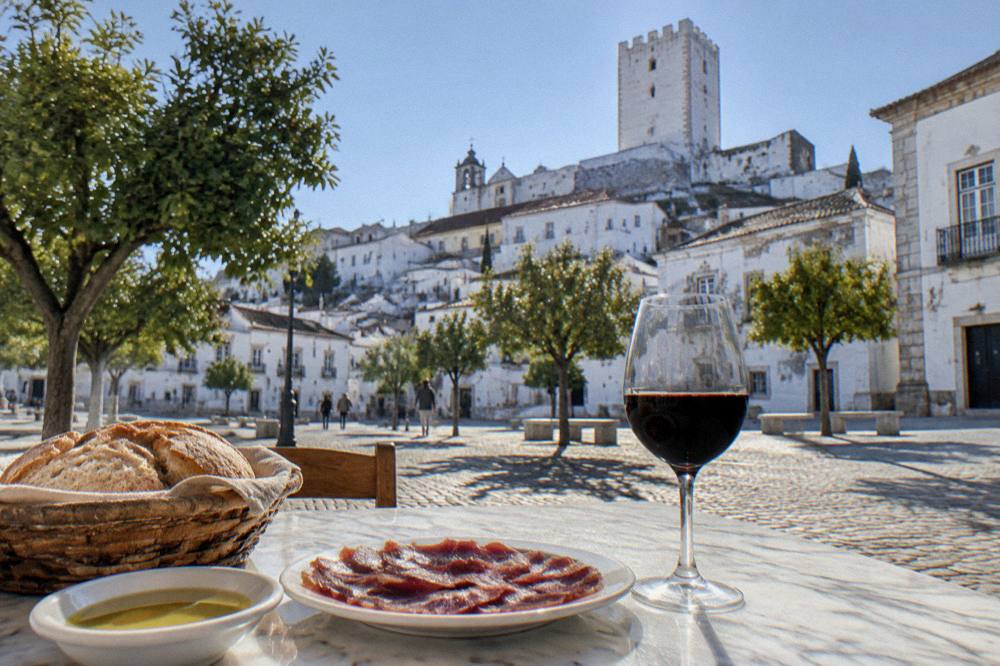
The eating around Estremoz is Alentejo regional cooking: bread-based soups, pork in its many cured and slow-cooked forms, sheep and goat cheese, olive oil from the surrounding groves and red wine from the same corridor that produces the marble, and the honest planning advice is that this is a slow-lunch region rather than a quick-snack one, so build the day around one proper meal rather than three short stops. No specific restaurant, tavern or winery details were verified for this page, so none are named.
The Alentejo table is one of Portugal's most distinctive. The region's cooking is built on the agriculture of the plain: bread, olives, pigs, sheep and grapes, with the pork tradition particularly deep. A typical regional meal runs from bread and olive oil and cheese at the start, through a soup or a slow-cooked main, to a dessert of the egg-and-cinnamon school, and the portions are generous. In the marble corridor, the wine glass alongside is likely to hold a red from the same district, since the vineyards sit between the towns.
The planning point worth making is about time. Lunch in the Alentejo, outside the biggest towns, still follows something closer to the old rhythm than the coastal cities do: kitchens open at midday, the meal is unhurried, and the afternoon quiet that follows it is real. A day trip that tries to compress Estremoz, a long lunch and a second town into a tight window will feel rushed; a day trip that accepts the rhythm, one town properly, one meal properly, and a second town only if the clock allows, will feel like the Alentejo. The Évora food guide pages cover the regional table in more depth for travellers who want the full picture.
For the market side, Estremoz's weekly market is a genuine regional event, and if the day of the visit coincides with it, the food stalls around it are the best expression of the local produce, but as noted above, no verified schedule exists for it in the facts available to this page. The safe formulation is to check the municipal notice for the week of travel. If the market does not coincide, the shops of the lower town, bakeries, grocers and wine sellers, carry the same products in calmer form.
When Is The Best Time Of Year To Visit Estremoz?
The most comfortable months for a day trip to Estremoz are spring and autumn, when the Alentejo plain is mild enough for walking the castle hill and the marble streets in the middle of the day; summer is genuinely hot, with July and August averaging 33.3 C and 33.5 C respectively as mean daily maximums in the 1991-2020 IPMA normals for the Évora station, and winter is quiet, cool and often wet, with November and December the rainiest months on the same record.
The climate record for the region comes from the IPMA 1991-2020 normals for the Évora station, which sits on the same plain and is the verified reference for the whole Central Alentejo, Estremoz included. The headline figures are these: the mean maximum in July is 33.3 C and in August 33.5 C, the plain records 31.9 days a year at 35 C or more, and the record maximum at the station is 45.4 C, set on 4 August 2018. Those are not abstract numbers for a day trip that involves climbing a hill in the early afternoon: in July and August, the walking part of an Estremoz day needs to happen before midday, with the middle hours given to lunch under shade.
| Month | Mean max (C), 1991-2020 | Mean min (C), 1991-2020 | Precipitation (mm) | Days at 30 C or more |
|---|---|---|---|---|
| March | 18.7 | 6.9 | 60.8 | 0.0 |
| April | 20.7 | 8.5 | 62.1 | 0.3 |
| May | 25.0 | 10.9 | 46.6 | 5.5 |
| June | 30.2 | 13.8 | 10.6 | 15.1 |
| July | 33.3 | 15.6 | 2.7 | 23.7 |
| August | 33.5 | 16.0 | 6.0 | 25.0 |
| September | 29.5 | 14.6 | 33.9 | 13.9 |
| October | 24.1 | 12.3 | 81.5 | 2.9 |
The shoulder seasons are the sweet spot for a different reason: the light. The Alentejo plain in April, May, September and October is warm without being punishing, and the low afternoon light of the shoulder months is exactly what the marble streets of Estremoz deserve. Rain is not a reason to avoid the region in spring or autumn, but it is a reason to check the forecast: October averages 81.5 mm across the month on the 1991-2020 record, against 2.7 mm in July, so the odds shift sharply with the season.
Winter is the quiet option. The mean maximum in January is 14.1 C and the mean minimum 4.5 C, which is cold enough that the castle hill at dusk is no place to linger, but the lower town's cafes and the region's slow lunches come into their own. The trade-off is daylight: winter days are short, and a two-town itinerary that works easily in June is tight in December. One day in Évora plus one town, rather than two, is the winter pattern.
Is Estremoz Worth The Trip Compared With Other Alentejo Day Trips?
Estremoz earns its place on a multi-day Évora stay as the marble and crafts entry in a list that also includes Monsaraz for the walled village, Elvas for the fortified border city, Arraiolos for the carpets and Vila Viçosa for the ducal palace, and the choice between them is about appetite rather than hierarchy, since each offers a different face of the same region.
Travellers who care about stone, crafts and working market towns should rank Estremoz high; travellers chasing views and water should head for Monsaraz and the Alqueva.
The comparison is worth making honestly because the eastern Alentejo is rich in day trips and most visitors have time for only two or three. Monsaraz, about 40-45 km south-east of Évora, is the most photographed: a tiny walled village above the great artificial lake of the Alqueva, and the Monsaraz day trip page covers it in full. Elvas, about 80 km east, is the border fortress, grander and stonier than Estremoz, and the Elvas day trip page covers that. Arraiolos, about 20 km away, is the carpet town, closest to Évora and the easiest half-day of the set.
Estremoz's particular claim is authenticity of function. It is a working regional town whose attractions, the castle, the marble, the crafts, the market, exist because of the town's real economic life, not because of tourism. That shows in the character of a visit: the lower town is busier, more commercial and less curated than the honey-stone showpieces of the region, and some travellers will find that a virtue and others a disappointment. The marble is the constant: no other town in the corridor displays the stone so completely in its ordinary streets.
For itinerary planning, the pairings that work are Estremoz with Vila Viçosa, the two marble towns, a natural single day; Estremoz with Borba, marble plus wine estates, the shortest combined loop; and Estremoz alone with a long lunch, for travellers who prefer one town done properly. The one day in Évora and Évora day trip from Lisbon pages cover the other end of the planning question, for travellers still deciding how to split days between the capital of the district and its surroundings.
Which Guided Tours Cover Estremoz And The Marble Country?
The guided offering around Estremoz centres on two products: a dedicated walking tour of Estremoz itself, from $28.67 per person and rated 4.8 from 19 reviews, and two marble tours based in Vila Viçosa at the eastern end of the belt, from $28.14 and from $28.67 per person respectively, the latter rated 4.9 from 324 reviews, all bookable through the operator's live listing with the timing and inclusions stated there.
The Estremoz walking tour is the direct answer for a visitor whose target is the town itself. The listing describes a heritage walk of Estremoz, from $28.67 per person, rated 4.8 from 19 reviews, and it exists precisely because the town rewards explanation: the marble, the castle quarter and the market tradition all carry history that a self-guided visitor walks past without noticing. For a traveller without a car, the practical question is transport to Estremoz, and the listing states what is and is not included, so read it before booking.
The marble tours sit at the other end of the corridor. Vila Viçosa, about 60 km from Évora, is where the quarry landscape and the ducal palace sit together, and the two marble tours based there approach the stone from different angles: one is a general marble tour of the town, from $28.14 per person and rated 4.8 from 82 reviews, and the other, from $28.67 per person and rated 4.9 from 324 reviews, frames the marble trail from landscape to archaeology. Either pairs naturally with an Estremoz stop on a self-drive day, since the towns are minutes apart.
The comparison table below sets the three options side by side with the figures from each tour card. Prices are in US dollars as the operators publish them.
| Tour | Base | Price per person | Rating | Duration |
|---|---|---|---|---|
| Walking Tour in Estremoz | Estremoz | from $28.67 | 4.8 from 19 reviews | See card |
| Marble Tour in Vila Viçosa | Vila Viçosa | from $28.14 | 4.8 from 82 reviews | See card |
| Marble Tour in Vila Viçosa (Marble Trail, Landscape to Archaeology) | Vila Viçosa | from $28.67 | 4.9 from 324 reviews | See card |
For travellers combining the marble country with wine, the wider Évora tour offering includes wine-and-cork tours from Évora and Monsaraz-and-wine days, and the Évora day trip from Lisbon page covers the Lisbon-start products that visit Évora itself. The marble corridor, however, is best served by the three options above and by self-driving, and a traveller deciding between them should weigh one thing: the walking tour explains a town, while the marble tours explain an industry and a landscape, and the two together make the fullest single day the corridor allows.
What Does A Realistic Estremoz Day Look Like?
A realistic day starts from Évora in the morning, reaches Estremoz by late morning, gives the castle quarter and the marble streets two unhurried hours, takes a long regional lunch in the lower town, and then either returns to Évora directly or adds Vila Viçosa or Borba on the way back, with the whole day fitting inside daylight in every season except midwinter, when the second town should be dropped.
The morning belongs to the hill. Arriving before the heat and before the lunch rush means the castle quarter is quiet, the viewpoints are clear, and the descent through the marble streets can be taken slowly, stopping at the crafts workshops as they open. The middle of the day belongs to the table: this is the Alentejo, and the regional lunch is not an interruption to the itinerary, it is one of the reasons for the trip. The afternoon belongs to the second stop or to the drive back, and the drive back, it should be said, is itself part of the day: the plain at the end of the afternoon, with the light low across the cork oaks, is the image most visitors carry home from the region.
For travellers pairing the day with Évora's own sights, the split works like this. Évora's headline monuments, the Sé de Évora at 5.00 EUR for the complete visit, the Capela dos Ossos at 7.00 EUR adult entry and the Museu de Évora at 8 EUR, need the better part of a day between them, so the Estremoz day should be a separate day, not an add-on. The Évora Ticket, at 8 EUR for one day, 10 EUR for two and 12 EUR for three, covers a different network of sites and does not include those three headline monuments, so it is not a shortcut around the question either. The verified prices for Évora's own sights are set out below for planning.
| Évora sight | Verified price | Notes |
|---|---|---|
| Sé de Évora, complete visit | 5.00 EUR | Cathedral, cloister, roof terrace, museum; children to 12 free |
| Capela dos Ossos / Igreja de São Francisco | 7.00 EUR adult | Youth to 25 and seniors over 65 5.00 EUR; family 15.00 EUR |
| Museu de Évora | 8 EUR adult | Closed Mondays |
| Évora Ticket | 8 EUR one day, 10 EUR two days, 12 EUR three days | Free to age 12; does not include the three sights above |
The last practical point is about what to carry. The castle hill is cobbled and steep in places, so the footwear question answers itself. Summer days need water and a hat, on the strength of the 33 C-plus mean maximums of July and August in the 1991-2020 record, and every visitor needs a little space in the bag, because the marble and the clay figurines of Estremoz are the region's most portable souvenirs, and the workshops of the lower town make resisting them harder than it sounds on paper.
Common Questions About Estremoz
How far is Estremoz from Évora?
Estremoz lies about 45 km east of Évora, across the Alentejo plain, on a route that passes through or near the wine town of Borba. No verified drive time for the journey exists, so plan it as a short regional hop rather than against a fixed number of minutes.
What is Estremoz known for?
Estremoz is known for three things: its white marble, which lines the town's streets, doorframes and fountains and is quarried in the surrounding countryside; its castle and walled upper town; and its painted clay figurines, the Rainha Santa craft tradition associated with the town. Its weekly regional market is also part of its identity.
Can you visit Estremoz without a car?
Yes, but with planning. No verified coach timetable or fare for the Évora to Estremoz journey was available, so check the regional operator's own site for the day of travel, or book a guided tour that includes transport. The dedicated walking tour of Estremoz covers the town itself; getting there is the part to arrange in advance.
Is Estremoz worth visiting compared with Vila Viçosa?
The two are different faces of the same marble corridor. Estremoz is the working market town with the castle hill and the crafts workshops; Vila Viçosa, about 60 km from Évora, is the ducal palace town at the heart of the quarry landscape. The strongest day combines both, since they lie minutes apart at the eastern end of the belt.
How hot is Estremoz in summer?
The verified climate record for the region is the IPMA 1991-2020 normals for the Évora station, which show a July mean maximum of 33.3 C and an August mean maximum of 33.5 C, with 31.9 days a year at 35 C or more on the same record. Plan summer walking for the morning and give the middle of the day to lunch in the shade.
What should you buy in Estremoz?
The town's signature purchases are the painted clay Rainha Santa figurines made in local workshops, and small marble objects cut from the regional stone. Both are light, portable and genuinely of the place, and both are sold in the ordinary shops of the lower town rather than in dedicated tourist outlets.