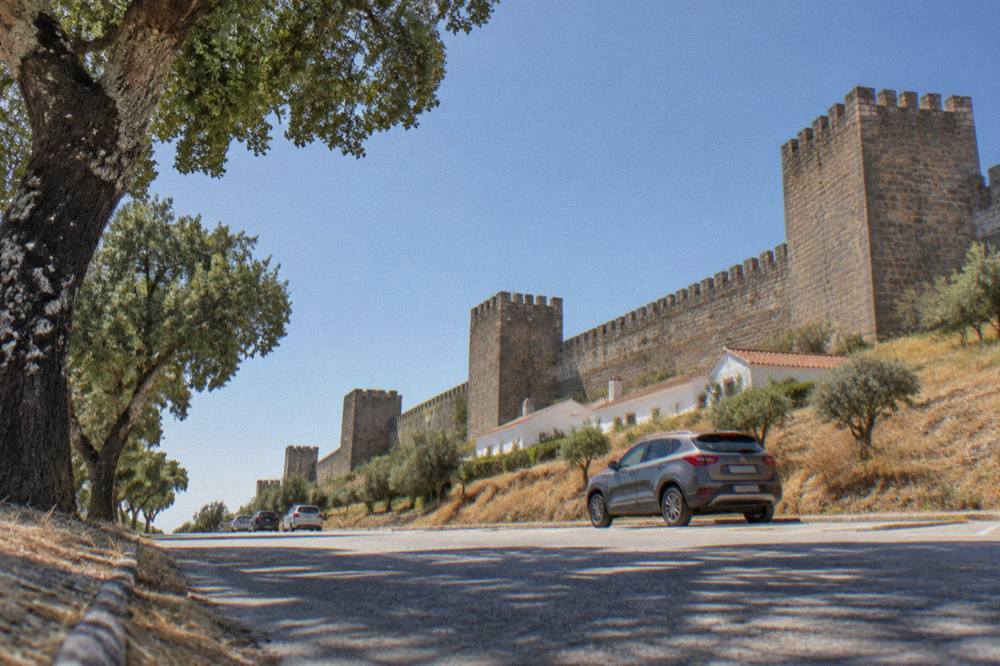
Marvao Day Trip From Évora
Marvão sits about 120 km north of Évora on the Serra de São Mamede, a walled village whose castle looks out over the Alentejo plain toward Spain. This guide covers what the place is, how the day works, and what to check before setting out.
Short answer
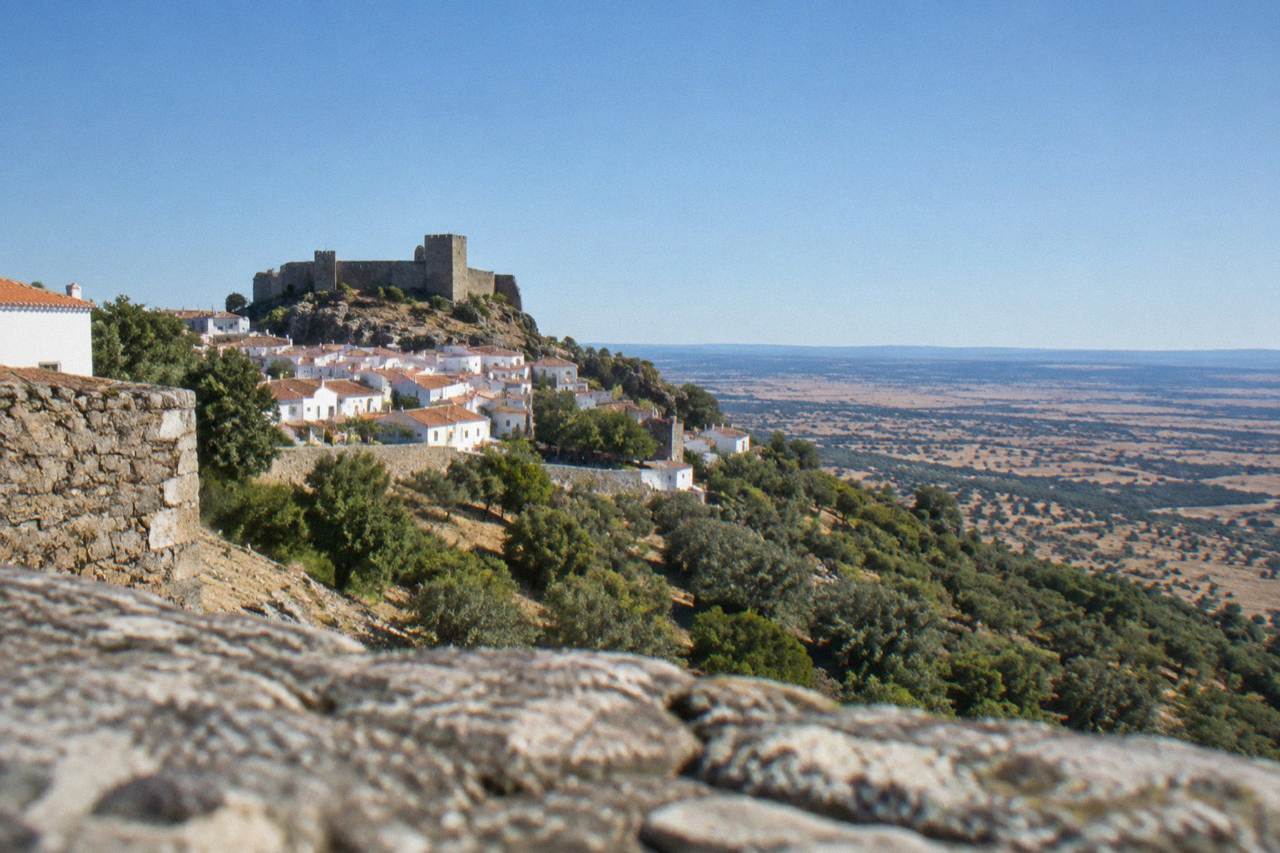
Marvão is a small walled village about 120 km from Évora, on a granite ridge of the Serra de São Mamede near the Spanish border. No train, bus timetable, castle hours or entry price for the journey or the site was verified, so plan the transport yourself and check the castle's notice before you go. The reward is one of the most dramatic settings in the Alentejo.
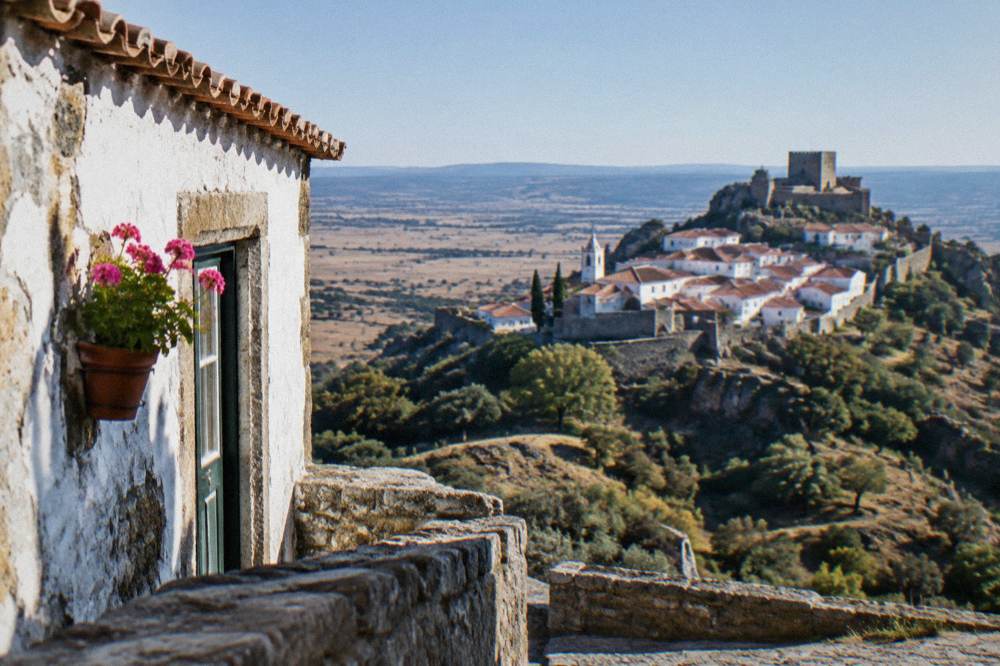
Évora, the inland capital of the Alentejo in Portugal, sits on a hot, flat plain of cork oak and wheat, and the single biggest change of scenery available on a day trip from it is Marvão. The village stands about 120 km to the north, piled on a narrow granite ridge of the Serra de São Mamede, wrapped in a complete circuit of medieval walls and topped by a castle that looks east across the border country toward Spain. Where Évora is golden limestone and level streets, Marvão is grey stone, steep lanes and long views. The contrast is the whole reason to spend a day there.
Why Does Marvão Make A Good Day Trip From Évora?
Marvão is a walled hilltop village about 120 km north of Évora, standing on the Serra de São Mamede close to the Spanish border. Its castle and its unbroken circuit of medieval walls give it one of the most theatrical settings of any village in the Alentejo. A day trip there trades the flat plain around Évora for a granite ridge with views in every direction, and that contrast is exactly what makes the long drive worthwhile.
The Alentejo is a region of horizons. Around Évora the land lies open and low, and the city's own monuments, the Templo Romano, the Sé, the Capela dos Ossos, all sit within walking distance of each other on ground that barely rises. Marvão belongs to a different Alentejo entirely, the northern one, where the Serra de São Mamede lifts the landscape into wooded hills and the air feels a step cooler. The village is small enough that its lanes, gates and viewpoints can be walked in a morning, yet the setting is grand enough to fill a camera card.
The municipal and regional character of the place is the draw rather than any single exhibit. There is no equivalent of a museum ticket queue to plan around, and the experience is mostly outdoors: walls, castle, church, cistern, viewpoints, and the walk up through the village itself. Visitors who enjoy Évora for its density of history tend to enjoy Marvão for the opposite quality, space and altitude, and the two make a natural pairing in one Alentejo itinerary.
What Is Marvão And Where Does It Sit?
Marvão is a fortified village in the Portalegre district, on the northern edge of the Alentejo, perched on a ridge of the Serra de São Mamede a short way from the Spanish frontier. Its castle anchors one end of a settlement enclosed by walls with two main gates. The neighbouring towns of Castelo de Vide and Portalegre lie in the same hill country, which makes Marvão the natural anchor for a loop through the Serra rather than a single stop.
The name and the fortress go together. A castle has stood on the ridge since the medieval period, guarding a border crossing between Portugal and León, and later Portugal and Castile, and the village grew inside the walls below it. The streets climb in a compact spiral from the lower gate toward the castle entrance, past whitewashed houses, a church and a cistern, and the whole ensemble is small enough that getting lost in it is part of the pleasure.
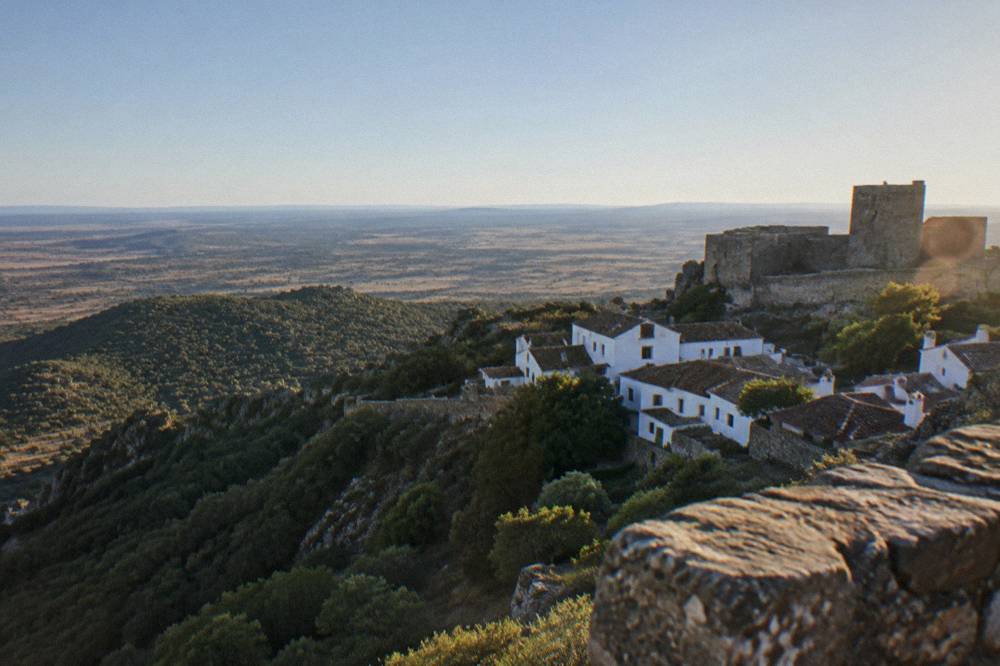
The border position shaped everything about the place. From the battlements the eye travels east over Spanish territory and west and south over the Alentejo plain stretching back toward Évora. The ridge is wooded, mostly with chestnut and oak, which is unusual for a region better known for cork plains, and the difference is visible on the approach road long before the walls appear.
For travellers basing themselves in Évora, Marvão marks the far edge of the practical day-trip range. It is the longest of the rounded distances in the region's day-trip set, and it rewards an early start. Anyone planning a wider circuit of the Alentejo can read the best day trips from Évora overview for how the other options compare.
How Do You Get From Évora To Marvão?
No train, bus timetable, driving time or route detail between Évora and Marvão was verified for this guide, so none can be stated. The distance is about 120 km by road, heading north through the Alentejo toward the Serra de São Mamede. Travellers should plan their own transport, check current timetables with the operators directly, and confirm road conditions before setting out, because the final approach climbs through hill country rather than plain.
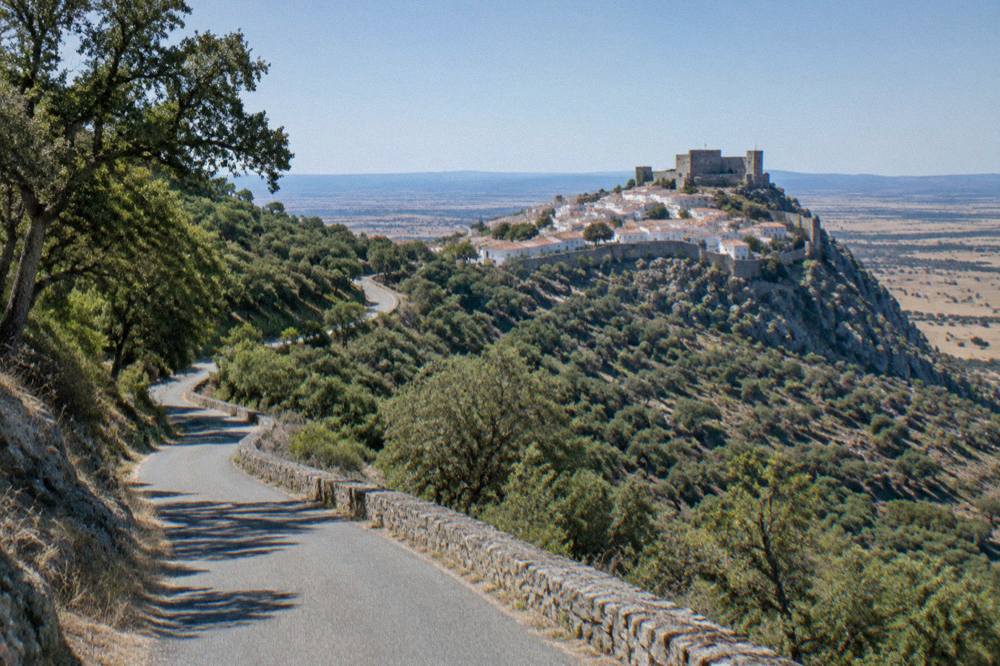
What can be said with confidence is the geography. The journey leaves Évora's plain and enters progressively higher, greener country as the Serra de São Mamede approaches, and the village itself sits at the top of a climb. That is the practical difference from closer trips such as Estremoz or Arraiolos: the destination is a summit, not a square. Allow more of the day than a nearer trip would consume, and treat the drive as scenery rather than dead time.
Public transport on this specific route cannot be advised from verified figures, and inventing a bus time would help nobody. Check the operator's own timetable before committing to a car-free plan, and have a fallback, because rural Alentejo services are thin. Most visitors to the region reach Marvão with a hire car or as part of a guided excursion, and both approaches leave from Évora or from Lisbon.
For context, visitors who reach Évora by train from Lisbon are using the CP Intercidades service, whose timetable valid since 6 September 2026 lists six through trains from Lisboa Oriente, arriving in Évora after about 1 hour 40 to 1 hour 45 minutes. The fare is 13.90 EUR in second class and 18.50 EUR in first class, per CP's 2026 price table. Those figures belong to the Lisbon to Évora leg only, not to anything north of Évora.
| CP Intercidades, Lisboa Oriente to Évora | Departure | Arrival |
|---|---|---|
| Service 1 | 07:02 | 08:47 |
| Service 2 | 09:02 | 10:45 |
| Service 3 | 09:58 | 11:40 |
| Service 4 | 13:35 | 15:13 |
| Service 5 | 17:02 | 18:41 |
| Service 6 | 19:02 | 20:46 |
Timetable valid since 6 September 2026; check cp.pt for weekday remarks and changes before travelling.
What Do You See In Marvão Castle And The Village?
The visit divides into three parts: the castle at the top, the walled village below it, and the viewpoints along the walls. The castle offers battlements, towers and a panorama over the border country. The village offers steep lanes, a church, gates and cistern. No opening hours or entry prices for the castle were verified, so check the site's own notice before planning the day around a fixed schedule.
The castle is the reason the village exists. A fortress of this kind, on a ridge this narrow, was built to watch a frontier, and the walk along its walls is still essentially that: a patrol of the horizon. To the east lies Spain, close enough that the border feels less like a line than a seam. To the south and west the land falls back toward the Alentejo of Évora, the plain that this whole day trip exists to escape for a few hours.
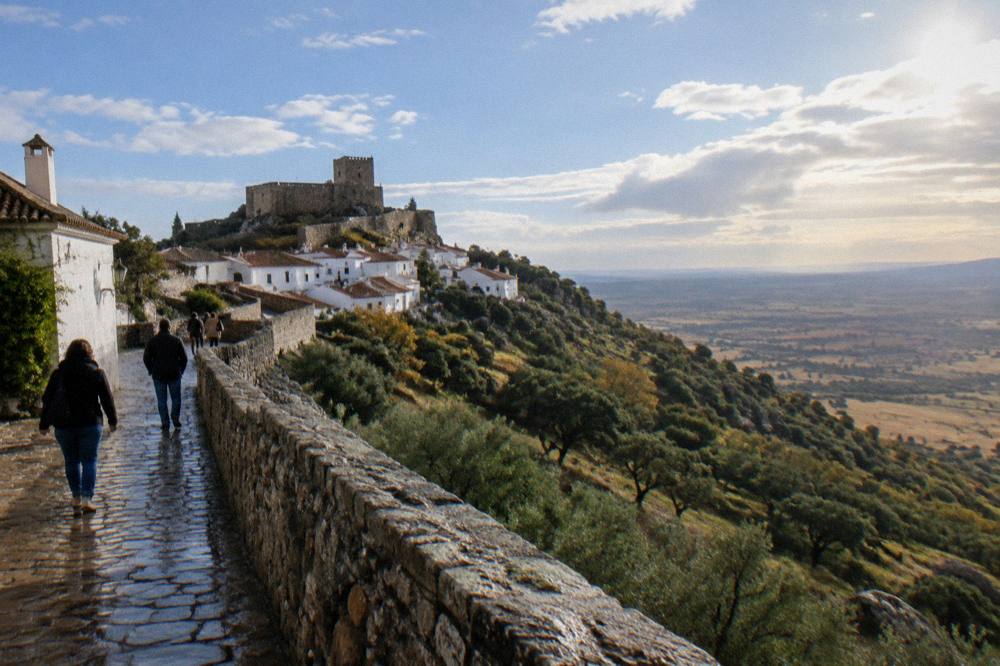
Below the castle, the village is a single compact climb. The lanes are cobbled and steep, the houses whitewashed with granite trim, and the two main gates frame the settlement at its top and bottom edges. There are small squares, a church, and the quiet of a place whose permanent population is small. The pleasure of it is unhurried: a coffee near the lower gate, a slow ascent, a pause at every opening in the walls.
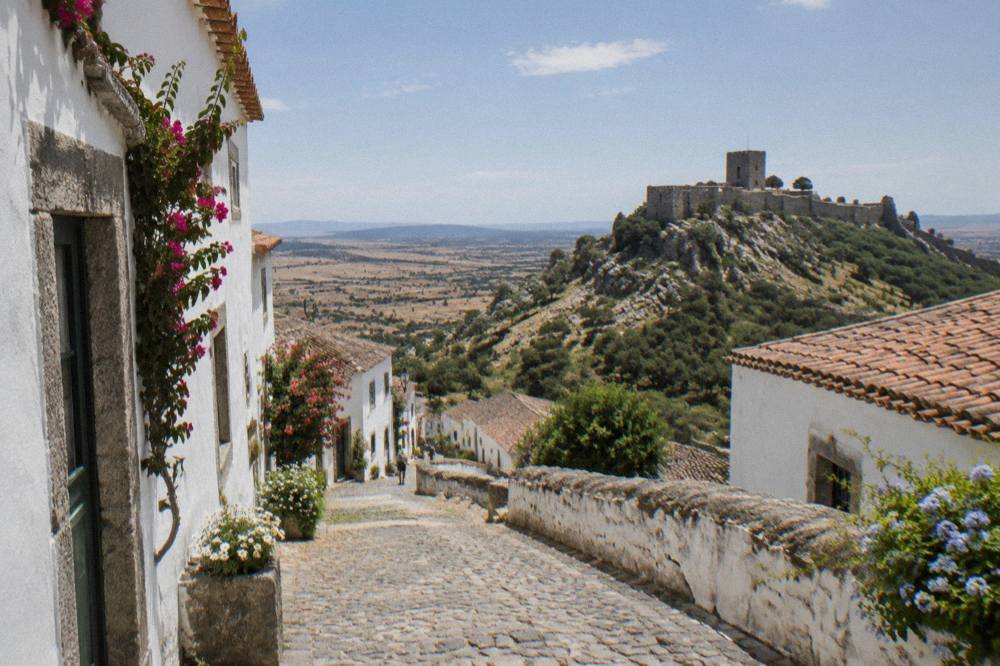
Because the visit is mostly outdoors and mostly free-ranging, it suits travellers who like to set their own pace. It suits photographers in particular: the light on white walls and grey stone changes through the day, and the long views from the battlements give wide-angle work that the tight streets of Évora's historic centre cannot. Readers planning the Évora half of a wider trip will find the one day in Évora itinerary a good counterweight to a Marvão day.
What Does The Serra De São Mamede Look Like?
The Serra de São Mamede is the greenest corner of the Alentejo, a ridge of granite hills running near the Spanish border with woods of chestnut and oak rather than the cork plains around Évora. Its slopes hold small villages, streams and a cooler, damper climate than the plain. The range is the reason Marvão looks and feels so different from the city a day trip starts from.
Approaching from the south, the change announces itself gradually. The wheat and cork give way to scrub, then to woods, and the road begins to climb in earnest. By the time the walls of Marvão appear, the landscape has swapped palettes: the gold of the Évora plain for the green and grey of the hills. The contrast is not subtle, and it is the single best argument for making this the longest day trip in the set. The full index of guides sits on Évora Travel Guide.
The serra also changes the weather arithmetic. Hill country holds cloud and rain that the plain sheds, and IPMA's 1991 to 2020 normals for the Évora station, the nearest verified climate series, already show a real winter in the Alentejo: December averages 85.1 mm of rain across 8.7 days with 1 mm or more. Expect the serra to run damper and cooler than even those figures, and pack accordingly.
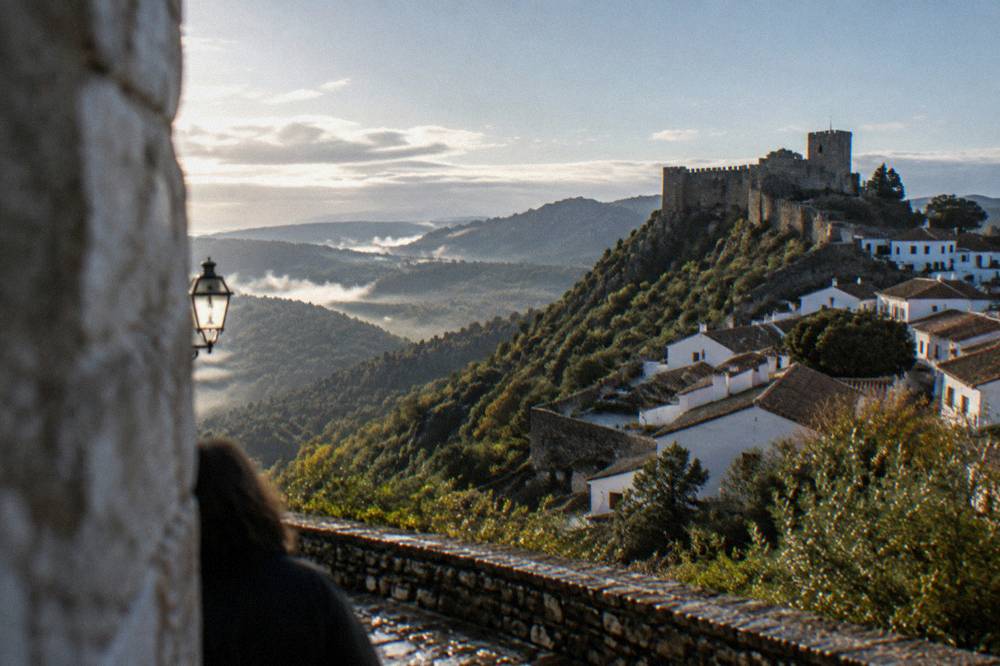
For visitors whose interest in the Alentejo runs to landscapes rather than monuments, the serra is the region's surprise. Most first-time travellers expect the whole of the Alentejo to look like the Évora plain, and the northern hills quietly correct that. A day built around Marvão can include stops on the approach simply to look, and the drive itself becomes part of the attraction rather than the cost of reaching it.
Which Towns Pair Well With Marvão On The Same Day?
Castelo de Vide and Portalegre are the two natural pairings, both lying in the same hill country of the Serra de São Mamede. Castelo de Vide is a spa town of fountains and a medieval Jewish quarter; Portalegre is the district capital with a cathedral and tiled houses. Combining two of the three makes a full loop, while trying to add a third risks spending the whole day in the car.
Castelo de Vide sits close to Marvão within the serra, and the two complement each other neatly: one hilltop fortress village, one fountain town of steep streets and small squares. A morning in Marvão and an afternoon in Castelo de Vide, or the reverse, is the classic pairing, and it keeps the driving within the hills rather than backtracking to the plain. The Castelo de Vide day trip guide covers that town in detail.
Portalegre, the capital of the district, is a larger, lower town with a different rhythm, worth it for travellers who want a proper lunch stop and a cathedral rather than a second set of walls. The Portalegre day trip page handles it separately. Going north for the day does not mean ignoring the nearer options either: Estremoz with its marble and castle, or Elvas with its border fortifications, sit on the eastern side of the region and can anchor a different day.
The honest planning advice is to resist doing everything. The serra's roads are good but slow by plain standards, and the pleasure of the day is standing on walls, not clocking towns. Two stops done slowly beat three done at a trot, and Marvão's views deserve the unhurried end of the day's attention. Travellers who want a second opinion on how the region's day trips stack up can start from the best day trips from Évora overview.
When Is The Best Time Of Year For A Marvão Day Trip?
Spring and autumn are the best seasons, and the verified climate numbers explain why. IPMA's 1991 to 2020 normals for the Évora station show July and August averaging 33.3 C and 33.5 C as mean daily maxima, with 31.9 days a year reaching 35 C or more. April and October sit far lower, at mean maxima of 20.7 C and 24.1 C, and the hill country of the Serra de São Mamede makes those shoulder months the comfortable window for climbing walls and lanes.
Summer in the Alentejo is a serious business. The record for the Évora station stands at 45.4 C, set on 4 August 2018, and while the serra runs cooler than the plain, a July ascent of Marvão's steep streets is a hot undertaking. Anyone travelling in the high summer window should plan the climb for the morning, carry water, and treat the afternoon as a long shaded lunch.
Winter is the quiet, atmospheric alternative. December through February brings the year's rain, 85.1 mm, 85.1 mm counting December alone against January's 68.6 mm in the Évora normals, and mist on a walled hilltop is a memorable sight for travellers who do not mind the damp. The trade is fewer daylight hours and a chance of low cloud swallowing the views, which for a panorama-driven destination is a real cost.
| Month (IPMA 1991-2020 normals, Évora station) | Mean temp | Mean max | Mean min | Rain |
|---|---|---|---|---|
| April | 14.6 C | 20.7 C | 8.5 C | 62.1 mm |
| July | 24.5 C | 33.3 C | 15.6 C | 2.7 mm |
| August | 24.7 C | 33.5 C | 16.0 C | 6.0 mm |
| October | 18.2 C | 24.1 C | 12.3 C | 81.5 mm |
Figures are the 1991 to 2020 averages for the Évora station; the Serra de São Mamede runs cooler and damper than the plain.
How Does Marvão Compare With Évora'S Other Day Trips?
Marvão is the longest of the standard day trips from Évora, at about 120 km, and the only one whose destination sits on a wooded mountain ridge. Monsaraz lies about 40 to 45 km away above a lake plain, Estremoz about 45 km away on the marble east, Vila Viçosa about 60 km, Elvas about 80 km. Marvão trades proximity for drama, and that is the choice a traveller is making.
The rounded distances tell most of the story. Everything closer than Marvão can be done with a later start and a lazier rhythm; Marvão cannot. It is the trip for a visitor with a spare full day, a car or a guide, and an appetite for scenery, and it is the wrong trip to squeeze into an afternoon gap between monuments in Évora.
| Day-trip destination from Évora | Rounded distance | Character |
|---|---|---|
| Arraiolos | about 20 km | Carpet-making hill village |
| Monsaraz | about 40-45 km | Walled village above the Alqueva lake country |
| Estremoz | about 45 km | Marble town with a castle |
| Vila Viçosa | about 60 km | Ducal seat and marble quarries |
| Elvas | about 80 km | Fortified border city |
| Marvão | about 120 km | Walled mountain village and castle |
Distances are rounded estimates; no drive times were verified for any of these routes.
The comparison is also one of landscapes. Monsaraz, covered in its own day trip guide, gives water and horizon; Elvas gives military geometry; Marvão gives altitude and forest. A traveller who has already seen the plain's golden towns will find Marvão the most distinct experience on the list, and a traveller still deciding between the region's options should weigh whether the drive is the attraction or the obstacle.
What Should You Check Before You Go?
Three things need checking ahead of a Marvão day: the castle's current opening arrangement, your transport, and the weather. No castle hours or entry prices were verified for this guide, no bus or train service between Évora and Marvão could be confirmed, and hill weather shifts faster than plain weather. Check the site's own notice, confirm timetables with operators directly, and read a forecast for the serra rather than for Évora.
The castle check matters most in the shoulder seasons, when smaller sites sometimes run reduced schedules, and the transport check matters most for anyone without a car. Neither can be answered here with a verified figure, and a guessed opening time is worse than none. The practical habit is to settle both the evening before, then treat the day as flexible.
Weather is the third check because the visit is almost entirely outdoors. The Évora normals show October still averaging a 24.1 C mean maximum but also 81.5 mm of rain, and a wet battlement with a wind on it is a different experience from a dry one. Layers, water and shoes with grip serve the steep lanes well in any season.
For the Évora portion of a wider stay, guided walks are one way to cover the city's monuments efficiently before heading north. A private skip-line tour of the university, the Sé and the Capela dos Ossos with a wine tasting, from $91.39 per person, pairs well with a Marvão day on an alternating rhythm of city and hills: Check availability.
How Does A Marvão Day Fit Into A Longer Alentejo Stay?
A Marvão day works best as the northern bookend of a three or four day Évora stay: one day for the city's own monuments, one for a nearer trip such as Monsaraz or Estremoz, and one full day north to the serra. In that shape, the long drive becomes the day of scenery in an itinerary otherwise built on squares and stones, and no single day repeats another's landscape.
The sequencing also spreads the driving. Nearer trips can absorb a slow morning; Marvão cannot, so placing it on the day with the best forecast and the earliest start is the sensible move. Travellers arriving from Lisbon by train, using the six through Intercidades listed in CP's 2026 timetable, typically land in Évora with the plain already behind them and the hills still to come.
For anyone building the full regional picture, the Alqueva lake country to the south, described in the Alqueva day trip guide, makes the opposite kind of excursion, all water and gentle shores, and the two ends of the region bracket the range of what the Alentejo can be. Between them sit the marble towns and the cork plains that most visitors picture when the region is named.
| Day-trip pairing from Évora | What the day looks like | Best for |
|---|---|---|
| Marvão plus Castelo de Vide | Two hill towns, walls and fountains | Scenery and altitude |
| Marvão plus Portalegre | Fortress village and district capital | A mix of views and a proper town lunch |
| Estremoz plus Vila Viçosa | Marble east, two towns about 45 and 60 km out | Architecture and quarries |
| Monsaraz alone | Walled village above the lake country | Water horizons and a slow day |
Pairings are suggestions, not verified schedules; no drive times between these towns were confirmed.
Common Questions About A Marvão Day Trip From Évora
Is Marvão worth a day trip from Évora?
For travellers with a full spare day, yes. Marvão is the most dramatic setting among Évora's day-trip options, a complete walled village on a mountain ridge about 120 km north, and it offers the strongest contrast with the flat plain around the city. For anyone short on time, a nearer destination such as Estremoz or Monsaraz gives a fuller day for less driving.
How far is Marvão from Évora?
About 120 km by road, the longest of the rounded day-trip distances from Évora. No drive time was verified for the route, so plan the timing yourself and allow for hill roads on the final approach.
What is Marvão known for?
A castle and an unbroken circuit of medieval walls on a narrow ridge of the Serra de São Mamede, close to the Spanish border. The village grew inside those walls, and its steep cobbled lanes, gates and viewpoints over the border country are the essence of a visit.
Can you visit Marvão without a car?
That cannot be answered with a verified timetable, because no bus or train service between Évora and Marvão was confirmed. Check the operators' current schedules directly before planning a car-free day, and treat a guided excursion from Évora or Lisbon as the practical alternative.
What is the best time of year to visit Marvão?
Spring and autumn. IPMA's 1991 to 2020 normals for the Évora station show July and August averaging 33.3 C and 33.5 C as mean daily maxima, while April and October sit at 20.7 C and 24.1 C, and the serra runs cooler than the plain. Climbing the village's steep lanes is far more comfortable in the shoulder months.
Should you combine Marvão with Castelo de Vide or Portalegre?
Combining Marvão with one of them, most naturally Castelo de Vide, makes a full and varied day within the same hill country. Adding both risks a day spent mostly driving. Portalegre, the district capital, suits travellers who want a town lunch and a cathedral between two hill stops.
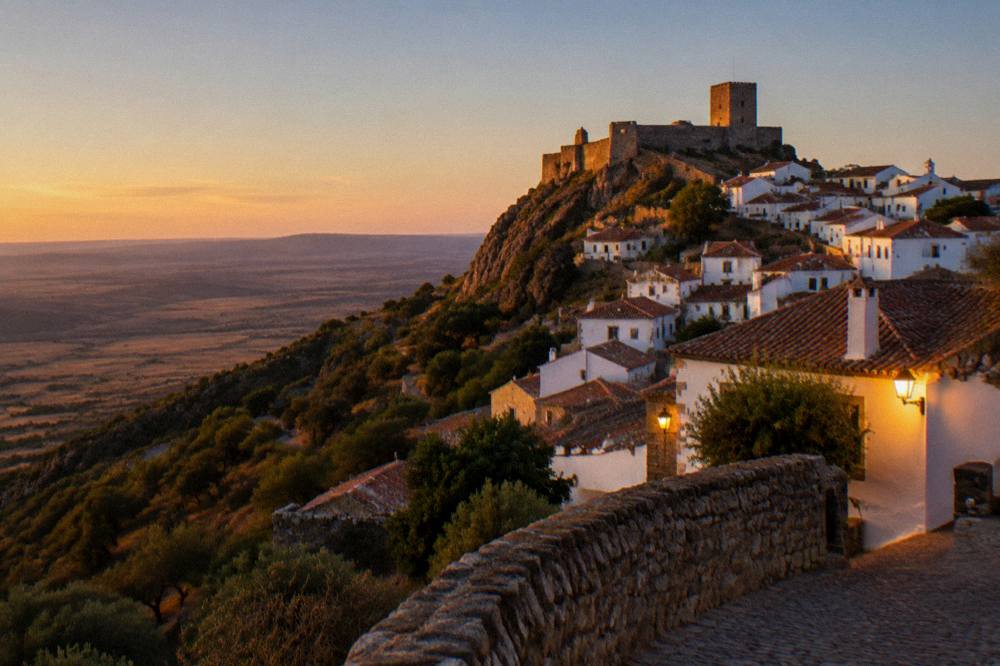
A Marvão day is the Alentejo at its most vertical: a walled village, a castle on a ridge, and a long green approach through the Serra de São Mamede that stands in deliberate contrast to everything the plain around Évora, Portugal, is known for. Plan the transport, check the castle's notice, pick a shoulder month, and the drive north pays for itself in the first view from the battlements.