Alqueva Lake And Dam Day Trip From Évora, Portugal: What To See And How To Plan It
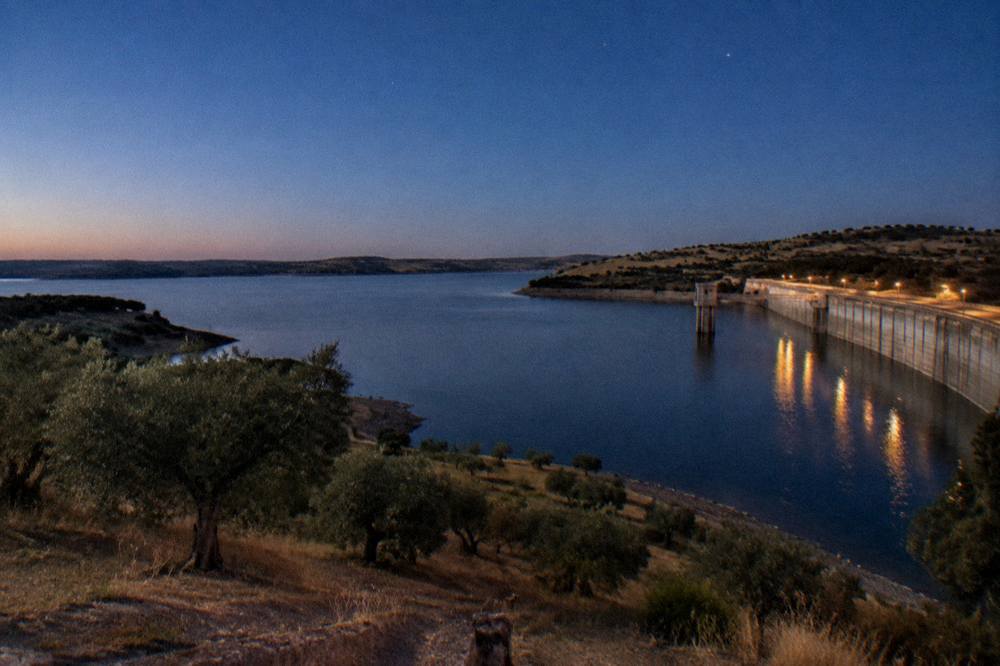
The Alqueva dam drowned a valley and created the largest artificial lake in Western Europe, and its shoreline now anchors some of the Alentejo's most rewarding day trips from Évora.
Short answer
The Alqueva lake lies south and east of Évora, reached via the wine town of Reguengos de Monsaraz, with the walled village of Monsaraz as its headline viewpoint. Plan it as a full day: there is no verified train line, so a car, a private tour or a guided day trip is the practical route.
The Alqueva reservoir is the Alentejo's biggest single transformation: a dam on the Guadiana river that turned a dry valley into an inland sea of quiet coves, drowned hillsides and beach-like margins, all within easy reach of Évora, the inland capital of the Alentejo that sits about 130 km from Lisbon. The lake spreads south and east of the city across the border country toward Spain, and the day trip that follows its shorelines strings together the walled village of Monsaraz, the wine town of Reguengos de Monsaraz and a string of hamlets where the pace of life has barely changed. This guide lays out what the Alqueva actually offers, how the pieces fit together on a day from Évora, and what to check before setting out.
What Is The Alqueva Lake And Where Does It Sit?
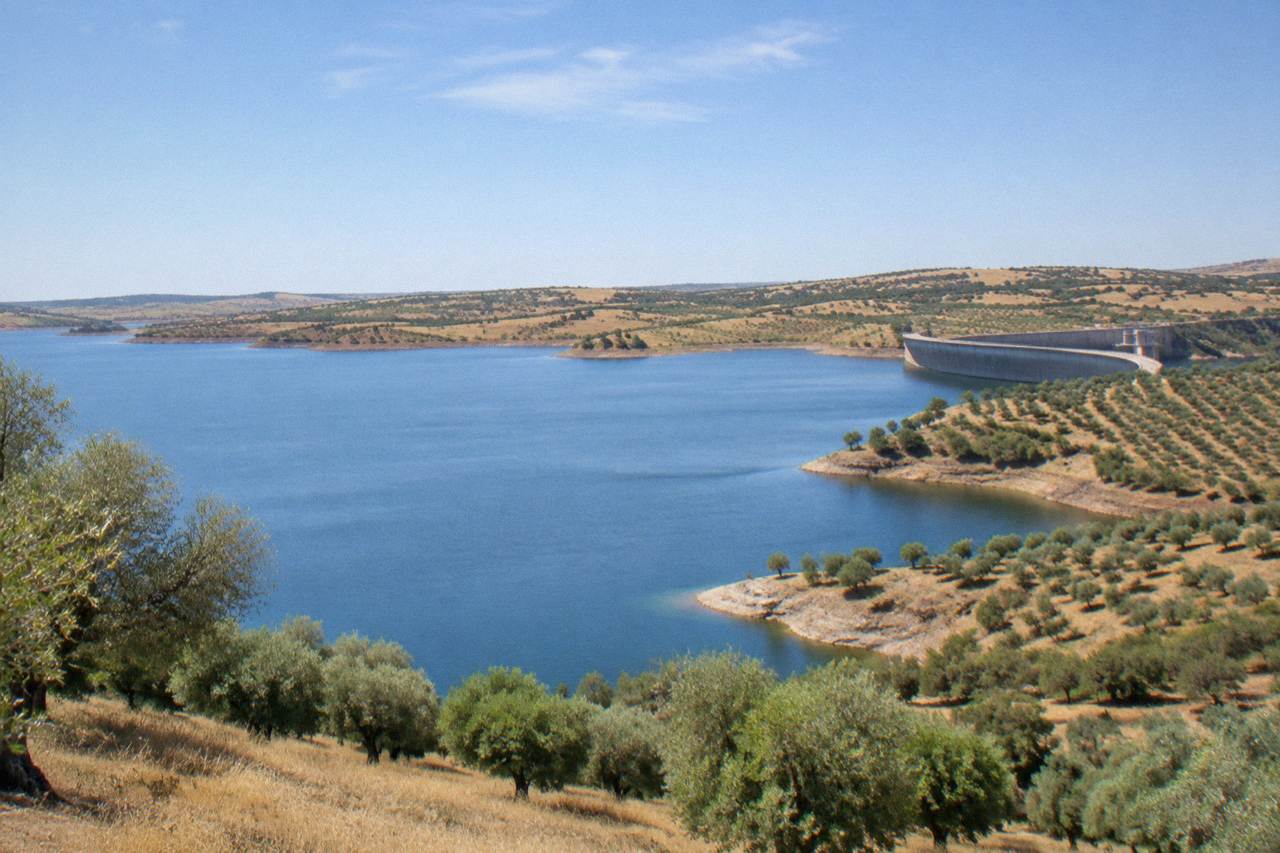
The Alqueva is a vast artificial reservoir on the Guadiana river, created by the dam that gives it its name, stretching across the south-eastern Alentejo from Reguengos de Monsaraz down to the Spanish border. From Évora the lake lies to the south and east, reached through wine country, not by rail, so a car, a private driver or a guided tour is the practical way in.
Its shoreline mixes steep ochre banks, small beaches, drowned-valley inlets and villages that once looked over a river and now look over open water.
The reservoir changed the geography of the region more than any event since the Moorish period ended here in 1165. Where the Guadiana once ran through a narrow valley, there is now a slow, branching expanse of water whose arms reach into valleys that were once farmland and olive groves. The Alentejo around it is flat-to-rolling plain, hot and dry in summer, and the lake moderates the immediate shoreline just enough to make waterside villages pleasant when Évora itself is baking.
For a visitor based in Évora, the lake organises itself around a handful of anchor points. Reguengos de Monsaraz is the gateway town, a working Alentejo centre with wine cellars and a Monday-morning feel that survives the tourist season. Monsaraz, perched on a hill above the northern shore, is the postcard. Beyond it, smaller settlements such as São Marcos do Campo and the villages around Mourão and Portel sit on the water's western and southern arms. Each makes a different kind of stop, and the table below sets out the main ones.
| Place | Direction From Évora | What It Offers |
|---|---|---|
| Reguengos de Monsaraz | South, gateway to the lake | Wine town, cellars, restaurants, practical services |
| Monsaraz | South-east, about 40-45 km | Walled hill village with views over the water |
| São Marcos do Campo | South-east | Small shoreline hamlet, quiet coves |
| Mourão | South-east near the border | Castle village on a southern arm of the lake |
| Portel | South-west | Castle town on the road toward the western shore |
The lake is not a single sight you drive to and photograph once. It is a region, and the day trip works best when it is planned as a loop: Évora to Reguengos for lunch or a tasting, Monsaraz for the afternoon light on the water, and a shoreline stop on the way back. The Monsaraz day trip guide covers the village itself in detail, and this page concentrates on the water and how the two fit together.
Why Is The Alqueva Dam Famous?
The Alqueva dam is famous for creating the largest artificial lake in Western Europe, a reservoir so extensive that it reshaped the economy of a whole sub-region of the Alentejo, moving it from dry farming toward irrigation, wine, tourism and dark-sky stargazing. It is also the reason the shoreline looks the way it does: a drawn-down, sculpted landscape of inlets and islands rather than a natural riverbank.
The dam's purpose was irrigation and hydroelectric storage, and its agricultural legacy is visible everywhere: vineyards and olive groves that would not have been viable on dryland now line the roads toward the lake. That same water changed the tourism map. Boating, kayaking and shoreline beaches appeared where there had been none, and the region's famously cloudless nights, already a product of the inland Alentejo climate, gained a lake horizon that attracts stargazers. The dark-sky character of the area is well known, though specific observatory hours and boat-trip details should be checked with each operator directly before planning an evening on the water.
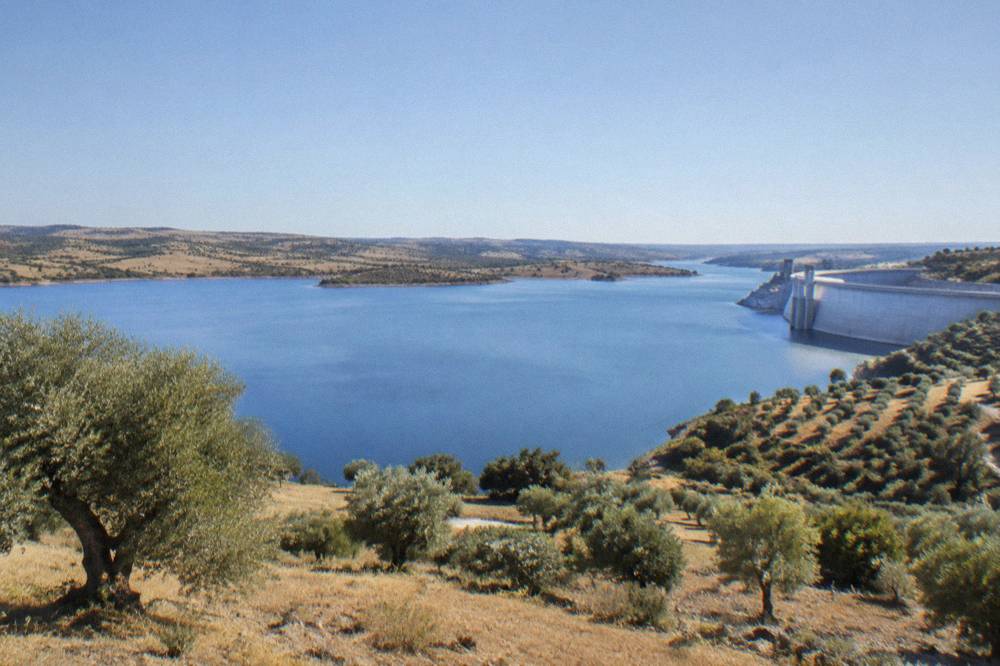
What surprises many first-time visitors is how empty the shoreline remains. This is not an Algarve: even in August the lake's many arms mean crowds thin out within a few kilometres of the main access points, and a short drive puts a visitor on a stretch of bank with nobody in sight. The trade-off is infrastructure: fuel, pharmacies and full restaurants cluster in the towns, so it pays to plan lunch rather than improvise it.
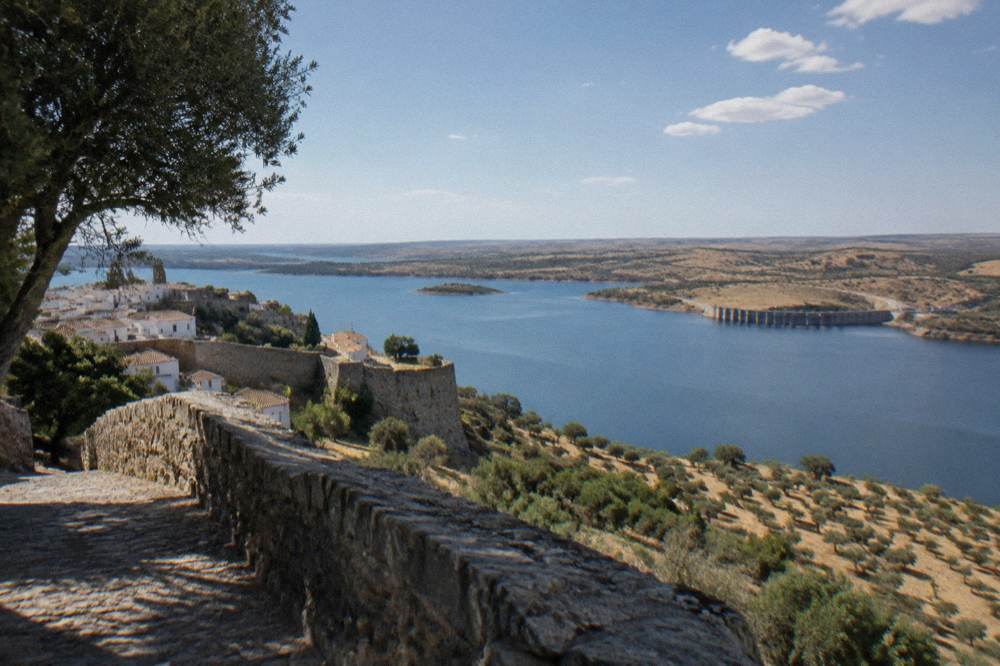
Guided options exist for travellers who would rather not drive, and they suit this trip particularly well because the lake's interest is spread out. A small-group Monsaraz and wine tour from Évora, for instance, pairs the village with a regional cellar in a single four-hour loop, while a private guide turns the whole shoreline into a flexible itinerary. The options below are the guided day trips that fit an Alqueva-centred plan.
What Can You Actually Do Around Alqueva Lake?
A day around Alqueva divides naturally into four activities: walking the walled streets and ramparts of Monsaraz above the water, tasting wine in the cellars of Reguengos and the surrounding communes, boating or kayaking on one of the lake's calm arms, and stargazing on the shoreline after dark. All four work in a single long day from Évora, though stargazing realistically means either a very late return or staying the night near the shore.
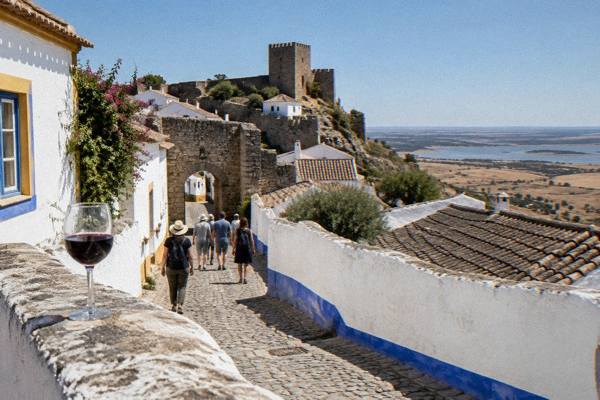
Monsaraz is the anchor and deserves the longest single block of the day. The village is tiny, a handful of whitewashed streets inside medieval walls, and its position on a bluff means the water fills the whole southern horizon. The light changes the view hour by hour, which is why most photographers aim for late afternoon. Inside the walls there are small museums, craft shops and cafés; the practical detail to remember is that the village is compact, so an unhurried two hours covers it comfortably.
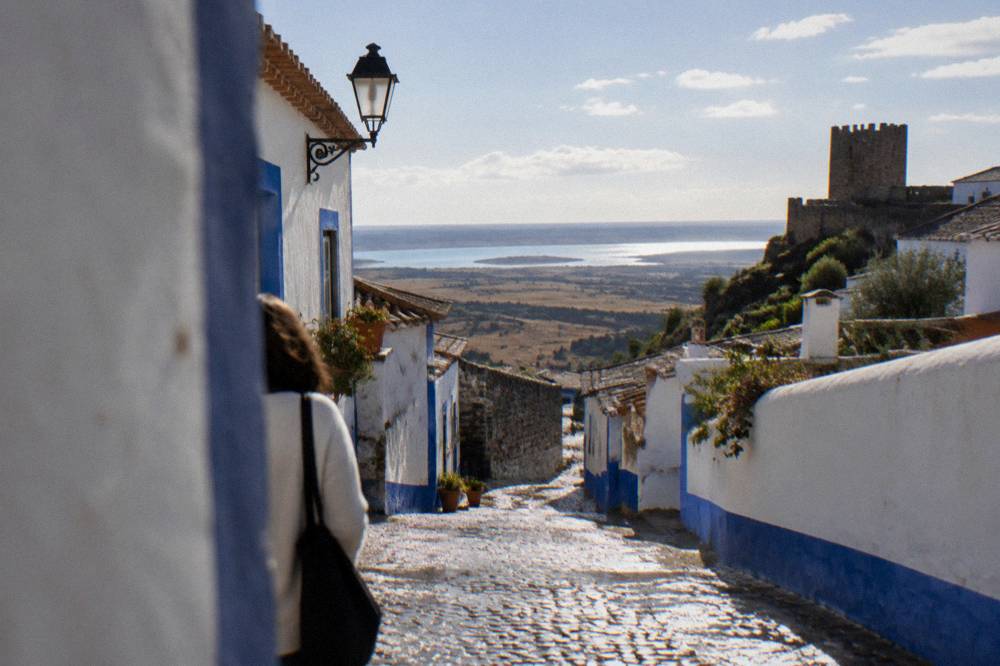
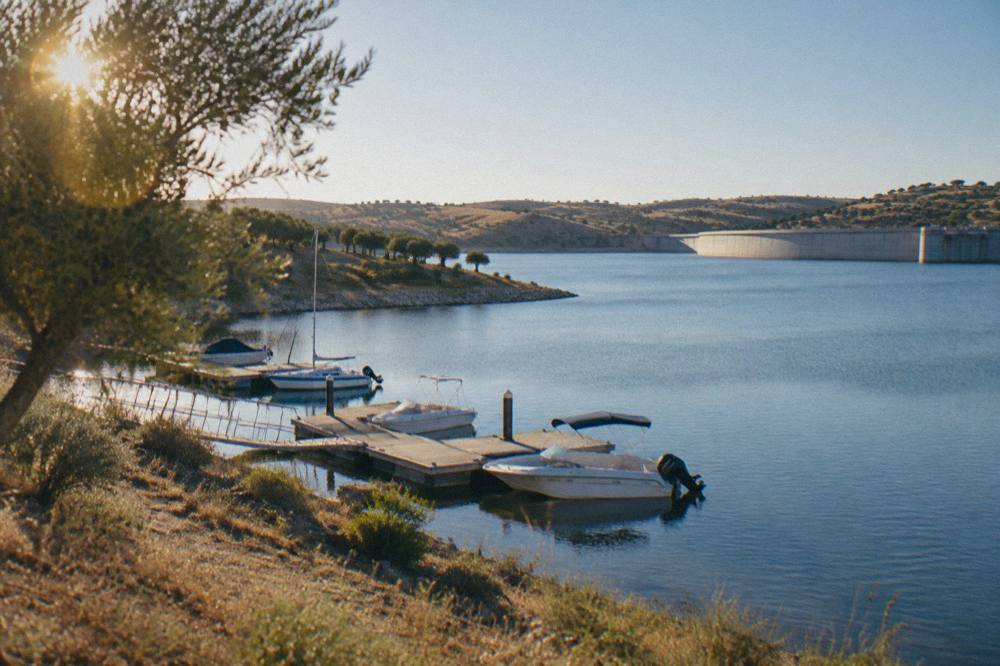
The water itself is the part many day-trippers underuse. Operators around the lake run boat trips, kayak hire and sailing excursions, and the reservoir's calm, current-free arms make it genuinely beginner-friendly. Hours, seasons and prices vary by operator and by the time of year, so check the operator's own listing before committing a morning to it. The shoreline also has small informal beaches, particularly on the arms near Monsaraz and Mourão, where swimming is possible in summer.
For travellers who prefer to spend the day in Évora itself and reach the lake on a later date, the city's guided walking products pair well with an Alqueva plan. The Golden Era of Évora walking tour with Portuguese wine tasting, a 2.5 to 3 hour walk rated 4.4 from 33 reviews at from $23.92 per person, covers the monuments of the golden age and finishes with a tasting, which is a sensible way to spend the arrival afternoon before a lake day.
| Activity | Where On The Lake | Best Part Of Day |
|---|---|---|
| Ramparts and village walk | Monsaraz | Late afternoon |
| Wine tasting | Reguengos and surrounding communes | Midday and early afternoon |
| Boat or kayak trip | Shoreline operators near Monsaraz and Mourão | Morning, calmer water |
| Swimming | Informal beaches on the lake arms | Midday in summer |
| Stargazing | Shoreline away from village lights | After dark, clear nights |
Where To Eat And Taste Wine Around Alqueva?
The food and wine of the Alqueva region are Alentejo classics: deep, warm red wines from the Reguengos communes, pork and lamb dishes, Alentejo bread and olive oil from the newly irrigated groves, and river-fish recipes that predate the reservoir. The practical plan is lunch in Reguengos or a shoreline village and a cellar tasting in the afternoon, with Monsaraz offering smaller cafés rather than full restaurants.
Reguengos de Monsaraz is the wine capital of the route, and its cellars are set up for visitors. The surrounding denominations, including Mourão and Portel on the southern and western arms, produce the same style: full, warm reds built on native grapes, with whites that have improved markedly as irrigation changed what growers could risk. Tasting fees vary by cellar and by the wines poured, so check with each cellar before arriving with a fixed budget in mind.
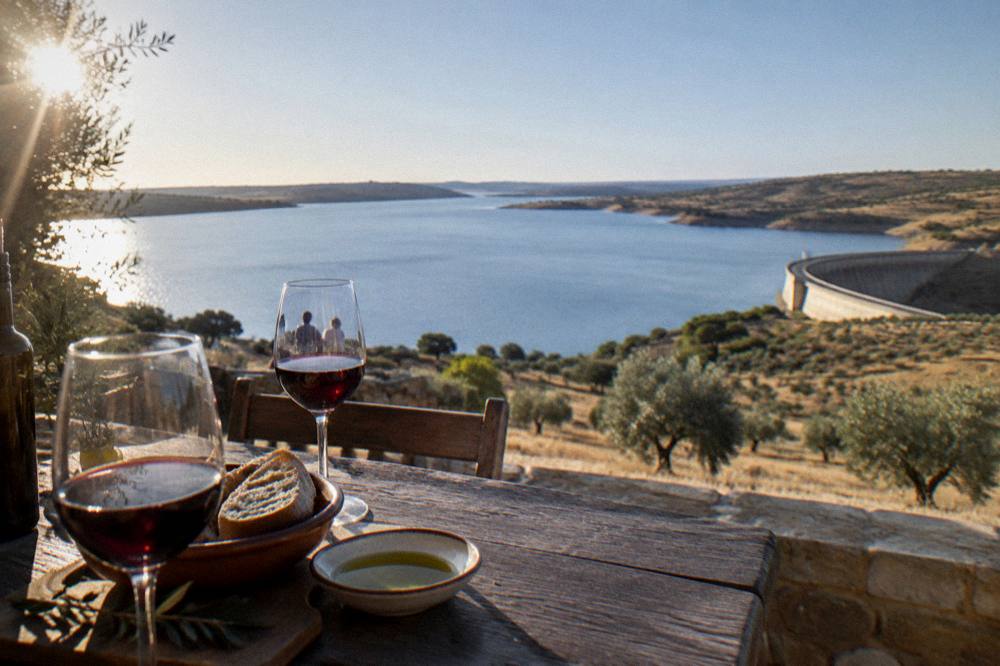
For a structured version of the wine side, a dedicated Alentejo wine and cork tour from Évora, from $78.78 per person and rated 4.7 from 24 reviews over four hours, moves between cellars and cork country, and a full-day wine tour around Évora at from $321.11 per person adds lunch and transport. A Monsaraz and wine guided tour from Évora, from $78.78 per person and rated 4.6 from 51 reviews, is the closest match to the Alqueva loop itself. The medieval sidecar tour, from $61.90 per person and rated 4.9 from 16 reviews, keeps the tasting inside Évora's walls for a day when the lake is off the schedule.
| Guided Option | Price From | Rating | Length |
|---|---|---|---|
| Monsaraz and Wine guided tour from Évora | $78.78 | 4.6 from 51 reviews | 4 hours |
| Alentejo Wine and Cork from Évora | $78.78 | 4.7 from 24 reviews | 4 hours |
| Full-day wine tour around Évora | $321.11 | 5 from 11 reviews | Full day |
| Medieval sidecar tour with wine tasting | $61.90 | 4.9 from 16 reviews | 3 hours |
Restaurants around the lake follow the Alentejo calendar rather than the tourist one, which means long lunches and early dinners. The Évora food guide and the Alentejo wine guide cover the dishes and bottles in depth for anyone planning the eating side of the trip.
How Do You Get To Alqueva From Évora Or Lisbon?
There is no rail line to the Alqueva, so the lake is reached by road: by hire car from Évora, by a guided day tour with transport included, or by combining the CP Intercidades train from Lisbon to Évora with a car or tour for the final leg. CP's timetable valid since 6 September 2026 lists six through trains from Lisboa Oriente to Évora taking about 1 hour 40 to 1 hour 45 at 13.90 EUR second class, so a Lisbon morning arrival in Évora works before driving south.
The train times below are the current through services, and they matter for anyone building a two-centre trip: the earliest arrival in Évora leaves the whole afternoon free for the lake, while the last return allows a full day. Check the CP site for the weekday remarks before locking a plan, and never assume a daily pattern from a single date. Everything else covered here is indexed on Évora Travel Guide.
| Lisboa Oriente Departure | Évora Arrival | Second-Class Fare |
|---|---|---|
| 07:02 | 08:47 | 13.90 EUR |
| 09:02 | 10:45 | 13.90 EUR |
| 09:58 | 11:40 | 13.90 EUR |
| 13:35 | 15:13 | 13.90 EUR |
| 17:02 | 18:41 | 13.90 EUR |
| 19:02 | 20:46 | 13.90 EUR |
From Évora the drive south is straightforward Alentejo road: the gateway town of Reguengos de Monsaraz sits on the route, and the rounded distance to Monsaraz itself is about 40-45 km. No coach timetable or fare for this corridor is published here, so check the operator's site for current times. Travellers without a car have two realistic choices: a guided tour that includes the lake loop, or a private driver hired for the day. The best day trips from Évora guide compares the whole region's options, and the Évora car rental guide covers the self-drive route.
How Does Alqueva Combine With Other Alentejo Day Trips?
Alqueva pairs naturally with Monsaraz, which sits on its shore, and with the wine towns of Reguengos and Portel on the approach roads, but it also slots into wider loops taking in Estremoz, about 45 km north-east of Évora, Vila Viçosa about 60 km away, or Elvas about 80 km east near the Spanish border. The honest limit is daylight: the lake deserves most of a day, so combining it with a second major destination means either two days or a very focused itinerary.
The classic pairing is Monsaraz plus the lake, which is really one destination with two halves. The next tier up is a two-day loop that adds Reguengos cellars on the way out and Portel or Mourão on the way back, keeping the whole route inside the southern Alentejo. Travellers with three or more days can build the full regional circuit described in the three days in Évora and Alentejo itinerary or the wider Alentejo road trip guide.
| Day-Tip Destination | Rounded Distance From Évora | What It Adds To An Alqueva Loop |
|---|---|---|
| Monsaraz | About 40-45 km | The lake's headline viewpoint and walled village |
| Estremoz | About 45 km | Marble town, castle and market heritage to the north-east |
| Vila Viçosa | About 60 km | Ducal palace and marble quarries on an eastern loop |
| Elvas | About 80 km | Border fortress city, further east |
| Marvão | About 120 km | Hilltop castle village, best as its own long day |
The stargazing side of the lake has its own following, and the Alqueva dark sky stargazing guide covers the night-time plan. Designation details and observatory specifics are not published on this page, so check the operator's notice before booking an evening session. For a private, monument-heavy alternative on a day when the lake is rained off, a private Évora walking tour with cathedral and Chapel of Bones, from $113.53 per person and rated 5 from 256 reviews, keeps the itinerary inside the city walls.
The guided options below round out an Alentejo plan that starts or ends with the lake.
When Is The Best Time Of Year For An Alqueva Day Trip?
Spring and autumn are the best seasons for an Alqueva day trip: IPMA's 1991 to 2020 normals for the Évora station show May and October mean maxima of 25.0 C and 24.1 C against July's 33.3 C, and the lake's boat and swimming season peaks in the hot months. Summer works if the day starts early and the midday hours are spent on or beside the water, while winter days are short, cool and often wet enough to close the shoreline activities.
The climate table that matters for planning is the Évora station's, since the lake sits in the same inland Alentejo regime. The numbers below are the 1991 to 2020 averages, and they explain the local rhythm: the lake fills with swimmers and boats in June, July and August, when 30 C-plus days are near-daily, and empties again by late September.
| Month | Mean Max (C) | Mean Min (C) | Rain (mm) | Days 30 C Or More |
|---|---|---|---|---|
| April | 20.7 | 8.5 | 62.1 | 0.3 |
| May | 25.0 | 10.9 | 46.6 | 5.5 |
| June | 30.2 | 13.8 | 10.6 | 15.1 |
| July | 33.3 | 15.6 | 2.7 | 23.7 |
| August | 33.5 | 16.0 | 6.0 | 25.0 |
| September | 29.5 | 14.6 | 33.9 | 13.9 |
| October | 24.1 | 12.3 | 81.5 | 2.9 |
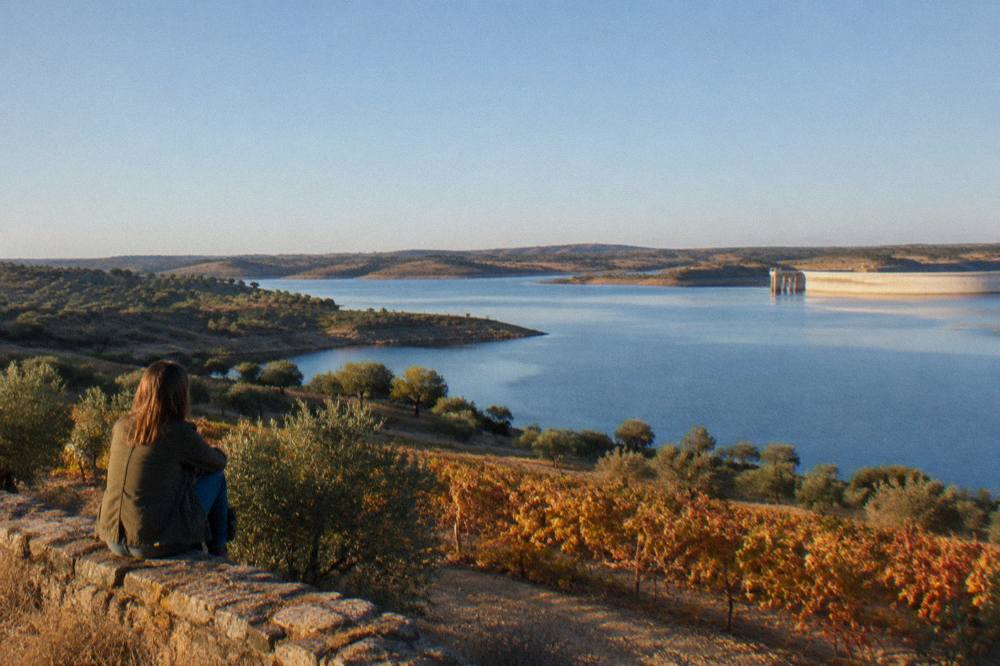
Two seasonal notes shape the plan. First, the record maximum at the Évora station is 45.4 C, recorded on 4 August 2018, a reminder that a midsummer lake day should put the hottest hours on the water rather than on a rampart. Second, October is the sweet spot many visitors miss: the water is still warm, the crowds are gone, and Évora's cultural calendar is filling ahead of the 2027 Capital of Culture year. The best time to visit Évora guide extends this comparison across the whole year.
What Should You Budget For An Alqueva Day Trip?
The transport and guiding side of an Alqueva day runs from about $64.09 per person for a shared Lisbon-based Monsaraz wine tour to $223.63 for a private guide covering both in one day, while self-drive adds hire car and fuel to modest village prices. On the Évora monument side, the Sé complete-visit ticket is 5.00 EUR, the Capela dos Ossos museum ticket 7.00 EUR and the Évora Ticket 8 EUR for one day, none applying to the lake itself.
The distinction that matters is what the dollars buy. The shared tours from Lisbon, such as the nine-hour Évora and Monsaraz trip with regional wine tasting at from $64.09 per person and rated 4.7 from 360 reviews, are built for travellers staying in the capital, and they should be understood as Lisbon-start products that visit Évora rather than Évora-based days. From Évora itself, the Monsaraz and wine tours in the table above are the comparable local options.
| Cost Item | Figure | Notes |
|---|---|---|
| Monsaraz and Wine guided tour from Évora | From $78.78 | Four hours, cellar visit included |
| Private day tour with guide to Évora and Monsaraz | From $223.63 | Rated 4.9 from 144 reviews |
| Évora and Monsaraz from Lisbon (shared) | From $175.21 | Rated 5 from 64 reviews, starts in Lisbon |
| Sé de Évora complete visit | 5.00 EUR | Cathedral, cloister, roof terrace, museum |
| Capela dos Ossos museum ticket | 7.00 EUR | Adult, all museum areas |
| Évora Ticket, one day | 8 EUR | Multi-site pass, excludes the Sé, the Capela dos Ossos and the Museu de Évora |
A municipal tourist tax applies to overnight stays in Évora, so check the hotel's confirmation for the current amount. Lake-side costs, including boat trips and tastings, vary by operator and season, and the honest advice is to confirm each one on the operator's own listing before budgeting the day.
Common Questions About The Alqueva Day Trip
Can you do Alqueva as a day trip from Évora?
Yes. Monsaraz, the lake's headline village, lies about 40-45 km from Évora, and the standard plan is a loop through Reguengos de Monsaraz with a shoreline stop, done comfortably in one day by car or with a guided tour that includes transport.
Is Alqueva worth visiting without a car?
It is, but only with a tour or a private driver, because there is no rail line to the lake and no verified coach timetable is published here. Guided Monsaraz and wine tours from Évora run about four hours and cover the village and a cellar without any driving on the visitor's part.
What is the best base for the Alqueva region?
Évora works well for a day trip and offers the widest choice of hotels, restaurants and guided tours, as the where to stay in Évora guide lays out. Staying near the lake itself, in Monsaraz or a shoreline village, is the better choice for stargazing, since the return drive after dark is the main obstacle to an evening on the water.
Can you swim in the Alqueva lake?
Yes, in summer. The reservoir's calm, current-free arms have small informal beaches near Monsaraz and Mourão, and the water warms through June and July. Boat, kayak and sailing operators work the same arms, with hours and prices varying by operator and season, so check the operator's listing before planning a morning around one.
How does Alqueva compare with other Évora day trips?
In general terms, Alqueva and Monsaraz offer water, wine and a hilltop village in one loop, while Estremoz and Vila Viçosa, about 45 and 60 km away, are marble-and-palace towns, and Elvas, about 80 km east, is a border fortress. None of them duplicates the lake, which is the region's only large expanse of water.
Is the Alqueva area good for stargazing?
Yes, the shoreline is known for exceptionally dark night skies, and the region draws stargazers year-round. Specific observatory sessions and boat-based astronomy trips are run by individual operators whose schedules change seasonally, so confirm times and availability on the operator's page before committing an evening.
The Alqueva day trip is the Alentejo at its most spacious: a drowned valley turned inland sea, a walled village above it, and wine in between. Plan the loop around the afternoon light on the Monsaraz ramparts, check the boat and cellar operators before setting out, and the day will carry itself.