Elvas Day Trip From Évora
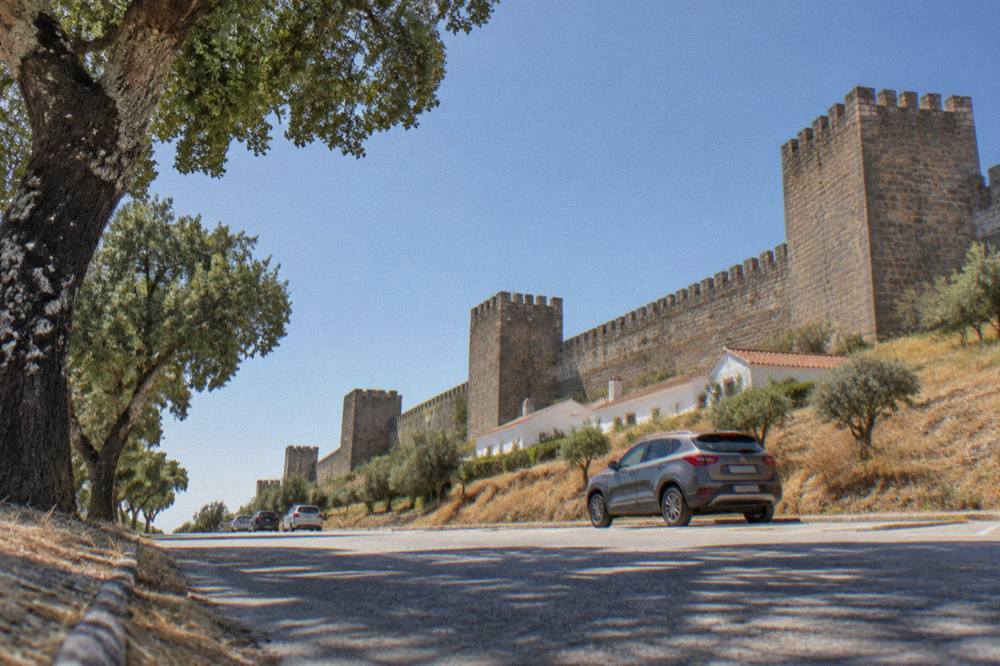
Elvas sits about 80 km east of Évora on the Spanish border, a garrison city of walls, bastions and an aqueduct that makes one of the Alentejo's most distinctive day trips.
Short answer
Elvas is a fortified border city about 80 km east of Évora, reachable by car in a morning and best known for its historic walls, military architecture and aqueduct. No train or bus timetable, opening hour or ticket price for Elvas is verified here, so plan around a full day and check official notices before you go.
Elvas is a fortified garrison city on Portugal's eastern border with Spain, about 80 km east of Évora across the Alentejo plain. The two cities could hardly feel more different: Évora is a Roman and Renaissance university town of churches and marble squares, while Elvas grew up as a fortress, ringed by walls and bastions built to guard the frontier. That contrast is exactly what makes it a rewarding day trip, because the drive east crosses open cork and wheat country before the hill and its fortifications rise out of the plain.
One honest caveat runs through it all: no opening hour, ticket price or timetable for Elvas itself was verified for this page, so every planning detail below is either a verified Évora figure or general advice, and the border city's own notices are the place to confirm details before you travel. The Évora Travel Guide editorial desk keeps the verified Évora facts on every page of this site, and this one is no exception.
Why Is Elvas Worth A Day Trip From Évora?
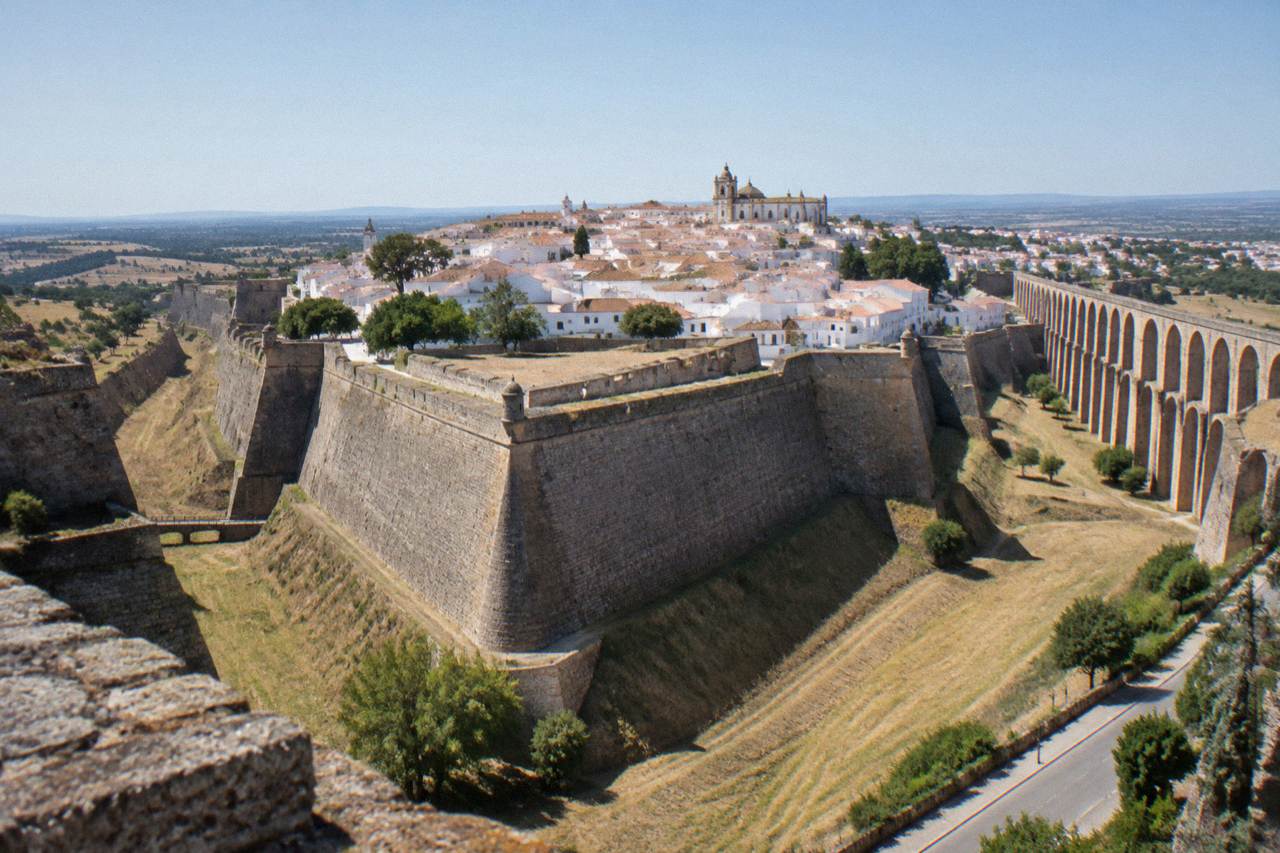
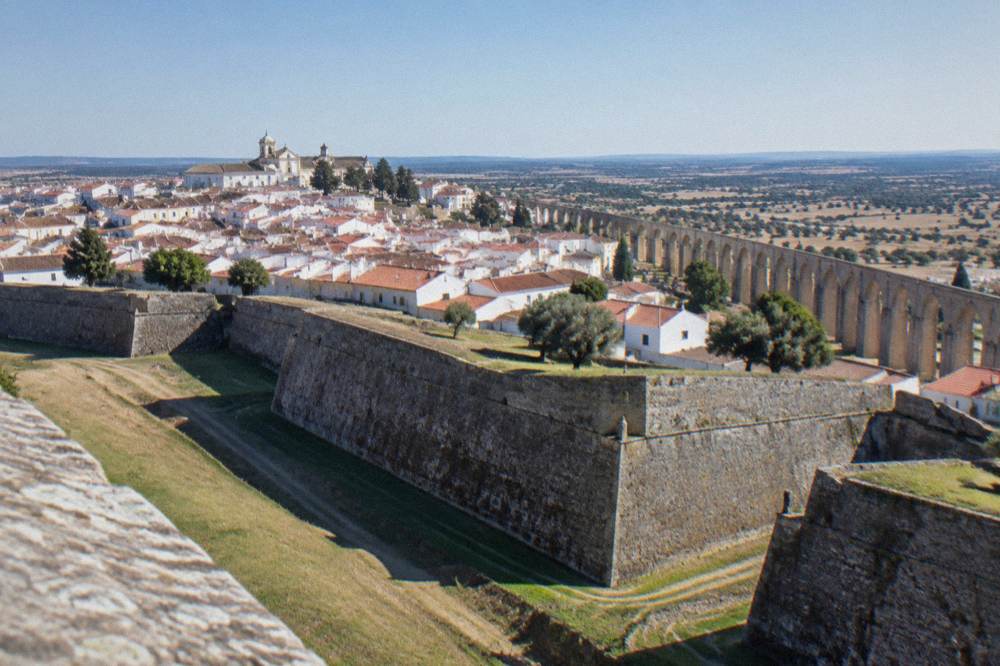
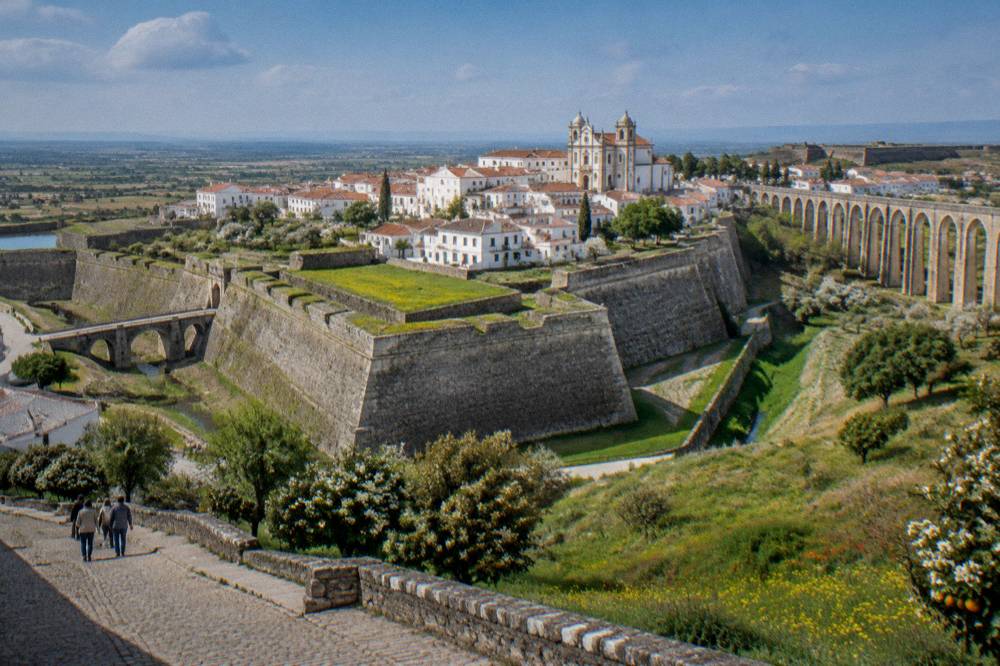
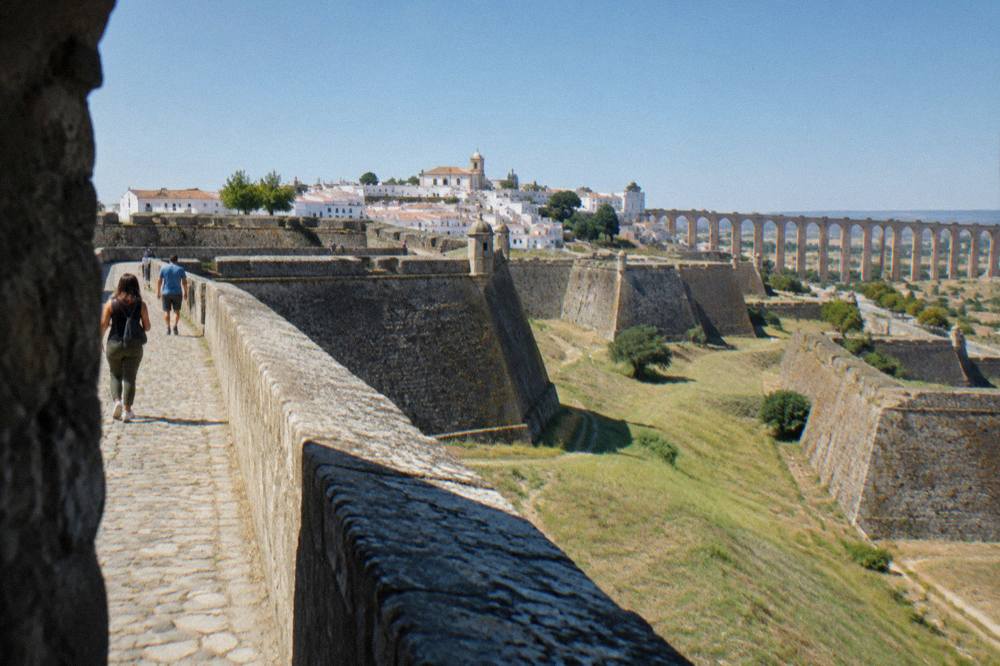
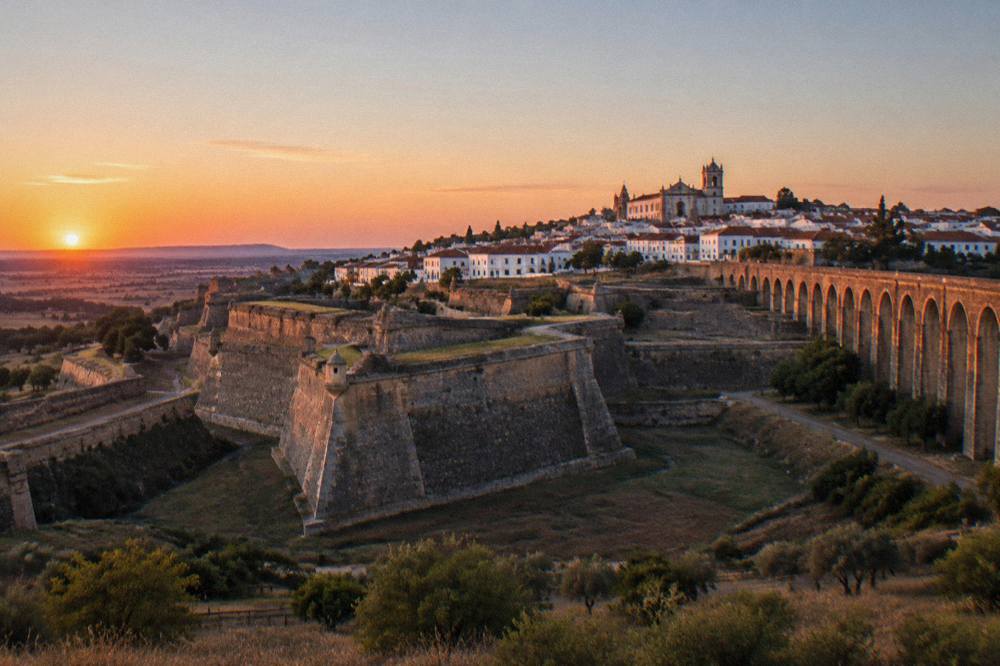
Elvas is worth a day trip because it is the Alentejo's great fortress city, a walled hill town about 80 km east of Évora whose entire identity was shaped by defending Portugal's border with Spain, and whose walls, bastions, castle and aqueduct give a day a completely different character from the churches and squares of Évora itself. The city's military architecture is its main draw, and the scale of it is the surprise: this is not one castle on a hill but a whole defended landscape, with fortifications reaching out into the countryside around the town.
The contrast with Évora is the point. Évora's historic centre, inscribed by UNESCO in 1986 under criteria (ii) and (iv), is a museum of the golden age of Portuguese city building; UNESCO's criterion (iv) calls it the finest example of a city of that golden age after the 1755 Lisbon earthquake, which Évora was largely spared. Elvas tells the other Alentejo story, the frontier one, of a town that existed to be defended. Walking from one to the other in a single itinerary gives you both halves of the region's history in two days.
Practically, Elvas works as a day trip because the drive is straightforward and the town is compact once you arrive. The rounded estimate for the distance is about 80 km, east toward the Spanish border. What no verified timetable or price exists for on this page is the bus or train option, so a hired car or a private driver is the realistic plan, and the best day trips from Évora overview collects the other destinations that pair well with it.
What Do You Actually See In Elvas On A Day Trip?
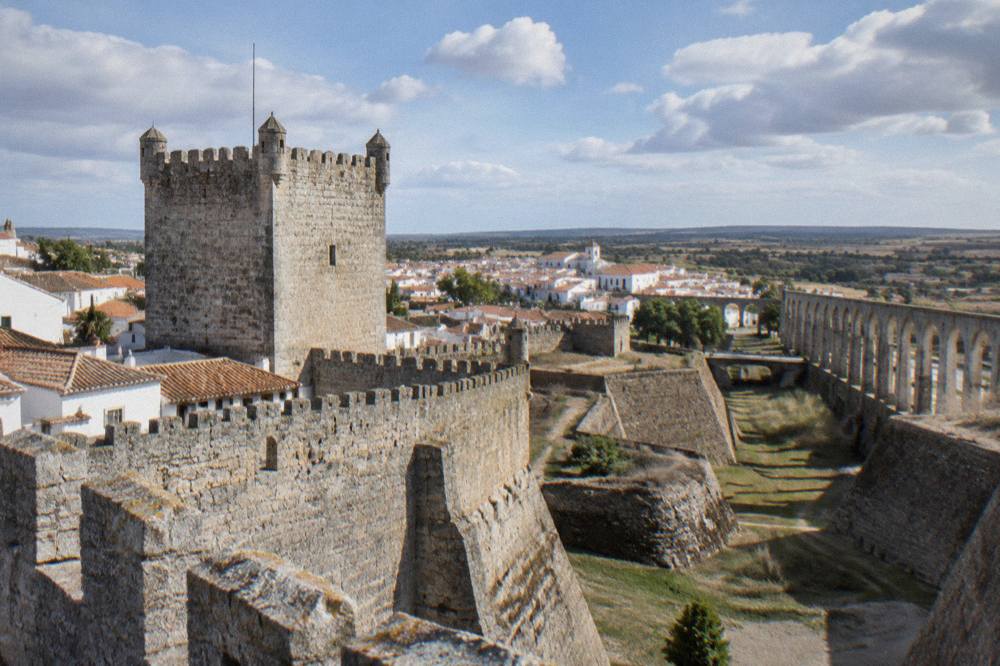
A day in Elvas is spent on its fortifications and the streets inside them: the castle keep at the top of the hill, the ring of walls and bastions that enclose the old town, the monumental aqueduct that carries water across the plain to the city, and the squares and churches of the historic centre, all of which can be explored on foot in a day of unhurried walking. The town is steep in places, so comfortable shoes matter more than any ticket.
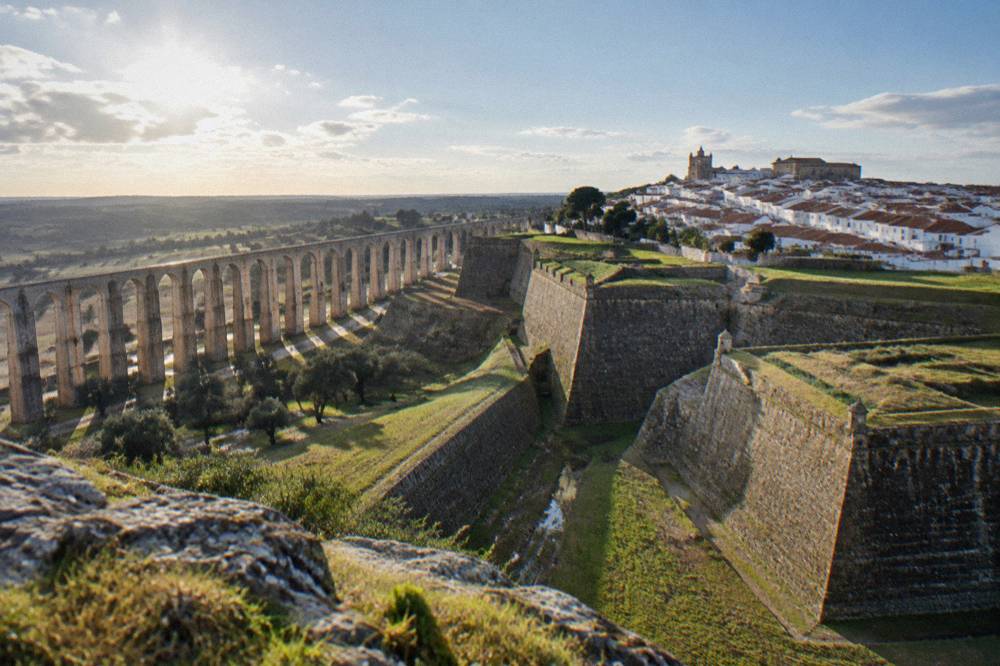
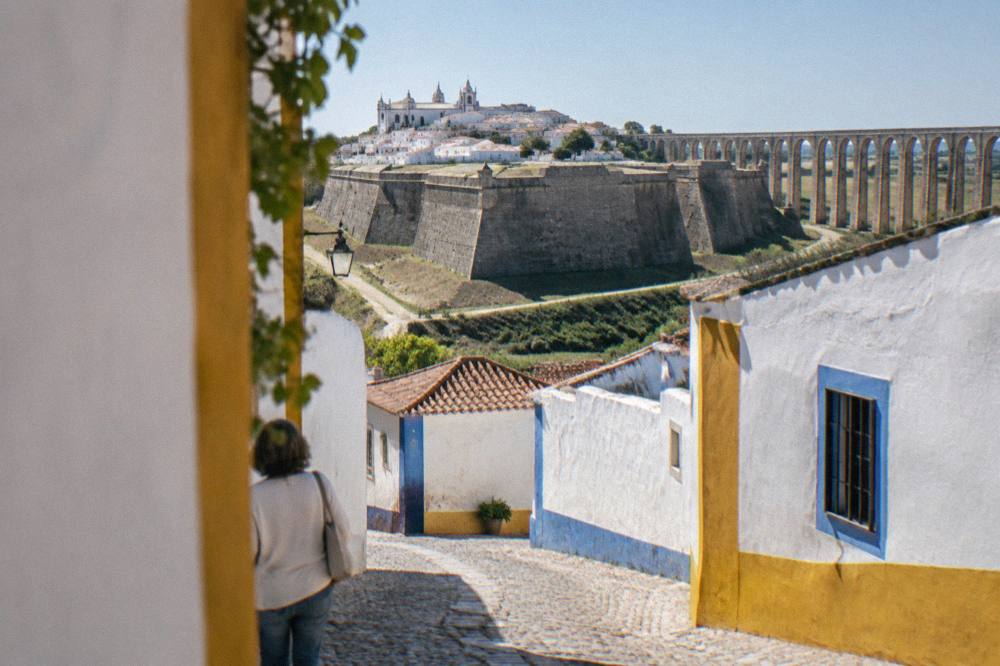
The aqueduct is the first thing most visitors see, because it announces the city long before the walls do. It is one of the largest such structures in Portugal, a long run of arches climbing the slope, and it sets the tone: everything in Elvas is built at fortification scale. Inside the walls, the old town is a grid of white houses with the castle keep rising above it, and the views from the upper town stretch east across the border country toward Spain.
Because no Elvas opening hour, ticket price or guided-walk detail is verified here, the honest planning advice is simple: treat the walls, aqueduct and streets as the day's substance, check the tourist office's current notices for anything you want to enter, and leave the interior visits as bonuses rather than the plan. A full day is the right length, with a long stop for lunch, because the Alentejo does not reward rushing.
If you want a guide rather than a self-directed wander, the guided options below are Évora-based walking tours that cover the historic centre, the cathedral and the Chapel of Bones, the classic introduction before you drive east. The small-group cultural walking tour with the Chapel of Bones is the most reviewed of them, from $77.66 per person and rated 4.9 from 141 reviews, and it pairs well with a second day given over to Elvas.
How Does A Day In Elvas Compare With Other Alentejo Day Trips From Évora?
Elvas is the border-fortress day trip, and it stands apart from every other option around Évora: Monsaraz is a walled lake-view village, Estremoz a marble town, Vila Viçosa a ducal seat about 60 km away, and Arraiolos a carpet-making town about 20 km out, so choosing Elvas means choosing military architecture and frontier history over wine villages, marble or crafts. None of them is a substitute for another, which is why many visitors do two or three.
The table below places Elvas against the other main day-trip destinations, using the rounded distances the geography block carries and nothing else. No drive time, entry fee or opening hour was verified for any of them, so the comparison is about character, not logistics.
| Day Trip From Évora | Rounded Distance | What The Day Is About |
|---|---|---|
| Elvas | about 80 km east | Fortress city, walls, bastions, aqueduct, border history |
| Monsaraz | about 40-45 km south | Walled hilltop village above the Alqueva lake, wine country |
| Estremoz | about 45 km northeast | Marble town, castle and quarries in the Alto Alentejo |
| Vila Viçosa | about 60 km east | Ducal palace and marble streets of the House of Braganza |
| Arraiolos | about 20 km north | Historic village famous for its hand-made carpets |
| Marvão | about 120 km north | Mountain-top walled village on the Serra de São Mamede |
Elvas and Vila Viçosa pair naturally, because both lie east of Évora and a single long day can take in both, Elvas for the fortifications and Vila Viçosa for the palace. The Vila Viçosa day trip and the Estremoz day trip pages carry the detail for those. Travellers with a week can go further, toward Marvão in the northern hills or even across the border, as the Cáceres and Badajoz from Évora page describes, though no border-crossing or timetable claim belongs on this one.
One pairing to think about before committing: Évora itself deserves a full day first, and the one day in Évora itinerary is the template. Elvas is a second-day destination for most visitors, not a competitor with the historic centre, and the guided Évora tours below are the most efficient way to spend that first day.
When Is The Best Time Of Year To Visit Elvas From Évora?
The best time to visit Elvas is spring or autumn, because IPMA's 1991 to 2020 normals for the Évora station show July averaging a maximum of 33.3 C and August 33.5 C, with 31.9 days a year reaching 35 C or more, and Elvas, with its exposed walls and steep streets, is a hard place to walk in that heat; winter is quiet and mild by northern standards but the days are short. The figures come from the inland Alentejo plain, which both cities share.
The monthly picture from the same normals table shows why the shoulder seasons win. Rain is scarce from June to September, with July averaging just 2.7 mm and August 6.0 mm, but the heat is the trade-off. October cools to a mean maximum of 24.1 C with 81.5 mm of rain across the month, and May sits at 25.0 C with 46.6 mm, which is why those two months are the classic Alentejo visiting window.
| Month | Mean Max (C), 1991-2020 | Mean Min (C), 1991-2020 | Rain (mm), 1991-2020 |
|---|---|---|---|
| March | 18.7 | 6.9 | 60.8 |
| April | 20.7 | 8.5 | 62.1 |
| May | 25.0 | 10.9 | 46.6 |
| June | 30.2 | 13.8 | 10.6 |
| July | 33.3 | 15.6 | 2.7 |
| August | 33.5 | 16.0 | 6.0 |
| September | 29.5 | 14.6 | 33.9 |
| October | 24.1 | 12.3 | 81.5 |
If summer is the only window available, the adjustment is the usual Alentejo one: walk the walls early, take a long shaded lunch through the midday hours, and come back out in the late afternoon. The record maximum at the Évora station is 45.4 C, set on 4 August 2018, a reminder that the plain's extremes are real. Winter visitors get a different Elvas, emptier and atmospheric, with January mean maxima of 14.1 C and cold nights down to a mean minimum of 4.5 C; the lowest minimum on record is -4.2 C, from 4 December 1998 and 23 January 2000.
What Should A Day-Trip Plan For Elvas Look Like?
A sensible Elvas day leaves Évora in the morning, arrives by late morning, spends the middle of the day walking the castle, walls and old town with a long Alentejo lunch inside them, and returns to Évora in the early evening, leaving the aqueduct viewpoints for the drive out or back; nothing in that plan depends on a timed entry, because no Elvas opening hour or ticket price is verified here. The shape of the day is the plan.
The morning matters more than the clock. Leaving early means the steepest walking is done before the heat builds, and the drive east across the plain is itself part of the day, open country with cork oaks and wheat fields that explain why fortresses were needed at the frontier. Lunch in Elvas should be long, because the Alentejo's slow, substantial cooking is one of the region's genuine attractions; the Évora food pages on this site describe the dishes to look for, and the same cooking follows you east.
| Part Of The Day | What To Do | Why |
|---|---|---|
| Early morning | Drive east from Évora across the plain | Beat the heat, see the landscape |
| Late morning | Castle keep and upper walls on foot | The steep part, done while cool |
| Midday | Long lunch inside the walls | Alentejo cooking, shade, rest |
| Afternoon | Old town squares, churches, ramparts stroll | Flat, shaded, unhurried |
| Late afternoon | Aqueduct viewpoints, then drive back | Low light on the arches |
Two practical notes carry verified Évora figures. If you are basing the whole trip in Évora and arriving by train from Lisbon, CP's timetable valid since 6 September 2026 lists six through Intercidades from Lisboa Oriente, at 07:02, 09:02, 09:58, 13:35, 17:02 and 19:02, arriving in Évora about 1 hour 40 to 1 hour 45 later; the fare is 13.90 EUR second class and 18.50 EUR first class. Check the weekday remarks on cp.pt before relying on any particular departure, because this page does not assert a daily service. And a municipal tourist tax applies to stays in Évora, so ask your hotel what the current arrangement is rather than expecting a fixed figure here.
Can You Visit Elvas Without A Car From Évora?
Visiting Elvas without a car from Évora is possible but awkward, because no bus or train timetable between the two cities was verified for this page, the distance is about 80 km, and the fortress sites that make Elvas worth the trip are spread between the town and its outlying fortifications; a hired car, a private driver or a guided day tour that includes Elvas is the practical answer. The Évora car rental page covers the driving basics.
The honest position on public transport is that this page states nothing, because nothing was verified. No Rede Expressos or FlixBus fare or time appears anywhere on this site, and inventing one would be worse than silence. If a bus is essential to your plan, check the operator's own timetable before building the day around it, and treat the connection as the risk in the itinerary rather than the fortress walking.
For visitors who would rather not drive at all, the workable alternative is to spend the Elvas day with a guide and driver arranged from Évora or Lisbon, and to spend a separate day properly inside Évora itself. The Évora-based guided walks below fill that second role well: a private walking tour with the cathedral and Chapel of Bones runs from $111.42 per person and is rated 5 from 106 reviews, while the flexible historic-centre walk from $13.51 per person, rated 4.8 from 105 reviews, is the budget option that still covers the core of the old town.
A private guide changes the shape of an Évora day, because the commentary carries the history the walls cannot, from the Roman temple, probably dedicated to the imperial cult according to the municipal page, to the Jesuit University of the Holy Spirit, which dates from 1553, before the Jesuits were expelled in 1759. Pairing one guided Évora day with one self-directed Elvas day is the pattern that suits most first visits to the Alentejo.
What Should You Know Before Booking Tours Around An Elvas Trip?
The tours worth booking around an Elvas trip are the Évora walking tours, because Elvas itself has no verified guided product on this site, and the three best-reviewed Évora options are the small-group cultural walk with the Chapel of Bones from $77.66, the private walking tour with cathedral and Chapel of Bones from $111.42, and the flexible historic-centre walk from $13.51, all priced in US dollars on their listings. Book the Évora day, drive the Elvas day yourself.
The comparison below uses only the figures on each tour's own listing, in dollars as the cards carry them. Prices and review counts sit on the cards and can move, so treat the table as a snapshot of what the cards show rather than a promise.
| Évora Walking Tour | From (USD) | Rating | Reviews | Length |
|---|---|---|---|---|
| Small-Group Cultural Walk and Chapel of Bones | $77.66 | 4.9 | 141 | 2 hours |
| Private Walk, Cathedral and Chapel of Bones | $111.42 | 5 | 106 | 2.5 hours |
| Personal and Flexible Historic-Centre Walk | $13.51 | 4.8 | 105 | 3 hours |
The small-group cultural walk is the one this page features, and it earns that place on volume: 141 reviews at 4.9 is the deepest review base of the three, and the two-hour format leaves a full afternoon for the rest of the old town. The private tour buys you the cathedral and the Chapel of Bones with monument tickets handled, which matters if you want the Sé's complete visit, at 5.00 EUR for cathedral, cloister, roof terrace and museum, with children up to 12 free. The flexible walk is the value pick, and at three hours it is the longest of the three for the least money.
For the Elvas day itself, the free option in Évora deserves a mention before you leave. GuruWalk runs a free, tip-based Essential Tour of Évora, rated 4.93 from 774 reviews over about two hours, and GuruWalk's gurus are the honest way to get a guided introduction at no fixed price. It is not this site's product and carries no price here, only the tip you choose to give the guru.
How Does Elvas Fit Into A Longer Alentejo Itinerary?
Elvas fits an Alentejo itinerary as the eastern bookend: most visitors spend two or three nights in Évora, add a day for the megaliths or Monsaraz, then push east for Elvas and Vila Viçosa before either returning to Évora or crossing into Spain, which makes it the natural last stop of a loop rather than a detour. The geography does the deciding, because everything east of Évora lies in the same direction.
A common pattern runs Évora first, with its UNESCO-listed centre and the walking tours above, then a Monsaraz or Alqueva day to the south, then the eastern pair of Elvas and Vila Viçosa. Travellers coming from Lisbon can read the is Évora worth a day trip from Lisbon page for the capital-side logic, and the Évora day trip from Lisbon itinerary for the full plan. Anyone building a wider route through the region should also look at the Alentejo road trip guide, which places Elvas in the sequence of border towns and marble villages that define the east of the region.
The border is Elvas's other itinerary role. Badajoz lies just across the frontier in Spain, and the crossing pages on this site describe the options, though no border-crossing time or bus claim is verified here. What can be said plainly is that Elvas is the last Portuguese city of any size before Spain, and that fact shapes everything about its streets, from the width of the ramparts to the scale of the granaries that once fed the garrison.
Common Questions About Elvas Day Trips From Évora
How far is Elvas from Évora?
Elvas lies about 80 km east of Évora, using the rounded distance estimate for the region. No verified drive time exists for this route, so plan a comfortable morning's drive and check your own mapping before setting out.
Can you get from Évora to Elvas by public transport?
No bus or train timetable between Évora and Elvas is verified on this site, so nothing can be stated about times, fares or frequency. If public transport matters to your plan, check the operator's own timetable directly before committing, or consider a hired car or private driver.
What is Elvas known for?
Elvas is known as a fortified border garrison city: its castle keep, ring of walls and bastions, and its long aqueduct were all built around defending Portugal's eastern frontier with Spain. The whole old town sits inside the fortifications, which is what gives a day there its distinctive character.
Is Elvas worth visiting compared with Monsaraz or Vila Viçosa?
Elvas offers military architecture and frontier history, Monsaraz a walled village above the Alqueva lake, and Vila Viçosa a ducal palace, so they answer different interests rather than competing. Elvas and Vila Viçosa lie in the same direction, about 80 km and 60 km east respectively, and pair naturally in one long day.
How much time do you need in Elvas?
A full day is the right length: the walls, castle and old town are walkable but steep, and a long Alentejo lunch is part of the experience. A rushed half day would cover the castle and the main square but miss the ramparts and the aqueduct viewpoints that give the city its scale.
When is the best time of year for an Elvas day trip?
Spring and autumn, according to IPMA's 1991 to 2020 normals for the Évora station, which show July mean maxima of 33.3 C and August 33.5 C, with 31.9 days a year at 35 C or more across the shared Alentejo plain. May averages a maximum of 25.0 C and October 24.1 C, which is why those months suit fortress walking best.
Elvas rewards the visitor who treats it as what it is, the Alentejo's fortress answer to Évora's marble and churches, and a day spent walking its walls with the plain stretching east to the border is a day that no other trip from Évora can replicate.