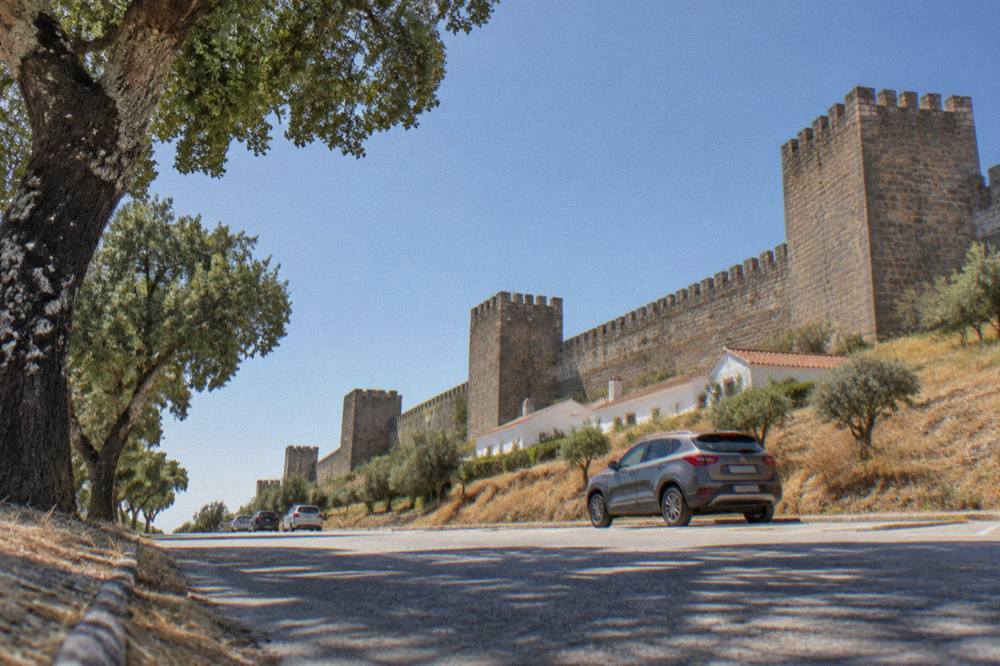
Portalegre Day Trip From Évora, Portugal: What To See And How To Plan It
Portalegre sits in the northern Alentejo under the Serra de São Mamede, and it makes a different kind of day trip from Évora: a district capital of churches, workshops and green hills rather than a monumental showpiece. Here is what the town offers, how it pairs with its neighbours, and how to plan the day.
Short answer
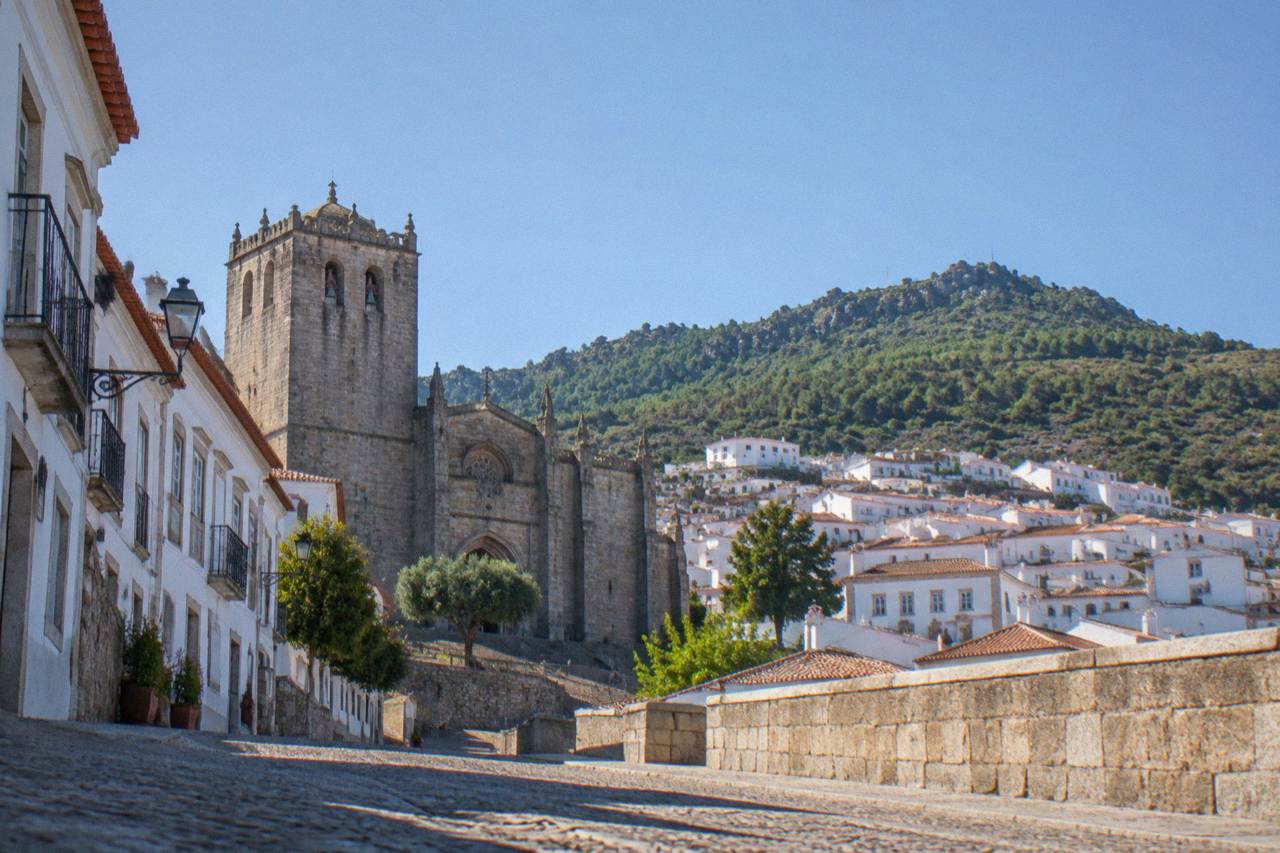
Portalegre is the capital of the district north of Évora, set on the slopes of the Serra de São Mamede near Marvão and Castelo de Vide. It rewards a slow day of churches, squares and hill views rather than a single must-see monument, and it pairs naturally with its two neighbouring towns on one loop.
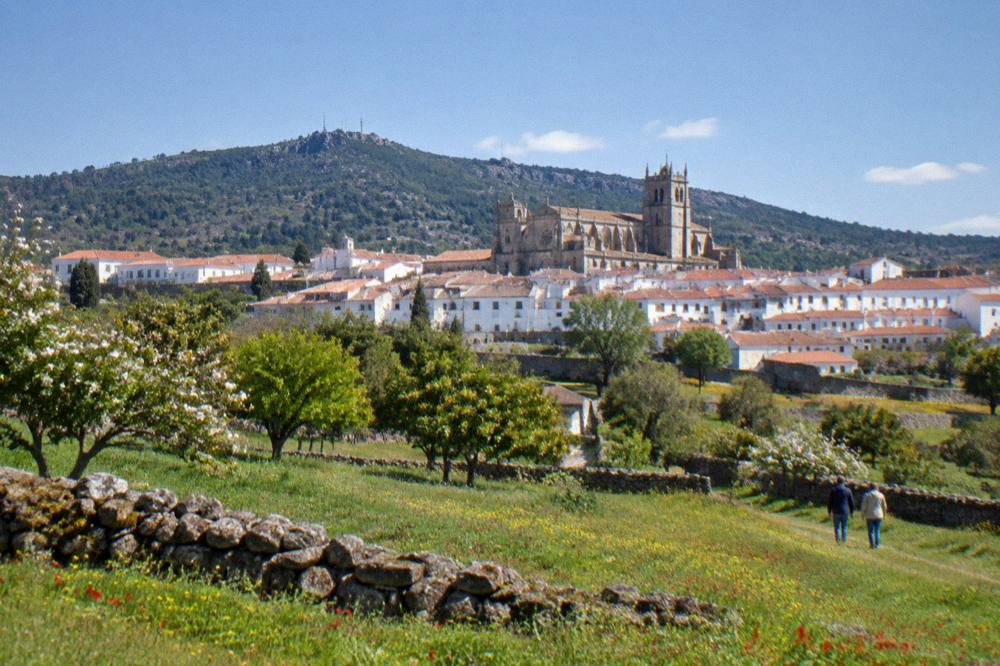
Portalegre is the capital of the northernmost district of the Alentejo, the region whose southern anchor is Évora, and it makes a day trip of a different flavour from the marble towns and wine villages closer to hand. The town climbs the lower slopes of the Serra de São Mamede, the wooded high ground that separates the Alentejo plain from the Spanish border, and that single fact shapes everything about a visit: the air is cooler, the streets are steeper, and the horizon is green in a way the plain around Évora is not. Évora, the UNESCO-listed capital of Central Alentejo, lies about 130 km from Lisbon and roughly south of this district, and the contrast between the two cities is the point of the drive.
The Évora Travel Guide editorial desk works from published sources only, so where a figure is not on an official page, this page says what to check instead of guessing it.
Where Is Portalegre And What Kind Of Day Does It Make?
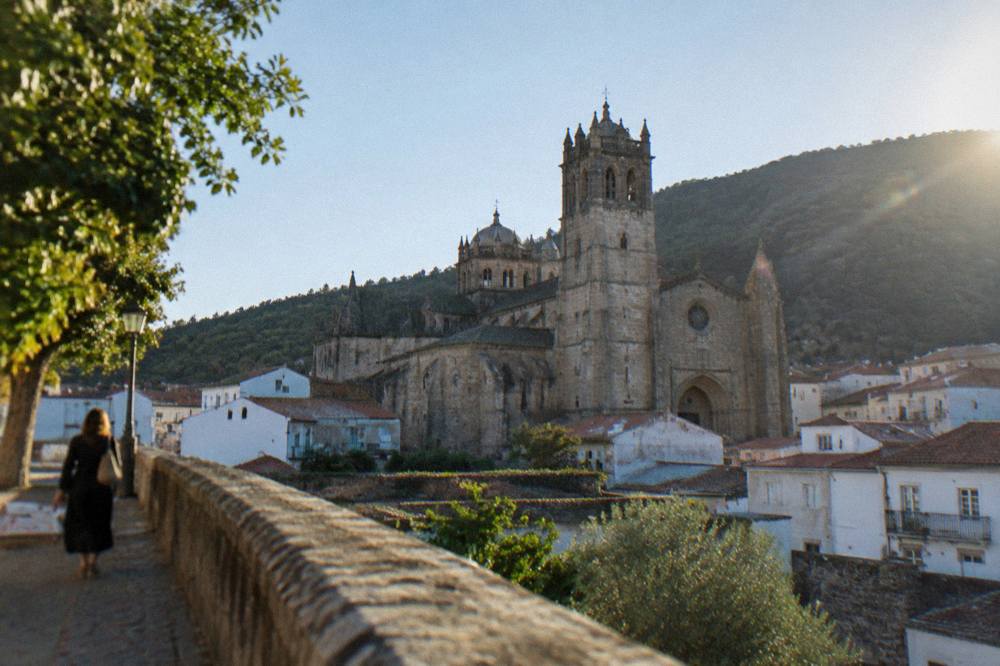
Portalegre is a district capital in the far north of the Alentejo, on the lower slopes of the Serra de São Mamede, and from Évora it lies to the north, beyond the wine and marble towns of the central plain. The day it makes is a quiet, architectural one: churches, a cathedral, tiled facades, a castle keep, and viewpoints over wooded hills, rather than a single monumental draw. It suits travellers who have already seen Évora's headline sights and want the Alentejo's greener, cooler edge.
The town's character comes from its position. The Serra de São Mamede lifts the landscape above the cereal plain, and Portalegre's streets reflect that climb: alleys step up the hillside, and the higher you go, the more the view opens toward the border country. The municipality of Évora counts about 53,000 residents and sits on the open plain; Portalegre's setting is higher and greener by nature, which is why it feels like a different region even though it belongs to the same Alentejo.
What the town does not offer is a compact single attraction of the Capela dos Ossos kind. Évora has the bone chapel, the Sé, the Roman temple and the Cromeleque dos Almendres within a short radius; Portalegre's pleasures are distributed across a whole hill. That makes it a walking town, and it makes the choice of day a matter of pace rather than tickets.
For context, the verified rounded distances from Évora to its northern neighbours, quoted as about-figures only, look like this:
| Town | Direction From Évora | Rough Distance | What The Day Is Built Around |
|---|---|---|---|
| Estremoz | Northeast | About 45 km | Marble, a hilltop castle keep, market square |
| Vila Viçosa | East | About 60 km | Ducal palace, marble streets, wineries |
| Elvas | East, near the border | About 80 km | Fortified walls and aqueduct |
| Marvão | North, in the serra | About 120 km | A walled hilltown with a castle |
| Portalegre | North, in the serra | Near Marvão | District capital, churches, hill views |
No drive time, bus timetable or train frequency was verified for any of these routes, so none is printed here. A car is the practical way to reach Portalegre, and the loop that takes in Marvão and Castelo de Vide is the standard shape of the day; the best day trips from Évora page sets out the alternatives for travellers who prefer not to drive.
What Should You Actually See In Portalegre In A Day?
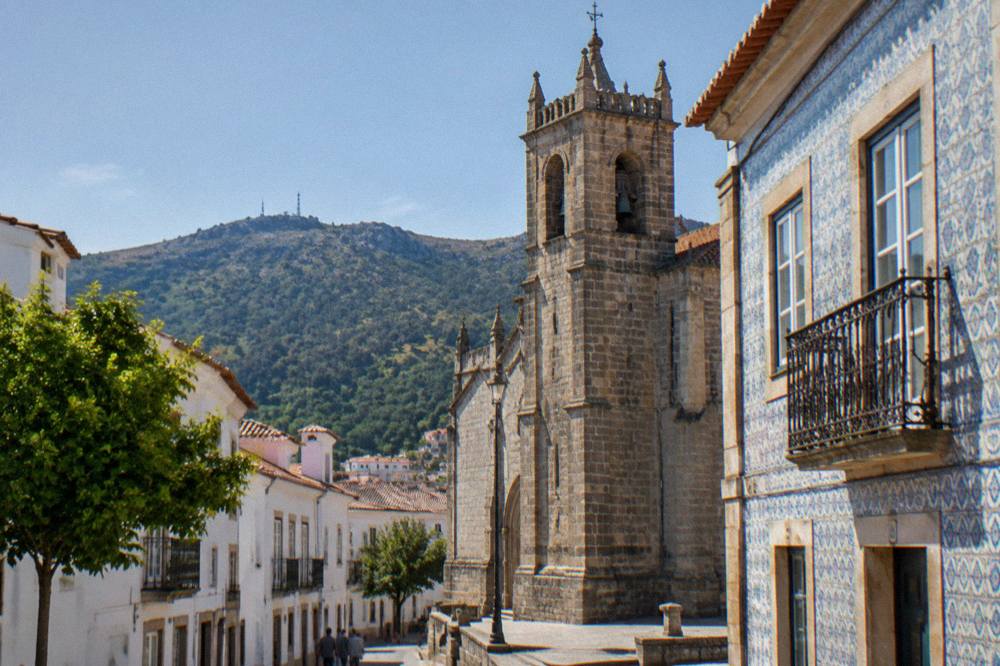
A day in Portalegre divides into three parts: the castle keep and its viewpoint at the top of the hill, the cathedral and the old churches threaded through the streets below it, and the town's tradition of fine-wool weaving, the craft the city is known for across Portugal. None of these carries a verified ticket price or opening hour on an official page, so the day should be planned as a wandering one, with each stop checked on arrival rather than assumed.
The castle is the natural first stop, because it anchors the topography. From its height the town falls away on one side and the serra rises on the other, and that double view is the clearest single explanation of why Portalegre exists where it does: a border watchtown between plain and mountain. No claim about the fortress being the oldest or best preserved of anything belongs on this page, because nothing of the kind was verified.
Below it, the streets hold the working life of a district capital. The same applies to the municipal museum and the churches: they are the substance of the day, but their hours and prices are not published facts this site can stand behind.
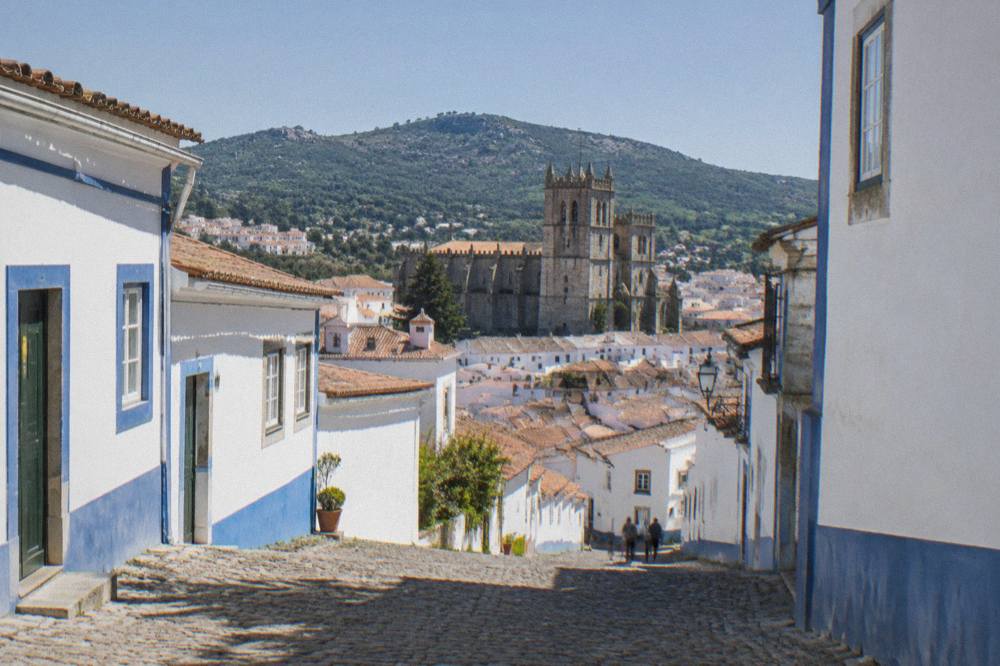
The third element is simply the town as a place to be. Portalegre is not a museum piece like Évora's walled centre; it is a working administrative city, and its appeal is that ordinary life, the cafés, the shops, the school runs, happens inside a beautiful setting. Travellers who arrive expecting another Évora will be disappointed; travellers who arrive expecting the Alentejo's northern edge will get exactly that.
The guided options below cover Évora itself rather than the northern serra, and they matter here for a simple reason: most visitors to this region base themselves in Évora, and the quality of the Évora half of the trip decides how much appetite is left for the drive north.
How Do You Get From Évora To Portalegre?
A car is the practical way to reach Portalegre from Évora, because the town sits in the serra north of the plain, no train or bus timetable for the route was verified on an operator page, and the day usually loops through Marvão and Castelo de Vide, which only a car reaches comfortably. The drive is a cross-country one through the Alentejo's northern towns, and no journey time, distance or frequency is printed here because none was verified for this specific route.
The verified transport facts for the region concern the Lisbon to Évora axis, not the Évora to Portalegre one. CP's timetable valid since 6 September 2026 lists six through Intercidades trains from Lisboa Oriente to Évora, departing at 07:02, 09:02, 09:58, 13:35, 17:02 and 19:02 and arriving about 1 hour 40 to 1 hour 45 later, at a fare of 13.90 EUR second class or 18.50 EUR first class. That is the spine of most trips: fly into Lisbon, train to Évora, and use Évora as the base for day trips by rental car. The Évora car rental and Évora parking guides cover the practical end of that arrangement.
For Portalegre itself, the honest position is that this site holds no verified timetable, fare or frequency for any Évora to Portalegre service. Coach operators serve the district capital from Lisbon, but the fare and times are not on a page this site could verify, so the advice is to check the operator's own schedule before planning around a bus. Renting a car in Évora removes the dependence entirely and opens the loop through the serra.
One planning note that is verified and matters: Évora's own sights have fixed hours that shape the day before and after a northern trip. The Sé de Évora is open 9:00 to 17:00 and closed on the afternoon of 24 December, on 25 December and on 1 January. The Capela dos Ossos runs 9:00 to 18:30 in summer legal time and 9:00 to 17:00 in winter, open every day except 1 January, Easter Sunday, the afternoon of 24 December and 25 December. The Museu de Évora is open Tuesday to Sunday, 9:30 to 13:00 and 14:00 to 17:30, and closed on Mondays. A day spent in the serra should therefore leave the Monday-closed and afternoon-closed sights of Évora for other days.
Can You Combine Portalegre With Marvão And Castelo De Vide?
Yes, and that combination is the strongest reason to make the trip, because Portalegre, Marvão and Castelo de Vide sit within a short drive of each other in the Serra de São Mamede and make a natural loop: Portalegre for the churches and the district-capital life, Marvão for the walled hilltop and castle, Castelo de Vide for the spa town streets and the Jewish quarter.
Marvão lies about 120 km from Évora, and the other two sit near it, so the loop is one long day.
Marvão is the headline of the three, a town on a granite crest with walls and a castle that are visible for miles, and the Marvão day trip page covers it in full. Castelo de Vide, covered here, is the softer complement: a spa town of fountains, a medieval Jewish quarter and chestnut woods. Portalegre, the largest of the three, is the place for lunch, for shopping and for the sense that the Alentejo continues past the postcard towns.
The order of the loop is a matter of taste and light. Marvão's view rewards the morning or the late afternoon, when the sun is low over the plain; Portalegre's streets are pleasant at midday; Castelo de Vide's shaded lanes suit the hottest hours. In summer that matters more than usual, because the serra is cooler than the plain but the IPMA 1991 to 2020 normals for the Évora station still show July and August mean maxima of 33.3 C and 33.5 C on the plain below, with 31.9 days a year reaching 35 C or more there.
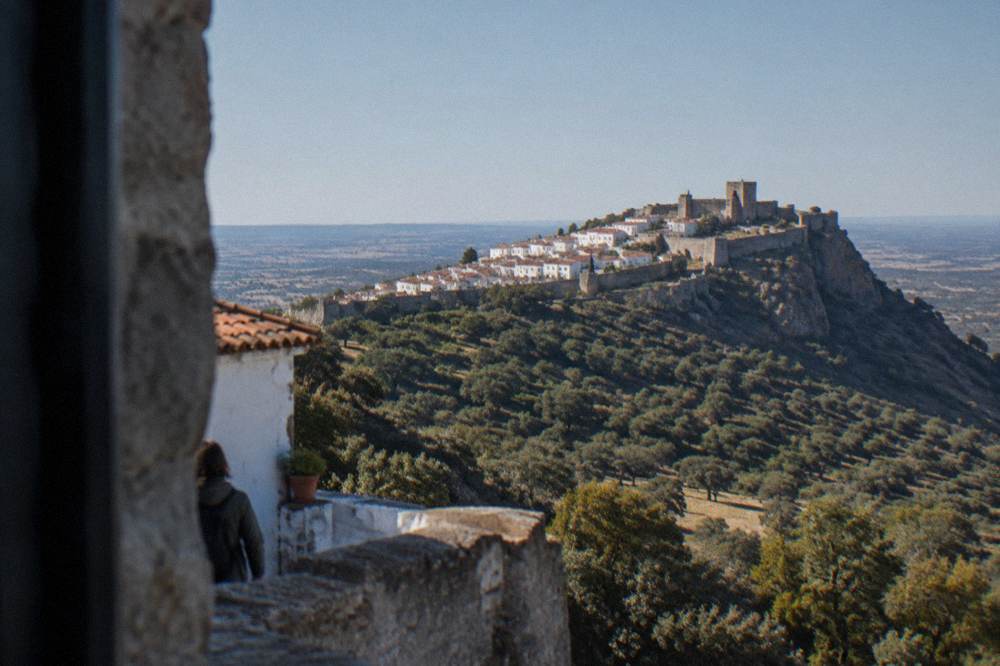
No castle hours for Marvão, no museum prices in Portalegre and no event dates for any of the three towns were verified, so the loop should be planned with slack in it: arrive early enough that a closed door costs an hour, not the day. Travellers who prefer a single destination per day should pick Marvão alone; travellers who like a full loop will find the three towns distinct enough that no stop repeats another.
What Is The Weaving Tradition Of Portalegre?
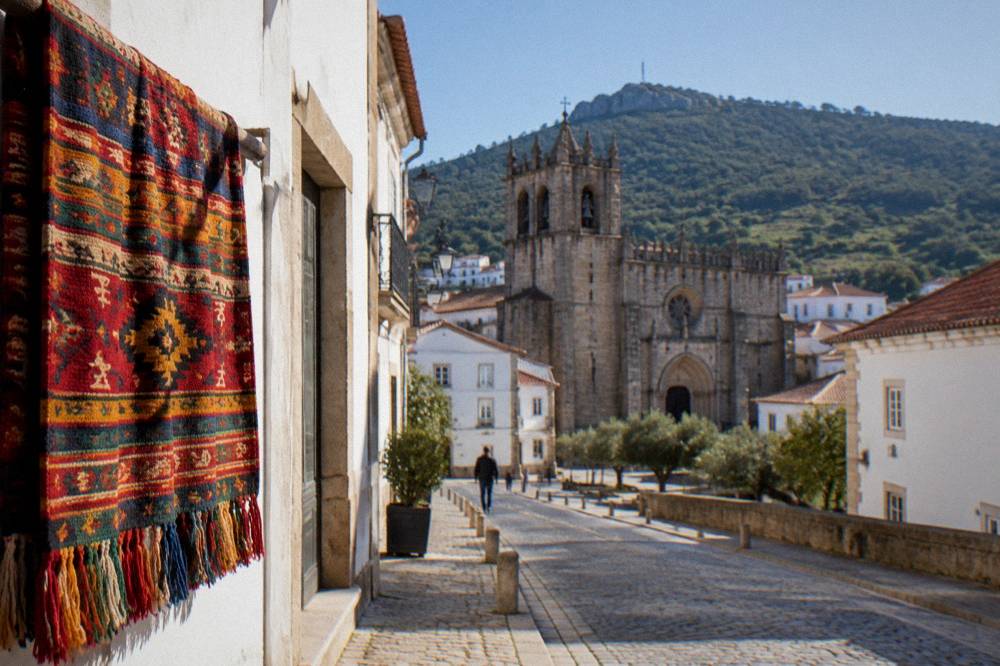
Portalegre gives its name to a school of fine-wool weaving, a craft in which designs by painters are translated into dense, hand-worked wall hangings, and the city's name is attached to that tradition across Portugal. What this page cannot honestly state is any workshop's opening hours, tour arrangements or prices, because none of that was verified on an official page, so the tradition should be treated as the town's cultural identity rather than a bookable attraction.
The distinction matters for planning. A traveller who arrives expecting a guaranteed workshop tour may find a closed door; a traveller who arrives knowing the city's identity can enjoy the craft in the streets, in shop windows and in whatever public display happens to be running, and can ask locally about the rest. The Évora Travel Guide editorial desk holds no verified detail on the workshops, so it prints none, and the practical advice is to check with the tourist office at Praça do Giraldo 73 in Évora, whose published phone number is +351 266 777 071, or with the Portalegre office on arrival. Everything else covered here is indexed on Évora Travel Guide.
The craft also gives the day a shape that the other northern towns lack. Évora's identity is stone: the Templo Romano, the walls, the Sé. Estremoz and Vila Viçosa are marble towns, and the Estremoz and Vila Viçosa pages cover that stone culture. Portalegre's identity is thread and wool, a softer, indoor heritage that suits the cooler climate of the serra. It is a different Alentejo from the one around Évora, and the difference is the reason to go.
When Is The Best Time To Visit Portalegre?
The best time for a Portalegre day trip is spring or autumn, because the serra is at its greenest then and the walking the town demands is comfortable, while the verified IPMA 1991 to 2020 normals for the Évora station on the plain below show July and August mean maxima of 33.3 C and 33.5 C, heat that makes steep streets punishing. Winter is quiet and cold at night; summer is hot but cooler than the plain.
The climate figures this site can stand behind are the Évora station's, labelled as such, and they describe the plain rather than the serra, but they set the frame for the whole region. The same normals put the July mean minimum at 15.6 C and the August mean minimum at 16.0 C, so summer nights stay warm, while January shows a mean maximum of 14.1 C and a mean minimum of 4.5 C, with a record low of -4.2 C recorded on 4 December 1998 and 23 January 2000. Rain concentrates from October to December, with 81.5, 86.0 and 85.1 mm respectively in those months against 2.7 mm in July.
| Month (IPMA 1991-2020, Évora Station 558) | Mean Max (C) | Mean Min (C) | Days With 1 mm+ Rain |
|---|---|---|---|
| January | 14.1 | 4.5 | 8.6 |
| April | 20.7 | 8.5 | 8.0 |
| July | 33.3 | 15.6 | 0.6 |
| October | 24.1 | 12.3 | 7.7 |
The planning rule is simple: go in spring or autumn for the walking, go in summer only with an early start, and go in winter expecting cold nights and short days.
What Should A Portalegre Day Trip Cost?
The verified costs of a Portalegre day are the Évora expenses around it rather than anything in the town itself: the Sé de Évora complete visit at 5.00 EUR, the Capela dos Ossos museum ticket at 7.00 EUR for an adult, the Museu de Évora at 8 EUR, and the Évora Ticket at 8 EUR for one day, 10 EUR for two or 12 EUR for three. No Portalegre attraction price was verified, so the town itself may cost little beyond lunch.
The Évora figures are solid because they sit on official pages. The Sé's single 5.00 EUR ticket covers the cathedral, the cloister, the roof terrace and the museum, with children up to 12 free. The Capela dos Ossos ticket, one price for all museum areas of the Igreja de São Francisco complex, is 7.00 EUR for an adult, 5.00 EUR for youth up to 25 and seniors over 65, and 15.00 EUR for a family of two adults plus youths. The Museu de Évora charges 8 EUR for an adult, with 50% off for youth 13 to 24, seniors and families, free entry to age 12, and free Sundays and holidays for residents of Portugal. A rental car, fuel and lunch in Portalegre are the variable parts no official figure covers.
| Verified Évora Entry | Adult Price | Reductions | Closed Days |
|---|---|---|---|
| Sé de Évora complete visit | 5.00 EUR | Free to age 12 | 24 Dec pm, 25 Dec, 1 Jan |
| Capela dos Ossos museum ticket | 7.00 EUR | 5.00 EUR youth to 25 and seniors 65+; family 15.00 EUR | 1 Jan, Easter Sunday, 24 Dec pm, 25 Dec |
| Museu de Évora | 8 EUR | 50% off youth, seniors, family; free to age 12 | Mondays, 1 Jan, Easter Sunday, 1 May, 29 June, 25 Dec |
| Évora Ticket, one day | 8 EUR | Free to age 12 | Site-specific |
One caution that saves money: the Évora Ticket does not include the Sé, the Capela dos Ossos or the Museu de Évora, so it is not a shortcut around the three biggest tickets in the city. And the Convento dos Lóios, often listed in older guides with a price, currently shows its ticket as temporarily unavailable on the official page, so no figure is printed for it here.
For the guided side, prices sit on the tour cards in US dollars. The private skip-line Évora tour of the university, cathedral and Capela dos Ossos with wine runs from $91.39 per person; a tales-and-legends walking tour of Évora runs from $52.90; a flexible historic-centre walk runs from $13.51. Those are Évora products, and they belong on the Évora half of the trip, but they set the scale of what a guided day in the region costs.
How Does Portalegre Compare With Évora'S Other Day Trips?
Portalegre is the farthest-flung and greenest of the standard Évora day trips, and it trades convenience for variety: the marble and wine towns of the central plain, Estremoz, Vila Viçosa, Borba, are closer and easier, the border fortress of Elvas is more monumental, the reservoir country of Alqueva is more about water and sky, and only the northern serra offers woods, altitude and a three-town loop in one drive. It is the choice for a second or third day trip, not the first.
The first day trip from Évora should be the near ones, and this site's one day in Évora and what to do in Évora for a day pages handle that base. After that, the map opens. Estremoz, about 45 km, and Vila Viçosa, about 60 km, make a marble-and-palace pair that can share a day. Elvas, about 80 km, is a border fortress city. Marvão, about 120 km, is the hilltop showpiece of the north, and Portalegre sits beside it.
| Day Trip From Évora | Rough Distance | The Reason To Go | Best For |
|---|---|---|---|
| Arraiolos | About 20 km | Embroidery tradition and a hilltop round church | A short half-day |
| Estremoz | About 45 km | Marble, castle keep, market town | Marble and history |
| Vila Viçosa | About 60 km | Ducal palace and wineries | Palaces and wine |
| Elvas | About 80 km | Fortified border city | Military architecture |
| Marvão | About 120 km | Walled hilltown and castle | The single best view |
| Portalegre | Near Marvão | District capital, weaving, serra streets | A three-town loop |
Portalegre's weakness is that no single sight anchors it, and its strength is that the whole town is the sight. Travellers who need a headline will prefer Marvão; travellers who like cities that work, where the Alentejo's administrative life happens inside beautiful streets, will find Portalegre the more interesting half-day of the two. Pairing them removes the need to choose.
What Should You Book Ahead For The Évora Half Of The Trip?
The Évora half of the trip is the part that benefits from booking, because the verified headline sights have fixed hours and the best-guided options sell around them: a private skip-line walk of the university, the Sé and the Capela dos Ossos with wine tasting runs from $91.39 per person and covers the three biggest monuments in one three-hour sequence. Portalegre itself needs nothing booked, and the serra towns run on arrival and luck.
The logic is one of scarcity and hours. The Sé closes at 17:00, the Museu de Évora closes for lunch between 13:00 and 14:00 and all day Monday, and the Capela dos Ossos stops at 17:00 in winter. A guided sequence that moves through those doors in the right order, with the tickets handled, converts a day of clock-watching into a day of looking. The private tour above does exactly that, and its card shows a 5 rating from 48 reviews at the time this page was written, with the live price and availability on the operator's listing. A tales-and-legends evening walk from $52.90 and a flexible historic-centre walk from $13.51 cover the city's stories at lower cost.
For travellers who want the stories rather than the monuments, the tales-and-legends walk runs two and a half hours through Évora's darker corners, and its card shows a 4.8 rating from 40 reviews. For the lightest option, the flexible historic-centre walk, from $13.51, lets the group set its own pace, and its card shows a 4.8 rating from 105 reviews. Both are evening-friendly in a way the monument tours are not, which matters in summer when the plain is at its hottest in the middle of the day.
There is also a free layer. The Essential Free Tour of Évora on GuruWalk, tip-based, runs about two hours with a 4.93 rating from 774 reviews, and it is the cheapest possible way to get oriented in Évora before the drive north. GuruWalk's model is pay-what-you-want, so it costs nothing to join and the guru is tipped at the end; no price is printed for it here because there is none to print.
What Is The Best Overall Plan For A Portalegre Day?
The best plan is a full-day loop by car: leave Évora early, take in Portalegre's hill, churches and lunch in the middle of the day, climb to Marvão for the afternoon view, and finish in Castelo de Vide's shaded lanes before the drive back, returning to Évora in time for dinner. Book the Évora monument walk for the day before or the day after, because the Sé, the Capela dos Ossos and the Museu de Évora have fixed hours that a serra day will consume.
The shape of the day follows the light. Marvão's crest is at its best with the sun low, Portalegre's streets are at their best in the middle hours, and Castelo de Vide's fountains and alleys are at their best in shade. The loop needs no tickets booked for the serra towns, because nothing about their entry is verified as bookable, but it does need fuel, water and an early start in summer, when the plain's heat, 33.3 C as the 1991 to 2020 July mean maximum at the Évora station, makes the middle of the day the worst time to be walking uphill anywhere in the region.
For travellers basing themselves in Lisbon instead, the Évora day trip from Lisbon page covers the southern half of the region, and the best day trips from Lisbon guide sets out the wider choice; the northern serra, though, is an Évora-based trip, because the train from Lisbon stops at Évora and the serra begins where the rail line ends.
Common Questions About Portalegre, Portugal
Is Portalegre worth a day trip from Évora?
Yes, for travellers on a second or third day trip who want the green northern Alentejo. Portalegre pairs naturally with Marvão and Castelo de Vide in one loop, and its district-capital streets, churches and weaving heritage make a quieter, more everyday Alentejo than the monumental towns closer to Évora.
How far is Portalegre from Évora?
Portalegre lies north of Évora, in the Serra de São Mamede near Marvão, which is about 120 km from Évora. No verified distance or drive time for the Évora to Portalegre route itself is in this site's facts, so the drive should be planned as a long morning's run with the loop in mind.
What is Portalegre known for?
Portalegre is known as the capital of its district, for its fine-wool weaving tradition, and for its setting on the slopes of the Serra de São Mamede, the wooded high ground of the northern Alentejo. No workshop hours, museum prices or event dates for the town are verified, so those should be checked locally.
Can you visit Portalegre and Marvão on the same day?
Yes, and that pairing is the standard shape of the trip. Portalegre, Marvão and Castelo de Vide sit close together in the serra, so one driving day covers all three: Portalegre for the churches and lunch, Marvão for the walled hilltop and castle, Castelo de Vide for the spa town lanes.
Is Portalegre in the Alentejo?
Yes. Portalegre is the capital of the Portalegre district, one of the Alentejo's districts, in the region's northern high country. Évora, to the south, is the capital of its own district and of the Central Alentejo sub-region, which is why the two cities anchor different halves of the same region.
Portalegre is the Alentejo's northern anchor, and the day it makes from Évora is a green, unhurried one that no other direction from the city quite matches.