Spanish Border Day Trips From Évora
Évora, the capital of Portugal's Alentejo region, sits close enough to Spain that a cross-border day trip to Cáceres or Badajoz is a realistic plan. Here is what each city offers and how to think about the journey.
Short answer
Cáceres and Badajoz both lie across the Spanish border in Extremadura, east of Évora. No bus or train timetable, drive time or ticket price for either city has been verified, so plan the route yourself and treat Elvas, about 80 km from Évora, as the natural halfway stop.
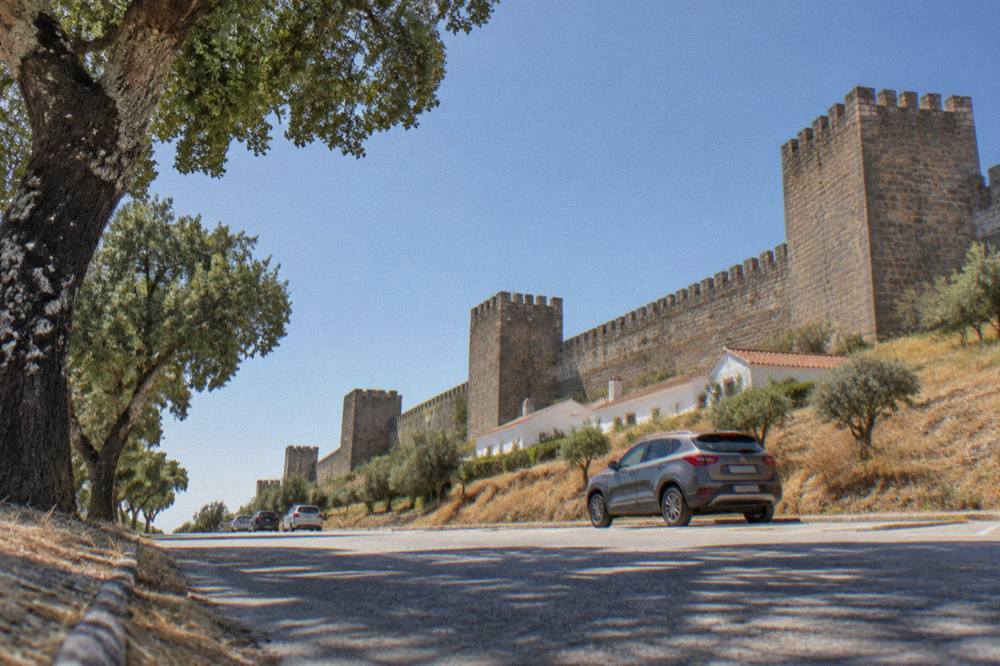
Évora, the capital of the Alentejo district of Portugal, stands inland on a hot, dry plain, and the Spanish region of Extremadura begins not far to its east. The border is invisible on the ground: no mountains, no river gorge, just open cork country and wheat fields rolling into Spain. That geography is why a day trip from Évora to Cáceres or Badajoz is one of the more interesting moves a visitor to the Alentejo can make, trading Roman-temple Portugal for conquistador Spain and back inside a single day.
What follows is a planning guide, not a timetable. No bus schedule, train time, drive time or ticket price for Cáceres or Badajoz has been verified for this page, and the border crossing itself carries no claim here. What is verified is what the cities are, what direction they lie in, and what kind of day each one makes. For the wider set of options inside Portugal, the best day trips from Évora page covers the Alentejo towns, and things to do in Évora covers the days you stay put.
Why Combine Évora With Cáceres Or Badajoz?
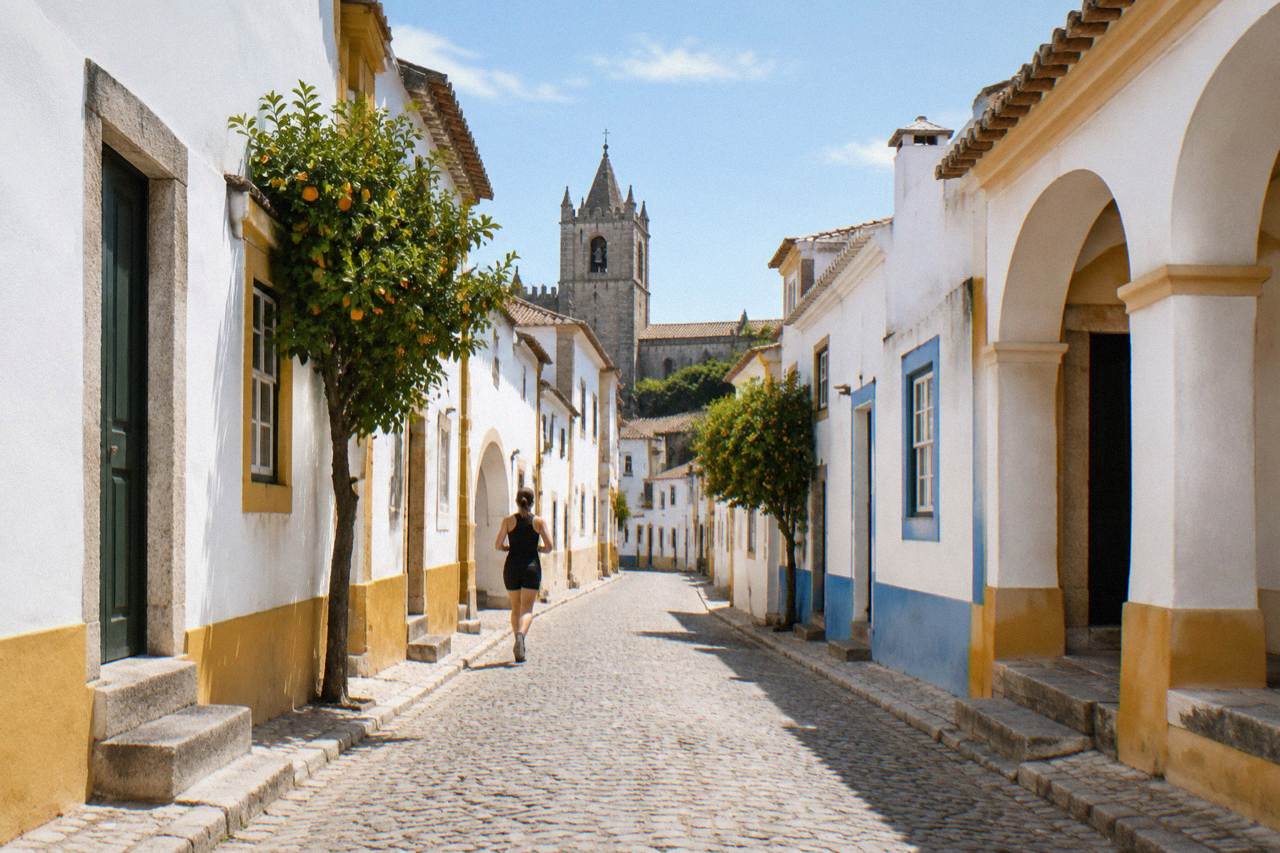
Because Évora and the two Spanish cities share one landscape and one history of borderland wealth, and the contrast is the whole point: Évora is a Portuguese museum city of white walls and azulejos, Cáceres is a Spanish fortress town of conquistador palaces, and Badajoz is the largest city in Extremadura, a working regional capital with an old Arab alcázar and a wide river setting. Standing in all three in one trip shows how differently Portugal and Spain spent that wealth.
The UNESCO Historic Centre of Évora was inscribed in 1986, on criteria (ii) and (iv), and the criterion (iv) text calls it the finest example of a city of the golden age of Portugal after the 1755 Lisbon earthquake, which Évora was largely spared. Cáceres has its own UNESCO inscription, and its old town is a dense cluster of fortified houses and renaissance palaces built by families who came back from the Americas with money. The two cities make a natural pair: same golden stone, different empire.
Badajoz is the less obvious choice and often the better one for a repeat visitor. It is not a picture-postcard town. It is a real Spanish provincial capital on the Guadiana river, with a cathedral, a Moorish alcázar, tall walls and a lively tapas quarter, and it sits closer to the Portuguese border than Cáceres does. Évora's own history is tangled with it: this whole stretch of the frontier changed hands repeatedly across the medieval centuries, and Moorish rule in Évora ended in 1165, part of the same push and pull that shaped every town on both sides of the line.
A word on the season before anything else. IPMA's 1991 to 2020 normals for the Évora station show a July mean maximum of 33.3 C and an August mean maximum of 33.5 C, with 31.9 days a year reaching 35 C or more, and the plain does not cool down much on the Spanish side. The best time to visit Évora question aside, spring and autumn are the comfortable months for a border crossing on foot.
Which Is Better From Évora, Cáceres Or Badajoz?
Cáceres is better for a first crossing because its old town is compact, walkable and visually spectacular, a walled quarter where almost every building is a historic monument, while Badajoz is better if you want a larger, lived-in Spanish city with a cathedral, an Arab fortress and a proper tapas scene rather than a museum street. Neither has a verified bus or train timetable from Évora on this page, so the choice should rest on what you want to see, not on how you get there.
Cáceres rewards a slow wander. The old town is small enough that a few hours covers it, and the experience is architectural: towers, arches, courtyards, storks. Badajoz spreads wider and needs a bit more planning, but it gives you the Guadiana riverfront, the tall Alcazaba walls and a genuinely Spanish evening atmosphere that a small walled town cannot match.
The honest third option is to do neither in a rush and stop in Elvas instead. Elvas, about 80 km from Évora, is the Portuguese border fortress town on the road east, and its own page covers it in detail. A day that goes Évora to Elvas, crosses into Spain for lunch in Badajoz, and comes back through Elvas is a realistic shape for a border day, and it keeps the driving in the cool part of the day.
| Question | Cáceres | Badajoz |
|---|---|---|
| What kind of place is it | Small walled old town, UNESCO listed | Large regional capital on the Guadiana river |
| Best for | Architecture, storks, a compact walk | Cathedral, Alcazaba, tapas, city life |
| Character of the day | Museum-like, quiet in the evening | Lived-in Spanish city, busier streets |
| How it pairs with Évora | Contrast of two golden-stone old towns | Contrast of Alentejo town and Spanish city |
| Verified timetable from Évora | None stated on this page | None stated on this page |
Whichever city you pick, the morning belongs to Évora if you have not yet seen it properly. A guided walk is the efficient way to do that, and the Évora private walking tour with cathedral and Chapel of Bones covers the Sé, the Capela dos Ossos and the historic centre with monument tickets included, from $111.42 per person and rated 5 from 106 reviews. Check availability
What Should You See In Cáceres On A Day Trip?
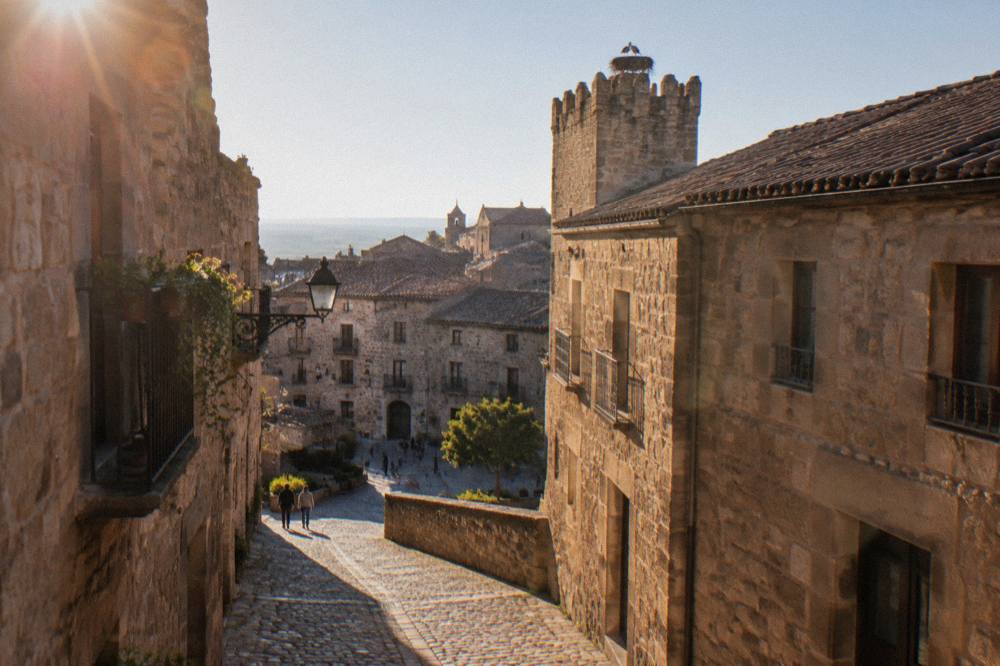
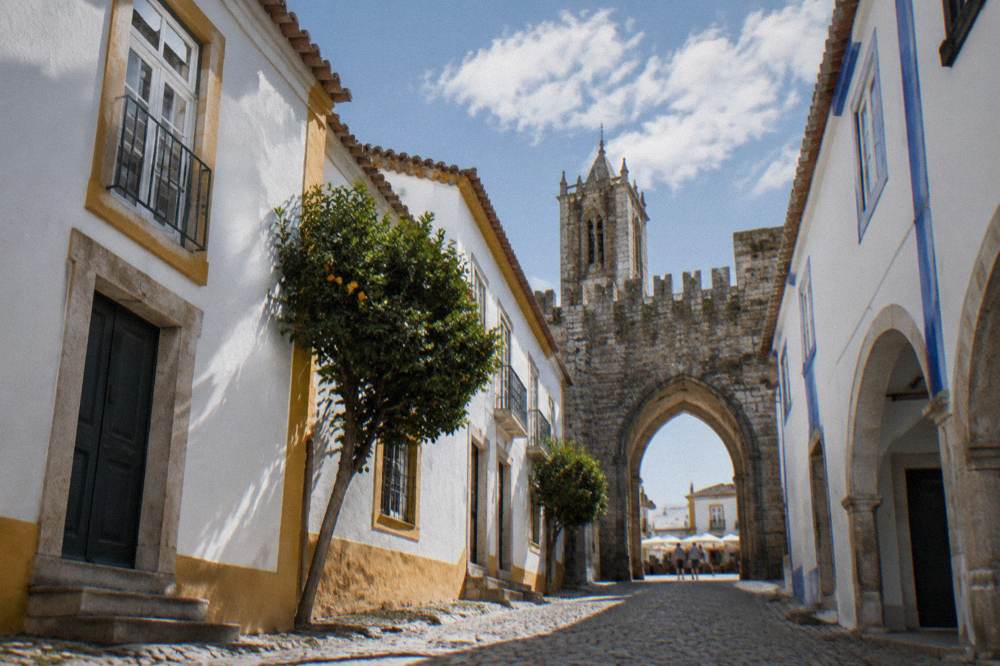
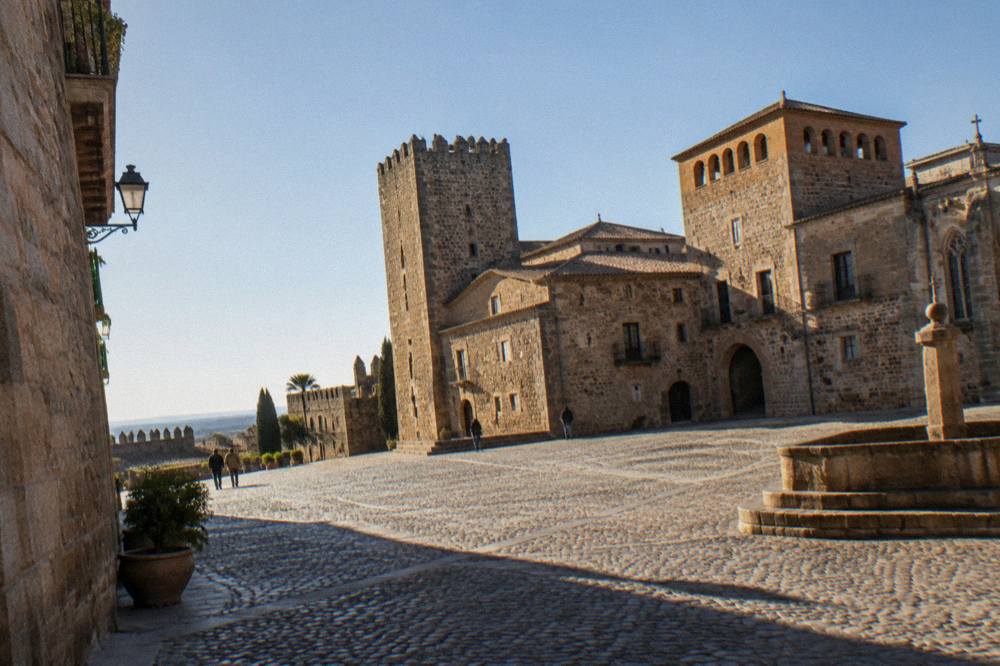
The old town inside the walls is the whole visit: the Plaza Mayor with its arched entrance gate, the cluster of renaissance palaces and fortified tower houses around the Plaza de San Mateo, the Bujaco tower, and the storks that nest on the rooftops and stay all year. The town's wealth came from families who returned from the American conquests and built palaces in stone, and the result is a quarter where the streets have barely changed shape in centuries.
Walk up from the Plaza Mayor through the Arco de la Estrella, the arched gate that is the postcard view, and the town opens into a maze of narrow lanes. The palaces are private or semi-private buildings in many cases, so the pleasure is the exteriors and the courtyards you can glimpse, not a museum crawl. The towers are the skyline: Cáceres keeps a group of defensive towers from its medieval period, and storks nest on them in every season.
Food is the second reason to come. Extremadura is the home of jamón ibérico dehesa country, the same dehesa landscape of cork oaks and pigs that runs right across the border into the Alentejo, and the tapas bars around the lower town serve it simply. A lunch in Cáceres and a dinner back in Évora is a good division of the day, and it lets you compare the two countries' versions of the same pork-and-bread-and-red-wine culture.
| Sight in Cáceres | What it is | What to expect |
|---|---|---|
| Plaza Mayor | Main square below the walls | Arcades, cafés, the view up to the towers |
| Arco de la Estrella | Arched gate into the old town | The classic entrance, crooked and photogenic |
| Plaza de San Mateo | Palace cluster at the high point | Renaissance facades, tower houses, storks |
| Bujaco tower | Defensive tower by the gate | Part of the skyline, visible from below |
| Old-town lanes | Network of medieval streets | Quiet stone streets, best explored slowly |
One caution: this page states no opening hour, ticket price or closure information for any Cáceres building, because none of it was verified. Check the current situation in the town before you commit to entering anything specific, and build the day around the streets themselves, which need no ticket and no schedule.
What Should You See In Badajoz On A Day Trip?
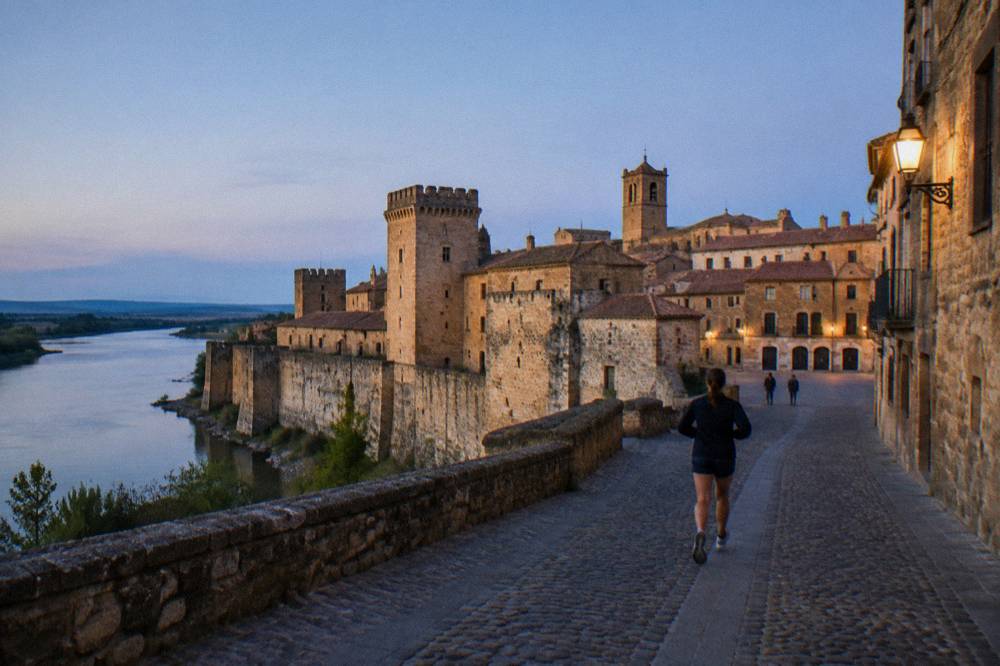
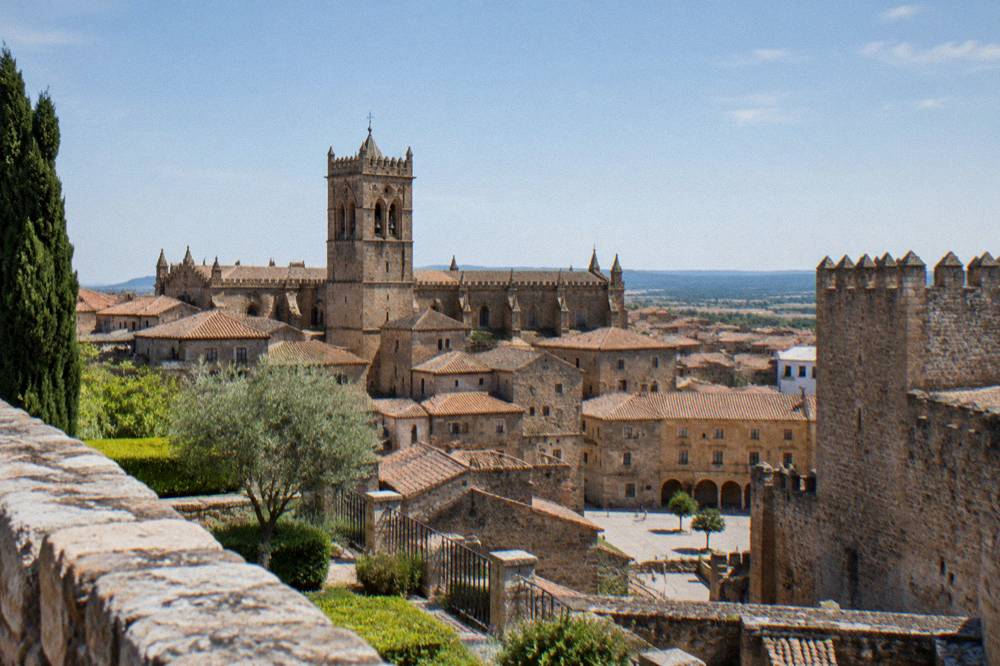
Badajoz gives you the Alcazaba, the large Moorish fortress on the hill above the Guadiana river, the tall 17th-century cathedral with its squat tower, the Espantaperros tower, and a tapas quarter around the Plaza de San Juan that fills up in the Spanish evening. It is a working city of real size, the largest in Extremadura, so the day has a different rhythm from a small walled town: fewer postcards, more life.
Start at the Alcazaba. It is one of the largest Moorish fortresses in Spain, and its walls and gardens look out over the river and the modern bridges, a reminder that this city was a frontier stronghold for centuries, fought over by Portugal and Castile long before either country was settled about the line. The Espantaperros tower stands inside the complex, a watchtower with a name that translates roughly as "scare-thieves." Other pages covering the same trip are gathered on Évora Travel Guide.
The cathedral, the Catedral de San Juan Bautista, sits in the old town below, and its plain, fortress-like exterior tells the border story again: this was a church built to be defended. Around it, the streets toward the Plaza de San Juan and the Plaza Alta are the tapas and evening quarter, and they are where a day trip should end. Spanish dinner hours run late, so plan either a late Spanish lunch or an early return to Évora.
| Sight in Badajoz | What it is | What to expect |
|---|---|---|
| Alcazaba | Moorish fortress on the hill | Walls, gardens, wide views over the Guadiana |
| Espantaperros tower | Watchtower in the Alcazaba | Part of the fortress circuit |
| Catedral de San Juan Bautista | 17th-century border cathedral | Fortress-like exterior, old-town setting |
| Plaza de San Juan | Tapas quarter | Bars and tables, busiest in the Spanish evening |
| Plaza Alta | Old main square | Painted facades, arcades, quiet by day |
| Guadiana riverfront | River below the fortress | Bridges and walks along the water |
As with Cáceres, no opening hour, entry price or closure for any Badajoz monument is stated here, because none was verified. The fortress and the riverfront are generous public spaces that carry a day on their own even if every interior is shut.
Where Should You Stop Between Évora And The Border?
Elvas is the natural stop, a Portuguese fortress town about 80 km from Évora whose towering granite walls and aqueduct announce the border region long before you reach Spain, and it is followed on the same eastern road by smaller Alentejo towns worth a pause: Borba, Portel and Vila Viçosa all lie in the same eastern Alentejo corridor, with Vila Viçosa about 60 km from Évora and Borba and Portel on the way toward it.
Elvas is the star of the corridor. Its walls are among the most dramatic military architecture in Portugal, and its aqueduct is a long, tall arc of stone that runs into the town. The page on Elvas covers the town in full; here it is enough to say that a border day that skips Elvas is missing half the story, because Elvas is the Portuguese answer to Badajoz, the two fortresses facing each other across the same contested plain.
Vila Viçosa, about 60 km from Évora, is the aristocratic counterpoint: a ducal seat with a marble ducal palace, and the region around it is marble country, the same white stone that paves so much of the Alentejo's eastern towns. The Vila Viçosa page carries the detail, and the Marble Tour in Vila Viçosa, from $28.14 per person and rated 4.8 from 82 reviews, is a short guided way into it.
| Stop east of Évora | Direction and distance | Character of the stop |
|---|---|---|
| Borba | East of Évora, on the Vila Viçosa road | Wine town, marble, small and calm |
| Portel | Southeast of Évora | Castle town on a hill |
| Vila Viçosa | About 60 km east | Ducal palace, marble, elegant streets |
| Elvas | About 80 km east | Fortress walls, aqueduct, border town |
| Badajoz | Across the border in Spain | Regional capital, Alcazaba, cathedral |
| Cáceres | Further north in Extremadura | Walled old town, palaces, storks |
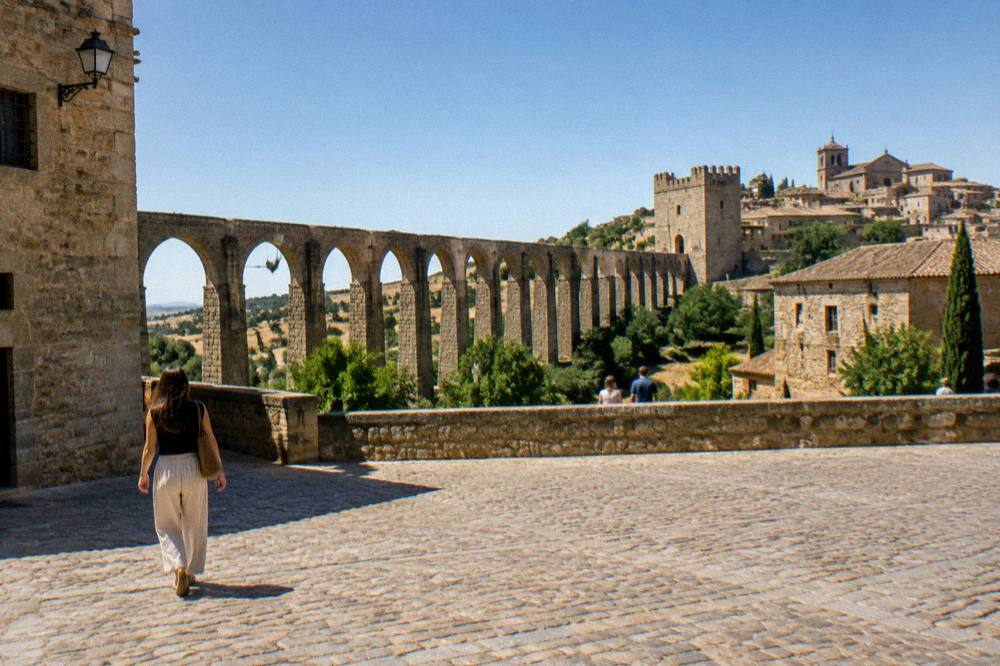
Borba and Portel are the unhurried options. Borba, with its wine cooperatives and marble, and Portel, with its castle above the plain, both reward an hour rather than a day, and both sit close enough to Évora that they can be folded into the outward or return leg of a border trip. The Borba and Portel pages carry the fuller picture.
How Do You Actually Get From Évora To Badajoz Or Cáceres?
No bus timetable, train connection, drive time or fare between Évora and either Spanish city has been verified for this page, so the honest answer is that you arrange the crossing yourself: a hire car is the practical option for a day trip of this shape, and the Évora car rental and Évora parking pages cover the Portuguese end of it. The CP train from Lisbon runs to Évora, not across the border, so rail is not the route to Spain here.
What can be said with confidence is the shape of the geography. Évora sits about 130 km from Lisbon on the Portuguese side, Elvas about 80 km east of Évora, and the Spanish border lies just beyond Elvas, with Badajoz the first sizeable city across the line. Cáceres sits further north in Extremadura. These are rounded, about-figure distances from the verified geography, not timetables, and no journey time should be inferred from them: road quality, border-town traffic and your stops decide the hours.
For anyone relying on public transport, the practical reality is that cross-border local connections in this part of the Iberian peninsula are thin and slow, and a day trip by bus is rarely the best use of a single day. A multi-day Alentejo road trip that swings through Spain is the better shape if the car is not available for one day only. The Alentejo road trip planning approach and the one day in Évora itinerary bracket the two ends of that decision.
| Leg of a border day | What is verified | What is not stated here |
|---|---|---|
| Évora to Elvas | Elvas about 80 km east of Évora | Drive time, road number, bus service |
| Elvas to Badajoz | Badajoz lies across the border in Spain | Distance, crossing time, border formalities |
| Évora to Cáceres | Cáceres lies in Extremadura, further north | Distance, drive time, route |
| Évora to Lisbon | About 130 km | Train journey time on this page's legs |
| Car hire in Évora | A practical option, covered on its own page | Price, availability |
One point on paperwork, because it is verified and often missed: the EU's Entry/Exit System was fully deployed across the Schengen area as of 10 April 2026, and both Portugal and Spain are inside Schengen, so there is no passport control on this crossing. Carry identification anyway, as border-area checks can happen anywhere in the zone.
Is A Spanish Day Trip Better Than Another Alentejo Day Trip?
For a visitor with three or fewer days in the region, no: the Alentejo towns inside Portugal, Monsaraz, Estremoz, Marvão and Arraiolos among them, are closer, better documented and easier to reach, and a Spanish crossing makes most sense on a fourth day or on a road trip that loops through both sides of the border. Monsaraz sits about 40 to 45 km from Évora, Estremoz about 45 km and Arraiolos about 20 km, all of them shorter hops than Spain.
The Alentejo case is simple. Monsaraz is a hilltop village above the Alqueva lake with one of the great views of the region. Estremoz is a marble town with a castle and a market tradition. Marvão is a mountain fortress village of astonishing position. Arraiolos is the carpet town, about 20 km away, small enough for a half day. Each of these is covered in its own page, and each is a shorter, simpler day than either Spanish city.
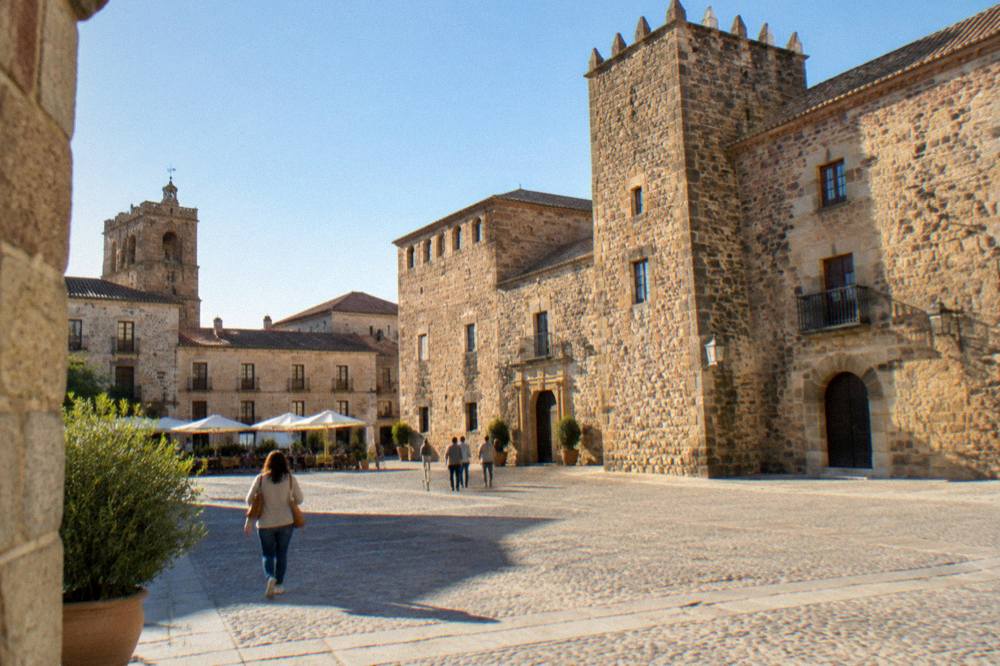
The Spanish case is also simple, and it is different in kind rather than in quality. A border day gives you a second country, a second currency zone in the sense that prices feel different even though the euro is shared, a second language at the lunch table and a genuinely different old town after days of Portuguese white. If the trip is a week in the Alentejo, a Spain day is a fine change of texture. If the trip is two nights in Évora, the Alentejo towns win.
| Option | Distance feel from Évora | Best for |
|---|---|---|
| Arraiolos | About 20 km, a short hop | Carpets, a calm half day |
| Monsaraz | About 40 to 45 km | The lake view, the hilltop village |
| Estremoz | About 45 km | Marble, market square, castle |
| Vila Viçosa | About 60 km | Ducal palace, marble country |
| Elvas | About 80 km | Fortress walls, the border story |
| Badajoz | Across the border | A Spanish city, Alcazaba, tapas |
| Cáceres | Further into Extremadura | A full walled old town, palaces, storks |
Between the two countries, the practical middle path is Elvas plus Badajoz: fortress on one side, fortress city on the other, one border crossing, one long day. Cáceres is the choice when the old town itself is the goal and the extra distance is acceptable.
What Should A Two-Day Border Loop Look Like?
Day one stays in Portugal: Évora's own monuments in the morning, the Sé complete-visit ticket at 5.00 EUR covering cathedral, cloister, roof terrace and museum, then Vila Viçosa or Estremoz eastward and a night in Elvas, whose walls are the best evening walk in the corridor. Day two crosses into Spain for Badajoz or Cáceres, spends the Spanish afternoon in the old town and the tapas quarter, and returns to Évora by night.
The Évora morning needs its own arithmetic. The Capela dos Ossos museum ticket at the Igreja de São Francisco is 7.00 EUR for an adult, 5.00 EUR for youth up to 25 and seniors over 65, and the museum ticket covers all the museum areas including the Sala do Capítulo and the nativity collection. The Museu de Évora adult ticket is 8 EUR, closed Mondays. The Évora Ticket, at 8 EUR for one day, 10 EUR for two and 12 EUR for three, covers the Cidade-Museu network but does not include the Sé, the Capela dos Ossos or the Museu de Évora, so it does not substitute for the two big tickets on a border-loop morning.
The Spanish day then stands on its own. Badajoz wants a full afternoon and an evening appetite; Cáceres wants a slow midday and an early start back. Either way, the return leg through Elvas after dark, with the aqueduct lit along the road, is the part of the loop people remember.
For the Évora end of the loop, a guide changes the city entirely, and the guided options below cover the historic centre, the monuments and the skip-line combinations that leave the afternoon free for the drive east.
The Évora University, Cathedral & Bones Chapel skip-line tour is the tightest version of that idea: three hours, from $91.39 per person, rated 5 from 48 reviews, with the three headline monuments handled in one pass. The personal and flexible historic-centre walk, from $13.51 per person and rated 4.8 from 105 reviews, is the budget alternative that leaves the monument tickets to you.
Common Questions About Spanish Border Day Trips From Évora
How far is Badajoz from Évora?
Elvas, the Portuguese border town on the road east, lies about 80 km from Évora, and Badajoz is the first sizeable Spanish city just across the border beyond it. No exact distance or drive time for Badajoz itself has been verified, so plan the leg from Elvas rather than from a stated figure.
Is Cáceres or Badajoz better for a day trip from Évora?
Cáceres suits a first crossing: a compact, spectacular walled old town of palaces and storks that a few hours covers well. Badajoz suits a visitor who wants a real Spanish city, with the Alcazaba, the cathedral and a tapas quarter. Neither has a verified timetable from Évora, so the choice rests on what you want to see.
Do you need a passport to cross from Évora into Spain?
No routine passport control applies, because both countries are inside the Schengen area, and the EU's Entry/Exit System has been fully deployed across Schengen since 10 April 2026. Carry identification anyway, as checks can happen anywhere in the zone.
What should you stop at between Évora and the Spanish border?
Elvas is the natural stop, a fortress town about 80 km east of Évora with dramatic walls and a tall aqueduct. Vila Viçosa, about 60 km from Évora, Borba and Portel all sit in the same eastern corridor and reward an hour each.
Is a Spanish day trip worth it if you only have two days in Évora?
Usually not. Monsaraz at about 40 to 45 km, Estremoz at about 45 km and Arraiolos at about 20 km are all closer and easier, and the Alentejo towns are the better use of a short stay. A Spanish crossing earns its place on a fourth day or on a longer road trip through both sides of the border.
Can you do Elvas and Badajoz in one day from Évora?
Yes, that is the natural shape of a single border day: Évora in the early morning, Elvas for the walls and the aqueduct, Badajoz for the Alcazaba, the cathedral and a Spanish lunch, then the return through Elvas. No timetable or drive time is stated here, so leave generous margins and check conditions before you set out.
A border day from Évora is a change of country, not a change of landscape: the same golden plain runs from the Praça do Giraldo to the Plaza Mayor, and the drive between them is the story of two nations sharing one ground. Pick the Spanish city that matches the day you want, stop in Elvas either way, and the Alentejo will still be there when you come back across the line.