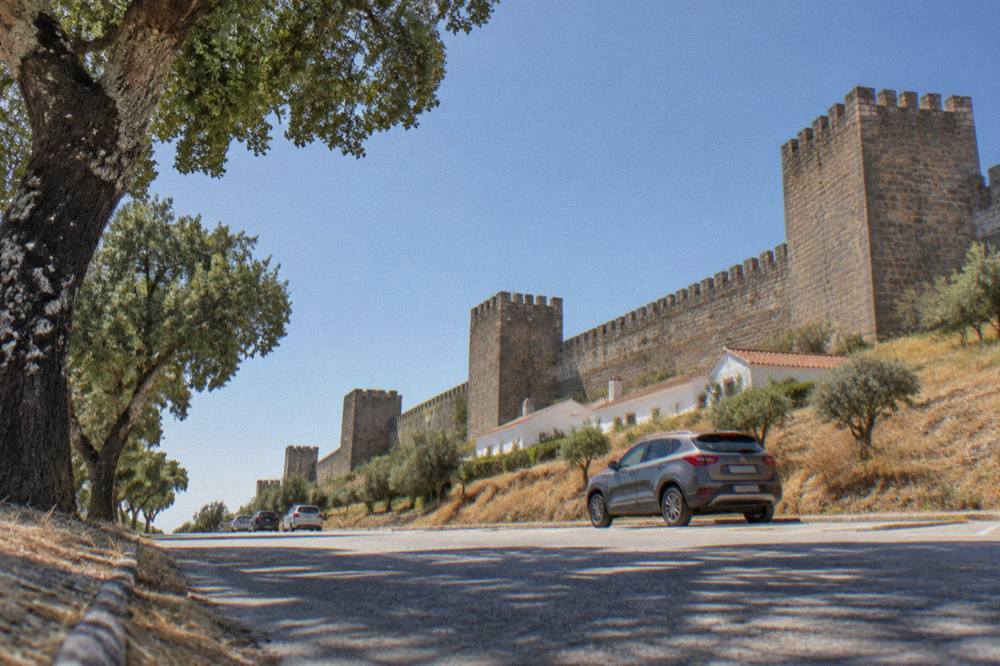
Mourão Day Trip From Évora, Portugal: The Walled Alentejo Town Beside The Alqueva
Mourão is a small walled town on the Alentejo plain, southeast of Évora and close to the shores of the Alqueva reservoir, and it makes a quiet, unhurried day trip for travellers already based in Évora.
Short answer
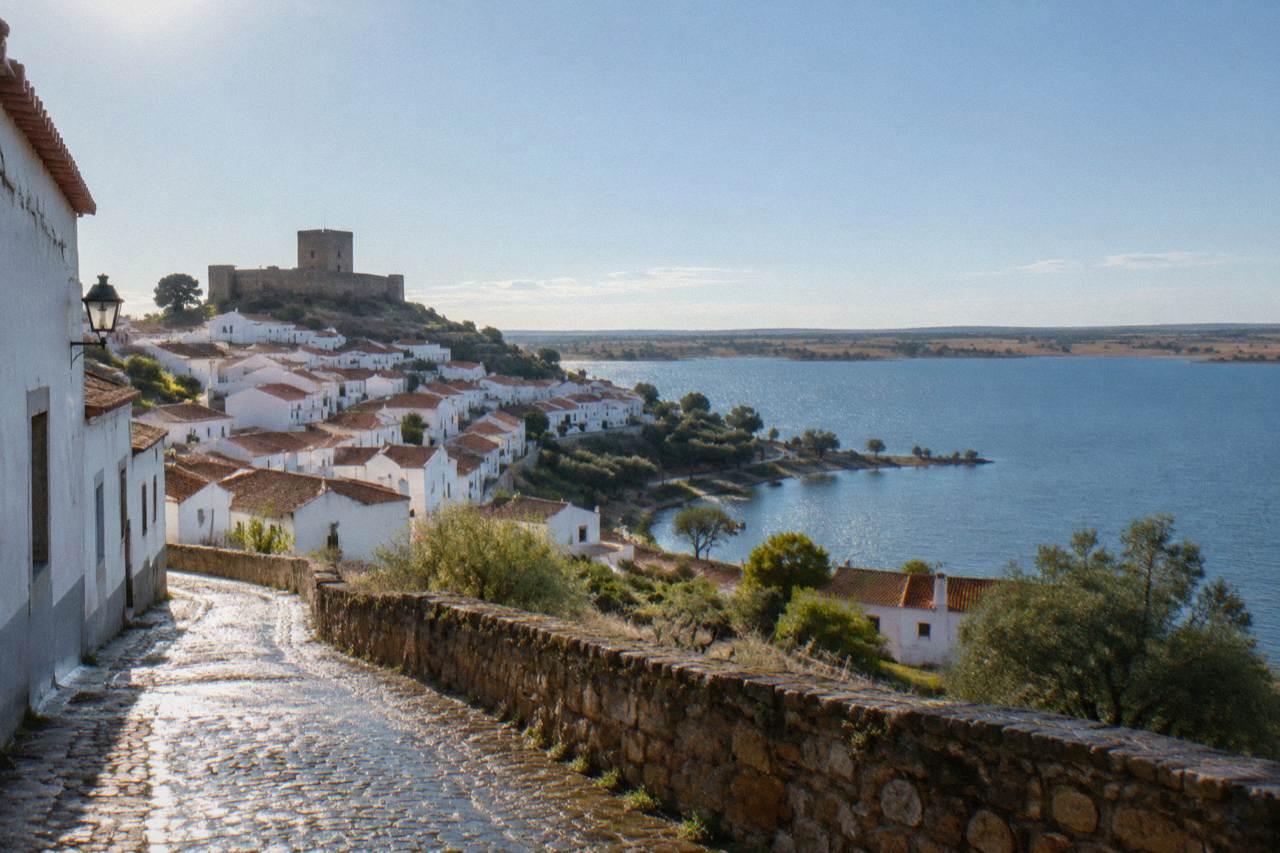
Mourão lies southeast of Évora, in the direction of Monsaraz and the Alqueva reservoir. It is a low-key walled Alentejo town with a castle keep, whitewashed lanes and open countryside of cork oaks, olives and vines. No train serves it, so it suits a self-drive day or a look from a wider Alentejo loop rather than a standalone excursion.
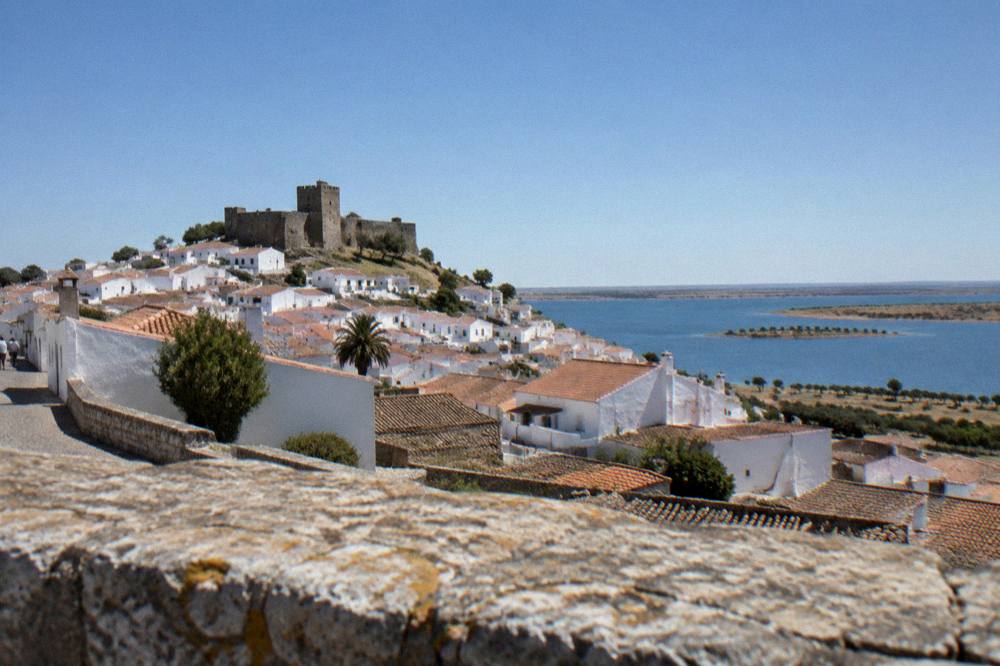
Mourão is a small, walled Alentejo town in Portugal's interior, southeast of Évora and within reach of the broad Alqueva reservoir that spreads across the Lower Alentejo along the Guadiana. It belongs to the same family of borderland hill towns as Monsaraz, Portel and Moura: white houses stacked below a castle keep, quiet lanes, storks on the chimneys, and a landscape of cork oaks, olive groves and vineyards running out to the horizon. The Évora Travel Guide editorial desk covers it here as one of the quieter day-trip options from Évora, the inland capital of the Alentejo, roughly 130 km from Lisbon and about 90 km from the Atlantic, so nothing about the day involves a coast.
The town rewards travellers who have already seen Évora's headline monuments and want the Alentejo at its slowest. There is no rush here, no queue, and no ticket line of any consequence. What there is, is a fortified silhouette on a low hill, a handful of churches, tiled façades, and a countryside that turns gold in summer and green after the autumn rains.
What And Where Is Mourão?
Mourão is a small municipality and walled town in the Alentejo, Portugal, southeast of Évora, in the belt of borderland hill towns that runs down toward the Guadiana river and the Alqueva reservoir. It keeps a castle keep above whitewashed lanes, and its setting is pure inland Alentejo: cork oaks, olives, vines and open plains, with no sea anywhere near. It is a place for slow wandering, not for a checklist of sights.
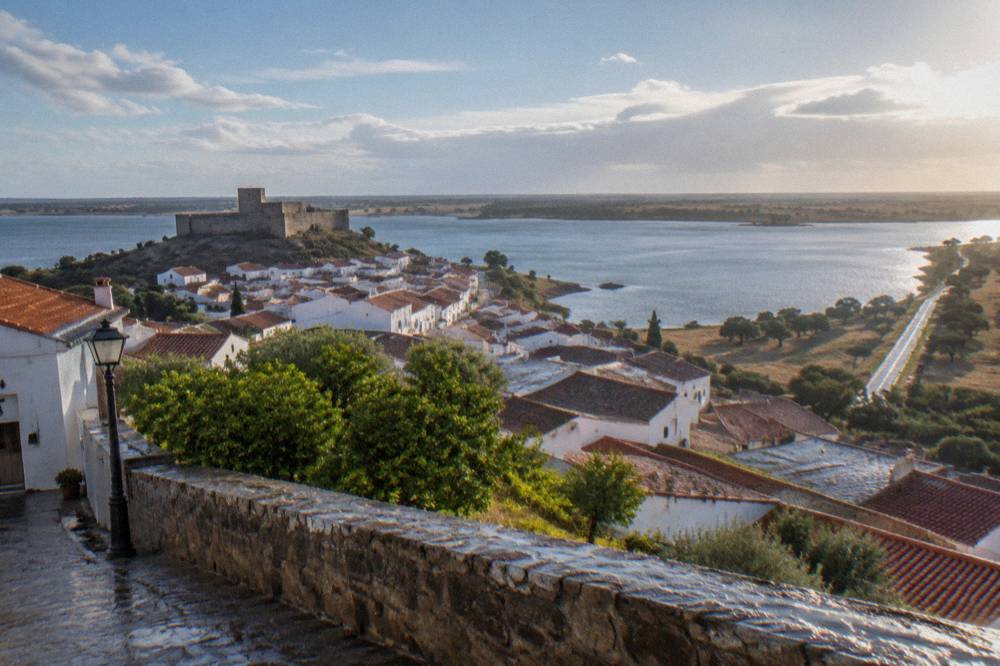
That description is the honest one, and it is also the point. Mourão has never been a mass-market destination, and the town's character comes from that. The castle sits at the top of the hill, the streets fall away from it in short, steep lanes, and the views from the upper town run across the plain toward the great lake. The Alqueva reservoir, created by the dam on the Guadiana, changed the economy of this corner of the Alentejo, bringing water to a dry region and a long, branching shoreline within reach of towns like Mourão, Monsaraz and Reguengos de Monsaraz. The Alqueva day-trip guide covers the lake itself in detail.
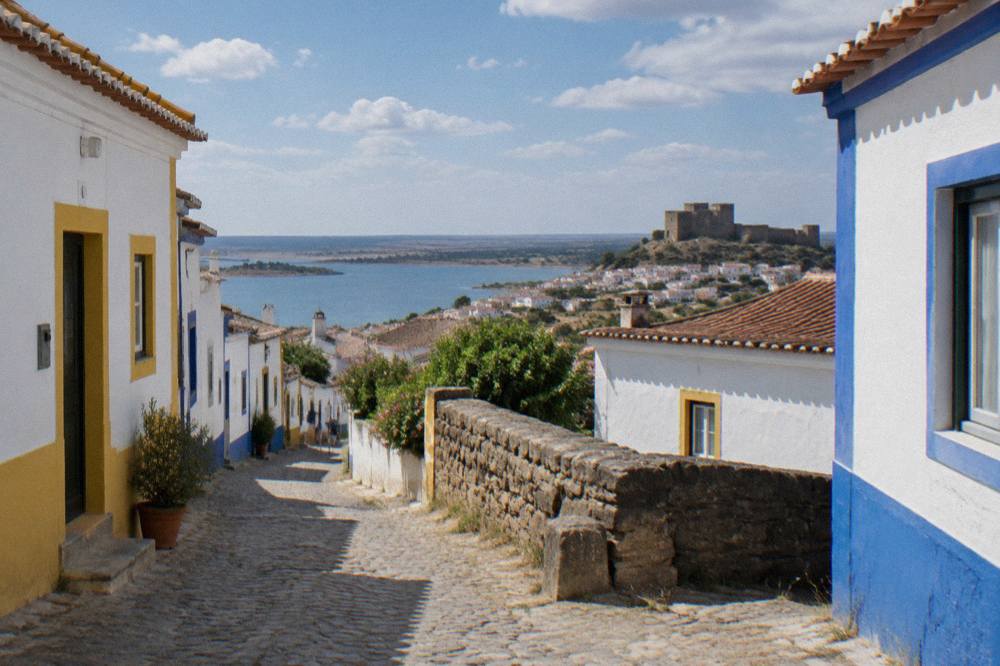
The town's history is the usual Alentejo layering: a fortified place contested across the medieval Portuguese-Castilian border, later a quiet agricultural town whose rhythms follow the cork harvest, the olive crop and the vine. Nothing about that history needs a ticket or a timetable. The walls, the keep and the street plan are the sight, and they are visible from the moment you park.
Writers on the Alentejo often reach for the word "sleepy" for towns like this. A fairer word is seasonal. In summer the streets empty at midday and fill again in the evening; in spring and autumn the town moves at an even pace all day. Plan around that rhythm rather than against it.
How Does A Mourão Day Trip Compare With Other Alentejo Day Trips?
Mourão is the quiet choice among Évora's day trips: less visited than Monsaraz, less monumental than Elvas or Vila Viçosa, and further out than Arraiolos or Estremoz. It suits a second or third day in the Alentejo, after the headline sights, when the goal is atmosphere rather than attractions. Pair it with Monsaraz and the Alqueva shore for the strongest single day.
The comparison matters because most visitors have limited days and must choose. The verified rounded distances from Évora, which are the only ones this guide will quote, look like this:
| Town | Direction From Évora | Distance (About) | Character Of The Day |
|---|---|---|---|
| Arraiolos | North | 20 km | Carpet workshops and a round hilltop convent |
| Monsaraz | Southeast | 40-45 km | Walled village above the Alqueva, the region's postcard |
| Estremoz | Northeast | 45 km | Marble town with a castle and a market tradition |
| Vila Viçosa | Northeast | 60 km | Ducal palace, marble and a royal residence |
| Elvas | East | 80 km | Border fortress town of great walls and aqueduct arches |
| Marvão | Northeast | 120 km | Mountain-top walled village with long views |
Mourão sits on the southeastern side of that map, in the Monsaraz-Alqueva direction, and no verified distance figure for the Évora to Mourão drive exists in the sources this site uses, so none is printed here. What can be said is that it lies beyond the Monsaraz turning, deeper into the lake country, and that the drive itself crosses some of the emptiest, most beautiful road in the region: cork forest, montado pasture with black pigs, and long horizons.
For first-time visitors the ranking is straightforward. If you have one day only, the Monsaraz day trip or the best day trips from Évora round-up is the better read. If you have already done Monsaraz, or you want a day with almost no other visitors, Mourão is exactly right. The Elvas and Vila Viçosa days are grander; this one is quieter.
One practical note shapes the whole comparison: every one of these towns, Mourão included, is reached by road. There is no railway line into any of them. The train from Lisbon stops at Évora and goes no further south, so the pattern for a Mourão day is either a hire car from Évora or a wider loop that takes in several towns.
What Should A One-Day Mourão Itinerary Look Like?
A good day starts mid-morning in Évora or at your Alentejo base, reaches Mourão by late morning, gives the walled town two unhurried hours on foot, takes a long Alentejo lunch, and then spends the afternoon on the Alqueva shore or at Monsaraz before returning by evening. Nothing in Mourão needs a booked time slot, so the day can flex with the weather and the light.
The shape of the day, in blocks rather than clock times, looks like this:
| Block | Where | What The Block Holds |
|---|---|---|
| Early morning | Évora | Coffee on Praça do Giraldo, a first look at the historic centre |
| Late morning | Mourão | The castle keep, the lanes, the tiled church façades, the views |
| Midday | Mourão or the lakeside | A long regional lunch, the Alentejo pace of the midday break |
| Afternoon | Alqueva shore or Monsaraz | Water, horizon and the walled village above the lake |
| Evening | Back to Évora | Dinner in the historic centre, or a rooftop view of the walls |
Two hours is the honest figure for Mourão itself. The town is small, and its lanes can be walked end to end without hurry in that time. The keep and the walls give the best photography light either early or late; at midday in summer the whole region retreats indoors, and IPMA's 1991 to 2020 normals for the Évora station show why, with July averaging a maximum of 33.3 C and August 33.5 C.
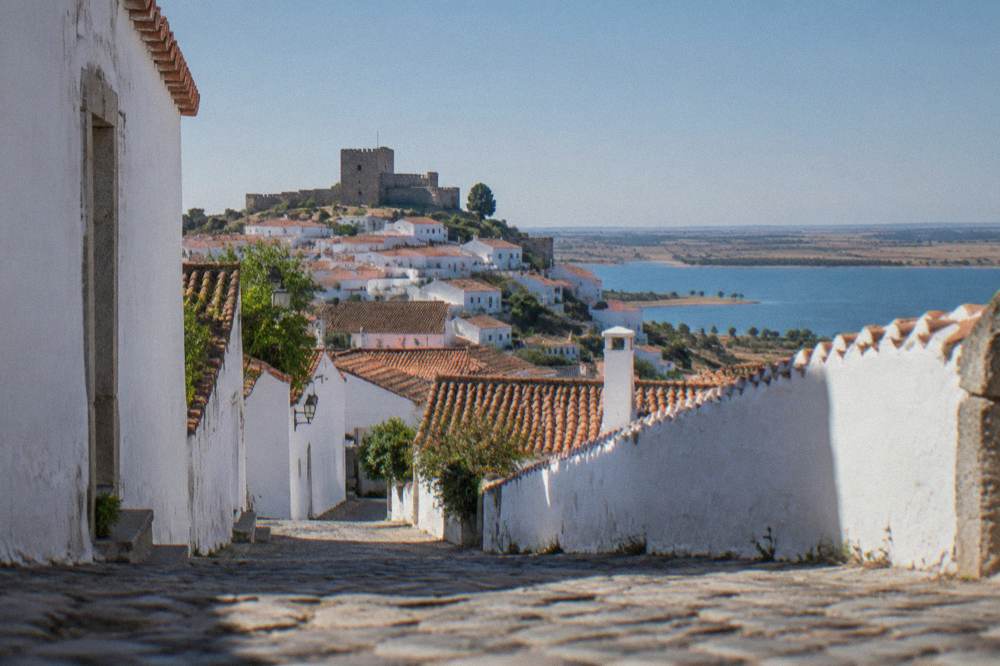
The afternoon is where the day earns its keep. The Alqueva shoreline near this corner of the region is a landscape of gentle inlets, submerged valleys and quiet water, and the light on it in late afternoon is the reason photographers make the drive. Check locally for anything you hope to do on the water itself, because boat and observatory arrangements are not verified in the sources this site uses, and the honest advice is to confirm at the spot.
Before leaving Évora in the morning, the city's own monuments are worth pricing into the wider trip, especially if this is day two or three of an Alentejo stay:
| Monument | Ticket | Notes From The Official Pages |
|---|---|---|
| Sé de Évora | 5.00 EUR | One complete-visit ticket: cathedral, cloister, roof terrace, museum; children to 12 free |
| Capela dos Ossos / Igreja de São Francisco | 7.00 EUR adult | Youth to 25 and seniors over 65 at 5.00 EUR, family 15.00 EUR; one ticket for all museum areas |
| Museu de Évora | 8 EUR | Closed Mondays; youth, seniors and family tickets 50% off |
| Évora Ticket | 8 EUR one day | 10 EUR two days, 12 EUR three days, free to 12; does not include the Sé, the Capela dos Ossos or the Museu de Évora |
A morning guided walk is the strongest way to absorb Évora before the drive, and the small-group cultural walk that includes the Chapel of Bones is the natural fit: it covers the historic centre's story in about two hours and leaves the afternoon open for the road. The Check availability link beside the tour's own page shows current times, and the tour page itself sets out what the walk includes.
What Is There To Do In And Around Mourão?
The town itself offers its castle keep, its walls, its churches and its lanes, all free-flowing and unhurried, while the surrounding country offers the Alqueva shoreline, the cork and olive landscapes of the montado, and the wine country around Reguengos de Monsaraz. It is a day of landscape and light more than of attractions, and it is best treated as such.
Inside the walls, the walk is short and rewarding. The keep is the anchor; the lanes fall away from it in the usual Alentejo pattern of whitewash, coloured trim and small squares. The main church carries the azulejo tiling that marks so many Alentejo towns, and the upper streets open repeated views over the plain. None of this has a verified opening hour in the sources this site uses, so check any notice at the door before counting on an interior visit.
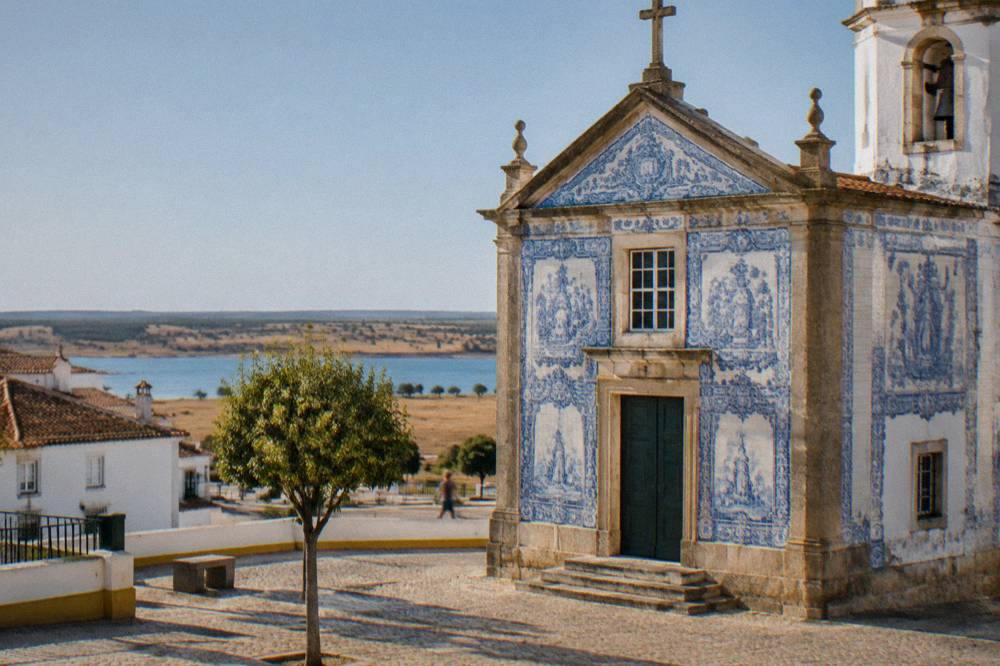
Outside the walls, the day opens out. The roads south and east run toward the lake, through country that is the Alentejo at its most characteristic: cork oaks with their harvest bared in season, olive rows, vineyards, and the flat gold of the plains in high summer. Storks nest on chimneys and pylons all across this region, and the drive itself is half the experience. Travellers drawn to this landscape can read the things to do in Évora guide for the city half of the trip, or the one day in Évora itinerary for how a first Alentejo day is usually built.
For anyone planning a wider loop, the neighbouring options stack well: Monsaraz for the walled village above the water, the Alqueva for the lake, and further afield the marble towns and border fortresses. A two-town day, Mourão plus Monsaraz, is the classic combination, and the Évora day trip from Lisbon itinerary shows how the same country is reached by visitors based in the capital.
When Is The Best Time Of Year To Visit Mourão?
Spring and autumn are the best seasons for a Mourão day trip: April, May, late September and October combine warm days with cool evenings, green or golden countryside and manageable heat. Summer is beautiful but seriously hot, with the 1991 to 2020 averages for the Évora station showing July and August mean maxima of 33.3 C and 33.5 C, and 31.9 days a year reaching 35 C or more.
The monthly picture, from IPMA's 1991 to 2020 climate normals for the Évora station, number 558, the only figures this guide quotes for regional weather:
| Month | Mean Maximum (C) | Mean Minimum (C) | Rainfall (mm) | Days Reaching 30 C+ |
|---|---|---|---|---|
| April | 20.7 | 8.5 | 62.1 | 0.3 |
| May | 25.0 | 10.9 | 46.6 | 5.5 |
| June | 30.2 | 13.8 | 10.6 | 15.1 |
| July | 33.3 | 15.6 | 2.7 | 23.7 |
| August | 33.5 | 16.0 | 6.0 | 25.0 |
| September | 29.5 | 14.6 | 33.9 | 13.9 |
| October | 24.1 | 12.3 | 81.5 | 2.9 |
Two readings matter for planning. First, the heat: the same normals record a maximum of 45.4 C on 4 August 2018, and summer days at 35 C or more are a normal feature of this inland climate, not an anomaly. A summer visit should put the town walk in the morning and the middle of the day indoors or on the water. Second, the rain: October and November are the wettest months in the averages, at 81.5 mm and 86.0 mm, but the rain falls on roughly eight days a month, so an autumn day is far more likely dry than wet.
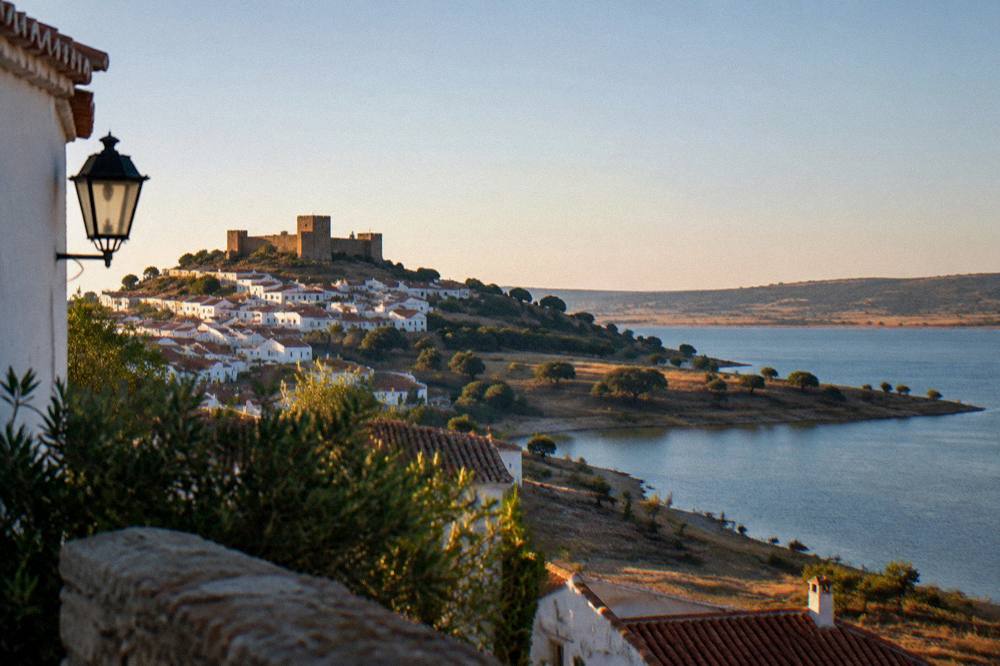
Winter has its own case: mean maxima of 14.1 C in January and 14.6 C in December, mean minima around 5 C, and the lowest reading in the whole record at -4.2 C. The light is low and lovely, the town is at its quietest, and the plains take on the green they keep until late spring. Any season works; only the midday hours of July and August demand real respect.
How Do You Get To Mourão From Évora Or Lisbon?
Mourão is reached by road only: there is no railway station, and no bus timetable or fare for the town is verified in the sources this site uses. From Évora the drive runs southeast toward Monsaraz and the Alqueva. From Lisbon, the verified rail link is the CP Intercidades service to Évora, six through trains a day taking about 1 hour 40 to 1 hour 45, at 13.90 EUR second class or 18.50 EUR first, and the onward leg needs a car.
The rail facts are worth having in full, because they fix the shape of any Lisbon-based plan. CP's timetable, valid since 6 September 2026, lists these through trains from Lisboa Oriente to Évora:
| Depart Lisboa Oriente | Arrive Évora | Class | Fare |
|---|---|---|---|
| 07:02 | 08:47 | 2nd | 13.90 EUR |
| 09:02 | 10:45 | 2nd | 13.90 EUR |
| 09:58 | 11:40 | 2nd | 13.90 EUR |
| 13:35 | 15:13 | 2nd | 13.90 EUR |
| 17:02 | 18:41 | 2nd | 13.90 EUR |
| 19:02 | 20:46 | 2nd | 13.90 EUR |
First class on the same services is 18.50 EUR. The timetable's weekday remarks should be checked on CP's own PDF before planning, and the Lisbon to Évora guide and the is Évora worth a day trip from Lisbon page cover the wider question. For the Mourão leg itself, a hire car from Évora is the practical answer, and the what to do in Évora for a day page shows how a city-only alternative compares.
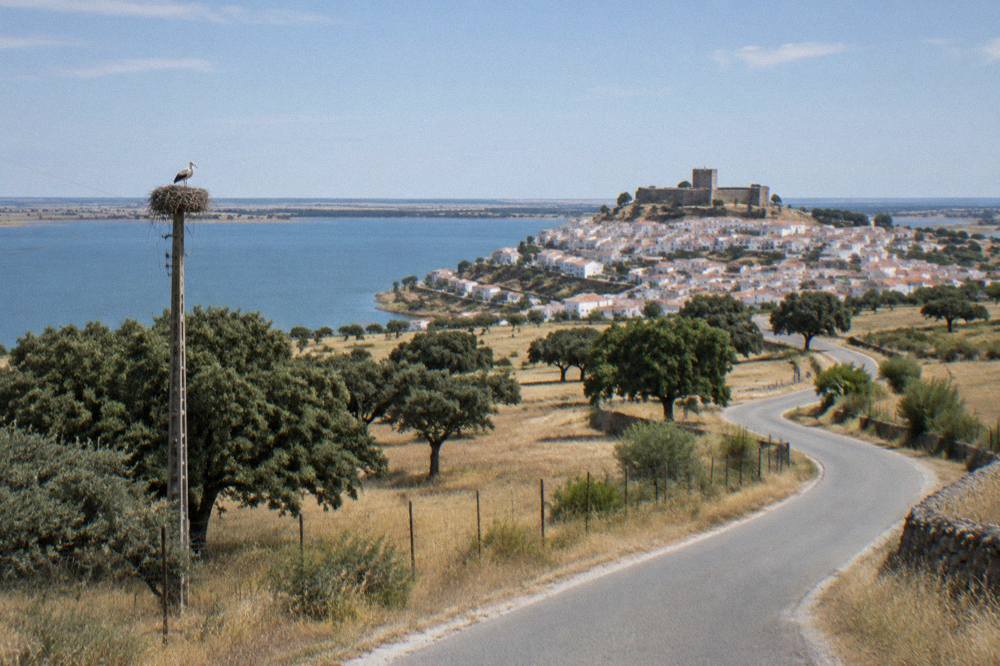
For drivers, the honest planning note is about rhythm rather than route numbers. The roads in this corner of the Alentejo are quiet, well surfaced and largely straight, but there are long stretches with no fuel and no shade, and summer heat makes an early start the comfortable choice. Fill up in Évora, carry water, and let the drive be part of the day rather than a delay before it.
Which Guided Tours From Évora Pair Well With A Mourão Day?
The strongest pairing is a morning guided walk in Évora followed by an independent drive to Mourão and the Alqueva in the afternoon: the walks cost from $13.51 to $113.53 per person, run two to three hours, and cover the historic centre, the Sé and the Chapel of Bones, so the day holds both the city and the plain. Full-day guided options into the wine and megalith country also work for travellers without a car.
The walking options that start in Évora, with prices and ratings exactly as they sit on the operators' listings, in US dollars:
| Tour | Length | From (USD) | Rating |
|---|---|---|---|
| Personal and Flexible Historic-Center Walk | 3 hours | $13.51 | 4.8 from 105 reviews |
| Golden Era Walk with Wine Tasting | 2.5-3 hours | $23.92 | 4.4 from 33 reviews |
| Tales and Legends Guided Walking Tour | 2.5 hours | $52.90 | 4.8 from 40 reviews |
| Small-Group Cultural Walk and Chapel of Bones | 2 hours | $77.66 | 4.9 from 141 reviews |
| Private Walking Tour, Cathedral and Chapel of Bones | 2.5 hours | $111.42 | 5 from 106 reviews |
The small-group cultural walk is the one this guide highlights for a Mourão day: two hours, the Chapel of Bones included, and a group small enough to ask questions in. The tales-and-legends walk suits a different mood, an evening-flavoured telling of the city's stranger stories, and works well the night before the drive. The straightforward Évora walking tour is the fallback for travellers who want the city's street stories without a theme.
Travellers without a car are not shut out of the lake country, but the guided products that reach it are the Monsaraz and wine tours rather than Mourão itself, and those belong on the Monsaraz pages. The honest summary: Mourão is a driver's town. The guided layer is what Évora adds before and after the drive.
Common Questions About Mourão
Is Mourão worth visiting?
Yes, for travellers who have already seen Évora and Monsaraz and want the Alentejo at its quietest. It is a small walled town with a castle keep, tiled churches and open lake-country views, best as half of a two-stop day rather than a destination in itself.
How far is Mourão from Évora?
No verified distance figure exists for the Évora to Mourão drive in the sources this site uses, so none is printed. The town lies southeast of Évora, in the direction of Monsaraz, which sits about 40 to 45 km from the city, and the onward drive runs through quiet cork and olive country.
Can you visit Mourão and Monsaraz on the same day?
Yes, and that is the classic combination. Mourão's walled town needs about two unhurried hours on foot, which leaves a long afternoon for Monsaraz and the Alqueva shoreline above it.
Is there a train or bus to Mourão?
There is no railway station. No bus timetable or fare for the town is verified in the sources this site uses, so check the operator's own notice before relying on one. A hire car from Évora is the practical way in.
What is the best time of year for a Mourão day trip?
Spring and autumn, on the 1991 to 2020 averages for the Évora station: warm days, cool evenings and green or golden countryside. July and August average mean maxima of 33.3 C and 33.5 C, so a summer visit should walk the town in the morning.
Do you need tickets for anything in Mourão?
The town's streets, walls and views cost nothing and need no booking. No opening hours for the castle or churches are verified in the sources this site uses, so check any notice at the door before counting on an interior visit.
Mourão will never top a first-time Alentejo itinerary, and that is precisely its value: a walled town where the day runs at the region's own pace, an hour's quiet lanes above the lake country, and a drive through cork and olive that is worth the trip on its own.