What Is Évora, Portugal Famous For?
Évora, Portugal is famous for the Capela dos Ossos bone chapel, a Roman temple in the main square, a UNESCO-listed historic centre and the wine and cork of the Alentejo. Here is what the city's own sources say.
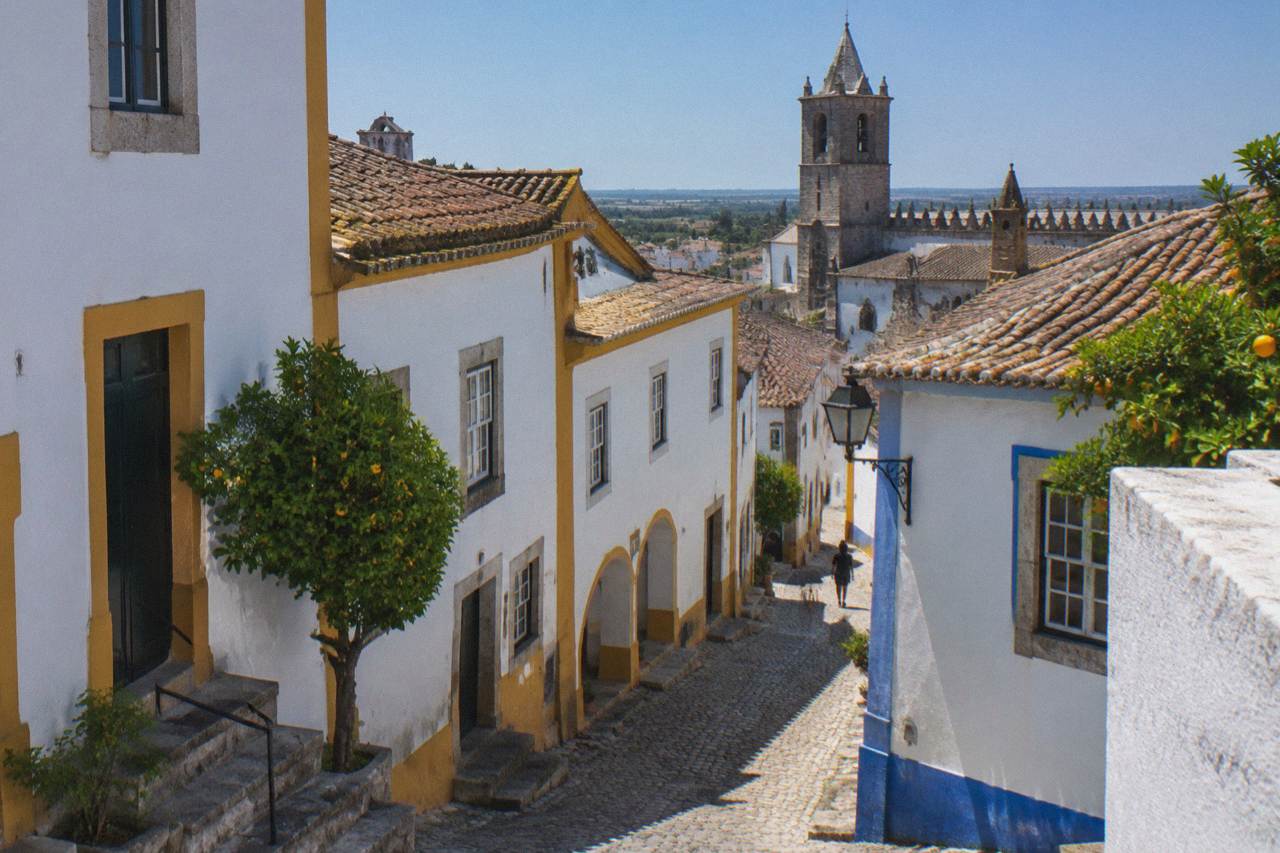
Évora, Portugal, the capital of the Alentejo and of the district that carries its name, is famous for a small walled city centre so intact that UNESCO listed it in 1986, for a chapel lined with human bones, and for a Roman temple that stands in the main square as if the empire had never left. Around the walls stretch the cork oak forests, vineyards and marble quarries of the Alentejo plain, which supply the second half of the city's fame: the wine, the cork and the slow, heavy food of inland Portugal. The Évora Travel Guide editorial desk has assembled what the official sources publish, from the cathedral's own ticket page to the national weather service's climate normals, so that every figure below can be checked.
What Is Évora, Portugal Famous For?
Évora, the capital of the Alentejo in Portugal, is famous for its intact walled historic centre, listed by UNESCO in 1986, the bone-lined Capela dos Ossos beside the Igreja de São Francisco, a Roman temple standing in the city centre, and the wine, cork and marble of the surrounding Alentejo plain. The city is also a European Capital of Culture for 2027, which has put its name on cultural programmes across Europe and beyond.
That is the short version. The longer version is that almost everything Évora is famous for sits inside one square kilometre of golden limestone, so the city rewards a slow pace rather than a long list. The Jesuit University of the Holy Spirit dates from 1553, Moorish rule ended in 1165, and the streets between the Roman walls still follow lines older than any of the buildings on them. Visitors who ask how much time they need in Évora usually find that the answer is at least one night, because the famous sights close early by big-city standards and the evening is when the centre shows itself off.
The fame is also regional. Évora is the city people mean when they say "the Alentejo", and the question of what the Alentejo is famous for is largely answered from its squares and kitchens. The sections below take the city's claims one at a time.
The Capela Dos Ossos, Évora'S Most Famous Interior
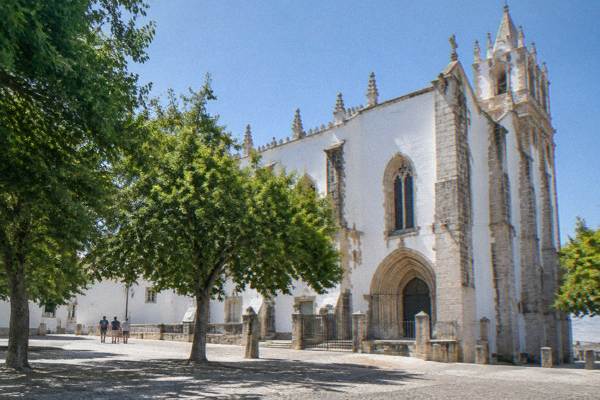
The Capela dos Ossos, the Bone Chapel attached to the Igreja de São Francisco, is Évora's single most famous sight. One museum ticket covers the chapel and the church's other museum areas, at 7.00 EUR for an adult, 5.00 EUR for youth up to 25 and for seniors over 65, and 15.00 EUR for a family. The church is open daily except 1 January, Easter Sunday, 24 December afternoon and 25 December.
The Igreja de São Francisco's own page lists what the single ticket includes: the Capela dos Ossos, the Sala do Capítulo, the Presépio, the Arte Sacra nucleus, the Sala da Tribuna Real, the Terraço da Galilé and the Canha da Silva nativity collection. That is considerably more than most visitors expect from a "bone chapel" ticket, and the nativity collection alone occupies a dedicated room. Hours follow the legal seasons: 9:00 to 18:30 in summer time, 9:00 to 17:00 in winter time.
The chapel's fame is global in a way the city's other sights are not. Whole pages of questions exist about it: why the Chapel of Bones is famous, whose bones are in it, and whether it is worth visiting. The church notes on its page that it is a private religious entity and does not apply State Museum discounts, which is worth knowing before arriving with a museum pass.
A Roman Temple Standing In The Middle Of Évora
The Templo Romano, popularly called the Temple of Diana, is a Roman temple of 25 x 15 m standing at the heart of Évora, probably dedicated to the imperial cult rather than to the goddess Diana, according to the municipal page. Its walls were freed in 1870, and the building served for a period as a municipal butcher's. It is an open-air monument, visible from the street without a ticket.
The name "Temple of Diana" has been used since the 17th century, but the municipal page is careful: the dedication was probably to the imperial cult. That correction is itself part of what Évora is famous for, a city where the Roman layer, the Moorish layer and the golden-age Portuguese layer sit within a few steps of each other. The temple stands beside the Sé and the Museu de Évora, so the three can be taken in one short walk.
Because it is open-air, the temple is also the city's most photographed structure after the bone chapel, and it anchors most guided walking routes. The must-see attractions in Évora all cluster in this corner of the centre, which is why the historic centre rewards walking far more than driving.
The UNESCO Historic Centre Of Évora, Listed In 1986
UNESCO inscribed the Historic Centre of Évora on the World Heritage List in 1986, under criteria (ii) and (iv). Criterion (iv) calls it the finest example of a city of the golden age of Portugal, after the 1755 Lisbon earthquake, which Évora was largely spared. Moorish rule ended in 1165, the Jesuit University of the Holy Spirit dates from 1553, and the Jesuits were expelled in 1759.
That earthquake is the quiet reason for the city's fame. Lisbon was rebuilt; Évora simply kept what it had. The golden-age streets, the Praça do Giraldo, the Sé with its roof terrace, and the Convento dos Lóios survived in a concentration that inland Portugal cannot match elsewhere. The listing says what it says, and it is worth reading the wording rather than the shorthand "UNESCO city", because the specific claim is about the golden age of Portugal, not about beauty in general. Other pages covering the same trip are gathered on Évora Travel Guide.
The practical side of the fame is a compact set of ticketed monuments, and their official prices are worth setting side by side:
| Sight | Official ticket | Hours published on the official page |
|---|---|---|
| Sé de Évora (cathedral, cloister, roof terrace, museum) | 5.00 EUR complete visit, children to 12 free | 9:00-17:00 |
| Capela dos Ossos / Igreja de São Francisco | 7.00 EUR adult, 5.00 EUR youth to 25 and seniors over 65, 15.00 EUR family | 9:00-18:30 summer, 9:00-17:00 winter |
| Museu de Évora | 8 EUR adult, 50% off youth 13-24 and seniors over 65 | Tue-Sun 9:30-13:00 and 14:00-17:30, closed Mondays |
| Évora Ticket (Cidade-Museu network) | 8 EUR one day, 10 EUR two days, 12 EUR three days, free to age 12 | Valid at the network's participating sites |
| Templo Romano | Open-air monument, no ticket listed | Visible at any hour |
Note what the Évora Ticket does not include: the Sé, the Capela dos Ossos and the Museu de Évora are separate, so the pass suits the network's own sites rather than the three headline monuments. The Convento dos Lóios, often listed in older guides with a price, currently shows its ticket as temporarily unavailable on the municipal page, so check at the door.
Alentejo Wine, Cork And The Food Évora Is Famous For
Évora is famous as the tasting room of the Alentejo: the city sits in the middle of one of Portugal's most productive wine regions, surrounded by cork oak forests and marble towns, and its kitchens serve the pork, bread soup and sheep's cheese of the inland plains. Guided wine and cork tours run from the city from $50.65 per person, and a full-day private wine tour with lunch from $321.11 per person.
The cork connection is not decorative. The forests around Évora are working landscapes, and the cork museum and cork shops in the city explain how the bark is stripped and sold. Guided products make the landscape legible: a megalithic and cork forest combo tour runs from $50.65, a two-hour cork safari in a classic Land Rover from $102.07, and a full-day cork factory and farm visit with lunch included from $112.55.
The food fame is slower and harder to package, which is why the evening food and wine crawl, from $83.28 per person, is one of the most telling products on offer: it exists because the city's taverns and wine bars are the attraction. For the depth behind it, read the Évora food guide and the Alentejo wine pages.
The guided options that best fit the "famous Évora" theme, with prices as listed:
| Guided option | Kind | From (per person) | Rating |
|---|---|---|---|
| Golden Era of Évora walking tour with Portuguese wine tasting | Walking, 2.5-3 hours | $23.92 | 4.4 from 33 reviews |
| Small-group cultural walking tour with Chapel of Bones | Walking, 2 hours | $77.66 | 4.9 from 141 reviews |
| Private walking tour with cathedral and Chapel of Bones | Walking, 2.5 hours | $111.42 | 5 from 106 reviews |
| Alentejo Wine and Cork from Évora | Wine, 4 hours | $78.78 | 4.7 from 24 reviews |
| Megalithic and cork forest guided tour | Cork and megaliths, 4 hours | $50.65 | 4.9 from 41 reviews |
For a first visit built around the famous sights rather than the countryside, the Golden Era of Évora walking tour with Portuguese wine tasting covers the golden-age quarter on foot and ends with a tasting, from $23.92 per person. Check availability
The Megaliths Around Évora: Cromeleque Dos Almendres And The Dolmen
Évora is famous as the natural base for the Cromeleque dos Almendres, the stone circle west of the city, and for the Great Dolmen of Zambujeiro nearby. The Almendres Interpretation Centre in the village of Guadalupe is open 10:00-18:00 in summer, 1 May to 31 October, and 10:00-17:00 in winter, 1 November to 30 April. Guided megalith tours from Évora run from $33.76 per person.
The stones are the oldest layer of the region's fame, and they are reached through working farmland rather than a park. The interpretation centre's own directions say to take the national road from Évora toward Lisbon and, after 8 km, follow the turn-off. Half-day tours led by archaeologists run from $74.54 per person, and a three-hour Almendres and Zambujeiro tour from $33.76, which is often the cheapest way to reach the sites without a car.
The megaliths also explain a piece of trivia that travels: people searching for a "Stonehenge in Portugal" are usually looking for Almendres. The sites and the questions around them are covered in the megalithic sites near Évora guide.
Évora As A European Capital Of Culture 2027
Évora and the Alentejo will be European Capital of Culture in 2027, promoted by an executive board led by the Municipality of Évora together with the regional culture directorate, the University of Évora and other partners. The year 2026 is a preparation programme built on the concept of Vagar, and the GUADIANA literature festival, with 28 authors from nine countries, runs 9 to 11 October 2026. The full 2027 programme calendar is not yet published.
This is the newest answer to the fame question, and it changes the practical picture. A city of about 53,000 people preparing a European cultural year is a city with building works, open calls and community projects, and visitors in 2026 and 2027 will feel the preparation even where they cannot see it. The Feira de São João, the city's great annual fair, ran 23 June to 5 July 2026 at the Rossio de São Brás under the theme "Évora: Capital Europeia ao Sul", which shows how the two stories are being woven together.
For anyone timing a visit around the cultural year, the honest advice is to watch the official programme page rather than any fixed calendar, because dates beyond the published ones have not been announced. The best time to visit Évora guide separates the climate question from the events question.
How Hot Does Famous Évora Get?
Évora is famous for dry, hot, inland summers. IPMA's 1991-2020 normals for the Évora station put the July mean maximum at 33.3 C and August at 33.5 C, with 31.9 days a year reaching 35 C or more, and the station record of 45.4 C was set on 4 August 2018. The Atlantic is roughly 90 km away, so there is no sea and no sea breeze to soften the heat.
The same normals show the other side: winter mean minimums of 4.5 C in January, and rain concentrated from October to December. The figures below are the 1991-2020 averages for the Évora station, station number 558:
| Month | Mean max (C) | Mean min (C) | Rain 1 mm+ (days) | Days max 30 C+ |
|---|---|---|---|---|
| January | 14.1 | 4.5 | 8.6 | 0.0 |
| April | 20.7 | 8.5 | 8.0 | 0.3 |
| July | 33.3 | 15.6 | 0.6 | 23.7 |
| August | 33.5 | 16.0 | 0.7 | 25.0 |
| October | 24.1 | 12.3 | 7.7 | 2.9 |
What this means for a visit is simple. In July and August the famous sights are best seen before midday and again after 18:30, when the Capela dos Ossos is still open in summer hours. April, May, September and October carry the comfortable end of the range, and the Évora weather guide works through all twelve months. Anyone wondering which month is best to visit the Alentejo is really asking this heat question.
Common Questions About What Évora Is Famous For
What is Évora, Portugal famous for?
Évora, Portugal is famous for the Capela dos Ossos bone chapel, the Roman temple in its main square, the UNESCO-listed historic centre inscribed in 1986, and its role as the capital of the Alentejo wine, cork and marble country. It is also a European Capital of Culture for 2027.
Is Évora worth a day trip from Lisbon?
Yes, and it is the most common way to see it: CP's timetable valid since 6 September 2026 lists six through trains from Lisboa Oriente taking about 1 hour 40 to 1 hour 45. The question is worked through in full on the page about whether Évora is worth a day trip from Lisbon.
What is the most famous thing to see in Évora?
The Capela dos Ossos, inside the Igreja de São Francisco complex, is the single most famous sight. A combined museum ticket costs 7.00 EUR for an adult and covers the chapel plus the chapter room, nativity collection and other museum areas.
Why is Évora a UNESCO World Heritage site?
The Historic Centre of Évora was inscribed in 1986 under criteria (ii) and (iv). Criterion (iv) calls it the finest example of a city of the golden age of Portugal, after the 1755 Lisbon earthquake, which Évora was largely spared.
Is Évora famous for wine?
Yes. The city sits at the centre of the Alentejo, one of Portugal's most productive wine regions, and wine and cork tours run from the city itself. The surrounding towns, such as Estremoz and Reguengos de Monsaraz, add marble and wineries to the same landscape.
What food is Évora famous for?
The Alentejo kitchen centred on Évora: pork dishes, bread soups, sheep's cheese and the red wines of the plain. The evening food and wine crawl in the city, from $83.28 per person, is built entirely around that reputation.
Évora's fame, in the end, is a concentration: a bone chapel, a Roman temple, a cathedral with a roof terrace and a UNESCO-listed golden-age centre, all inside walls you can walk around in an afternoon, with the Alentejo's wine, cork and megaliths waiting just outside them.