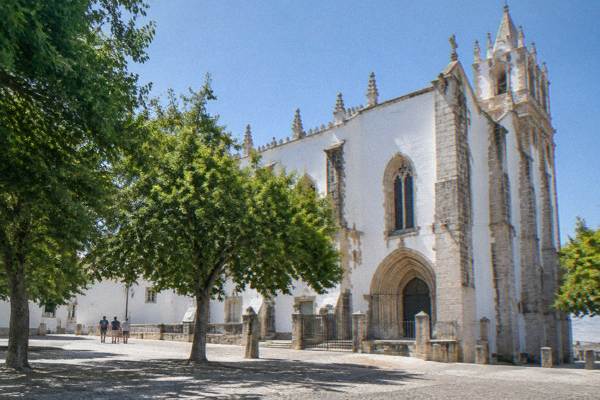
Why Is The Chapel Of Bones Famous?
The Chapel of Bones in Évora, Portugal, is famous for walls lined with human bones inside the Igreja de São Francisco. Here is what it is, what a ticket costs and why it matters.
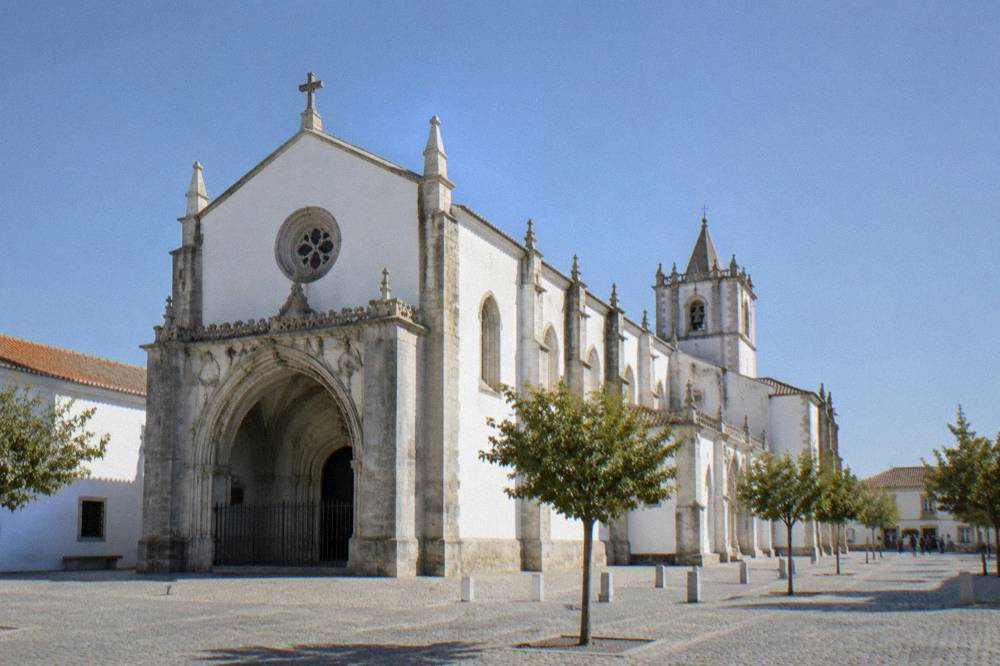
Évora, the capital of Portugal's Alentejo region and of the district of the same name, holds a UNESCO-listed historic centre of Roman temples, medieval squares and white-washed streets, yet the image most travellers carry away from the city is a single small room attached to the Igreja de São Francisco: the Capela dos Ossos, the Chapel of Bones. Its fame rests on one plain fact, that its walls and columns are lined with human bones, arranged in patterns rather than hidden away, and on the questions that sight raises about why such a room was built at all.
Why Is The Chapel Of Bones Famous?
The Chapel of Bones is famous because its interior is lined, from floor to ceiling, with the bones and skulls of thousands of Évora's dead, arranged into decorative patterns inside a chapel attached to the Igreja de São Francisco. No other monument in Portugal presents mortality on this scale in a single room, and the sight, paired with the chapel's sober message about the brevity of life, has made it the most photographed and most discussed space in Évora's UNESCO-listed historic centre.
The chapel belongs to the Igreja de São Francisco, one of Évora's largest religious buildings, and it sits a short walk from Praça do Giraldo, the city's main square. The church's own page presents the chapel as part of its museum areas rather than as a standalone attraction, and that framing matters: visitors buy one museum ticket and move through several rooms, of which the Capela dos Ossos is the last and the overwhelming one.
Fame of this kind tends to travel by image. Photographs of the bone-lined walls circulate far more widely than any explanation of them, which is why questions such as is the Chapel of Bones made of real bones and whose bones are in the Chapel of Bones sit among the most-asked queries about Évora anywhere online. The bones are real. The room is a Christian chapel, not a horror attraction, and the tradition it belongs to, of bone chapels in Portugal and wider Europe, is older and more widespread than most visitors expect.
What Is The Chapel Of Bones In Évora?
The Capela dos Ossos is a small chapel inside the Igreja de São Francisco complex in Évora, Portugal, whose walls, columns and vaults are covered with human bones taken from the city's churchyards. The church describes it as one of its museum areas, visited on a single ticket that also covers the chapter room, the nativity collection, the sacred art nucleus and the terrace, and it remains a consecrated space within a working church.
The Igreja de São Francisco's page lists the museum areas the ticket covers: the Capela dos Ossos itself, the Sala do Capítulo, the Presépio, the Arte Sacra nucleus, the Sala da Tribuna Real, the Terraço da Galilé and the Canha da Silva nativity collection. That is a fuller visit than the single room most people arrive for, and the difference is worth knowing before you queue at the window.
The chapel's purpose is devotional rather than macabre. Bone chapels of this kind were built as meditations on mortality, places where the arrangement of the dead reminded the living that earthly life is short. Évora's is the best known example in Portugal, but it is not the only one; the wider tradition is covered in the guide to bone chapels in Portugal, and seeing the Évora chapel in that context makes it easier to read the room as its builders intended.
The church notes on its own page that it is a private religious entity and does not apply State Museum discounts, which is a practical detail worth knowing if you hold a pass of that kind. The church itself is free to enter; the ticket is for the museum areas, the chapel included.
How Much Does The Chapel Of Bones Cost To Visit?
A single adult museum ticket for the Capela dos Ossos and the other museum areas of the Igreja de São Francisco costs 7.00 EUR, with youth up to 25 at 5.00 EUR, seniors over 65 at 5.00 EUR and a family ticket of two adults plus youths at 15.00 EUR. The church itself is free to enter, and the ticket buys the museum areas only. There is no separate cheaper chapel-only ticket on the church's page.
The Igreja de São Francisco's hours page gives the opening times: summer legal time 9:00 to 18:30, winter legal time 9:00 to 17:00, open every day except 1 January, Easter Sunday, the afternoon of 24 December and 25 December. Masses are held Monday to Saturday at 11:30 and on Sunday at 9:00 and 12:00, and the church remains a place of worship first.
| Ticket | Price | Notes |
|---|---|---|
| Adult | 7.00 EUR | Covers all museum areas |
| Youth up to 25 | 5.00 EUR | Same coverage |
| Senior over 65 | 5.00 EUR | Same coverage |
| Family (2 adults plus youths) | 15.00 EUR | Same coverage |
| The church itself | Free | Entry to the Igreja de São Francisco |
For visitors comparing this against the city's other paid monuments, the Sé de Évora charges 5.00 EUR for its complete visit and the Museu de Évora charges 8 EUR for adults, so the Capela dos Ossos sits in the middle of Évora's price range. The multi-site Évora Ticket, at 8 EUR for one day, does not include the Capela dos Ossos, the Sé or the Museu de Évora, so it is not a way into this chapel. Those comparisons are laid out in the fuller guide to the Chapel of Bones in Évora.
Why Does A Bone Chapel Sit In A UNESCO City?
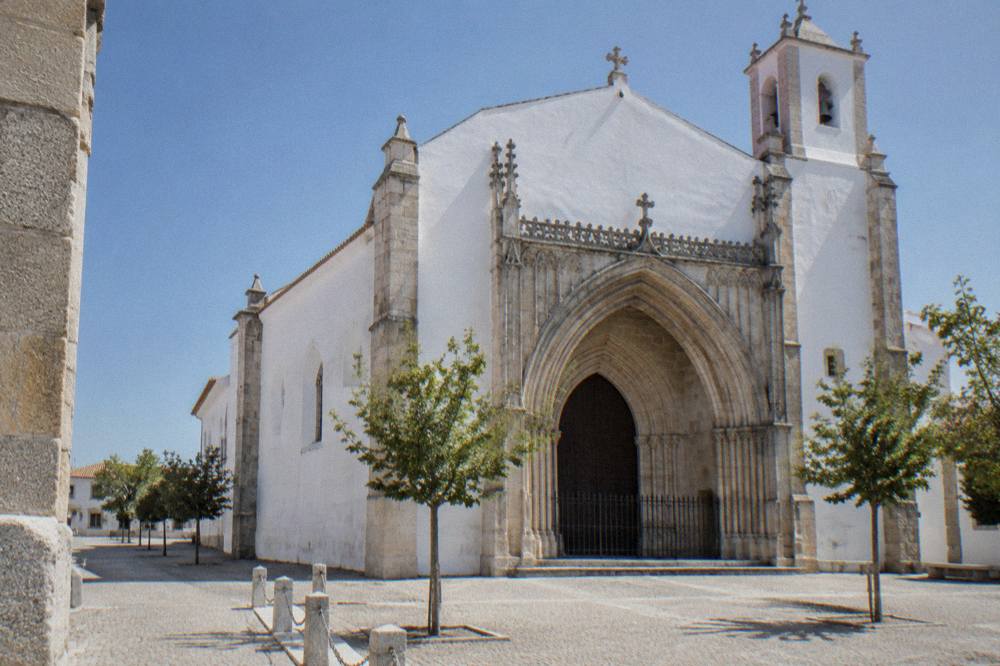
The Chapel of Bones sits inside the Historic Centre of Évora, inscribed by UNESCO in 1986 under criteria (ii) and (iv), and the chapel belongs to the layer of golden-age religious architecture that earned the city that listing. UNESCO's criterion (iv) calls Évora the finest example of a city of the golden age of Portugal after the 1755 Lisbon earthquake, an earthquake the city was largely spared, which is why its monuments survive so intact.
That survival explains part of the chapel's impact. In Lisbon, the earthquake of 1755 destroyed whole quarters; in Évora, the Roman temple, the medieval walls, the Sé and the great convent churches all stand much as they were built. A visitor walking from the Templo Romano to the Igreja de São Francisco passes through two thousand years of the city's fabric with barely a gap, and the Chapel of Bones is the most startling room in that fabric. Other pages covering the same trip are gathered on Évora Travel Guide.
The wider history is worth a sentence. Moorish rule in Évora ended in 1165, the Jesuit University of the Holy Spirit dates from 1553 and the Jesuits were expelled in 1759, all part of the record UNESCO cites for the city. The chapel belongs to the same golden age that produced those institutions, an age when Évora was one of the most important cities in the kingdom rather than the quiet regional capital it is today. The city's broader story is told in what Évora is famous for.
Is The Chapel Of Bones Worth The Ticket?
For most visitors, yes: the Capela dos Ossos is the one interior in Évora that no other city in Portugal can offer in the same form, and the 7.00 EUR ticket also covers six further museum areas of the Igreja de São Francisco, from the chapter room to the nativity collection. The honest caveat is that the chapel itself is a small space and a short visit; the value comes from pairing it with the rest of the museum circuit and with the church, which is free.
How much time the whole visit takes depends on how thoroughly you take in the other museum areas; the question of how much time you need in Évora overall is usually answered with at least a full day, and the chapel fits comfortably inside that. Visitors coming only from Lisbon for the day can see it, the Sé and the Templo Romano without rushing, which is part of why a day trip from Lisbon to Évora has become such a common plan.
The chapel also divides opinion, and it should. Some visitors find it a moving meditation on mortality, others find it grim, and both readings are legitimate responses to a room built precisely to provoke that reflection. The fuller argument on both sides is set out in is the Chapel of Bones worth visiting, and reading it before you buy a ticket is a reasonable way to decide whether the room is for you.
How Do You Visit The Chapel With A Guide?
A guided visit to the Capela dos Ossos pairs the chapel with the rest of Évora's monuments, and the strongest options are private or small-group walking tours that include the Sé and the chapel in one circuit. The private walk with cathedral and Chapel of Bones runs from $113.53 per person, the small-group cultural walking tour with the chapel from $77.66, and both are led by local guides who handle the monument tickets as part of the visit.
A guide earns their fee in this city less for the chapel itself, which speaks loudly enough, than for the connective tissue around it: the Roman layer, the medieval walls, the golden-age churches and the stories that link them. The private walking tour with cathedral and Chapel of Bones is rated 5 from 256 reviews and runs about two and a half hours, which is enough to cover the historic centre's core without exhausting a day. Check availability if that circuit suits your dates.
Visitors who prefer to go alone should simply buy the museum ticket at the door; the chapel needs no booking of its own. Those arriving from the capital can read up on how to get from Lisbon to Évora before deciding whether a guided day or an independent one fits better.
Common Questions About The Chapel Of Bones In Évora
Why is the Chapel of Bones famous?
Its walls and columns are lined with human bones arranged in decorative patterns, a sight unique in its scale in Portugal, and it sits inside the Igreja de São Francisco in Évora's UNESCO-listed historic centre, which makes it the city's most recognised interior.
Is the Chapel of Bones free to enter?
The Igreja de São Francisco is free, but the chapel sits in the museum areas covered by a single ticket: 7.00 EUR adult, 5.00 EUR for youth up to 25 and seniors over 65, 15.00 EUR for a family of two adults plus youths.
What are the Chapel of Bones opening hours?
Summer legal time 9:00 to 18:30, winter legal time 9:00 to 17:00, open every day except 1 January, Easter Sunday, the afternoon of 24 December and 25 December, according to the church's hours page.
What does the ticket include besides the chapel?
The single ticket covers the Capela dos Ossos, the Sala do Capítulo, the Presépio, the Arte Sacra nucleus, the Sala da Tribuna Real, the Terraço da Galilé and the Canha da Silva nativity collection.
Is the chapel inside Évora's UNESCO area?
Yes. The Historic Centre of Évora was inscribed by UNESCO in 1986 under criteria (ii) and (iv), and the Igreja de São Francisco stands within that listed centre.
Can you visit the chapel on a day trip from Lisbon?
Yes, comfortably. CP's timetable valid since 6 September 2026 lists six through trains from Lisboa Oriente taking about 1 hour 40 to 1 hour 45, and the chapel, the Sé and the Templo Romano all sit within walking distance of the station.
The Chapel of Bones earns its fame the direct way: it shows you something no other room in Portugal shows, inside a city whose whole historic centre is built to be walked, and a single 7.00 EUR ticket is the only thing standing between you and it.