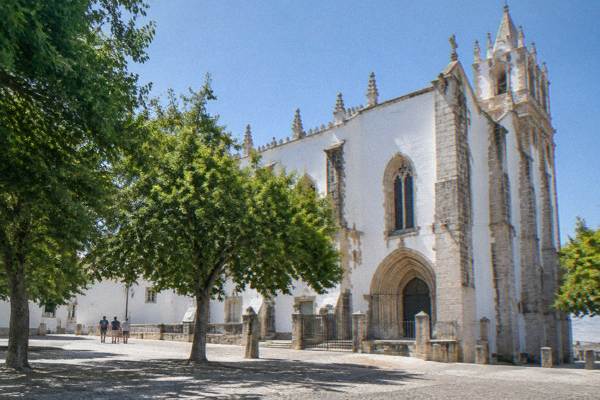
What Are The Must-See Attractions In Évora, Portugal?
The must-see attractions in Évora, Portugal, from the Sé and the Capela dos Ossos to the Templo Romano and the Almendres Cromlech, with verified ticket prices, hours and how to fit them into a visit.
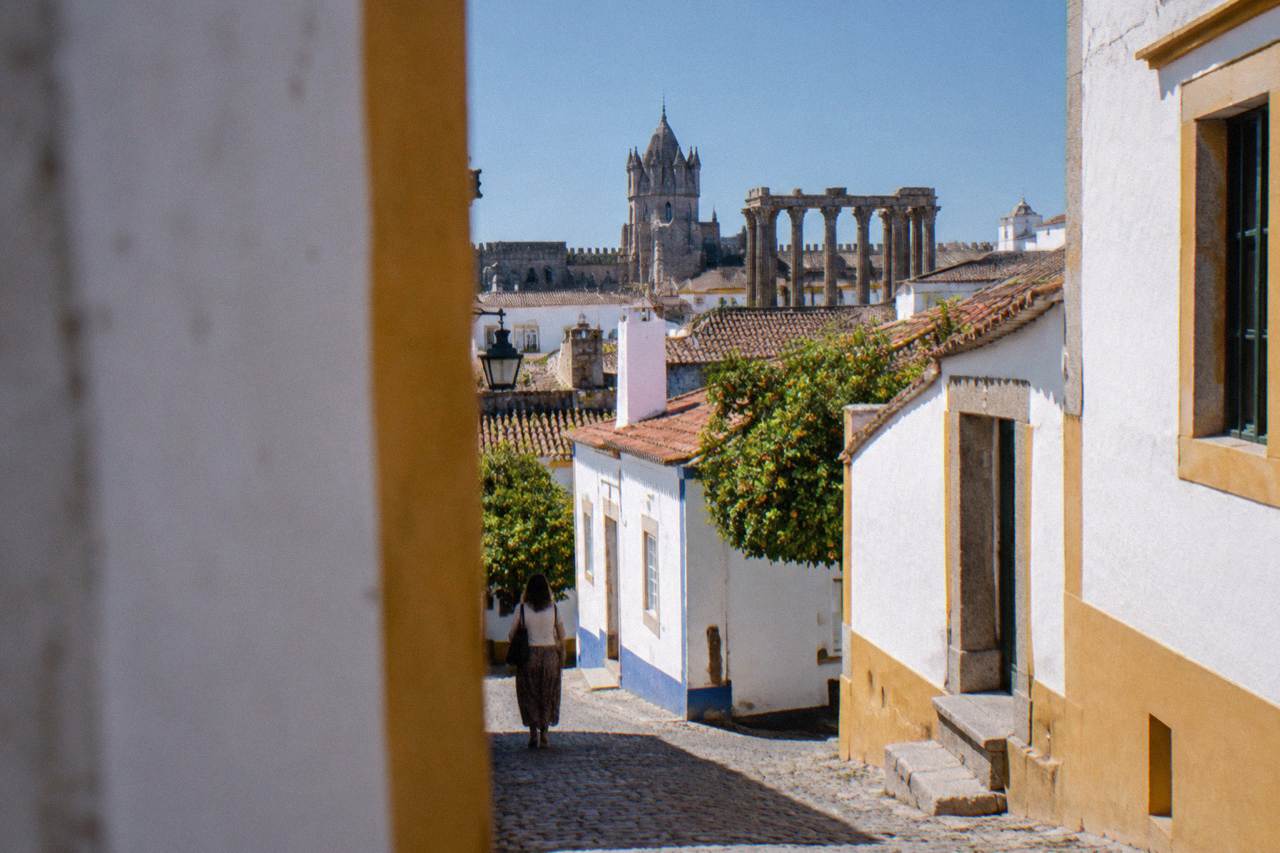
Évora, the walled capital of Portugal's Alentejo region, concentrates a Roman temple, a fortress-like cathedral and a chapel lined with human bones inside a historic centre that UNESCO inscribed in 1986. The whole core is walkable. Nothing on a must-see list here sits more than a few minutes' stroll from Praça do Giraldo, and the one big exception, the Cromeleque dos Almendres, is a short drive out into the cork oak country. That density is the reason the city works as a day trip and rewards a longer stay.
What Are The Must-See Attractions In Évora, Portugal?
The must-see attractions in Évora, Portugal, are the Sé de Évora cathedral with its roof terrace, the Capela dos Ossos at the Igreja de São Francisco, the Templo Romano, the Museu de Évora in the former Archbishop's Palace, Praça do Giraldo, the Água de Prata aqueduct arches and, outside the walls, the Cromeleque dos Almendres stone circle.
UNESCO inscribed the Historic Centre of Évora in 1986 under criteria (ii) and (iv), calling it the finest example of a city of the golden age of Portugal after the 1755 Lisbon earthquake.
That UNESCO wording matters more than it first appears. The 1755 quake flattened Lisbon's golden-age architecture, and Évora was largely spared, so the city centre preserves a whole ensemble of buildings from that era which the capital lost. Criterion (iv) on the UNESCO listing is the reason the streets around the Sé and the university look the way they do. The Jesuit University of the Holy Spirit dates from 1553, and the Jesuits were expelled in 1759; the university building still frames the main square of the old college.
If the list above feels long for a small city, it is. Readers deciding between Évora and the coastal alternatives usually start from what Évora is famous for, and the short answer is monuments: this is a museum-city, not a resort. The editorial desk at Évora Travel Guide keeps the sightseeing core to roughly six stops, and the table below shows what each one costs on the figures the official pages publish.
| Attraction | Ticket (official page) | Hours (official page) | Closed |
|---|---|---|---|
| Sé de Évora (complete visit) | 5.00 EUR, children up to 12 free | 9:00-17:00 | 24 Dec afternoon, 25 Dec, 1 Jan |
| Capela dos Ossos / Igreja de São Francisco | 7.00 EUR adult, 5.00 EUR youth to 25 and senior over 65, 15.00 EUR family | Summer 9:00-18:30, winter 9:00-17:00 | 1 Jan, Easter Sunday, 24 Dec afternoon, 25 Dec |
| Museu de Évora | 8 EUR adult, 50% off youth 13-24, seniors over 65 and family | Tue-Sun 9:30-13:00 and 14:00-17:30 | Mondays, 1 Jan, Easter Sunday, 1 May, 29 June, 25 Dec |
| Templo Romano | Open-air monument, no ticket listed | Open-air, freely visible | Not applicable |
| Praça do Giraldo | Public square | Always open | Not applicable |
| Cromeleque dos Almendres | No entry charge stated for the stones | Interpretation centre: summer 10:00-18:00, winter 10:00-17:00 | Centre closed outside hours |
Two notes on that table. The Museu de Évora also admits residents in Portugal free on Sundays and public holidays, and children up to 12 pay nothing. The Almendres Interpretation Centre sits in the village of Guadalupe, and the centre's own page gives the route from Évora as the national road toward Lisbon, then a turn-off after about 8 km.
Which Évora Sights Should Come First On Your List?
Start with the Sé de Évora and the Capela dos Ossos, because they are the two sights with queues, fixed hours and a single ticket each, then fill the gaps around them with the Templo Romano, Praça do Giraldo and the university square, which need no ticket at all. The Sé's one 5.00 EUR ticket covers the cathedral, the cloister, the roof terrace and the museum, and the Capela dos Ossos ticket covers every museum area of the Igreja de São Francisco complex.
The logic is about opening hours, not prestige. The Museu de Évora closes for lunch, shuts on Mondays and stops admitting at 17:30 in the afternoon session, so it belongs early or in a well-planned afternoon. The Capela dos Ossos runs longer in summer, until 18:30, which makes it the natural late stop. The Sé closes at 17:00 with last museum admission 30 minutes before closing, so the cathedral is a morning thing in practice.
A workable order for a single day therefore reads: Sé and cloister first, Templo Romano and Praça do Giraldo in the late morning when the light is on the temple columns, the Museu de Évora after its 14:00 reopening, and the Capela dos Ossos last. Visitors with two days can push the Cromeleque dos Almendres and the aqueduct to day two and slow the pace inside the walls. The one-day plan for Évora expands on this sequence stop by stop.
For travellers who would rather have a guide arrange the ordering, the small-group and private walks below cover the core monuments with tickets handled in advance.
What Do The Sé De Évora And Capela Dos Ossos Tickets Actually Include?
The Sé de Évora sells one complete-visit ticket at 5.00 EUR covering the cathedral, the cloister, the panoramic roof terrace and the museum, with children up to 12 free, and there is no cheaper roof-only tier. The Capela dos Ossos ticket at 7.00 EUR for adults covers every museum area of the Igreja de São Francisco, including the Sala do Capítulo, the Presépio, the sacred art nucleus, the Sala da Tribuna Real and the terraces.
The church's own page notes that it is a private religious entity and does not apply State Museum discounts, which catches out visitors holding cards that work at national museums. The 5.00 EUR youth and senior rate at the Capela dos Ossos applies to visitors up to 25 and over 65 respectively, and the 15.00 EUR family ticket covers two adults plus youths.
The multi-site Évora Ticket is the other option, and its limits are the thing to understand before buying. The official pass page prices it at 8 EUR for one day, 10 EUR for two days and 12 EUR for three days, free to age 12, but it does not include the Sé, the Capela dos Ossos or the Museu de Évora. Anyone whose must-see list is exactly those three monuments gets nothing from the pass and should buy the single-site tickets instead.
| Ticket | Price | Covers | Does not cover |
|---|---|---|---|
| Sé complete visit | 5.00 EUR | Cathedral, cloister, roof terrace, museum | Any other site |
| Igreja de São Francisco museum ticket | 7.00 EUR adult | Capela dos Ossos and all museum areas of the complex | The Sé, the Museu de Évora |
| Museu de Évora | 8 EUR adult | The museum's collections in the Archbishop's Palace | The Sé, the Capela dos Ossos |
| Évora Ticket | 8 EUR one day, 10 EUR two days, 12 EUR three days | The Cidade-Museu network sites on the pass page | The Sé, the Capela dos Ossos, the Museu de Évora |
Whether the bone chapel itself earns its ticket is a fair question, and it has its own answer page: is the Chapel of Bones worth visiting. The short version from this desk: it is a twenty-minute interior with a heavy reputation, and pairing it with the rest of the São Francisco complex makes the 7.00 EUR feel proportionate.
If skip-the-line entry and a guide through all three headline monuments appeals, the box below is the tour built exactly around that.
Which Évora Highlights Are Free To Visit?
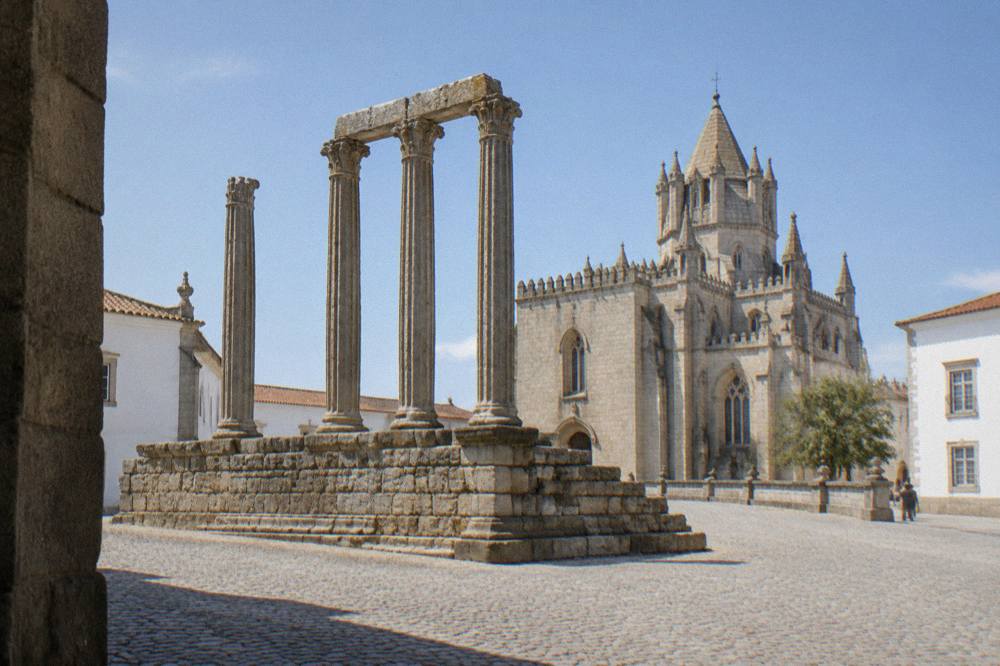
The Templo Romano, Praça do Giraldo, the outside of the Água de Prata aqueduct and the streets of the UNESCO historic centre cost nothing, and the Templo Romano is an open-air monument with no ticket listed on the municipal page. The municipal page also records the temple's dimensions as 25 x 15 m and says it was probably dedicated to the imperial cult rather than to the goddess Diana, a name only in use since the 17th century.
That last detail is the kind of thing a guidebook glosses over. The popular name, Temple of Diana, is a label attached long after the building went up; the municipal page says the imperial cult is the more likely dedication. The same page records that the building was reused as a municipal butcher's shop and that its walls were freed in 1870. Standing in front of the columns with that history in mind changes what you are looking at: a Roman monument that spent centuries as working infrastructure.
The free layer of Évora is genuinely deep. The aqueduct's arches run into the town and houses were built into them; no hours or prices are published for the aqueduct itself, because it is a street-level sight you walk beneath. Praça do Giraldo is a public square, always open, and the tourist office sits at number 73 if a paper map or a question is needed. The Museu de Évora is free for residents in Portugal on Sundays and public holidays, though that concession does not apply to foreign visitors.
One planning caution: the Convento dos Lóios, often listed among the city's monuments, currently shows its price as temporarily unavailable on the official page, so no ticket figure can be given here and the Museu de Évora's 8 EUR must not be attached to it. Check the notice before you go if it is on your list.
Is A Guided Tour Worth It For Évora'S Must-See Sights?
A guided tour is worth it in Évora when the visit is short or the monuments are the whole point, because the city's dense core rewards context and the two ticketed headliners have fixed hours that a guide sequences for you. The guided options run from a flexible historic-centre walk at $13.51 per person to a private skip-line tour of the university, the cathedral and the Chapel of Bones with wine tasting at $91.39 per person.
The budget end of that range is the flexible historic-centre walking tour, rated 4.8 from 105 reviews over three hours, which suits visitors who want orientation and stories more than monument entry. The premium end is the private skip-line monuments and wine tour, rated 5 from 48 reviews over three hours, which handles the tickets and adds a tasting. Between them sits the private cathedral-and-bones walk at $111.42, rated 5 from 106 reviews.
There is also a free layer in the guided market. The Essential Free Tour of Évora on GuruWalk, tip-based, runs about two hours and is rated 4.93 from 774 reviews; it is a GuruWalk product, not a paid booking, and the guru leading it should be named on the platform page. For a first afternoon in the city it is a low-risk way to get the geography straight before spending on the ticketed monuments.
The trio below is the same shortlist again, for readers comparing the guided options side by side.
How Much Time Do The Must-See Attractions In Évora Need?
A full day covers the Sé, the Templo Romano, Praça do Giraldo, the Museu de Évora and the Capela dos Ossos at a steady pace, while two days add the Cromeleque dos Almendres, the aqueduct walk and a slower second pass through the historic centre. The CP timetable valid since 6 September 2026 lists six through trains a day from Lisboa Oriente taking about 1 hour 40 to 1 hour 45, at 13.90 EUR second class, which makes even a day trip from Lisbon workable.
The train detail is what makes the timing question concrete. A 07:02 departure arrives in Évora at 08:47, which puts a visitor inside the walls before the Museu opens its morning session and ahead of the cathedral crowds. The 19:02 return leaves after the Capela's summer closing time, so a day tripper can genuinely see all five core sights in one long day, though the desk's fuller treatment of that trade-off sits in how much time you need in Évora.
The megaliths change the arithmetic. The Cromeleque dos Almendres and the Great Dolmen of Zambujeiro sit outside the city, and the guided visits that reach them run about three hours, such as the Almendres and dolmen tour at $33.76, rated 5 from 54 reviews. Anyone with a single day and no car should choose between the megaliths and the Museu de Évora, because the hours do not comfortably stretch to both.
For the reader who wants one decision made rather than a menu, this is the pick:
It is the option that most directly matches a must-see list: three hours, the university, the cathedral, the Chapel of Bones, tickets handled, and a wine tasting at the end. A day built around it still leaves the Templo Romano and Praça do Giraldo free to wander before or after.
Common Questions About Évora'S Must-See Attractions
What are the must-see attractions in Évora, Portugal?
The Sé de Évora, the Capela dos Ossos at the Igreja de São Francisco, the Templo Romano, the Museu de Évora, Praça do Giraldo, the Água de Prata aqueduct and the Cromeleque dos Almendres outside the city, all within or beside the UNESCO-inscribed historic centre.
How much do the main Évora monuments cost?
The Sé complete-visit ticket is 5.00 EUR, the Capela dos Ossos adult ticket is 7.00 EUR, and the Museu de Évora is 8 EUR. The Évora Ticket at 8 EUR for one day does not include any of those three.
Is the Templo Romano free to visit?
Yes. The municipal page lists no ticket or hours for it because it is an open-air monument; the columns stand freely visible in the square, and the municipal page gives its dimensions as 25 x 15 m.
Can you see Évora's main sights in one day?
Yes. The five core sights inside the walls fit into one full day, and the CP timetable valid since 6 September 2026 lists six through trains from Lisboa Oriente taking about 1 hour 40 to 1 hour 45, which supports a day trip from Lisbon.
What is closed on Mondays in Évora?
The Museu de Évora is closed on Mondays, along with 1 January, Easter Sunday, 1 May, 29 June and 25 December. The Sé and the Igreja de São Francisco are open on Mondays outside their listed holiday closures.
Do you need a tour for the Évora must-sees?
Not strictly, since every core sight is walkable and ticketed on the spot, but a guided walk sequences the fixed hours and adds context. Guided options run from a flexible historic-centre walk at $13.51 per person to a private skip-line monuments tour with wine at $91.39 per person.
The short version of the whole page: buy the three single-site tickets, walk the free layer hard, and let the train timetable from Lisbon set the clock on whatever day you choose.