How Much Time Do You Need In ÉVora?
How much time do you need in Évora? A practical answer built on verified ticket prices and opening hours: what one day covers, what a second day adds, and when a third day pays off.
UNESCO inscribed the Historic Centre of Évora, the walled capital of Portugal's Alentejo, in 1986, and the city has been pulling visitors inland from Lisbon, about 130 km away, ever since. The question nearly all of them ask is how long to stay. The honest answer depends on what the visit is for: the headline monuments fit into one long day, the full historic centre rewards two, and the megaliths, wine country and hill towns of the surrounding Alentejo justify a third. This page sets out what each of those options actually contains, using the verified opening hours and ticket prices that decide how the hours add up.
How Much Time Do You Need In ÉVora?
Two full days cover Évora's historic centre comfortably: one for the Sé, the Capela dos Ossos, the Praça do Giraldo and the Templo Romano, a second for the Museu de Évora, the university and the slower Alentejo pleasures of food and wine. A single day works for the headline sights if the visit starts early, and a third day earns its keep only when megaliths, Monsaraz or the wine country around the city are on the plan.
That is the short version. The longer version is that Évora is a small city with a dense centre, and the variable that most often breaks a plan is not distance between sights but the fixed rhythm of the monuments themselves. The two biggest draws both open at 9:00, one closes at 17:00 and the other at 18:30 in summer, and the main museum shuts for lunch and stays closed all day on Mondays. A visitor who arrives at midday and leaves the next morning will see far less than the calendar suggests.
Season matters too. IPMA's 1991 to 2020 normals for the Évora station show a July mean maximum of 33.3 C and 31.9 days a year reaching 35 C or more, so a summer day is really two half-days, an early one and a late one, with a shaded gap between. In spring and autumn the same hours stretch much further. The question of how much time you need is partly a question of when you go, and the best time to visit Évora deserves its own look before any itinerary is locked.
What Can You Realistically See In One Day In Évora?
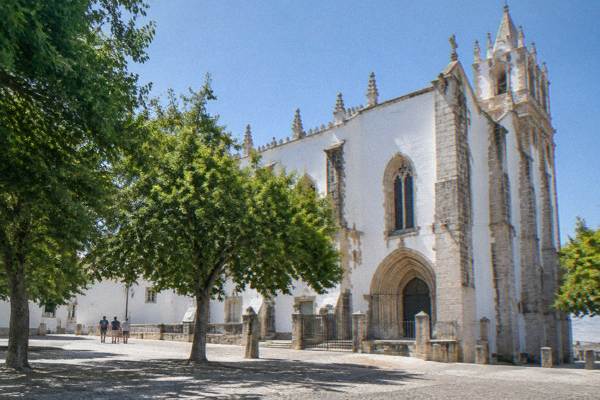
One well-planned day covers Évora's headline sights: the Sé de Évora, whose single 5.00 EUR complete-visit ticket includes the cloister, roof terrace and museum, the Capela dos Ossos at 7.00 EUR, the open-air Templo Romano and the public Praça do Giraldo, all inside the walled centre. Both paid monuments open at 9:00, the Sé closes at 17:00 and the Capela dos Ossos at 18:30 in summer, so an early start leaves a full afternoon for the lanes and a long lunch.
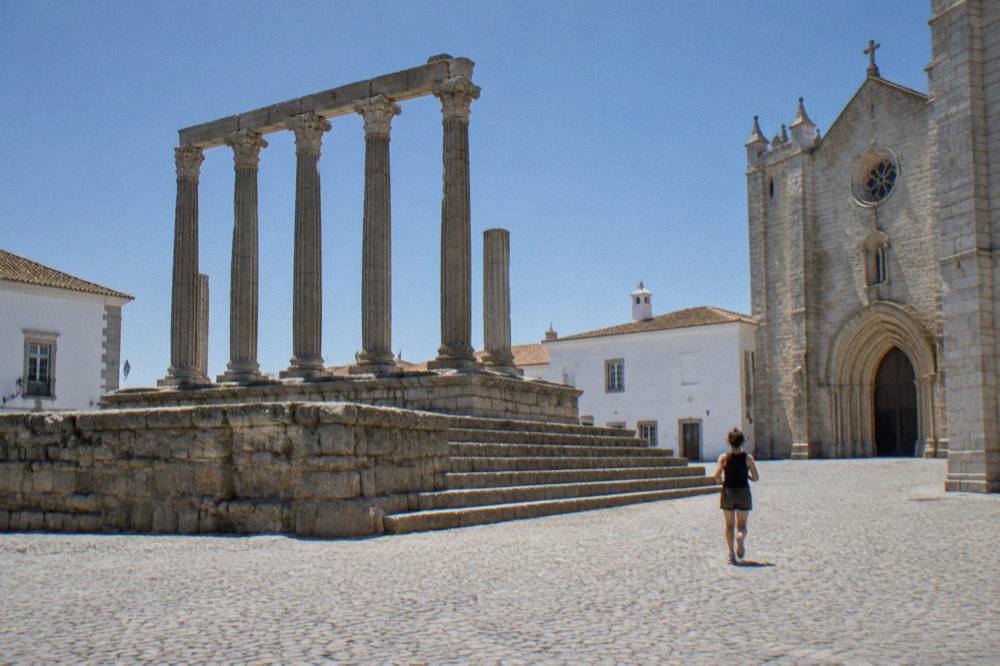
The one-day shape writes itself. Start at the Sé when it opens at 9:00, because the complete-visit ticket is one ticket for the cathedral, the cloister, the roof terrace and the museum together, and there is no cheaper roof-only option on the official page. From there the Templo Romano stands a few streets away, an open-air monument with no ticket at all; the municipal page says it was probably dedicated to the imperial cult rather than to Diana, a name only in use since the 17th century. The Praça do Giraldo, a public square, costs nothing but time.
The Capela dos Ossos belongs to the Igreja de São Francisco, and the church's own page states that one 7.00 EUR museum ticket covers the chapel and all the other museum areas, with youth to 25 and seniors over 65 at 5.00 EUR and a family ticket at 15.00 EUR. Summer legal-time hours run to 18:30, winter hours to 17:00, so it is the natural late stop. What a single day cannot absorb well is the Museu de Évora, which closes on Mondays and splits its day, Tuesday to Sunday, into two sessions, 9:30 to 13:00 and 14:00 to 17:30.
| Monument | Adult ticket | Opening hours | Closed |
|---|---|---|---|
| Sé de Évora (complete visit) | 5.00 EUR, children to 12 free | 9:00-17:00 | 24 Dec afternoon, 25 Dec, 1 Jan |
| Capela dos Ossos / Igreja de São Francisco | 7.00 EUR (youth to 25 and seniors over 65 5.00 EUR, family 15.00 EUR) | Summer 9:00-18:30, winter 9:00-17:00 | 1 Jan, Easter Sunday, 24 Dec afternoon, 25 Dec |
| Museu de Évora | 8 EUR (youth 13-24, seniors over 65 and family 50% off) | Tue-Sun 9:30-13:00 and 14:00-17:30 | Mondays, 1 Jan, Easter Sunday, 1 May, 29 June, 25 Dec |
For visitors who want the one-day version guided rather than self-directed, there are walking options at several price points, from a flexible historic-centre walk at $13.51 per person to private tours built around the monuments. The cards below show the three that fit a short stay best.
Whether one day is enough as a strategy is a separate question from whether it is pleasant, and the must-see attractions in Évora are the same list either way. Anyone weighing Évora against a coastal stop should remember the city sits inland on the Alentejo plain, roughly 90 km from the Atlantic, so the day is built on streets, squares and stones rather than a sea view.
What Does A Second Day In Évora Add?
A second day adds the Museu de Évora, closed Mondays and open Tuesday to Sunday from 9:30 to 13:00 and 14:00 to 17:30 at 8 EUR, plus the university, the Évora Ticket network of smaller sites and the unhurried pace the Alentejo is known for. It also removes the pressure of fitting the Capela dos Ossos, the Sé and a proper lunch into one morning, which is the main reason a single day in Évora can feel rushed.
The museum is the clearest gain. Housed in the former Archbishop's Palace and officially founded in 1915, it holds the city's main art and archaeology collections, and its split hours mean a rushed day-one visit tends to end at the lunch closure. Free entry applies on Sundays and holidays for residents in Portugal, and children to 12 enter free, facts worth checking against the plan before buying. Other pages covering the same trip are gathered on Évora Travel Guide.
The second day also unlocks the smaller sites that the Évora Ticket covers, from the Colégio do Espírito Santo at the University of Évora to the Palácio de Dom Manuel and the Fundação Eugénio de Almeida's spaces. None of these carries a verified individual price, and none needs one, because the pass prices them as a bundle. A visitor with two days can treat them as the slow middle of the itinerary rather than as casualties of a tight schedule.
A private guide makes the two-day version considerably easier to organise, and the standout for this purpose is the Évora Private Walking Tour with Cathedral & Chapel of Bones, rated 5 from 256 reviews and priced from $113.53 per person, which handles the monument tickets as part of the walk. Check availability if that structure appeals; the same tour is featured across the Évora Travel Guide pages because it matches the two-day pace better than anything else in the city.
Which Évora Tickets Are Worth Buying For A Short Visit?
The three headline monuments sell their own tickets and none is covered by the Évora Ticket: the Sé costs 5.00 EUR for the complete visit, the Capela dos Ossos costs 7.00 EUR for an adult, and the Museu de Évora costs 8 EUR, so all three together come to 20.00 EUR. The Évora Ticket, at 8 EUR for one day, 10 EUR for two and 12 EUR for three, covers a separate network of sites and is a different purchase, not a discount on those three.
This is the detail most short-stay visitors get wrong. The Évora Ticket is a real product, sold at each included site and at the tourist office on the Praça do Giraldo, with a digital version online, and its one-day price of 8 EUR looks like a bargain against three monument tickets. It is not, because the Sé, the Capela dos Ossos and the Museu de Évora sell their own tickets and sit outside the pass network. The pass buys entry to the Casa Nobre e Ruínas da Rua de Burgos, the Casas Pintadas, the Fundação Eugénio de Almeida's Centro de Arte e Cultura and carriage collection, the Centro Interativo de Arqueologia, the Colégio do Espírito Santo, the Megalithica Ebora centre, the Museu da Misericórdia, the MADE, the Museu do Relógio, the Palácio de Dom Manuel and the Palácio Duques de Cadaval.
| Évora Ticket | Adult price | Notes |
|---|---|---|
| One day | 8 EUR | Free to age 12; covers the Cidade-Museu network only |
| Two days | 10 EUR | Same network; the Sé, Capela dos Ossos and Museu de Évora are not included |
| Three days | 12 EUR | Sold at included sites, the Posto de Turismo and online in digital form |
For a one-day visitor whose interests are the cathedral, the bone chapel and the square, the pass is simply irrelevant, and the 20.00 EUR of separate monument tickets is the real budget line. For a two- or three-day visitor who wants the university, the palaces and the smaller museums, the pass earns its price quickly, and the two-day version at 10 EUR is usually the sweet spot for the pace described above. Children to 12 travel free on the pass, just as they enter the Sé free with a parent or guardian.
The guided alternative bundles the ticket question away entirely, which is one reason the skip-line style tours are popular with short-stay visitors.
When Does Évora Deserve A Third Day?
A third day in Évora pays off when the plan reaches beyond the walls: the Cromeleque dos Almendres and the megalithic sites around the city, whose interpretation centre in Guadalupe keeps summer hours of 10:00 to 18:00, or the Alentejo towns such as Monsaraz at about 40 to 45 km and Estremoz at about 45 km. Guided tours from Évora cover the cromlech, the cork forests and the wine routes in half a day, which is the practical ceiling for a third day built on a single base.
The megalithic case is the strongest. The Almendres Interpretation Centre in the village of Guadalupe, a partner of the municipality, opens 10:00 to 18:00 from 1 May to 31 October and 10:00 to 17:00 in winter, and the cromlech itself stands in the open landscape beyond. Guided half-day tours from Évora, led in one case by archaeologists, run from $33.76 per person, and the combination of megaliths with a cork forest walk starts at $50.65. These are dollar prices from the tour listings, not local entry fees, and the cromlech's own entry terms are best checked with the operator's notice before setting out.
The towns make the other third-day case. Monsaraz sits about 40 to 45 km away, Estremoz about 45 km, Vila Viçosa about 60 km and Elvas about 80 km, all rounded figures, and each is a half-day or more on its own. A visitor who tries to fold any of them into a two-day city stay usually ends up sacrificing the museum or the long lunches that are half the point of the Alentejo. The dedicated one day in Évora and day-trip pages carry the detail on each of these.
There is also a 2027 argument for lingering. Évora and the Alentejo are European Capital of Culture in 2027, with the full programme still to be published, and the preparatory 2026 programme is already running under the concept of "Vagar", a word that means moving slowly and deliberately. A city preparing a year of culture is a city with more to see than the monument list suggests, and the third day is where that surplus lives.
For travellers compressing everything into a single visit from the capital, the day trip from Lisbon question has its own answer, and the guided options below are the ones that fit a short stay best.
Common Questions About Time In Évora
How long should you stay in Évora?
Two nights, giving two full days, is the pace that fits the historic centre without rushing. One day covers the Sé, the Capela dos Ossos, the Templo Romano and the Praça do Giraldo; the second day adds the Museu de Évora, the university and the Évora Ticket sites at a humane speed.
How many days do you need in Évora?
Two days for the city itself, and a third if the plan includes the Cromeleque dos Almendres, Monsaraz or the wine country. The headline monuments alone can be seen in one day, but the museum's Monday closure and split hours make a one-day visit tight.
Is one day enough for Évora?
Yes, for the headline sights. The Sé opens at 9:00 and closes at 17:00, and the Capela dos Ossos runs to 18:30 in summer, so a 9:00 start covers both plus the Templo Romano and the Praça do Giraldo. What one day loses is the Museu de Évora, the university and any of the smaller Évora Ticket sites.
Is the Capela dos Ossos included in the Évora Ticket?
No. The Capela dos Ossos, the Sé and the Museu de Évora all sell their own tickets, at 7.00 EUR, 5.00 EUR and 8 EUR respectively, and none is part of the Évora Ticket network. The pass covers a separate list of palaces, museums and the university site instead.
When is the Museu de Évora closed?
Every Monday, plus 1 January, Easter Sunday, 1 May, 29 June and 25 December. On the days it does open, Tuesday to Sunday, it runs two sessions, 9:30 to 13:00 and 14:00 to 17:30, which is why a rushed first day usually skips it.
Can you visit Évora as a day trip from Lisbon?
Yes, and many people do. CP's timetable valid since 6 September 2026 lists six through trains from Lisboa Oriente taking about 1 hour 40 to 1 hour 45, with a second-class fare of 13.90 EUR, so a day trip is practical. The trade-off is that a day trip is the one-day version of Évora, with the museum and the slower sites left for a longer stay.
The hours and prices above are the ones that decide the answer, and they point one way: give Évora two days if the schedule allows, treat one day as the workable minimum, and hold the third day for the megaliths and the wine country that surround the walls.