Whose Bones Are In The Chapel Of Bones?
No source names the individuals whose bones line Évora's Capela dos Ossos, but the official record says what the chapel is, what a ticket covers and when it opens. Here is the honest answer.
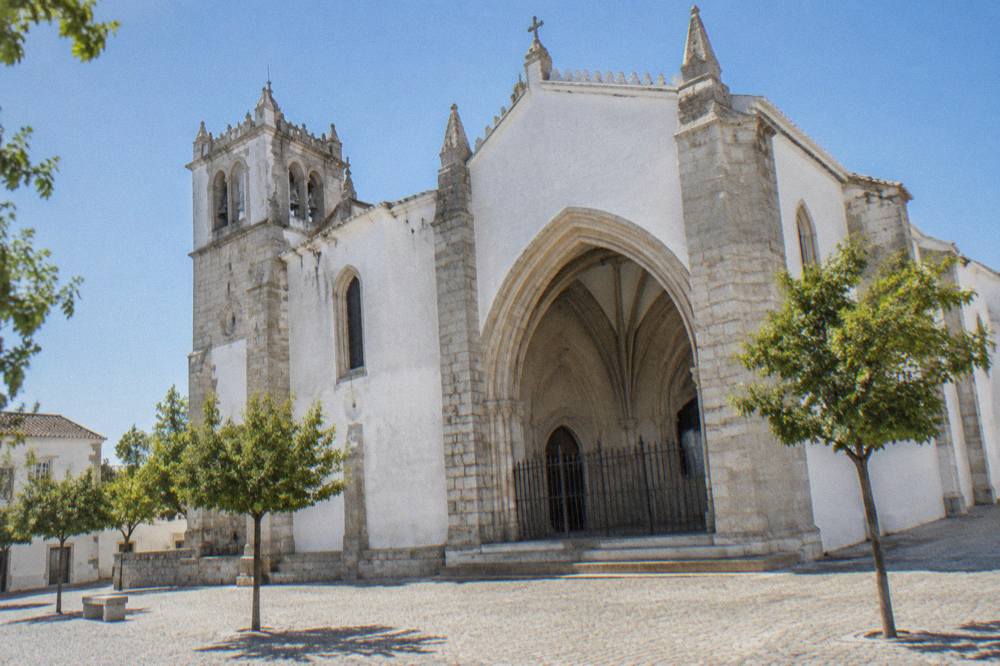
The Capela dos Ossos in Évora, Portugal, is a small chapel whose interior walls and pillars are lined from floor to ceiling with human bones, and the honest answer to who they belonged to is that no primary source says. The Igreja de São Francisco, the church the chapel belongs to, publishes its ticket prices, its hours and its closure days, and none of that material names the individuals, the cemeteries or the monasteries the bones came from. Guides and articles that assign the bones a specific origin are filling that silence with a story. This page sticks to what the church's own record states, describes what a visitor actually sees, and explains how to visit the chapel, which sits inside the Chapel of Bones attraction complex attached to one of Évora's largest churches.
Whose Bones Are In The Chapel Of Bones?
No primary source identifies the people whose bones line the Capela dos Ossos in Évora. The church's own published material gives the ticket, the hours and the closure days, but it names no individuals, no cemetery and no religious order as the source of the bones. The chapel's walls and pillars are decorated with human bones, which is what the Portuguese name means, and any specific claim about who they were is a later story rather than a documented fact.
That answer disappoints some readers, and it should be said plainly rather than papered over. Évora's Chapel of Bones was built at a time when several European cities relocated overflowing cemeteries and, in some cases, redecorated sacred spaces with the remains, but the Évora chapel's own church does not publish which local burial grounds, if any, supplied the bones on its walls. Writers who state a specific origin for them are choosing a version of events that the building's custodians do not confirm.
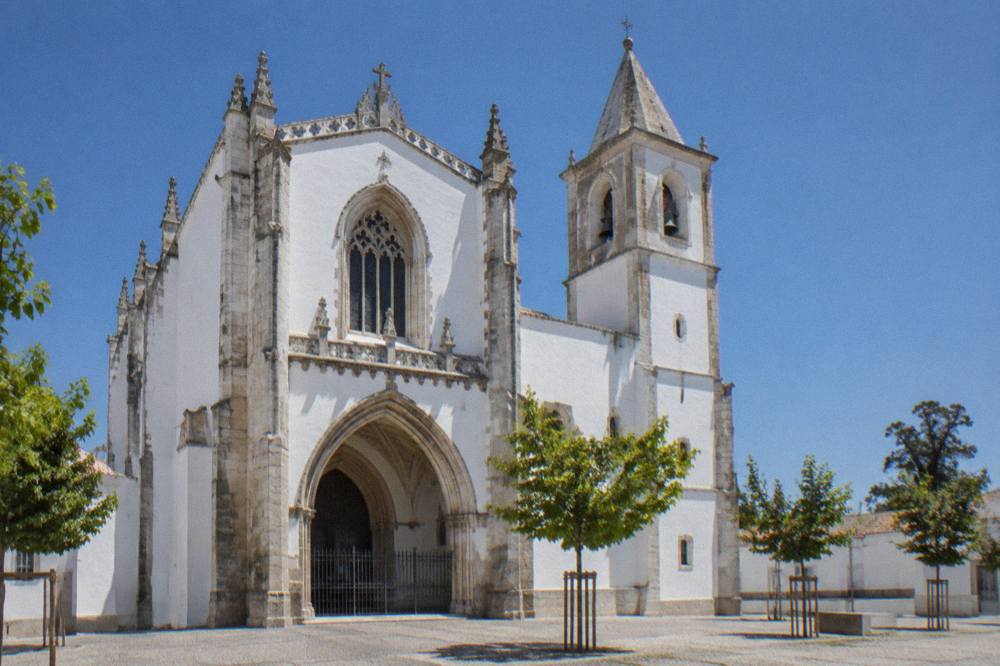
What can be described with confidence is the chapel itself. It is a small, dim, vaulted space attached to the Igreja de São Francisco, one of the grandest Gothic churches in Portugal, and the bones are not scattered: they are sorted and arranged, with skulls placed in deliberate rows and long bones stacked in patterns between them. The effect is architectural rather than accidental, which is precisely why the chapel draws the crowds it does and why the question of identity keeps coming up.
The question of whether the bones are even genuine has its own answer, and it is a clear one, covered in detail on whether the Chapel of Bones is made of real bones. In short: the chapel is a real devotional space decorated with real human bone, not a plaster theme-park effect, and the church treats it as part of its museum circuit rather than as a stunt.
Why The Question Has No Documented Answer
The Igreja de São Francisco publishes its ticketing, hours and religious schedule in detail, and none of that official material records who the bones belonged to, where they were collected or which community commissioned the work. Évora's municipal pages describe the chapel as a visitor attraction without adding an origin for the remains either. The gap is in the record itself, not in a visitor's research, and no document held by the church names the dead.
Churches that house bone chapels elsewhere in Portugal, in Faro and in Évora's own region, sometimes carry local traditions about their remains, and those traditions get repeated in guidebooks until they read like facts. Évora's case is different in one useful way: the custodians of the Capela dos Ossos have put a detailed visitor-facing record online, covering prices, opening hours and mass times, and that record simply does not address identity. When the institution responsible for the building declines to say, a travel article that does say is guessing.
There is also a practical reason the question resists answering. Bones moved into a decorative scheme centuries ago cannot be attributed to named individuals by inspection, and the arrangement mixes remains in a way that no visual study could untangle. The honest framing is the one this page uses: the chapel is a real space lined with real human bone, the identity of the dead is not recorded by the church, and the meaning of the space does not depend on solving it.
For visitors, the absence of a named cast is part of what makes the chapel unsettling in the intended way. It is a memento-mori space, built to make the viewer think about mortality in general rather than about particular people, and the anonymity of the arrangement serves that purpose. The broader story of the chapel, its purpose and its fame, is told in the story behind the Chapel of Bones.
A guided walk is the easiest way to hear that context on the spot. The private walking tour with cathedral and Chapel of Bones pairs the chapel with the Sé de Évora and carries a 5 rating from 256 reviews on the operator's listing, from $113.53 per person. Check availability
What A Ticket To The Chapel Of Bones In Évora Covers
One single museum ticket covers every museum area of the Igreja de São Francisco complex: the Capela dos Ossos itself, the Sala do Capítulo, the Presépio, the Arte Sacra nucleus, the Sala da Tribuna Real, the Terraço da Galilé and the Canha da Silva nativity collection. An adult ticket costs 7.00 EUR, youth up to 25 pay 5.00 EUR, seniors over 65 pay 5.00 EUR, and a family ticket for two adults with youths costs 15.00 EUR.
The church itself is free to enter.
The church notes on its own page that it is a private religious entity and does not apply State Museum discounts, so visitors holding a national museum pass should not expect a reduction here. The distinction between the free church and the paid museum circuit matters in practice: many visitors walk into the Igreja de São Francisco expecting to see the chapel from the nave and discover the chapel sits behind the museum ticket.
| Ticket | Price | What It Covers |
|---|---|---|
| Adult | 7.00 EUR | All museum areas: Capela dos Ossos, Sala do Capítulo, Presépio, Arte Sacra nucleus, Sala da Tribuna Real, Terraço da Galilé, Canha da Silva nativity collection |
| Youth up to 25 | 5.00 EUR | Same full museum circuit |
| Senior over 65 | 5.00 EUR | Same full museum circuit |
| Family (2 adults plus youths) | 15.00 EUR | Same full museum circuit for the group |
| The church itself | Free | The Igreja de São Francisco nave, outside service times |
Hours follow the legal-time switch rather than a fixed calendar. In summer legal time the museum areas open 9:00 to 18:30, and in winter legal time 9:00 to 17:00, every day except 1 January, Easter Sunday, the afternoon of 24 December and 25 December. Masses are held Monday to Saturday at 11:30 and on Sunday at 9:00 and 12:00, and the church asks visitors to respect them.
How The Chapel Fits Into A Day In Évora
The Capela dos Ossos sits a short walk inside Évora's UNESCO-listed historic centre, close to the Praça do Giraldo, the Sé de Évora and the Templo Romano, so it slots naturally into a half-day circuit of the city's main monuments. The Sé's own complete-visit ticket, at 5.00 EUR, covers the cathedral, cloister, roof terrace and museum, and children up to 12 enter free. Most visitors pair the two in a single morning or afternoon.
The historic centre of Évora was inscribed by UNESCO in 1986 under criteria (ii) and (iv), and criterion (iv) calls it the finest example of a city of the golden age of Portugal after the 1755 Lisbon earthquake, which Évora was largely spared. Walking between the chapel, the cathedral and the Roman temple therefore covers the core of what the listing protects, all within compact medieval streets. Everything else covered here is indexed on Évora Travel Guide.
Planning the pairing is straightforward. The chapel's museum circuit is the denser visit, and the Sé's roof terrace is the one that rewards daylight, so a sensible order is the cathedral first, the chapel second, with the Praça do Giraldo in between for a coffee. Visitors working out their overall schedule will find the timing question answered on how much time you need in Évora.
For travellers arriving without a car, the city is reachable by train from Lisbon, a practical question covered on whether there is a direct train from Lisbon to Évora. Once in the centre, everything in this circuit is on foot.
Is The Chapel Of Bones Worth Visiting Anyway?
Yes, and the honest case does not depend on knowing who the bones belonged to. The chapel is one of the few interiors in Portugal where a decorative scheme of this kind is open to the public, and the single ticket also covers six further museum areas of a major Gothic church. The anonymity of the dead is the point of a memento-mori chapel, not a defect, and the visitor response reflects it.
Visitors who expect a horror attraction are the ones most often disappointed, because the chapel is small, quiet and contemplative rather than frightening. Those who arrive expecting a piece of Counter-Reformation-era devotional art, which is what it is, tend to come out having stayed longer than planned, since the ticket includes the nativity collections and the sacred-art nucleus that most walk past.
The guided walks that include the chapel back this up on their listings: the private walking tour pairing it with the cathedral holds a 5 rating from 256 reviews, and the skip-line monuments tour with wine tasting a 5 from 48. The question of value is argued both ways on whether the Chapel of Bones is worth visiting, and the short version is that it rewards visitors who take the museum circuit seriously rather than photographing one corridor and leaving. The chapel also anchors the city's wider reputation, a subject explored on what Évora is famous for.
Other Bone Chapels In Portugal
Évora's Capela dos Ossos is the best known bone chapel in Portugal, but it is not the only one: the country has several churches and chapels whose interiors incorporate human remains, most famously the Capela dos Ossos in Faro in the Algarve. None of these sites publishes a named roll of the dead either, and the Portuguese tradition as a whole treats the remains as anonymous by design. The full list and the differences between the sites are covered in the guide to bone chapels in Portugal.
The comparison matters for travellers building an itinerary, because Évora and Faro sit in opposite halves of the country and are rarely combined in one trip. Évora's chapel belongs to a larger church and museum complex, which gives the visit more depth than the chapel alone, and the city around it carries the UNESCO inscription, the Roman temple and the megalithic sites of the Alentejo plain.
Travellers weighing Évora against Portugal's other classic day-trip cities can also read the head-to-head on which is better, Sintra or Évora. The short version: Sintra is palaces and hills, Évora is plains, bones and Roman stone, and they suit different travellers.
Common Questions About The Chapel Of Bones In Évora
Whose bones are in the Chapel of Bones?
No primary source identifies them. The Igreja de São Francisco's own published record gives tickets, hours and masses but names no individuals, cemetery or order as the source of the bones, so the honest answer is that the identity of the dead is not recorded.
Is the Chapel of Bones made of real bones?
Yes. The chapel's walls and pillars are lined with human bone arranged in deliberate patterns, and the church manages it as part of its museum circuit. The detailed answer is on the page about whether the Chapel of Bones is made of real bones.
Is the Chapel of Bones free?
The Igreja de São Francisco itself is free to enter, but the Capela dos Ossos sits within the paid museum areas, covered by a single ticket at 7.00 EUR for adults, 5.00 EUR for youth up to 25 and seniors over 65, and 15.00 EUR for a family.
What religion is the bone church?
The chapel belongs to the Igreja de São Francisco, a Catholic church, and masses are still held there: Monday to Saturday at 11:30 and Sunday at 9:00 and 12:00. The decorative scheme is a Catholic devotional tradition rather than something outside the church.
When is the Chapel of Bones open?
The museum areas open 9:00 to 18:30 in summer legal time and 9:00 to 17:00 in winter legal time, every day except 1 January, Easter Sunday, the afternoon of 24 December and 25 December.
The bones on the walls of Évora's most visited chapel will keep their anonymity, because the church that cares for them has never published a name, a cemetery or a count, and a chapel built to make visitors think about mortality in general does not need one. What the record does give is precise: a single 7.00 EUR ticket covering seven museum areas, daily opening with four closure days a year, and a space that remains one of the most compelling reasons to visit the Alentejo's capital.