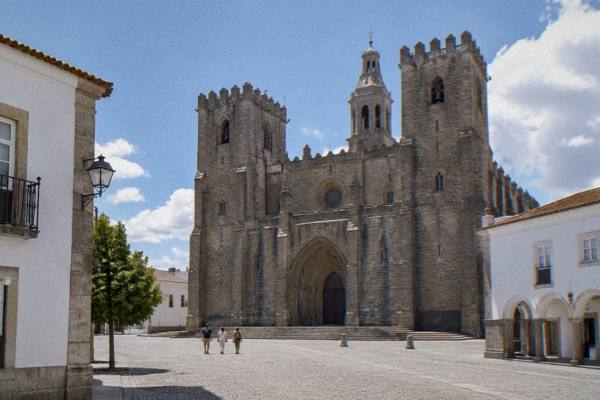
Évora Accessibility: A Practical Guide To Visiting Portugal's Alentejo Capital With Reduced Mobility
Évora, the inland capital of Portugal's Alentejo, is a compact walled city of stone streets, Roman monuments and quiet squares, and with the right planning it rewards slower-paced visitors unusually well.
Short answer
Évora is small and walkable, but its streets are stone-paved and uneven in places and the summer heat is intense. Plan around morning visits, the six daily trains from Lisbon, simple single-ticket monuments and guided tours that set their own pace, and check access details with each site before you go.
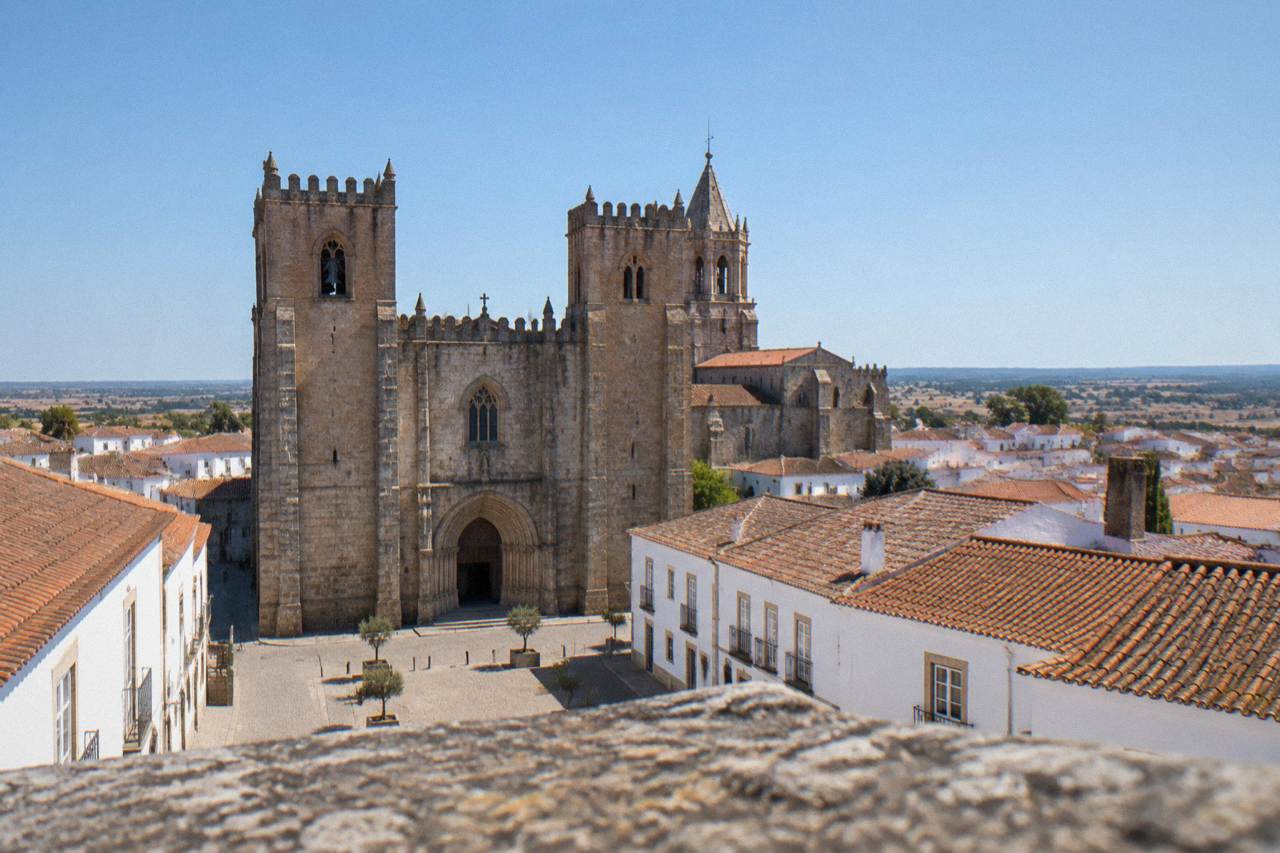
Évora, the inland capital of Portugal's Alentejo region, packs a UNESCO-listed historic centre, a Roman temple, a medieval cathedral and a famous bone chapel into a space that most visitors cross on foot in a day. That compactness is the city's great advantage for anyone travelling with reduced mobility, older joints, a stroller or simply a preference for a slower pace. The trade-off is real too: the streets inside the walls are stone-paved and uneven in places, summer heat is fierce, and no two monuments handle visitors quite the same way. This guide lays out what is published, what can be planned with confidence, and what should be checked with each site directly before you arrive.
How Accessible Is Évora For Visitors With Reduced Mobility?
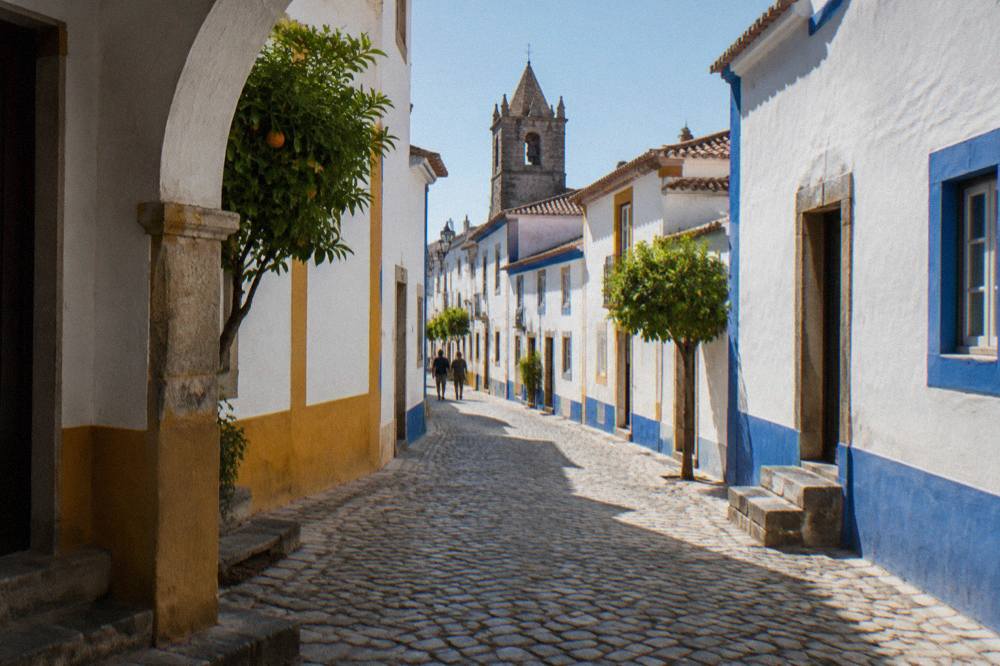
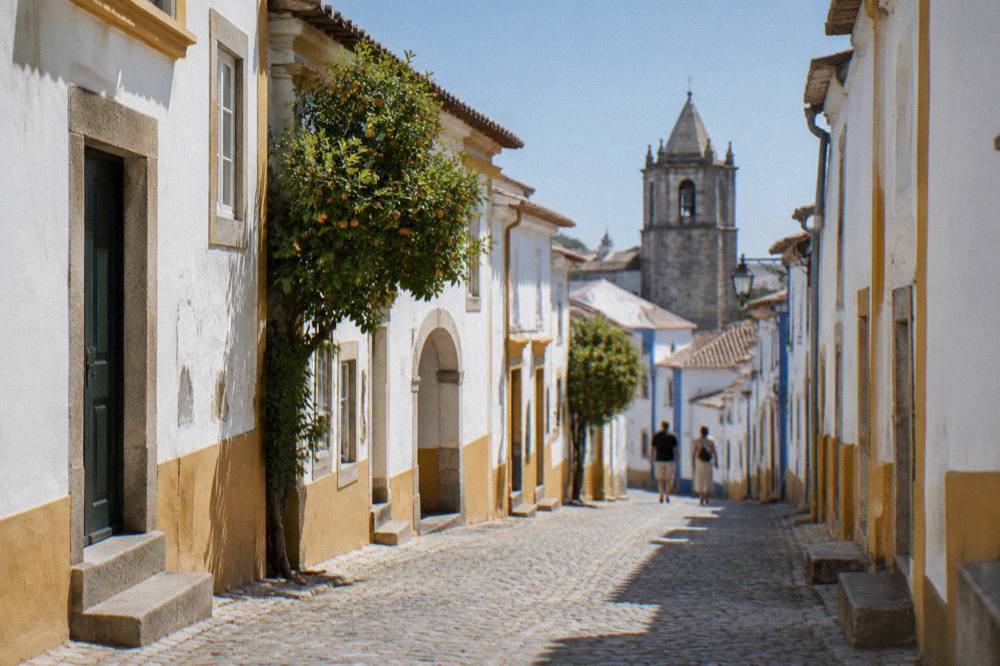
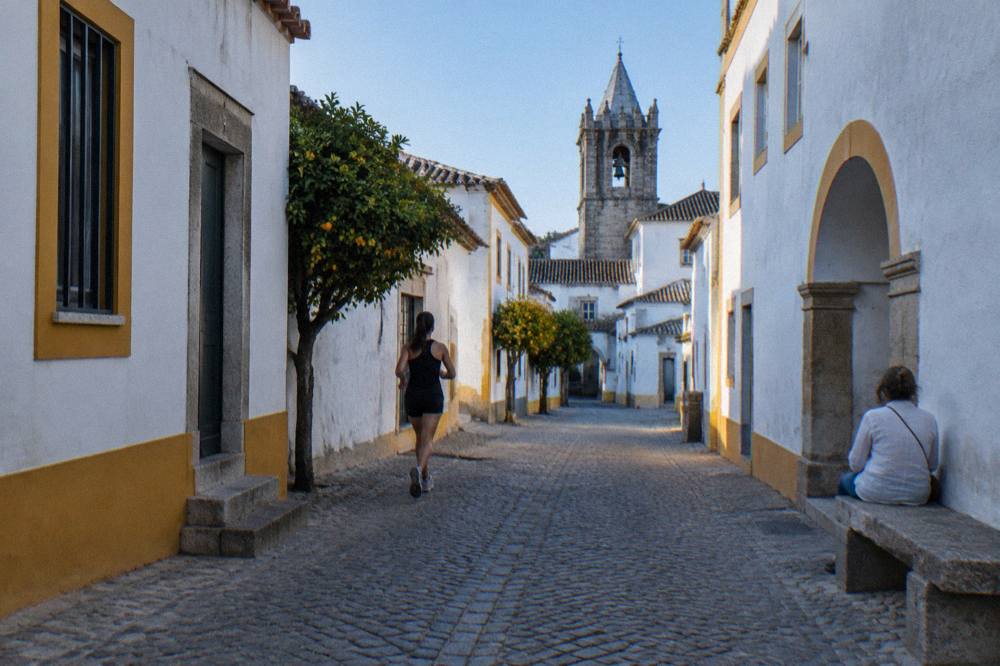
Évora is a small, flat-to-gently-sloping walled city where nearly everything of interest sits within a short walk of everything else, which makes it one of the more manageable historic destinations in Portugal for slower-paced travel. The historic centre's streets are stone-paved and uneven in places, so comfortable shoes and a relaxed schedule matter more than distance. No site publishes a detailed accessibility rating, so contact each monument directly before visiting to confirm what suits your needs.
The honest starting point is geometry. The UNESCO Historic Centre of Évora, inscribed in 1986 under criteria (ii) and (iv), is a dense core of narrow streets, arcaded squares and low-rise buildings. UNESCO's criterion (iv) calls it the finest example of a city of the golden age of Portugal, precisely because the 1755 Lisbon earthquake that flattened so much of the country barely touched Évora. The practical consequence for visitors today is a centre that has never been rebuilt around the car, which is both its charm and its challenge.
Distances are the friend here. The Praça do Giraldo, the Templo Romano, the Sé, the Igreja de São Francisco with its Capela dos Ossos and the Museu de Évora all sit within a few minutes of one another, and the whole core can be crossed at a stroll. What slows visitors down is not length but surface and shade: stone paving polished by centuries, stretches without cover, and a summer sun that the Alentejo plain does not soften. A realistic plan is two or three monuments per morning, a long lunch in the shade, and one more sight before the evening.
Because no attraction in the city publishes a step count, a ramp inventory or a wheelchair-route map that this guide could rely on, the working method is simple: decide what you want to see, then phone or email each site ahead. The tourist office on Praça do Giraldo 73 (phone +351 266 777 071) is the natural first call, and it can relay current conditions at the monuments. For a broader picture of the city's layout and sights, the things to do in Évora overview is a good companion to this page.
Which Évora Monuments Are The Easiest To Plan Around?
Four headline sights carry simple, published, single-ticket systems: the Sé at 5.00 EUR for a complete visit including the cloister, roof terrace and museum, the Capela dos Ossos at 7.00 EUR adult, the Museu de Évora at 8 EUR, and the multi-site Évora Ticket at 8 EUR for one day. Children up to 12 enter the Sé free, and the Évora Ticket is also free to age 12. The Templo Romano is an open-air monument with no ticket at all.
Simple tickets matter when energy is the budget. The Sé de Évora sells one ticket that covers the cathedral, the cloister, the panoramic roof terrace and the museum, so a single purchase covers a full visit and can be abandoned at any point if fatigue sets in. Its own page lists hours of 9:00 to 17:00, with the museum's last admission 30 minutes before closing, and closure on 24 December afternoon, 25 December and 1 January. The cathedral's ticket page says children up to 12 enter free with a parent or guardian.
The Igreja de São Francisco, home of the Capela dos Ossos, publishes a single museum ticket covering the chapel, the chapter room, the nativity collection and the other museum areas: 7.00 EUR adult, 5.00 EUR for youth up to 25 and seniors over 65, and a 15.00 EUR family option. Summer hours run 9:00 to 18:30, winter 9:00 to 17:00, open daily except 1 January, Easter Sunday, 24 December afternoon and 25 December. The church notes it is a private religious entity and does not apply State Museum discounts.
| Monument | Adult ticket | Reduced or free | Published hours | Closed |
|---|---|---|---|---|
| Sé de Évora (complete visit) | 5.00 EUR | Children to 12 free | 9:00-17:00 | 24 Dec afternoon, 25 Dec, 1 Jan |
| Capela dos Ossos / Igreja de São Francisco | 7.00 EUR | Youth to 25 and seniors over 65: 5.00 EUR; family 15.00 EUR | Summer 9:00-18:30, winter 9:00-17:00 | 1 Jan, Easter Sunday, 24 Dec afternoon, 25 Dec |
| Museu de Évora | 8 EUR | Youth 13-24, seniors over 65, family 50% off; free to 12; free Sundays for residents | Tue-Sun 9:30-13:00 and 14:00-17:30 | Mondays, 1 Jan, Easter Sunday, 1 May, 29 June, 25 Dec |
| Templo Romano | Open-air, no ticket | Open-air, no ticket | Public space | None published |
| Convento dos Lóios | Check at the ticket desk | Check at the ticket desk | Check the official page | Check the official page |
The Évora Ticket, the pass for the Cidade-Museu network of municipal sites, is worth a look for multi-day visits: 8 EUR for one day, 10 EUR for two days and 12 EUR for three days, free to age 12. One caveat that matters for planning: it does not include the Sé, the Capela dos Ossos or the Museu de Évora, so it complements rather than replaces the tickets above. Check the pass's own site for the current list of what it covers before buying.
| Évora Ticket option | Price | Notes |
|---|---|---|
| One day | 8 EUR | Free to age 12 |
| Two days | 10 EUR | Best for a relaxed two-day pace |
| Three days | 12 EUR | Suits a slow itinerary with rest days |
The Museu de Évora, housed in the former Archbishop's Palace and founded officially in 1915, closes on Mondays, which catches out many visitors who arrive for a long weekend. Its split day, 9:30 to 13:00 and 14:00 to 17:30, means a morning visit followed by lunch is the natural pattern. For a fuller picture of each sight before committing your energy, the Évora opening hours planning page collects the published times in one place.
How Do You Get To Évora And Move Around The Centre?
CP's Intercidades timetable valid since 6 September 2026 lists six through trains a day from Lisboa Oriente to Évora, departing at 07:02, 09:02, 09:58, 13:35, 17:02 and 19:02 and arriving roughly 1 hour 40 to 1 hour 45 later, with a second-class fare of 13.90 EUR and first class at 18.50 EUR. No change at Casa Branca is needed on these trains. The station is a short taxi or adapted-vehicle ride from the centre.
The train is the backbone of an accessible trip to Évora. Six direct Intercidades services each way means a visitor can arrive mid-morning, spend five or six unhurried hours in the city, and still be back in Lisbon the same evening, or stay overnight and repeat. The arrival times at Évora are 08:47, 10:45, 11:40, 15:13, 18:41 and 20:46. CP's assistance arrangements for passengers with reduced mobility are booked through the operator, so reserve help at the boarding station when you buy the ticket; the details are on CP's own pages, and the Lisbon to Évora by train guide covers the practical sequence.
| Lisboa Oriente departure | Évora arrival | Class fare |
|---|---|---|
| 07:02 | 08:47 | 2nd 13.90 EUR / 1st 18.50 EUR |
| 09:02 | 10:45 | 2nd 13.90 EUR / 1st 18.50 EUR |
| 09:58 | 11:40 | 2nd 13.90 EUR / 1st 18.50 EUR |
| 13:35 | 15:13 | 2nd 13.90 EUR / 1st 18.50 EUR |
| 17:02 | 18:41 | 2nd 13.90 EUR / 1st 18.50 EUR |
| 19:02 | 20:46 | 2nd 13.90 EUR / 1st 18.50 EUR |
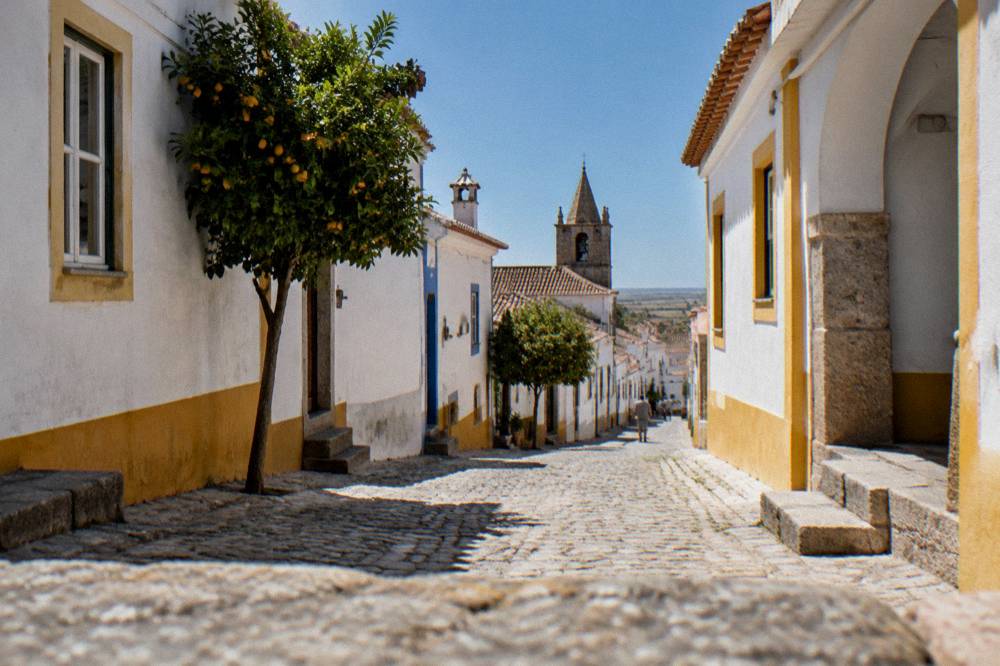
Once in the city, the calculus changes. The historic centre is compact enough that most visitors never need a bus, and a taxi or ride from the station to a hotel inside the walls removes the one genuinely long walk of a typical trip. Drivers bringing a car should read the Évora parking guide before choosing a hotel, because parking inside the medieval core is restricted and the sensible move is to park once and walk or rest from there. Coaches from Lisbon also serve the city; no fare or timetable for them can be stated here, so check the operator's own site if the train times do not suit.
How Does The Alentejo Heat Affect A Slower-Paced Visit?
IPMA's 1991 to 2020 normals for the Évora station show a July mean maximum of 33.3 C and August of 33.5 C, with 31.9 days a year reaching 35 C or more and a record of 45.4 C set on 4 August 2018. For a reduced-mobility visitor, heat is the single biggest planning constraint in Évora, bigger than any staircase or cobblestone, and it argues for May, June, late September or October visits and a strict morning schedule in summer.
The numbers deserve respect because they are averages, not extremes. In a typical year, Évora records 86.5 days with a maximum of 30 C or more, and 23.7 of those fall in July and 25.0 in August. Rain almost disappears in the same months, 2.7 mm in July and 6.0 mm in August, so there is no cloud cover to offer relief. The Évora weather and best time to visit Évora pages carry the full picture; the accessibility angle is that heat fatigue compounds every other limitation, and shade in the Alentejo is a resource to be planned like a ticket.
| Month | Mean max (C) | Mean min (C) | Rain (mm) | Days max 30 C+ |
|---|---|---|---|---|
| May | 25.0 | 10.9 | 46.6 | 5.5 |
| June | 30.2 | 13.8 | 10.6 | 15.1 |
| July | 33.3 | 15.6 | 2.7 | 23.7 |
| August | 33.5 | 16.0 | 6.0 | 25.0 |
| September | 29.5 | 14.6 | 33.9 | 13.9 |
| October | 24.1 | 12.3 | 81.5 | 2.9 |
The workable summer pattern is the one locals use: monuments at 9:00 sharp when doors open, a long shaded lunch, an indoor museum or a rest through the early afternoon, and one more sight after 17:00, since the Capela dos Ossos stays open to 18:30 in summer. October is the sweet spot for slower travel: a mean maximum of 24.1 C, only 2.9 days at 30 C or more, and the Feira de São João already past. May runs it close at 25.0 C. Winter is mild by northern standards, a January mean maximum of 14.1 C, but nights drop to a mean minimum of 4.5 C, so pack layers if visiting between November and March. The wider set of guides lives on Évora Travel Guide.
Which Guided Tours Suit A Slower Pace In Évora?
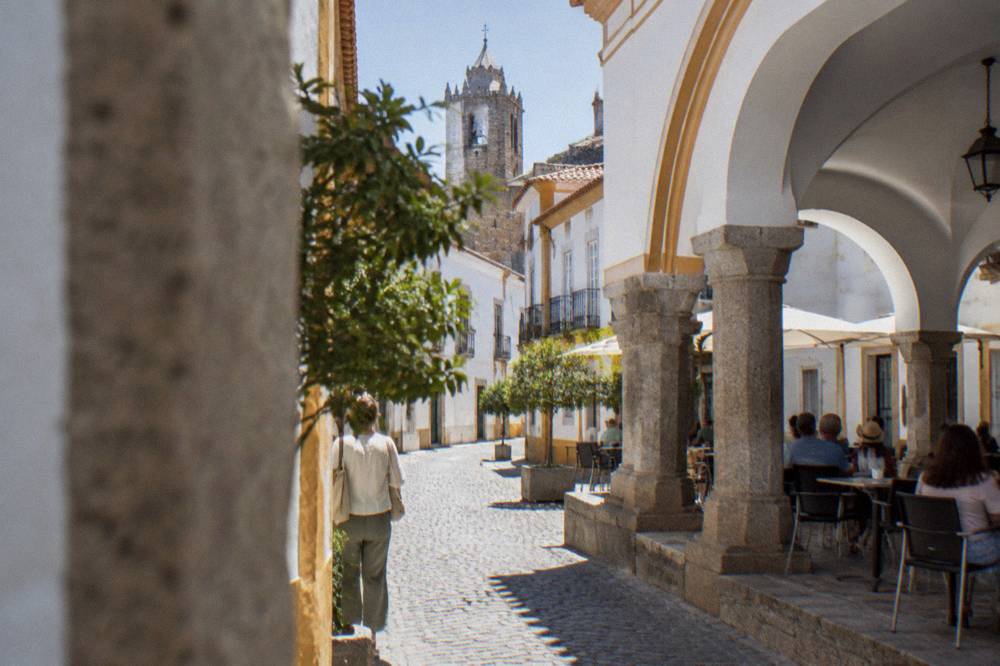
A guided walk is often the most comfortable way to see Évora with reduced mobility, because the guide sets the pace, the route is fixed in advance and rest stops are built in. The Golden Era of Évora walking tour with Portuguese wine tasting runs 2.5 to 3 hours from $23.92 per person, the Personal and Flexible Walking Tour in the Historic Center is from $13.51 per person over 3 hours, and private options from $111.42 per person add monument tickets and a fully adjustable itinerary.
The budget end is genuinely useful. The Évora Personal and Flexible Walking Tour in Historic Center, from $13.51 per person and rated 4.8 from 105 reviews, markets itself on flexibility, which is exactly what a visitor managing energy levels wants: the route bends around what is comfortable that day.
At the premium end, a private guide turns the whole day into a paced itinerary. The Évora Private Walking Tour with Cathedral and Chapel of Bones, from $111.42 per person and rated 5 from 106 reviews, includes monument tickets in its price, which removes both queueing and the walk between ticket desk and entrance.
| Guided option | From (per person) | Rating | Length | Why it suits slower travel |
|---|---|---|---|---|
| Personal and Flexible Walking Tour in Historic Center | $13.51 | 4.8 from 105 reviews | 3 hours | Route adjusts to the group on the day |
| Golden Era of Évora walking and Portuguese wine tasting | $23.92 | 4.4 from 33 reviews | 2.5-3 hours | Short route plus a seated tasting finish |
| Small-Group Cultural Walking Tour and Chapel of Bones | $77.66 | 4.9 from 141 reviews | 2 hours | Compact two-hour core-sights format |
| Évora Private Walking Tour with Cathedral and Chapel of Bones | $111.42 | 5 from 106 reviews | 2.5 hours | Private pace, monument tickets included |
| Medieval Tour of Évora on a Sidecar and Wine Tasting | $61.90 | 4.9 from 16 reviews | 3 hours | Riding replaces long stretches of walking |
The related tour for this page, the Golden Era of Évora walking and Portuguese wine tasting, from $23.92 per person over 2.5 to 3 hours, is a good middle path: a guided walk through the golden-age core followed by a seated wine tasting, which is a rest disguised as an activity. Check availability
One option removes walking almost entirely: the Medieval Tour of Évora on a Sidecar and Wine Tasting, from $61.90 per person, rated 4.9 from 16 reviews, carries two passengers through the medieval streets in a classic motorcycle sidecar. For a visitor who cannot manage the cobbles but wants the full circuit of walls, temple and squares, it is the most direct substitute for a long walk, and it ends with the same seated tasting. The wider Évora tours guide compares every category, including the free GuruWalk options, which are tip-based two-hour walks led by named local gurus and cost nothing to join beyond what you choose to tip.
Where Should You Stay To Minimise Walking In Évora?
The right base in Évora is a hotel inside or just inside the medieval walls, within a few minutes of the Praça do Giraldo, because from there every major monument is reachable with short, interruptible walks and a taxi back to the door at day's end. Staying outside the walls saves money but adds a commute on stone streets each morning and evening. Choose a room near the historic centre and the whole visit reorganises itself around comfort.
The arithmetic is unforgiving in a good way. Inside the walls, the Sé, the Templo Romano, the Capela dos Ossos, the Museu de Évora and the Praça do Giraldo are all close neighbours, so a central room turns the day into a series of short outings with the hotel as a rest point between them, rather than one long expedition. That hub-and-spoke pattern, monument, rest, monument, rest, is the single most effective accessibility strategy the city offers, and it costs nothing beyond the choice of hotel.
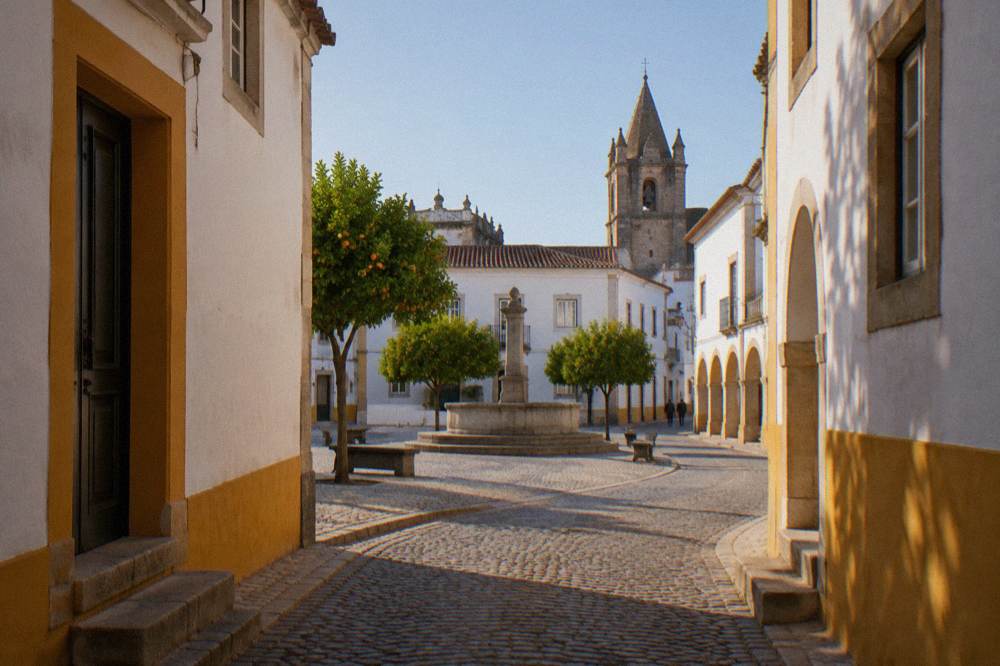
Two practical cautions. First, buildings inside a UNESCO-listed centre are old, and hotels convert them within the limits of heritage rules, so ask the property directly about ground-floor rooms, lifts and bathroom fittings before booking; no such detail can be stated as fact here, and a two-minute email settles it. Second, a municipal tourist tax applies to stays in Évora, so expect it on your hotel bill and confirm the current amount with the property when booking. The where to stay in Évora guide maps the neighbourhoods, and the Évora cost and budget page puts the whole spending picture together, from the 5.00 EUR cathedral ticket to dinner prices.
Can You Combine Évora With Accessible Day Trips?
Yes, and the two best bases for it are guided tours that collect you in Évora and drive the country roads for you. Monsaraz and its wine region sits about 40 to 45 km away, Estremoz about 45 km, Vila Viçosa about 60 km and Arraiolos about 20 km, all distances best quoted as rounded figures. A driver-guide removes the parking, the navigation and the walking between car park and village centre, leaving only the parts worth seeing.
The Alentejo beyond Évora is a landscape of hilltop villages, marble towns and megalithic sites, and its roads are quiet, which makes driven day trips both easy and restful. The Monsaraz and Wine guided tour from Évora, from $78.78 per person and rated 4.6 from 51 reviews, pairs the walled village with a seated tasting, while the Monsaraz and Wine from Évora small-group version runs from $80.28 per person, rated 4.9 from 31 reviews. For visitors who want the megaliths, the Cromlech of Almendres and Great Dolmen of Zambujeiro tour, from $33.76 per person and rated 5 from 54 reviews, reaches the stones in three hours, and the Almendres Interpretation Centre in Guadalupe keeps published hours, 10:00 to 18:00 in summer and 10:00 to 17:00 in winter.
| Day-trip destination | Distance from Évora | Driven tour option from the city |
|---|---|---|
| Arraiolos | About 20 km | Cork and heritage tours from Évora |
| Monsaraz | About 40-45 km | Monsaraz and Wine guided tour, from $78.78 |
| Estremoz | About 45 km | Walking Tour in Estremoz, from $28.67 |
| Vila Viçosa | About 60 km | Marble Tour in Vila Viçosa, from $28.14 |
| Elvas | About 80 km | Guided private itineraries |
| Marvão | About 120 km | Guided private itineraries |
Visitors starting from Lisbon rather than Évora have a parallel set of options: the From Lisbon: Évora and Monsaraz with Regional Wine Tasting day, from $64.09 per person and rated 4.7 from 360 reviews over 9 hours, and the Small-Group Évora and Monsaraz Tour with Wine Tasting from Lisbon, from $65.31 per person, both of which deliver the city and the hill village in one driven loop. The best day trips from Lisbon page ranks those, and the Alentejo travel guide covers the wider region.
What Should A One-Day Accessible Itinerary In Évora Look Like?
A comfortable single day runs: arrive on the 09:02 train from Lisbon or start from a central hotel, visit the Sé at opening on its one 5.00 EUR complete-visit ticket, walk the short arc to the Templo Romano and Praça do Giraldo for a shaded coffee, take a long lunch, see the Capela dos Ossos after 15:00 when the heat eases, and finish with a seated wine tasting before the 18:41 train back. Two or three rested monuments beat five rushed ones.
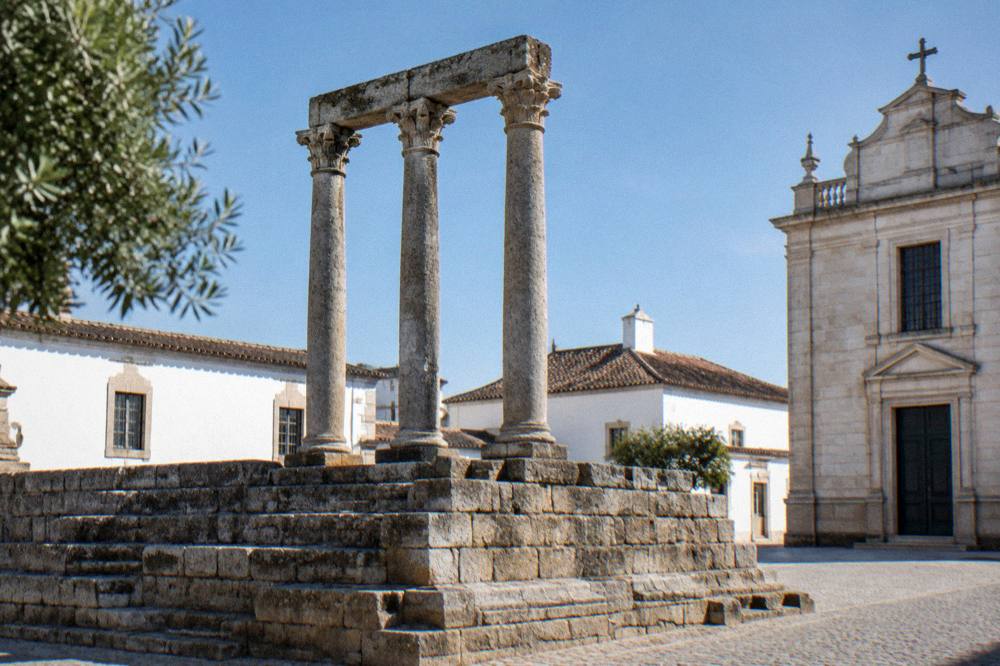
The morning is the valuable currency. The Sé opens at 9:00 and its complete visit, cathedral, cloister, roof terrace and museum, fits inside two unhurried hours. The Templo Romano is next door and is an open-air monument with no ticket, a 25 x 15 m Roman podium that the municipal page says was probably dedicated to the imperial cult rather than to Diana, a name only used since the 17th century; it was later reused as a municipal butcher's shop and its walls were freed in 1870. Seeing it costs nothing but the walk past.
Afternoon belongs to the Igreja de São Francisco. In summer the Capela dos Ossos stays open to 18:30, so a 16:00 arrival misses both the midday sun and the coach groups, and the 7.00 EUR ticket covers all the museum areas in one purchase. If the day falls on a Monday, swap the Museu de Évora out and leave it for a return trip, since it closes Mondays. The one day in Évora itinerary page gives the fuller sequence for readers with more time, and the Évora half day version trims it further for a morning-only visit.
What Practical Support Exists For Visitors With Disabilities In Évora?
The support that reliably exists is human: the tourist office on Praça do Giraldo 73 answers questions in person or on +351 266 777 071, CP arranges boarding assistance for the Lisbon trains when booked in advance, hotels answer direct questions about their own rooms, and private guides adjust routes on request. What does not exist is a published, city-wide accessibility audit of the monuments, so the plan is to ask ahead, arrive early and pace the day around the heat rather than around any assumed barrier list.
That is not a weak position, it is simply how a small heritage city works. Évora's monuments are run by different bodies, the church, the diocese, the national museum service, the municipality, and each manages its own access. The tourist office is the one place that speaks for the city as a whole, and its published hours, 9:00 to 18:00 on weekdays in winter and weekend afternoons too, make it a realistic first stop on arrival. Treat its hours as indicative and confirm anything critical by phone.
For travel into Portugal, one recent change matters to non-EU visitors: the EU's Entry-Exit System has been fully deployed across the Schengen area since 10 April 2026, adding biometric checks at the external border. It changes nothing about travelling inside Portugal once admitted, but it adds a few minutes at the airport on first entry, so factor it into tight connections on the way to the train at Lisboa Oriente. The Lisbon to Évora guide covers the full door-to-door sequence.
Common Questions About Évora Accessibility
Is Évora accessible for wheelchair users?
Évora's historic centre is compact and mostly level, but its streets are stone-paved and uneven in places, and no monument publishes a wheelchair-route guide that can be relied on here. The workable approach is to contact each site and the tourist office on +351 266 777 071 before visiting, use a taxi between the station and a central hotel, and consider a sidecar or driven tour for the longer circuits.
How much walking is involved in a visit to Évora?
Less than in most Portuguese historic cities, because the Sé, the Templo Romano, the Capela dos Ossos, the Museu de Évora and the Praça do Giraldo all sit close together. A typical day involves several short walks of a few minutes each rather than one long march, and a central hotel turns the day into rest-separated outings.
Are Évora's monuments step-free?
No site in Évora publishes a step, ramp or lift inventory that could be stated as fact here. Each monument is run by a different body, so check with the Sé, the Igreja de São Francisco and the Museu de Évora directly, or ask the tourist office on Praça do Giraldo 73, before planning a visit around a specific interior.
What is the best time of year to visit Évora with limited mobility?
May, June, late September and October, based on IPMA's 1991 to 2020 normals for the Évora station: May averages a 25.0 C maximum and October 24.1 C, against 33.3 C in July and 33.5 C in August. Heat is the biggest constraint on slower-paced travel in Évora, so avoid the July and August afternoons entirely.
Can you visit Évora without a car?
Yes. Six through trains a day connect Lisboa Oriente and Évora in about 1 hour 40 to 1 hour 45, from 13.90 EUR second class, and the historic centre itself is a walking district where almost no visitor needs a car. Taxis cover the short hop from the station, and guided tours handle any day trips beyond the walls.
Do Évora tours accommodate slower walkers?
Several do. The Personal and Flexible Walking Tour in Historic Center, from $13.51 per person, adjusts its route on the day, private walking tours from $111.42 per person set their own pace, and the Medieval Tour of Évora on a Sidecar, from $61.90 per person, replaces most walking with riding. State your needs when booking and the operator can match you to the right departure.
Évora rewards visitors who plan around its two real constraints, uneven stone paving and serious summer heat, and who use its equally real strengths, a compact UNESCO-listed centre, simple single-ticket monuments, six direct trains a day from Lisbon and guided options that set the pace for you.