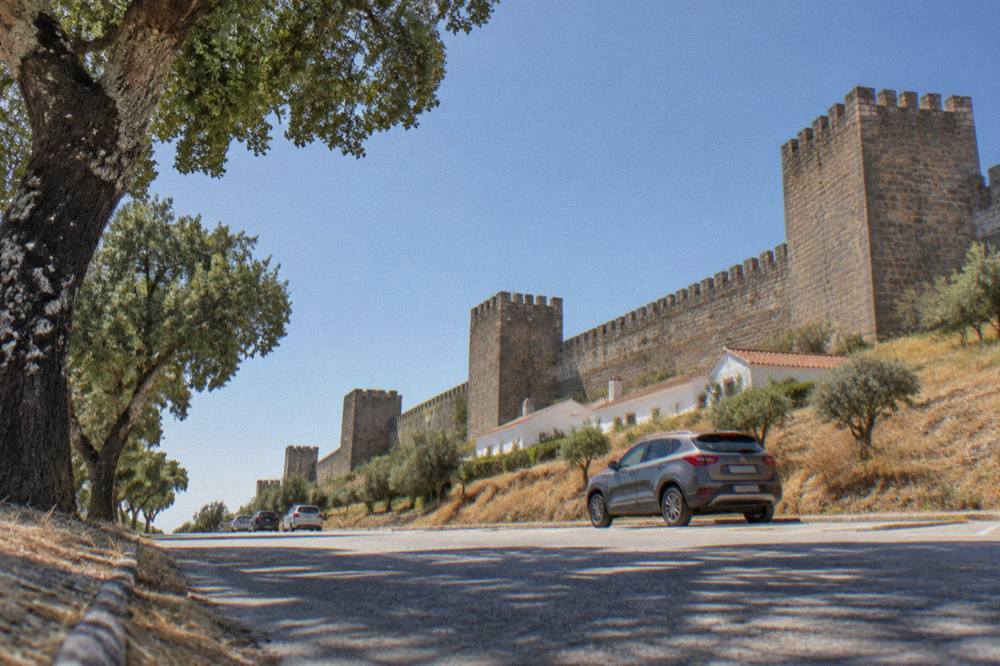
Portel Day Trip From Évora In Alentejo, Portugal: What To See And How To Plan It
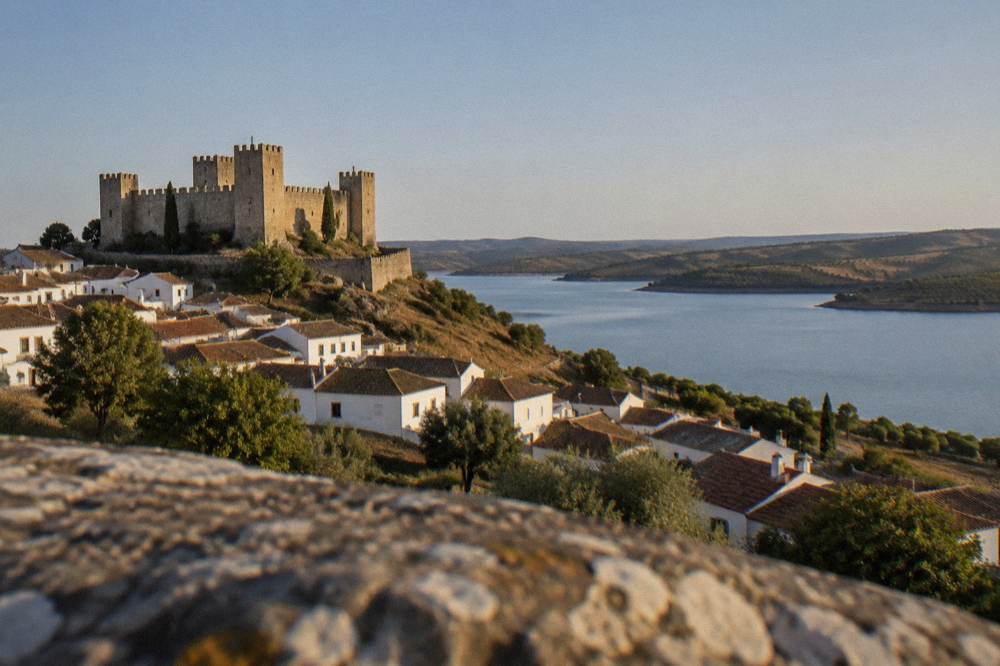
Portel is a small castle town on the Alentejo plain south of Évora, Portugal, a quiet day trip of whitewashed lanes, a hilltop fortress and the nearby Alqueva lake country.
Short answer
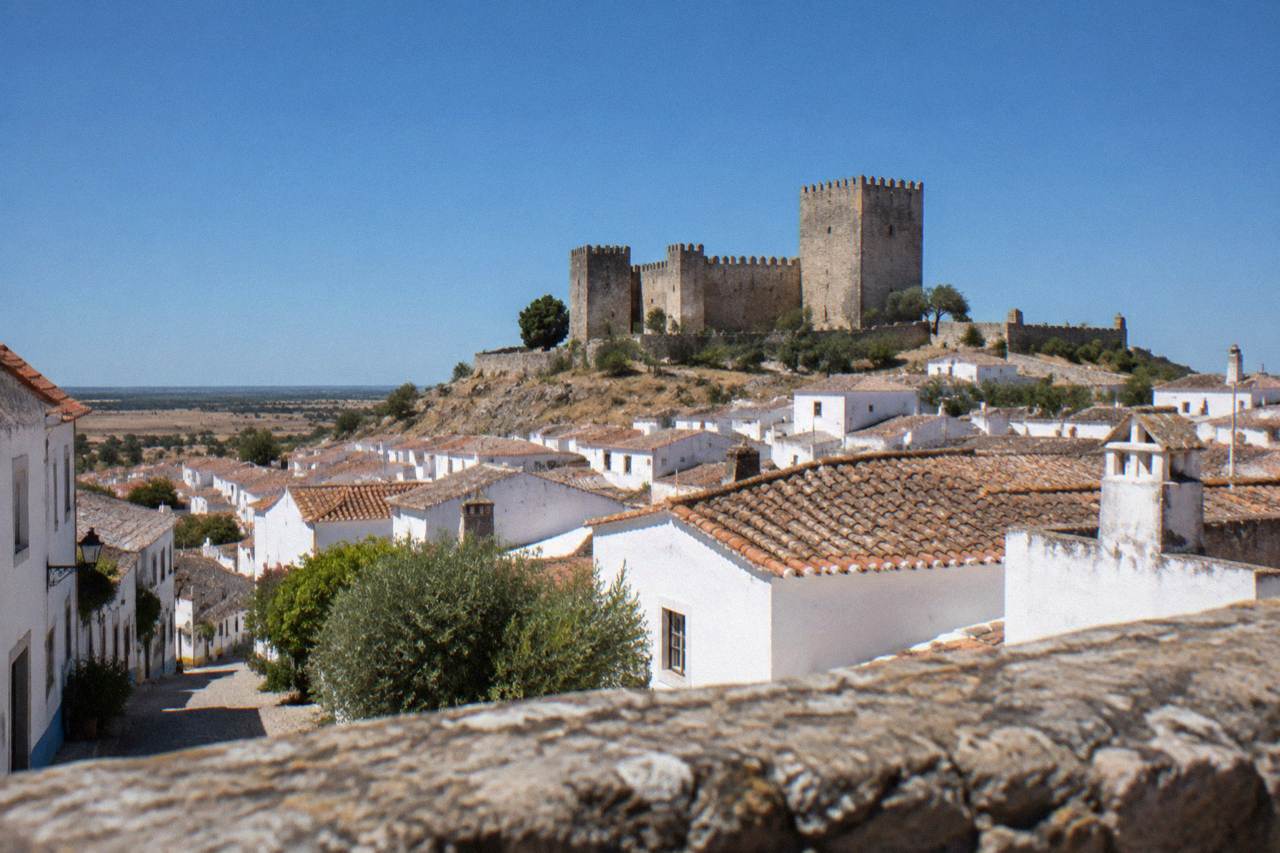
Portel is a small Alentejo town south of Évora, Portugal, known for the castle on its hill and the white village beneath it. It makes a slow half or full day, best combined with the Alqueva lake country or the neighbouring marble and wine towns, and is reached by car from Évora.
Évora, the UNESCO-listed capital of Portugal's Alentejo region, sits at the centre of a plain dotted with small castle towns, and Portel is one of the quietest of them, lying to the south across open cork and wheat country. The Historic Centre of Évora was inscribed by UNESCO in 1986 under criteria (ii) and (iv), and criterion (iv) calls it the finest example of a city of the golden age of Portugal, largely because the 1755 Lisbon earthquake that damaged so much of the country barely touched it. Portel belongs to the same world: a hill, a fortress, white walls and a horizon with no sea in any direction. The Atlantic is roughly 90 km away, and everything about the place, the heat, the light, the pace, is inland Alentejo.
Where Is Portel, And Which Direction Does It Lie From Évora?
Portel is a small town in the Évora district of Portugal's Alentejo, lying to the south of Évora on the rolling plain that slopes toward the Alqueva reservoir and the Guadiana basin. It is inland country: no coast, no beach, and a horizon of cork oaks, olive groves, wheat fields and low hills. The town itself is compact enough that its castle, its lanes and its main square can all be covered on foot in a slow morning.
That geography is the whole point of the day. Évora is the region's capital, a city of about 53,000 people in its municipality at the 2021 census, and everything around it is small by comparison. Portel is one of a ring of such towns, each a market centre for its own patch of farmland, each with a castle or a wall left over from the medieval centuries when this frontier between Portugal and Castile was fought over.
The direction matters for planning. The marble towns of the northeast, Estremoz, Vila Viçosa and Borba, make a different loop from Portel, and the lake country of the Alqueva spreads to the south and east of it. A day built around Portel is a southern day, a day of the plain and the water, not of quarries and hilltop fortresses like Marvão or Castelo de Vide further north.
What Kind Of Day Does A Portel Day Trip Make?
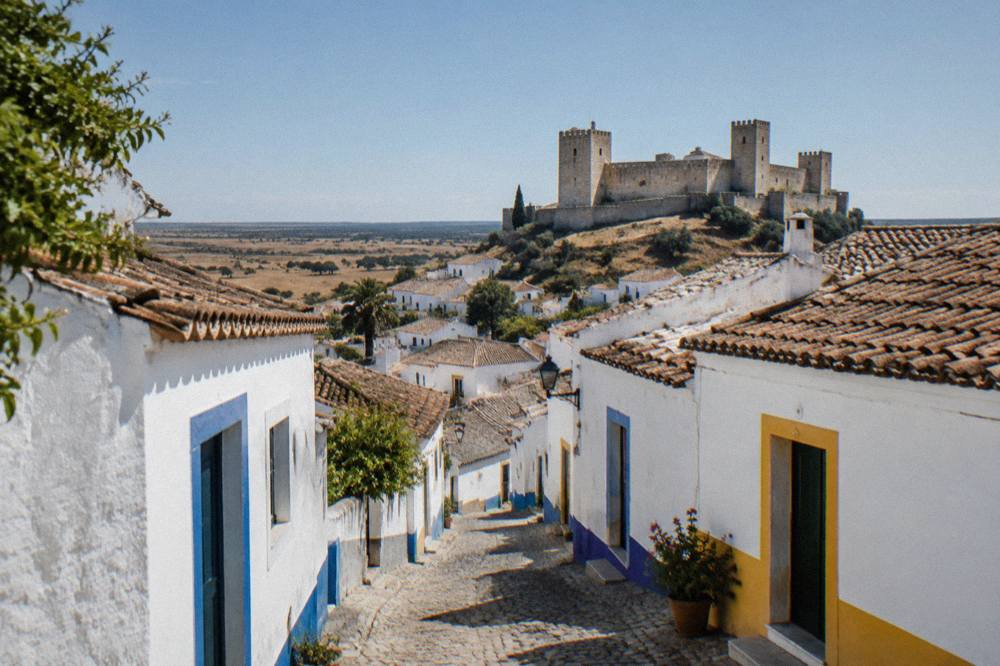
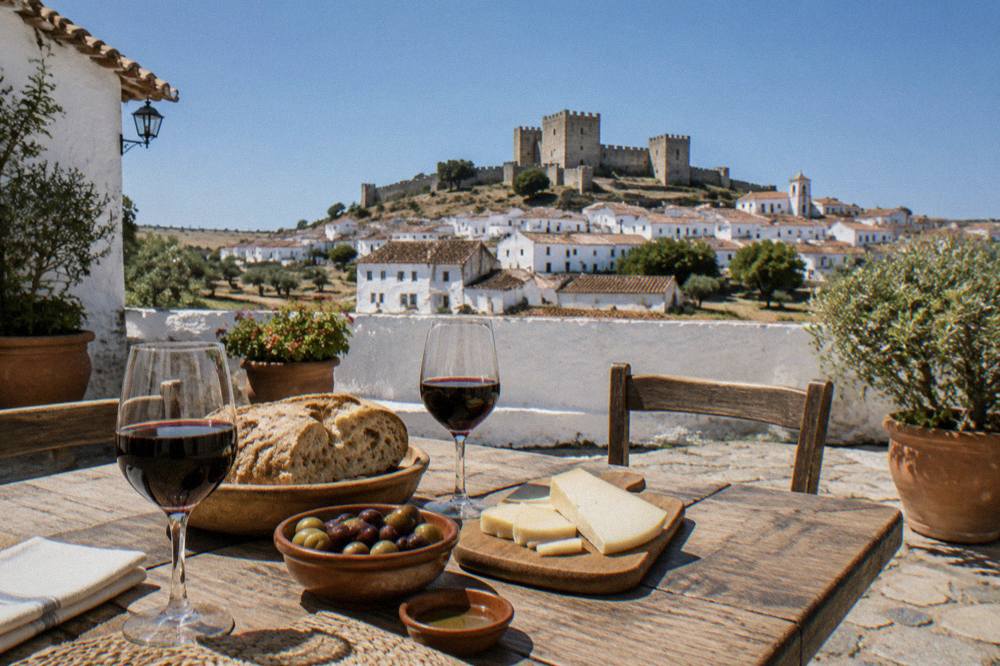
A Portel day is a slow, unhurried day: a castle hill with wide views over the plain, a village of whitewashed lanes to wander without a timetable, and, if you extend it, the shores of the Alqueva reservoir, the largest artificial lake in western Europe. It suits travellers who have seen Évora's monuments and now want the Alentejo's emptier register, and it pairs naturally with a wine stop, a long lunch or a sunset over the water.
The 2026 cultural programme of Évora 2027, the European Capital of Culture project, is built on the concept of "Vagar", an Alentejan word for moving slowly, and Portel is exactly the kind of place that word describes. Nothing in the town demands a queue or a timed entry. The pleasure is architectural and agricultural at once: the castle above, the white houses below, the fields beyond.
For visitors basing themselves in Évora, the practical shape of the day is simple. The city's own sights, the Sé, the Capela dos Ossos, the Templo Romano, the Museu de Évora, fill a first day or two on their own, and a Portel excursion works best as the third or fourth day, when the rhythm of the region has already settled. The Évora Travel Guide editorial desk suggests treating it as a countryside day, not a monument day, because Portel's castle is a ruin and a viewpoint rather than a furnished museum.
| Évora sight | Ticket | Key conditions |
|---|---|---|
| Sé de Évora, complete visit | 5.00 EUR | Cathedral, cloister, roof terrace and museum; children up to 12 free |
| Capela dos Ossos and Igreja de São Francisco | 7.00 EUR adult | Youth to 25 and seniors over 65 at 5.00 EUR; family ticket 15.00 EUR |
| Museu de Évora | 8 EUR adult | Closed Mondays; youth, seniors and families 50% off |
| Évora Ticket, one day | 8 EUR | Multi-site pass; does not include the Sé, the Capela dos Ossos or the Museu de Évora |
How Do You Shape The Day: Évora In The Morning, Portel After Lunch?
The pattern that works is a morning in Évora, the drive south after lunch, and the late afternoon on Portel's hill while the light is low and the plain turns gold. One practical anchor: the CP Intercidades from Lisboa Oriente reaches Évora in about 1 hour 40 to 1 hour 45, with six through trains a day in the timetable valid since 6 September 2026, so even visitors arriving from Lisbon that morning can be in Portel by mid-afternoon.
For anyone starting from the capital, the train is the comfortable way in. The fare from Lisboa Oriente to Évora is 13.90 EUR in second class and 18.50 EUR in first class, and the six through services leave Oriente at 07:02, 09:02, 09:58, 13:35, 17:02 and 19:02, arriving at 08:47, 10:45, 11:40, 15:13, 18:41 and 20:46. A car for the Portel leg itself is the practical choice; the region's towns are linked by rural roads, and no verified timetable or fare exists for a bus to Portel, so check the operator's notice before relying on one.
| Lisboa Oriente departure | Évora arrival | Class | Fare |
|---|---|---|---|
| 07:02 | 08:47 | 2nd | 13.90 EUR |
| 09:02 | 10:45 | 1st | 18.50 EUR |
| 09:58 | 11:40 | 2nd | 13.90 EUR |
| 13:35 | 15:13 | 2nd | 13.90 EUR |
| 17:02 | 18:41 | 1st | 18.50 EUR |
| 19:02 | 20:46 | 2nd | 13.90 EUR |
Before leaving Évora, a short guided walk is a good use of the morning, and the Golden Era of Évora walking tour with a Portuguese wine tasting, from $23.92 per person and rated 4.4 from 33 reviews on its listing, covers the golden-age quarter that UNESCO's criterion (iv) praises, ending with a tasting that sets up the afternoon in wine country.
What Do You Actually See In Portel?
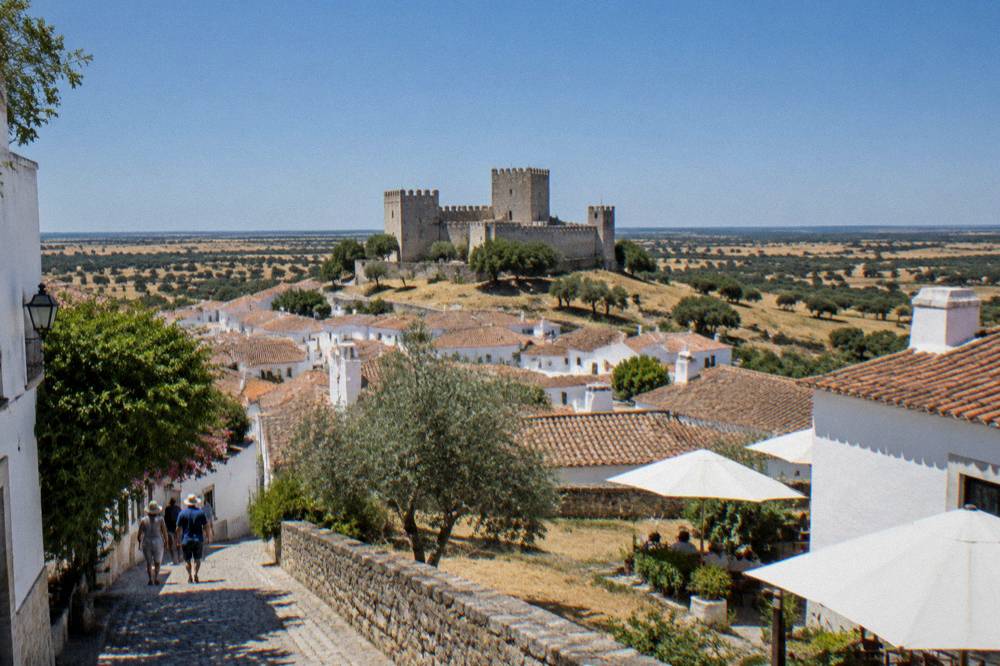
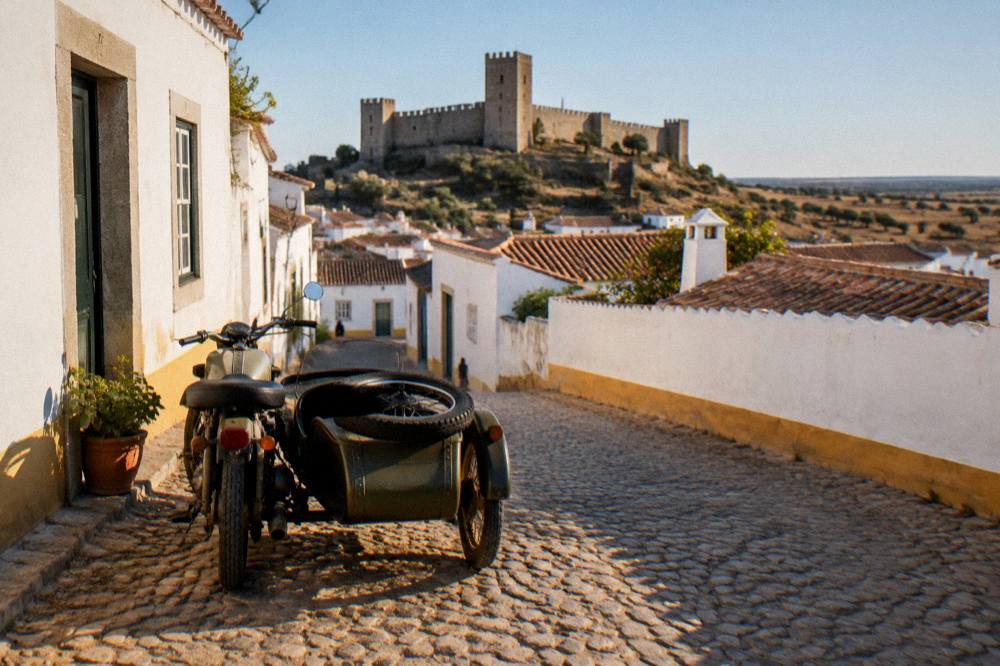
The town's sights are one castle, one hill and one network of white lanes: the fortress on the summit, the village that grew in its shelter, and the views south across the Alentejo plain toward the Alqueva. There is no ticketed circuit and no museum route, so the visit is a walk, up to the castle, around the walls where they stand, and down through the streets to the main square for a coffee.
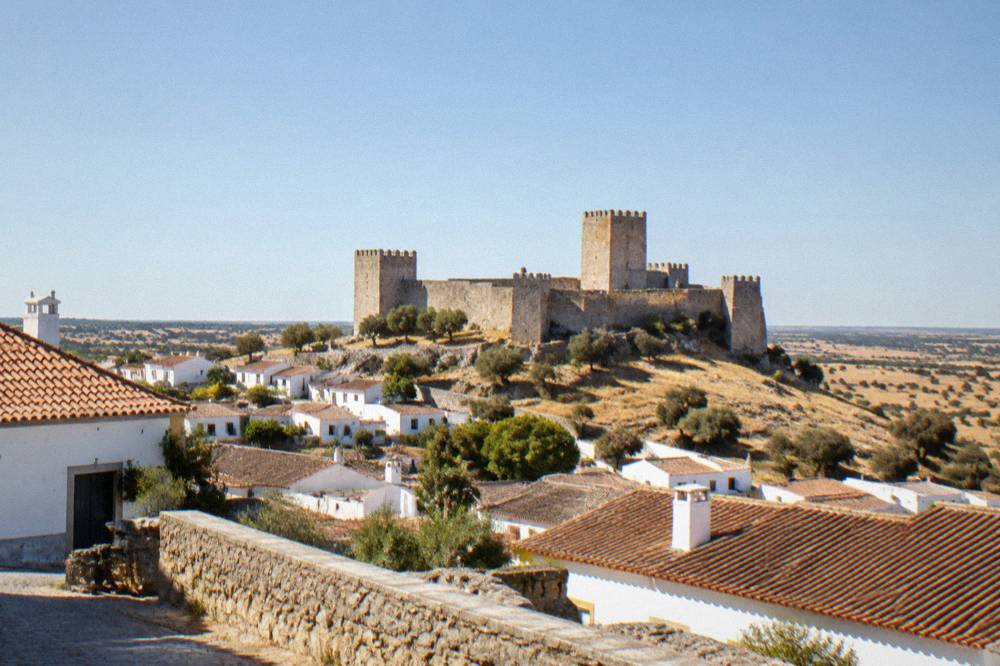
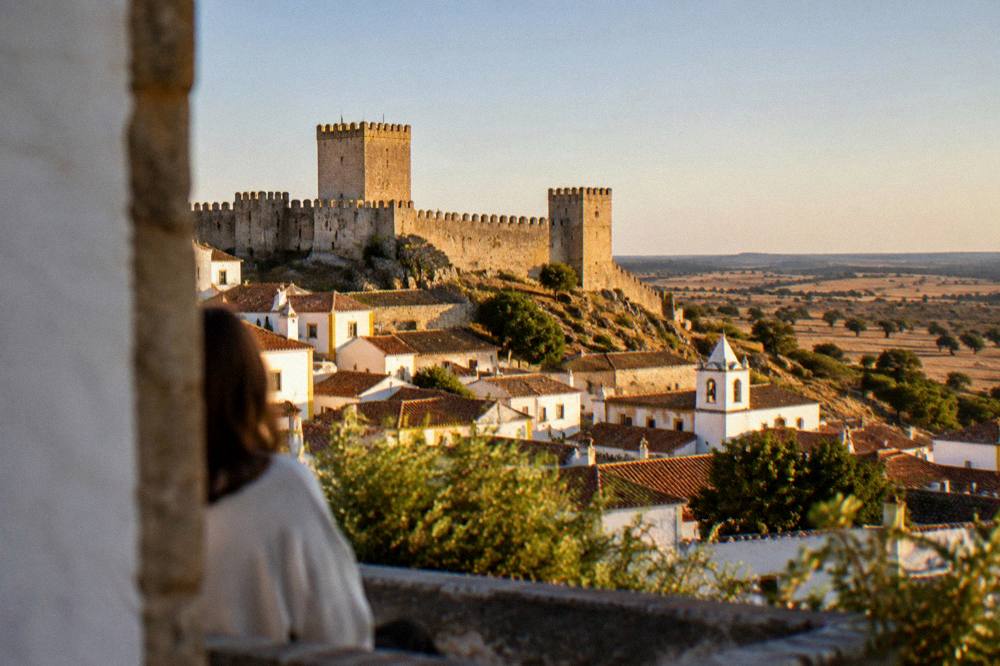
The castle is the reason Portel exists where it does. Frontier towns across the Alentejo were built this way, fortress above, houses below, fields beyond, and Portel keeps the pattern clearly. No verified opening hours or entry price for the castle are published in this desk's sources, so check the municipal notice before you go rather than assuming a set timetable.
The village streets are the second act. Alentejan whitewash, chimneys, blue and yellow trim around doors, pots of geraniums: the register is the same as Évora's old quarter but at village scale, and without the crowds of the UNESCO centre. Give it an unhurried hour.
The third act is the horizon. From any high point the plain runs out in every direction, and to the south the country tilts toward the Guadiana and the great reservoir. Bring more water than feels reasonable in summer; IPMA's 1991 to 2020 normals for the Évora station show a July mean maximum of 33.3 C and an August mean of 33.5 C, and 31.9 days a year at 35 C or more.
Can You Combine Portel With The Alqueva Lake?
Yes, and the combination is the best version of the day: Portel's castle hill in the late afternoon and the Alqueva reservoir's shoreline at sunset, with the lake country spreading south and east of the town. The Alqueva is the largest artificial lake in western Europe, and its shores hold vineyards, olive groves and villages such as Monsaraz, about 40 to 45 km from Évora, whose walled hilltop is one of the region's signature sights.
The Alqueva's dark-sky reputation is real in general terms, but this desk holds no verified designation details, observatory hours or boat-trip prices, so treat an evening of stars as a likely pleasure rather than a booked activity, and check any stargazing operator's listing directly. What is certain is the landscape: water where the Alentejo is otherwise dry, and a horizon that behaves differently at dusk. The wider set of guides lives on Évora Travel Guide.
A southern loop therefore writes itself: Évora in the morning, Portel after lunch, the lake shore by evening. Travellers with two spare days can extend it toward Reguengos de Monsaraz's wine route or the border towns, and the Alqueva guide covers the lake country in detail, while Monsaraz covers the walled village itself.
Which Other Alentejo Towns Pair Well With Portel?
Portel sits in the southern half of the Évora day-trip ring, and its natural companions are the Alqueva villages and the wine towns of Reguengos and Redondo, while the marble axis of Estremoz, Vila Viçosa and Borba makes a separate northern loop. Distances from Évora, as rounded planning figures, run from about 20 km to Arraiolos in the west to about 120 km to Marvão on the Serra de São Mamede in the far northeast.
The table below gives the rounded distances this desk can quote, with "about" attached to every one. Portel itself carries no verified distance figure in these sources, so the honest advice is to plan it as a short southern hop from Évora and let the map set the number.
| Day-trip town | Direction from Évora | Rounded distance | Character of the day |
|---|---|---|---|
| Arraiolos | West | about 20 km | Arraiolos carpets and a round hilltop village |
| Monsaraz | Southeast | about 40-45 km | Walled lake village above the Alqueva |
| Estremoz | Northeast | about 45 km | Marble town with a hilltop keep |
| Vila Viçosa | Northeast | about 60 km | Ducal palace and marble quarries |
| Elvas | East | about 80 km | Border fortress city near Badajoz |
| Marvão | Northeast | about 120 km | Mountain village on the high ridge |
For pairing, the logic is geography. Portel with Monsaraz and the Alqueva is one coherent southern day or a relaxed two. Portel with the marble towns means more driving and a different theme, and it is usually better to give the northeast its own day, as the best day trips from Évora roundup does. Borba and Redondo, both wine towns of the same southern and eastern country, sit between the two worlds and can be slotted into either loop.
When Is The Best Time Of Year For A Portel Day Trip?
Spring and autumn are the best seasons: IPMA's 1991 to 2020 normals for the Évora station show April at a 20.7 C mean maximum with 62.1 mm of rain, and October at 24.1 C with 81.5 mm, against July and August means of 33.3 C and 33.5 C on a plain with almost no rain between June and August. Summer days out here are for early mornings and evening light, and winter days are quiet, green and occasionally sharp.
The numbers behind that advice are worth reading directly, because the Alentejo's heat is structural, not incidental. The station records 86.5 days a year at 30 C or more and 31.9 days at 35 C or more, with a record maximum of 45.4 C set on 4 August 2018. Rain concentrates between October and March, and July averages just 2.7 mm across the whole month. The January mean minimum sits at 4.5 C, so winter mornings on the castle hill can feel genuinely cold before the midday sun arrives.
| Month | Mean maximum | Mean minimum | Rainfall | Days at 30 C or more |
|---|---|---|---|---|
| April | 20.7 C | 8.5 C | 62.1 mm | 0.3 |
| July | 33.3 C | 15.6 C | 2.7 mm | 23.7 |
| August | 33.5 C | 16.0 C | 6.0 mm | 25.0 |
| October | 24.1 C | 12.3 C | 81.5 mm | 2.9 |
There is also a calendar angle. Évora and the Alentejo are European Capital of Culture in 2027, with 2026 running as a preparation year, and the Feira de São João filled the Rossio de São Brás from 23 June to 5 July 2026 under the theme "Évora: Capital Europeia ao Sul". A 2027 visit will land in the middle of that programme, and the full calendar has not yet been published, so check the official listings for what will be running around a Portel trip that year.
How Does A Portel Day Fit Into An Évora Budget?
The day itself is cheap: Portel's castle and lanes cost nothing to wander, no verified ticket price exists for the town's sights in this desk's sources, and the spend that matters is the car, the lunch and the wine. The comparison points are Évora's official prices, 5.00 EUR for the Sé's complete visit, 7.00 EUR for the Capela dos Ossos and 8 EUR for the Museu de Évora, and the guided options, which run from $23.92 to $113.53 per person on their listings.
A municipal tourist tax applies to stays in Évora; check your hotel for the amount rather than any figure quoted elsewhere. Beyond that, the honest budget picture is that the Alentejo rewards slow spending: one long lunch, one tasting, one tank of fuel.
| Guided option | Price | Rating | Length |
|---|---|---|---|
| Golden Era of Évora walk with wine tasting | from $23.92 | 4.4 from 33 reviews | 2.5-3 hours |
| Medieval Évora sidecar tour with tasting | from $61.90 | 4.9 from 16 reviews | 3 hours |
| Private walking tour with cathedral and chapel | from $113.53 | 5 from 256 reviews | 2.5 hours |
For a fuller cost picture of the city base, the one day in Évora itinerary lays out how the monument tickets stack up, and for the question of whether the city justifies the trip from Lisbon at all, the is Évora worth a day trip from Lisbon answer lays out the case.
Which Guided Tours Pair Évora With The Alentejo Countryside?
The strongest pairings are Évora-based walks and countryside rides: the Golden Era walking tour with a Portuguese wine tasting from $23.92, the medieval sidecar tour of Évora with a tasting from $61.90, and the private walking tour covering the cathedral and the Capela dos Ossos from $113.53, all rated 4.4 or higher on their listings. None of them drives to Portel itself, but each anchors the Évora half of the day, and the countryside half can be self-driven or built around a wine tour.
The sidecar option deserves a note, because it changes the register of the city entirely. The Medieval Tour of Évora on a sidecar with wine tasting, rated 4.9 from 16 reviews, moves at the pace of the old lanes rather than the pace of a walking group, and it suits travellers who want the golden-age quarter without a long time on foot.
The private option is the deepest of the three. The private walking tour with cathedral and Capela dos Ossos, rated 5 from 256 reviews on its listing, takes in the two monument interiors that define Évora's skyline and pairs them with the old quarter, and its skip-the-line format suits anyone whose Portel day needs to start after a full Évora morning. Check availability
For free introductions to the city, GuruWalk runs tip-based walks, including the Essential Free Tour of Évora, rated 4.93 from 774 reviews on GuruWalk, and Évora through history and how it shaped the city, rated 4.88 from 74 reviews; both are pay-what-you-want walks with a named guru, and neither belongs in a paid budget.
Common Questions About A Portel Day Trip
Is Portel worth visiting?
Yes, for travellers who enjoy quiet castle towns and open plains. Portel offers a hilltop fortress, whitewashed lanes and wide views toward the Alqueva, with none of the crowds of Évora's UNESCO centre. It suits a slow half day rather than a packed itinerary.
What is Portel known for?
Portel is known for the castle on its hill and for its position on the Alentejo plain south of Évora, close to the Alqueva reservoir country. It is a market town of the southern Évora district, built on the classic frontier pattern of fortress above and village below.
Can you visit Portel and the Alqueva in one day?
Yes. The town lies toward the lake country, and a southern loop of Évora, Portel and the reservoir shoreline makes a coherent single day, with Monsaraz, about 40 to 45 km from Évora, as the signature stop on the same side of the region.
Do you need a car for a Portel day trip?
A car is the practical way. No verified bus timetable or fare for the Évora to Portel route appears in this desk's sources, so check the operator's notice before relying on public transport, and treat the drive as part of the pleasure of the plain.
Is Portel good for children?
Yes, in a low-key way. A castle hill to climb, lanes to run through and an afternoon by the water make an easy family day, and Évora's own family options are covered in the city's kid-friendly guides for anyone building a wider trip.
How hot is the Portel area in summer?
Very hot. IPMA's 1991 to 2020 normals for the Évora station show a July mean maximum of 33.3 C and an August mean of 33.5 C, with 31.9 days a year at 35 C or more across the region, so plan castle climbs for the morning or the evening and carry more water than feels necessary.
A Portel day is the Alentejo at its least hurried: one castle, one hill, one lake on the horizon, and an evening drive back to Évora with the plain turning gold behind you.