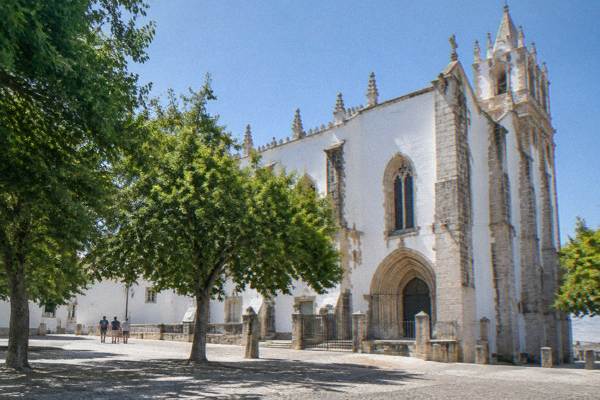
What Is The Story Behind The Chapel Of Bones Portugal?
The story behind Évora's Capela dos Ossos, the bone-lined chapel beside the Igreja de São Francisco in Portugal's Alentejo, and what a visit involves.
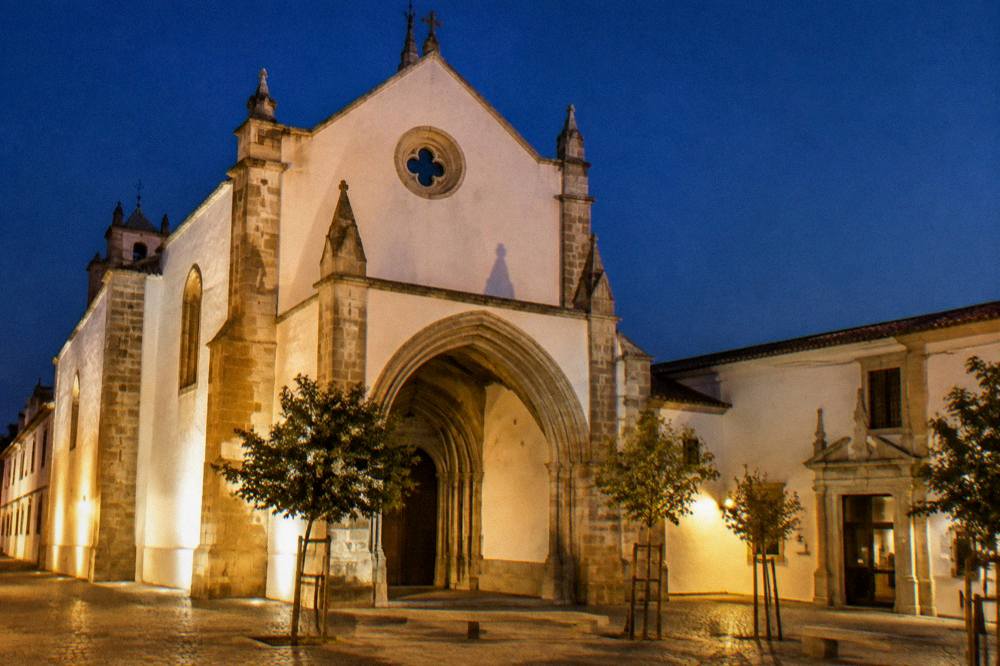
Évora, the inland capital of Portugal's Alentejo region, keeps its most famous sight inside a modest building beside the Igreja de São Francisco: the Capela dos Ossos, a small chapel whose walls, pillars and vaults are lined with the arranged bones of the human dead. The name translates plainly as Chapel of Bones, and the interior delivers exactly what the name promises. The city around it is a UNESCO World Heritage site, inscribed in 1986, and the chapel has become the single image most travellers associate with the place. The full story, as far as the sources tell it, is below.
What Is The Story Behind The Chapel Of Bones Portugal?
The Capela dos Ossos is a small chapel attached to the Igreja de São Francisco in Évora, Portugal, whose interior walls and columns are lined with the bones of the human dead, arranged as a decorative and devotional covering. It was created as a memento mori, a physical reminder of mortality intended to make visitors reflect on the shortness of life. The sources that name a builder or a construction date are not official ones, so this page leaves those details out rather than repeat a guess.
What can be said with confidence comes from the church's own published information. The chapel sits within the museum areas of the Igreja de São Francisco, and a single ticket covers the chapel together with the Sala do Capítulo, the Presépio, the Arte Sacra nucleus, the Sala da Tribuna Real, the Terraço da Galilé and the Canha da Silva nativity collection. The church itself is free to enter and holds regular masses; the ticket is for the museum spaces, the chapel among them.
The purpose of the decoration, in the tradition it belongs to, was not spectacle. Memento mori art, "remember that you will die", was a widespread devotional practice in early modern Europe, and bone chapels are its most literal form. Évora's is the best known in Portugal but not the only one, as the guide to bone chapels in Portugal shows. The dead used in such chapels were typically moved from overflowing city cemeteries, a practical problem that became, in the hands of the devout, an opportunity for instruction.
Why Did Évora Line A Chapel With Bones?
The tradition behind the chapel answers a problem every medieval and early modern European city faced: churchyards filled up, and the bones had to go somewhere. Rather than discard them, communities in the memento mori tradition placed them inside places of prayer, where the dead became a sermon in plaster and bone. Évora's chapel is the most complete surviving Portuguese example of that practice, and the arrangement of the bones is deliberate, decorative and devotional rather than random storage.
That reading is supported by the character of the interior itself. The bones are sorted and patterned, stacked and cemented into columns, cornices and wall surfaces, with skulls set into the composition. This is organised work, the product of sustained effort, and it belongs to the same visual world as the funeral art of the period: a designed space in which the visitor stands surrounded by the dead and is meant to think about the end of life rather than admire a curiosity.
Évora was a natural home for such a project. The city was a major religious and university centre, the seat of an archbishop, and its historic core is dense with churches and convents, from the Sé to the Convento dos Lóios. The UNESCO inscription of 1986 cites Évora as the finest example of a city of the golden age of Portugal, preserved because the 1755 earthquake that devastated Lisbon largely spared it. A chapel of this kind belongs squarely to that golden-age religious culture.
The question of whose bones they are has its own answer, and it is less grim than the interior suggests. For that, see whose bones are in the Chapel of Bones, which sets out what is and is not known about the dead themselves.
Where Is The Chapel Of Bones And How Do You Get In?
The chapel is part of the Igreja de São Francisco complex in Évora's historic centre, a short walk inside the old walls from Praça do Giraldo, the city's main square. Entry to the church is free; the chapel sits within the paid museum areas, covered by a single ticket that also includes the chapter room, the nativity collections and the sacred art nucleus. Hours follow the church's own published schedule, with a longer evening window in summer.
The Igreja de São Francisco publishes its hours directly: 9:00 to 18:30 in summer legal time, 9:00 to 17:00 in winter legal time, open every day except 1 January, Easter Sunday, the afternoon of 24 December and 25 December. Masses are held Monday to Saturday at 11:30 and on Sunday at 9:00 and 12:00, and the church remains a working parish rather than a museum piece. Everything else covered here is indexed on Évora Travel Guide.
Getting to Évora itself is straightforward. CP's timetable valid since 6 September 2026 lists six through Intercidades trains from Lisboa Oriente to Évora, taking about 1 hour 40 to 1 hour 45, with a second-class fare of 13.90 EUR. For the fuller picture of routes, see how do you get from Lisbon to Évora, and for timing, how much time do you need in Évora.
A guided walk is the most efficient way to place the chapel in context, since its story is tied to the city around it. The private walking tour with cathedral and Chapel of Bones covers the historic centre with a licensed guide and includes the monument visits, and it can be booked through the operator's live listing: Check availability. The Évora Travel Guide editorial desk lists it because it pairs the two monuments whose stories are hardest to unpick alone.
How Much Does It Cost To Visit The Chapel Of Bones?
A single adult museum ticket costs 7.00 EUR and covers the Capela dos Ossos together with every other museum area of the Igreja de São Francisco complex. Youth up to 25 pay 5.00 EUR, seniors over 65 pay 5.00 EUR, and a family ticket for two adults plus youths costs 15.00 EUR. The church states it is a private religious entity and does not apply State Museum discounts. Entering the church itself, outside the museum areas, is free.
The full price structure as published by the church:
| Ticket | Price |
|---|---|
| Adult, all museum areas | 7.00 EUR |
| Youth up to 25 | 5.00 EUR |
| Senior over 65 | 5.00 EUR |
| Family, 2 adults plus youths | 15.00 EUR |
| Church itself | Free |
Visitors sometimes assume the chapel is covered by the Évora Ticket, the multi-site pass for the city's municipal network. It is not: the pass costs 8 EUR for one day, 10 EUR for two and 12 EUR for three, and its network does not include the Capela dos Ossos, the Sé de Évora or the Museu de Évora. Whether the chapel is worth its own ticket is a fair question, and is the Chapel of Bones worth visiting takes it up directly. The free-entry question is answered at is the Chapel of Bones free.
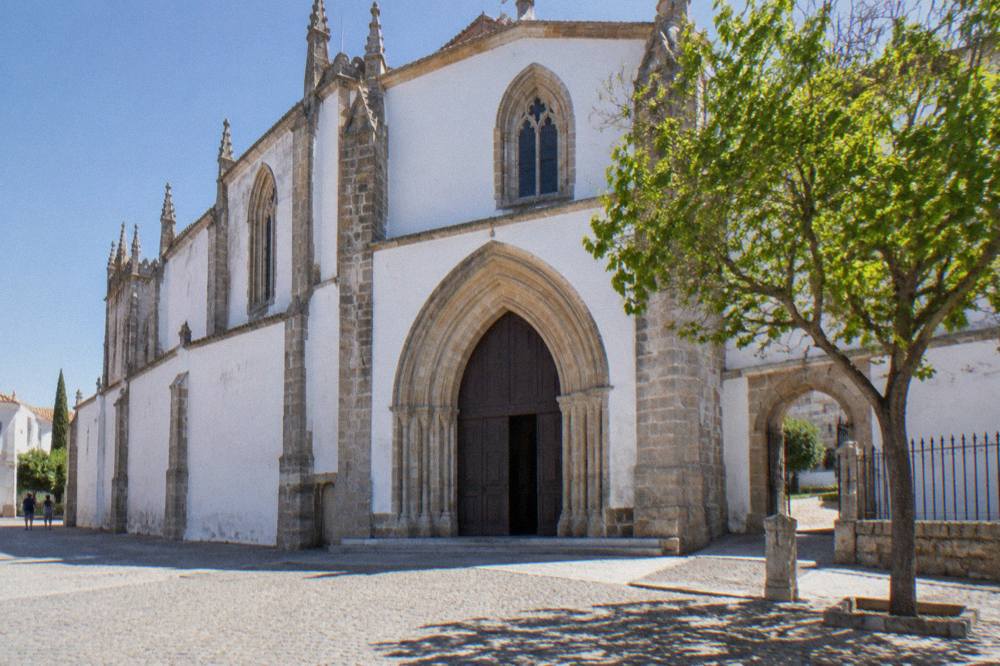
Is The Chapel Of Bones Made Of Real Bones?
Yes, the walls of the Capela dos Ossos are lined with real human bone, and the chapel's own name states as much: Capela dos Ossos means Chapel of Bones, and the interior is a composition of human remains arranged across the walls and columns. The bones were gathered from the dead of Évora's overflowing cemeteries, in the tradition described above. No official source publishes a count, and this page does not print one.
That last point matters, because the internet is full of numbers attached to this chapel, and they do not come from the church. The Igreja de São Francisco's own published material describes the chapel and its museum areas without putting a figure on the bones, so a visitor repeating a number found elsewhere is repeating something no official page stands behind. The honest description is the visual one: a small vaulted room in which bone covers nearly every surface, sorted and patterned, with skulls worked into the design.
The chapel is also not the only thing worth seeing in the complex. The same ticket covers the Sala do Capítulo, the Terraço da Galilé and two nativity collections, one of them, the Canha da Silva collection, substantial enough to be an attraction in its own right. Treating the chapel as the whole visit shortchanges the rest of the ticket.
How Should You Plan A Visit To The Chapel Of Bones?
Visit in the first hour after opening or in the later afternoon, since the chapel is small and the middle of the day draws the tour groups that reach Évora from Lisbon, about 130 km away. Buy the 7.00 EUR museum ticket at the door, allow time for the other museum areas on the same ticket, and remember the church's closing days: 1 January, Easter Sunday, the afternoon of 24 December and 25 December. Summer hours run to 18:30, winter hours to 17:00.
Évora's climate shapes the day around any visit. IPMA's 1991 to 2020 normals for the Évora station show a July mean maximum of 33.3 C and an August mean of 33.5 C, with 31.9 days a year reaching 35 C or more and a record of 45.4 C set on 4 August 2018. The city is inland, with no sea to moderate the heat, so summer visitors do well to put the chapel, which is cool and dark, in the early afternoon and the open sights like the Templo Romano in the morning. The full seasonal picture is in the guide to the best time to visit Évora.
A sensible half-day in the city pairs the chapel with the Sé de Évora, whose complete-visit ticket at 5.00 EUR covers the cathedral, cloister, roof terrace and museum, and with a walk past the Templo Romano and Praça do Giraldo. The full plan is laid out in what to do in Évora for a day.
Common Questions About The Chapel Of Bones
What is the story behind the Chapel of Bones Portugal?
It is a memento mori chapel beside the Igreja de São Francisco in Évora, its walls lined with the bones of the city's dead, built in a tradition that turned overcrowded cemeteries into devotional art meant to remind the living of mortality.
Whose bones are in the Chapel of Bones?
The bones come from Évora's churchyards and cemeteries, moved when those grounds could hold no more. No official source identifies individuals, and the church publishes no count of the remains.
Is the Chapel of Bones free to enter?
The Igreja de São Francisco is free to enter, but the chapel sits in the paid museum areas, covered by a single 7.00 EUR adult ticket that also includes the chapter room and the nativity collections.
Is the Chapel of Bones made of real bones?
Yes. The walls and columns are lined with real human bone, arranged into patterns and compositions. The chapel's name, Capela dos Ossos, says exactly what it is.
What religion is the bone church?
It is a Christian chapel, part of a working Catholic church in Évora, and masses are still held there weekly. The bone decoration is devotional art in the memento mori tradition.
When is the Chapel of Bones open?
Summer legal time 9:00 to 18:30, winter legal time 9:00 to 17:00, every day except 1 January, Easter Sunday, the afternoon of 24 December and 25 December, per the church's own published hours.
The chapel rewards a visitor who arrives knowing what it is: not a horror show but a sermon in bone, made in a city that UNESCO calls the finest surviving example of golden-age Portugal. Standing inside it, surrounded by the arranged dead of Évora, is the closest a traveller gets to hearing that sermon spoken aloud.