Beja Day Trip From Évora: What To Expect From The Southern Alentejo
Beja, the capital of the Baixo Alentejo, lies south of Évora across an open plain of wheat and cork oaks, and it makes a different kind of day trip from the walled towns closer to hand.
Short answer
Beja is the capital of the Baixo Alentejo sub-region, south of Évora on the Alentejo plain. It makes a quieter, wider-horizon day trip than the castle towns near Évora, best combined with a slow lunch and an early start, and no verified timetable, price or opening hour for the trip itself is published here.
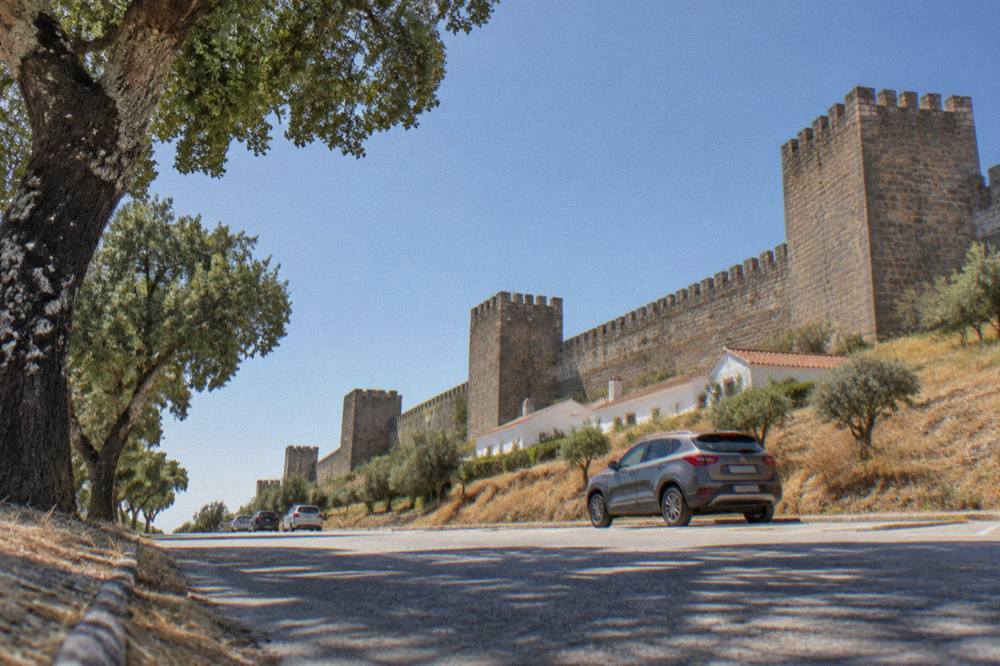
Beja is the capital of the Baixo Alentejo, the southern half of the Alentejo region, and it lies south of Évora across a plain so open that the town's medieval keep is visible long before the town itself. This is the deep Alentejo: wheat fields, cork oaks, low white houses and a horizon that seems to run on without end. Évora, the capital of the Central Alentejo and of the district of that name, sits at the northern edge of this landscape, and a day trip between the two crosses the whole character of the region in a single drive.
The point of the journey is the contrast. Évora is a UNESCO-listed museum city, dense with monuments inside Roman and medieval walls. Beja is a working agricultural town that grew around a castle and a convent, spread out along low ridges, and its pleasures are slower ones: the keep above the old centre, the plain seen from its walls, the quiet of a place that tourism reaches only lightly. For a visitor based in Évora who has already walked the Praça do Giraldo and the Capela dos Ossos, Beja answers a different question: what does the Alentejo look like when the monuments thin out and the land takes over?
Where Is Beja In Relation To Évora?
Beja lies south of Évora, in the Baixo Alentejo sub-region of the Alentejo, on the open plain that stretches across the south of Portugal toward the Spanish border and the coast. It is the capital of the Beja district and the largest town of the southern Alentejo, and the route from Évora crosses the flat wheat and cork country that defines the region. No verified driving distance or time for the Évora to Beja journey is published here, so treat any figure you see elsewhere as an estimate.
The direction matters more than the number. Every other classic day trip from Évora runs north, east or west: Estremoz and Vila Viçosa to the marble country, Elvas to the border fortress, Monsaraz above the Alqueva reservoir, Arraiolos with its carpets. Beja is the one big excursion that runs south, into the half of the Alentejo most visitors never enter. The plain opens out as you leave the Évora district, and the landscape changes from the rolling hills around Évora to something flatter, drier and more agricultural.
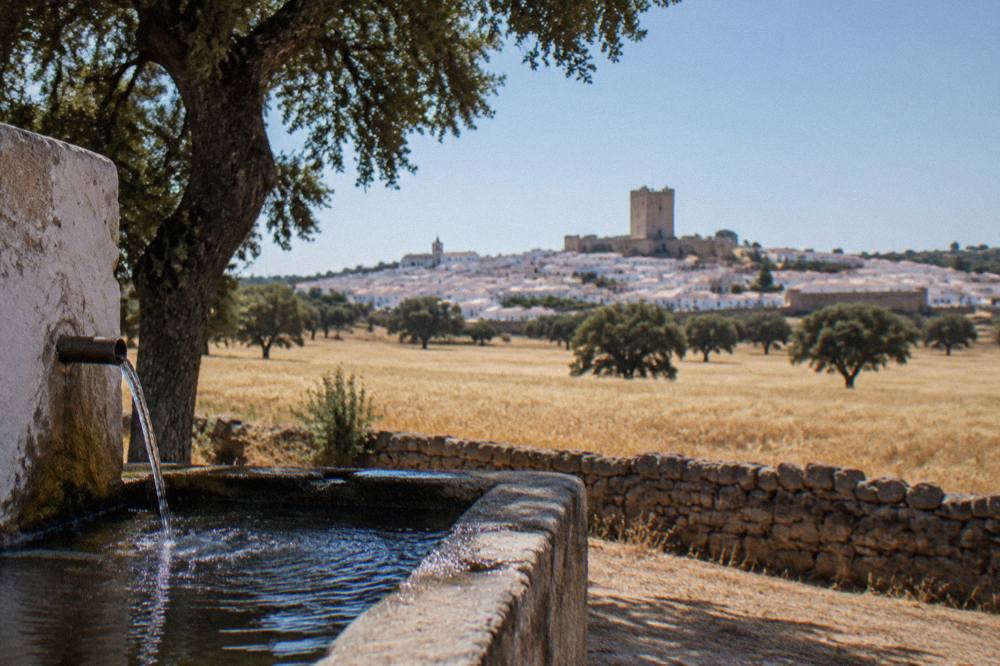
The Baixo Alentejo is farm country. Wheat, olives, cork and, increasingly, the vineyards that supply the southern Alentejo wine producers fill the plain, and Beja is its market and administrative centre. That gives the town a different rhythm from a tourist hub: it is busy on market days and quiet on Sunday afternoons, and its restaurants serve the people who live and work in the district rather than a visitor economy. For the practical side of planning the wider region, the guide to the best day trips from Évora puts Beja in context with the northern and eastern options.
What Kind Of Day Does Beja Make From Évora?
Beja makes a slow, wide-horizon day built around one town rather than a checklist of monuments: a morning in the old centre around the keep, a long Alentejo lunch, and an afternoon of museums and churches before the drive back north across the plain. It suits travellers who have already covered Évora's monuments and want the Alentejo at its most agricultural, and it rewards an early start because the middle of the day in summer belongs to the shade.
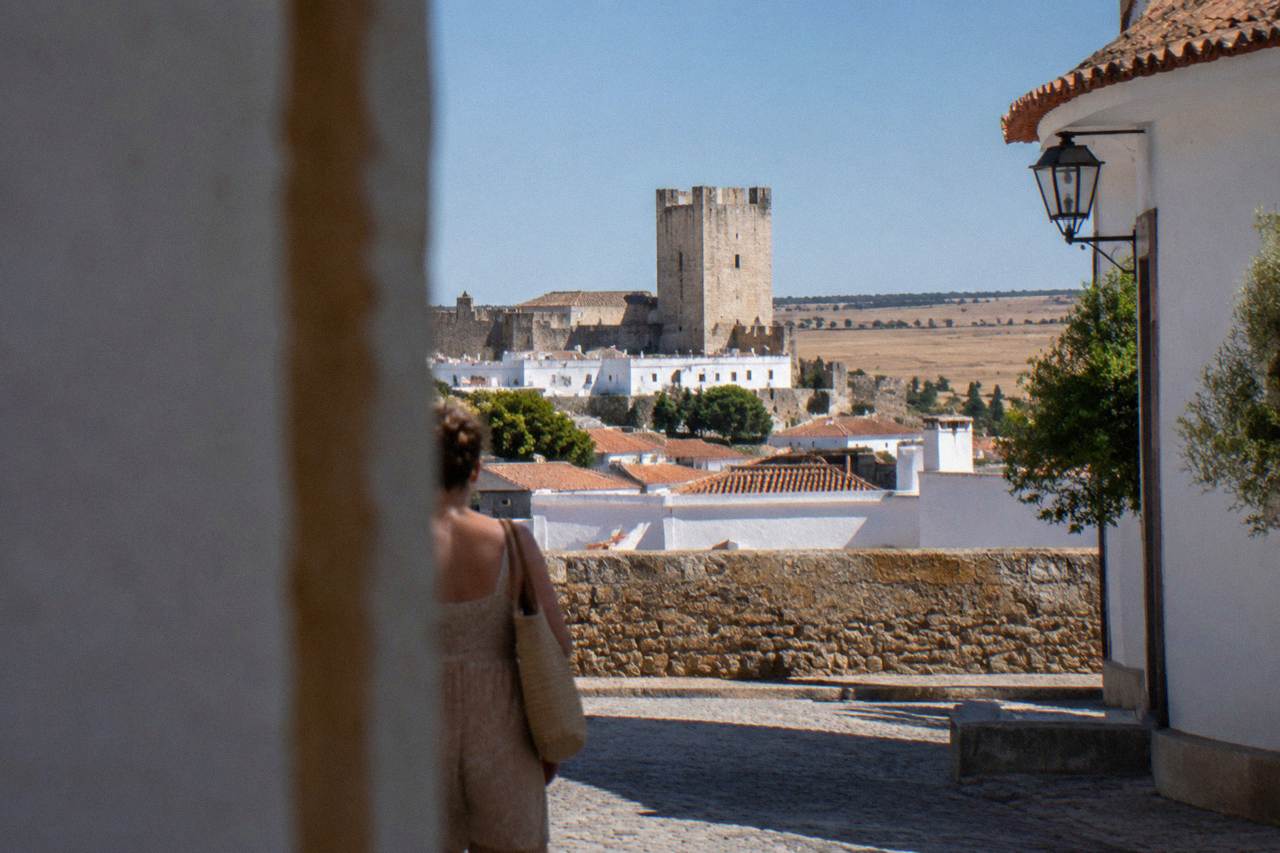
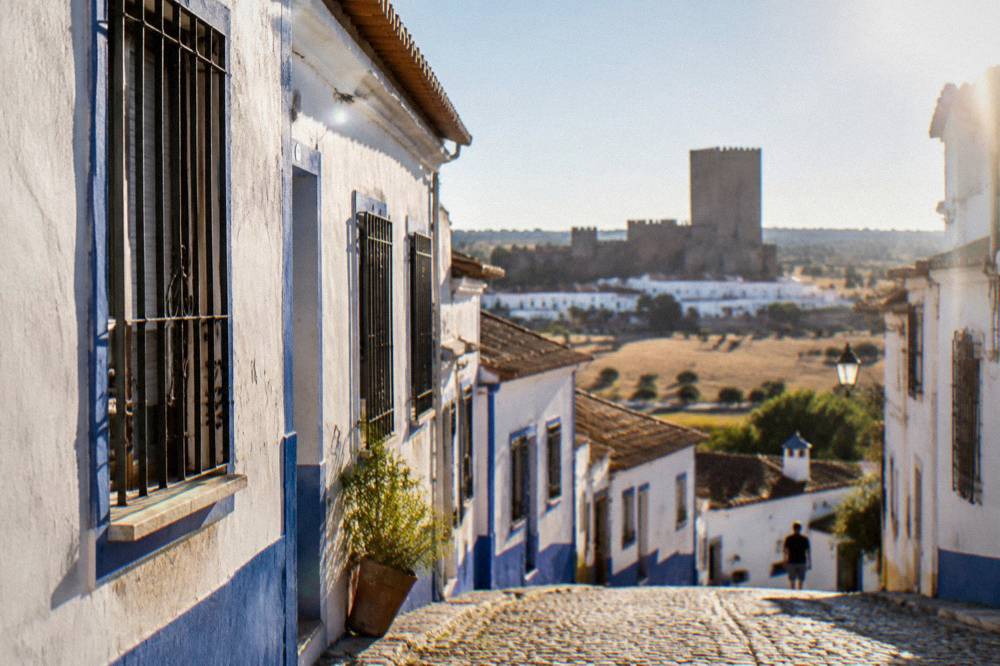
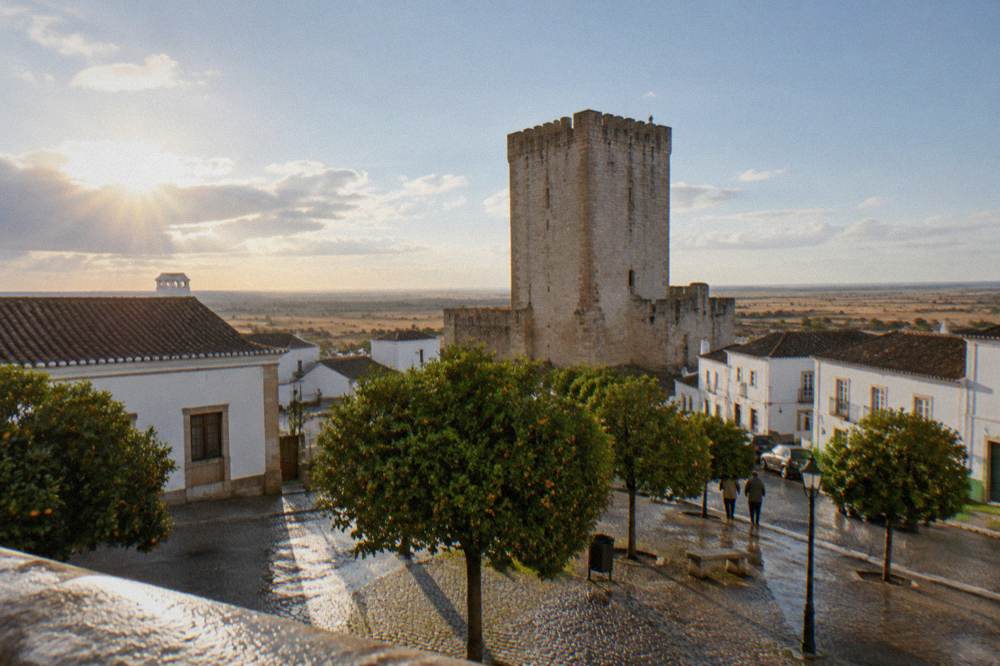
The old centre of Beja clusters below the castle keep, one of the landmarks of the southern Alentejo, and the streets around it are a low maze of white walls, blue trim and iron grilles. The town's churches and its regional museum carry the story of a frontier place that changed hands between Christian and Muslim rulers during the medieval reconquest, the same story that runs through Évora's own history, where Moorish rule ended in 1165. Beja's version of that history is quieter and less restored, which is precisely its appeal.
Two honest warnings shape the day. First, no opening hours, ticket prices or closure days for any Beja sight are verified here, so check each site's own notice before you build an itinerary around it, and keep the keep, the streets and the plain as the anchors that need no ticket. Second, the plain is genuinely hot: IPMA's 1991 to 2020 normals for the Évora station show a July mean maximum of 33.3 C and an August mean of 33.5 C, with 31.9 days a year reaching 35 C or more, and the southern Alentejo is, if anything, warmer still. Plan the walking for morning and late afternoon.
If a full day in the deep Alentejo feels like more commitment than you want, the guided options running out of Évora itself cover the same landscape in shorter form, and several of them pair well with a Beja day on the same trip.
The Alentejo's prehistory is another layer of the same plain. The archaeologist-led half-day megaliths tour from Évora visits the Cromeleque dos Almendres and the surrounding stone sites with working archaeologists as guides, rated 5 from 77 reviews and priced from $74.54 per person, and it makes a natural companion to a Beja day for anyone whose interest in the region runs deeper than its towns. You can also Check availability alongside the tour's own page.
What Should You Actually See In Beja In One Day?
A one-day Beja itinerary hangs on three things: the castle keep and the old streets around it, the town's museums and churches, and the plain itself, seen from the walls or from the approach road. Everything else is a bonus, because Beja's character is a single coherent place rather than a list of separate sights, and the day works best when it is walked slowly rather than collected.
The keep is the anchor. It is the vertical element of an otherwise horizontal town, and the view from its height is the best explanation of what the Baixo Alentejo is: plain to the horizon in every direction, patched with fields and cut by roads. The streets below it hold the bulk of the old town, and the churches scattered through them carry the town's medieval and convent history. Beja grew rich as a frontier and agricultural centre, and its buildings show it in the plain, solid manner of the southern Alentejo rather than the marble display of Estremoz and Vila Viçosa.
The museum deserves the longest single block of the day. Beja's regional museum occupies a former convent, and its collections run from Roman epigraphy found across the region to the religious art and archaeology of the southern Alentejo. As with every sight in this guide, check the museum's own notice for hours and admission before you go, because none is verified here. The same applies to the churches: they are working parish buildings, and their opening depends on services and volunteers rather than a visitor timetable.
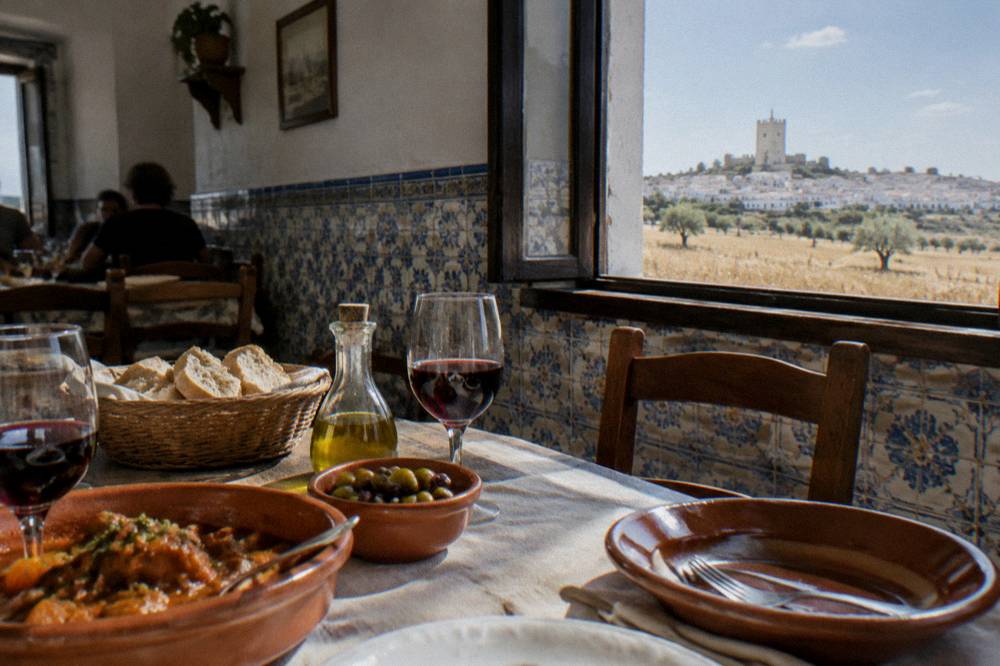
The lunch is not a filler between sights, it is a sight. The Baixo Alentejo table runs to the same dishes as the Évora one, migas, pork, soups and the region's breads, and the town's taverns serve them without a visitor premium. No restaurant, tavern or dish recommendation is verified here, so treat any name you read online as a starting point and let the room tell you the rest.
How Does Beja Compare With The Other Alentejo Day Trips From Évora?
Beja is the farthest-flung and the least monumental of the classic Alentejo day trips from Évora: where Estremoz and Vila Viçosa trade in marble, Elvas in fortifications and Monsaraz in a walled silhouette above the water, Beja trades in plain, scale and quiet. The rounded distances below are the only figures verified for the other towns, and no distance at all is verified for Beja itself, which tells you something about how far off the usual circuit it sits.
The comparison is worth making carefully, because the choice between them is a choice between kinds of Alentejo. The marble towns are polished and compact, built for a half day of walking. Elvas is a fortress. Monsaraz is a view. Beja is none of these: it is a regional capital, larger and lower, and it asks for a whole day because its parts are spread out and its pace is unhurried.
| Day Trip From Évora | Rounded Distance | What the Day Is Built Around |
|---|---|---|
| Arraiolos | about 20 km | A hilltop round village and its carpet-making tradition |
| Monsaraz | about 40-45 km | A walled village above the Alqueva reservoir |
| Estremoz | about 45 km | Marble town, a castle above the plain and market squares |
| Vila Viçosa | about 60 km | A ducal palace and the marble country of the House of Braganza |
| Elvas | about 80 km | Border fortifications and a garrison old town |
| Marvão | about 120 km | A mountain village with a castle high above the plain |
| Beja | no verified figure | The Baixo Alentejo capital, its keep and the open plain |
The northern options are covered in the site's own pages: Estremoz, Vila Viçosa and Portalegre each get a full guide, and a Beja trip is best understood as their southern mirror. The Walking Tour in Estremoz, from $28.67 per person and rated 4.8 from 19 reviews, shows the difference in scale: a marble-town visit is a guided stroll, while Beja is a journey.
How Do You Get From Évora To Beja?
The honest answer is that no train or bus timetable, fare or frequency for the Évora to Beja journey is verified here, so the practical method is to check the operators directly before you travel: CP for rail connections through the Alentejo lines and the coach operators for direct services, and to plan on driving if you want the plain to yourself. The only verified rail figures in this guide belong to the Lisboa Oriente to Évora Intercidades service, not to the Évora to Beja leg.
That constraint is worth respecting rather than papering over. The Alentejo's rail network is sparse, and journeys between secondary towns often involve changes and long waits; a figure copied from a forum or a third-party site is a guess wearing a timetable's clothes. CP's own pages carry the current Alentejo schedules, and the coach operators serve the regional capitals, but neither is quoted here because neither was verified for this specific journey. The rest of the planning pages sit on Évora Travel Guide.
| Leg | What Is Verified Here | Where to Check |
|---|---|---|
| Lisboa Oriente to Évora, Intercidades | Six through trains, about 1 hour 40 to 1 hour 45, 13.90 EUR second class, 18.50 EUR first class, timetable valid since 6 September 2026 | CP's own timetable and fare pages |
| Évora to Beja | No timetable, fare or frequency verified | CP and the coach operators, directly |
| Driving | No distance or time verified | Your own route planner, on the day |
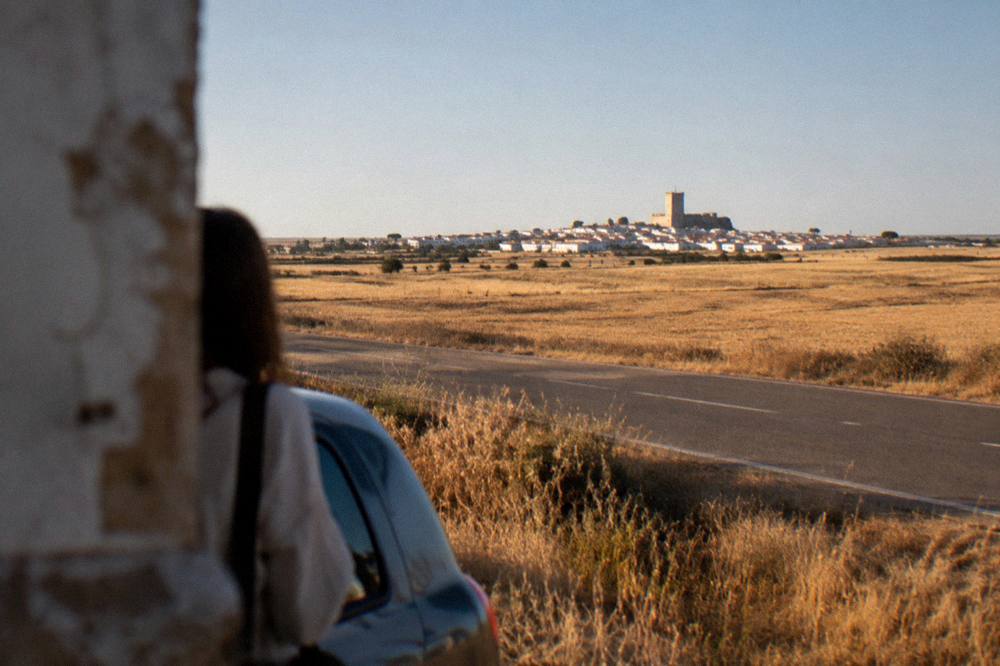
The CP timetable valid since 6 September 2026 lists six through trains from Lisboa Oriente to Évora, departing at 07:02, 09:02, 09:58, 13:35, 17:02 and 19:02, and that matters to a Beja day only if you are building a wider Alentejo itinerary that starts in Lisbon. The fare is 13.90 EUR in second class and 18.50 EUR in first class for that leg. For the southern leg, the freedom of a car is the real argument: the plain between Évora and Beja is the part of the journey most worth stopping in, and no bus stops for a cork oak.
When Is The Best Time Of Year For A Beja Day Trip?
Spring and autumn are the best seasons for a Beja day trip, because IPMA's 1991 to 2020 normals for the Évora station show the Alentejo plain at its hottest in July and August, with mean maxima of 33.3 C and 33.5 C, and at its wettest from October through December. The southern Alentejo plain is exposed country with little shade, so the temperature table below, the nearest verified series to the route, is the planning tool that matters most.
The pattern is the story: a cool, damp winter, a short explosive spring, a long dry furnace of a summer and a gentle autumn. The 1991 to 2020 averages put the annual mean at 16.6 C and total precipitation at 596.1 mm, and the record maximum of 45.4 C was set on 4 August 2018, a number that should end any debate about midsummer walking.
| Month | Mean Max (C), 1991-2020 | Mean Min (C) | Precipitation (mm) | Days at 30 C or More |
|---|---|---|---|---|
| March | 18.7 | 6.9 | 60.8 | 0.0 |
| April | 20.7 | 8.5 | 62.1 | 0.3 |
| May | 25.0 | 10.9 | 46.6 | 5.5 |
| June | 30.2 | 13.8 | 10.6 | 15.1 |
| July | 33.3 | 15.6 | 2.7 | 23.7 |
| August | 33.5 | 16.0 | 6.0 | 25.0 |
| September | 29.5 | 14.6 | 33.9 | 13.9 |
| October | 24.1 | 12.3 | 81.5 | 2.9 |
May is the month the plain earns its reputation: the wheat is green, the days average 25.0 C at maximum with only 6.0 days of rain at a millimetre or more, and the heat that produces 5.6 days at 35 C or more in June has not yet arrived. September is its twin on the other side of summer, with 13.9 days at 30 C or more but mornings that start at 14.6 C. Either month, the day trip works as a full walking day; in July and August, it works only as an early start, a long shaded lunch and a late afternoon.
What Does A Beja Day Trip Cost Compared With Staying In Évora?
The verified sight costs sit almost entirely in Évora itself: the Sé complete-visit ticket at 5.00 EUR, the Capela dos Ossos museum ticket at 7.00 EUR, the Museu de Évora at 8 EUR and the Évora Ticket at 8 EUR for one day, 10 EUR for two and 12 EUR for three. No Beja sight price is verified here at all, so the southern day is priced by fuel, lunch and whatever each site charges on its own notice.
The point of the comparison is where your money goes. A day in Beja is a cheap day if you drive yourself and eat like a local, because its costs are fuel, a lunch and whatever the sights you enter charge, and those charges are not published here. A day built on guided tours from Évora costs more per head but buys interpretation, transport and, on the megaliths runs, access to sites that are hard to reach without a car and easy to misread without a guide.
| Item | Verified Price | Notes |
|---|---|---|
| Sé de Évora complete visit | 5.00 EUR | Cathedral, cloister, roof terrace and museum; children up to 12 free |
| Capela dos Ossos museum ticket | 7.00 EUR adult | Youth to 25 and seniors over 65 at 5.00 EUR; family 15.00 EUR |
| Museu de Évora | 8 EUR adult | Closed Mondays; concessions at 50% off |
| Évora Ticket, one day | 8 EUR | Two days 10 EUR, three days 12 EUR; free to age 12; does not include the Sé, the Capela dos Ossos or the Museu de Évora |
| Beja sights | no verified price | Check each site's own notice before you go |
One structural fact matters to the budget: the Évora Ticket covers the Cidade-Museu network, and it does not include the Sé, the Capela dos Ossos or the Museu de Évora, so the pass and the big three tickets are separate purchases. None of it reaches Beja, which sits outside every Évora pass. A municipal tourist tax also applies to stays in the region; no amount is verified here, so check with your hotel at booking. For the fuller picture of costs in the base city, one day in Évora shows how the pieces fit.
Is Beja Worth The Day Trip From Évora?
Beja is worth the day trip for a specific traveller: one who has already seen Évora's monuments, has a car or has checked the transport carefully, and wants the Alentejo at its widest and least performed. It is not worth it for a first-time visitor squeezing the region into two days, for whom Monsaraz, Estremoz or Vila Viçosa deliver more per hour, and it is not worth it in the July and August heat without an early start and a shaded lunch planned.
The honest case against is the opportunity cost. From Évora, the northern and eastern day trips are shorter, more compact and better documented, and a visitor with three days will get more from Monsaraz and the Alqueva than from a long run south. The site's own Monsaraz guide makes that case in full, and the answer to whether Évora is worth a day trip from Lisbon matters more to most itineraries than Beja ever will.
The honest case for is the plain itself. Beja is the only place in the region where the Alentejo's agricultural scale is the main sight, and its keep, its convent museum and its taverns deliver the Baixo Alentejo in a form you can walk in a day. For a second-week visitor, a slow-return itinerary that pairs a Beja morning with an afternoon in the cork and megalith country north of Évora is one of the best days the region can produce.
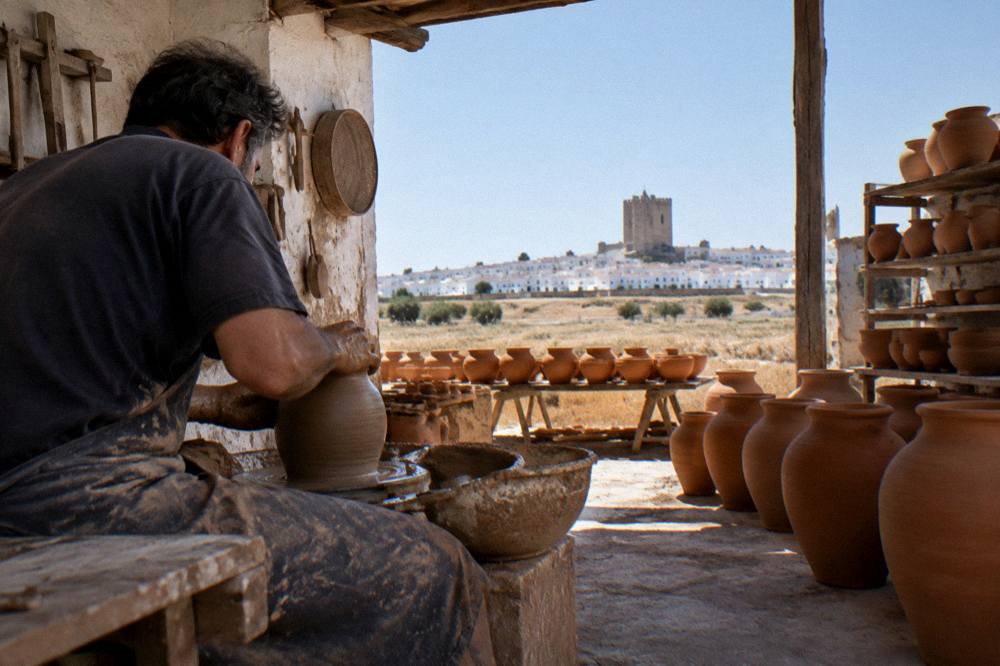
The pairing works because the two halves of the day are opposites. The Monsaraz pottery workshop tour, from $56.27 per person and rated 5 from 13 reviews, runs out of Évora into the village pottery tradition of São Pedro do Corval, and the Golden Era walk with wine tasting, from $23.92 per person and rated 4.4 from 33 reviews, closes the day inside Évora's own golden-age streets. Either one slots into the return leg of a Beja day.
Common Questions About A Beja Day Trip
Is Beja worth visiting from Évora?
Yes, for a visitor who has already covered Évora's monuments and wants the wide agricultural plain of the Baixo Alentejo. Beja is the regional capital, its keep and old centre make a genuine half day, and the drive south is part of the attraction. It is a poor choice for a first-time visitor short on days, for whom the closer towns deliver more per hour.
How far is Beja from Évora?
Beja lies south of Évora across the Alentejo plain. No verified distance or driving time for the journey is published here, so treat any figure you find online as an estimate and check your own route planner on the day of travel.
What is Beja known for?
Beja is known as the capital of the Baixo Alentejo, for its medieval castle keep rising above a low white town, for its regional museum in a former convent, and for the wheat, cork and vineyard plain that surrounds it. It is an agricultural and administrative centre rather than a tourist town, which is the core of its appeal.
Can you get from Évora to Beja by train or bus?
No timetable, fare or frequency for the Évora to Beja leg is verified here. Check CP's own pages for rail connections and the coach operators directly for regional services, and plan on driving if you want to stop along the plain, because no verified schedule for this journey exists to quote.
What is the best time of year to visit Beja?
Spring and autumn. IPMA's 1991 to 2020 normals for the Évora station, the nearest verified series, show July and August mean maxima of 33.3 C and 33.5 C and a record of 45.4 C set on 4 August 2018, while May averages 25.0 C at maximum with only 6.0 days of rain. The exposed southern plain makes midsummer walking genuinely hard.
Can you combine Beja with other day trips from Évora?
Yes, and it pairs best with the opposite kind of day. A Beja morning followed by an afternoon in the megalith and cork country north of Évora, or by a guided walk in Évora itself, makes a strong two-part itinerary, and the site's guide to the best day trips from Évora sets out the full range of combinations.
The Baixo Alentejo does not perform for visitors, and that is exactly why a Beja day trip earns its place on an Évora-centred itinerary: the keep, the plain and a long lunch in a town built for the people who farm it.