Redondo Day Trip From Évora In Portugal's Alentejo: Pottery, Wine And Castle Lanes
Redondo is a quiet pottery and wine town southeast of Évora, a place that rewards travellers who want the Alentejo at working speed rather than monument speed.
Short answer
Redondo is a small Alentejo town southeast of Évora, Portugal, best known for hand-painted pottery and red wine. It is reached by car or private guide, and pairs naturally with Estremoz, Borba and Vila Viçosa on a day loop.
Redondo is a small pottery and wine town in the Alentejo, the inland region of southern Portugal that Évora, the district capital, anchors. It lies southeast of Évora on the rolling plain, close enough to fold into a day loop through the region's marble and wine towns, and far enough off the standard tourist circuit that its lanes still belong mostly to the people who live in them. The town's reputation rests on two crafts that have shaped its economy for generations: hand-painted ceramics and the red wine of the surrounding vineyards.
What Is Redondo, Portugal Known For?
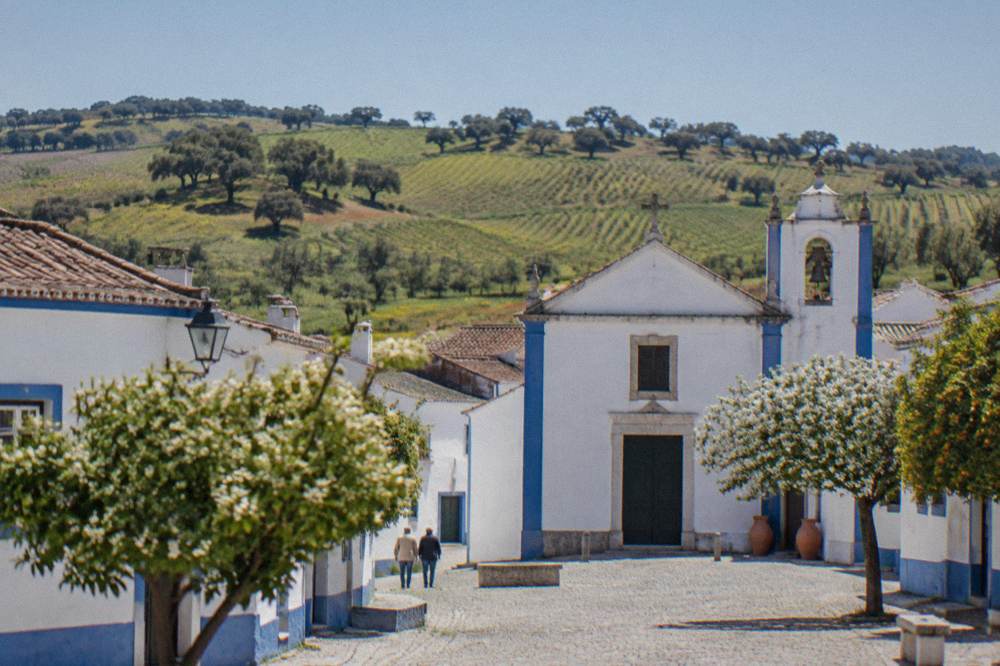
Redondo is a small Alentejo town known for two crafts: hand-painted pottery and red wine. The town lies in the heart of the Alentejo wine country, southeast of Évora, and its pottery tradition has supplied the region's kitchens for generations. Whitewashed lanes, a compact castle keep and working ceramic workshops give it a slower, working-town feel than the monumental cities on most itineraries.
That combination is the whole reason to go. The great Alentejo sights, the Sé de Évora, the Capela dos Ossos, the Roman temple, sit an hour and more of quiet road away, and Redondo is what sits between them: vineyards, cork oaks, olive groves and low white houses with blue or yellow trim. Travellers who spend all their Alentejo time inside Évora's walls see the region's past. Travellers who drive out to a town like Redondo see its present, the part that still runs on clay, grapes and the weekly rhythm of a small municipal seat.
The town is small enough that a morning covers it on foot. That is not a complaint. The Alentejo rewards towns you can walk across, because walking is how the details appear: a painted door frame, a workshop kiln cooling behind an open gate, a vineyard track leaving town past the last house. Redondo also gives the things to do in Évora list a useful counterweight, a half or full day that costs almost nothing and moves at village pace.
How Do You Get From Évora To Redondo?
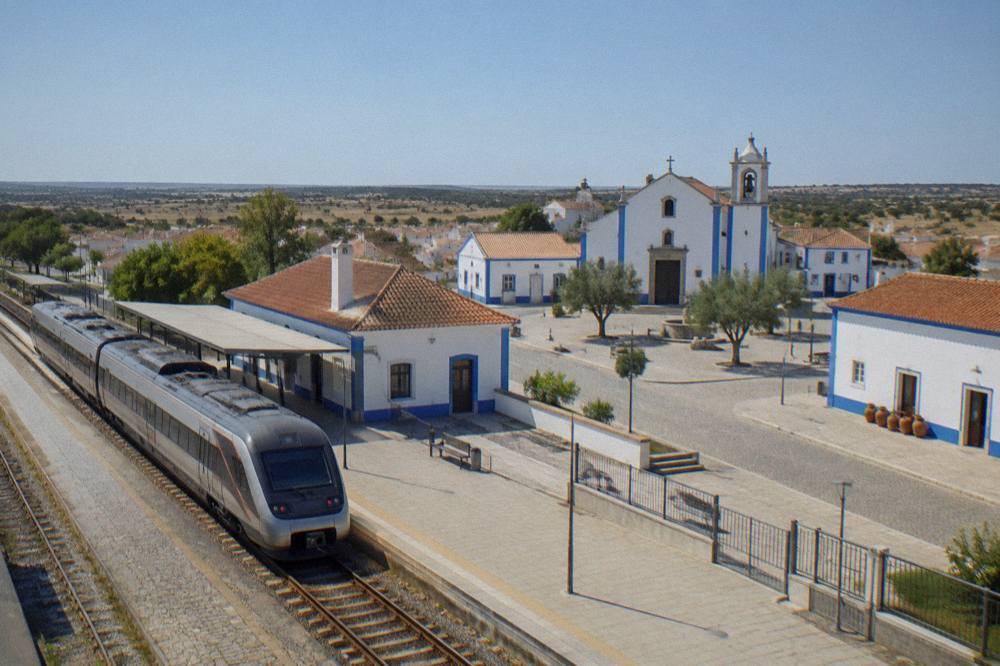
Redondo lies southeast of Évora on the Alentejo plain, and the dependable way to reach it is by car or with a private guide, as part of a loop through the region's wine and marble towns. No rail line serves Redondo, and no bus timetable or fare for the route could be confirmed on an operator's page, so this is a drive-it-yourself or guided destination rather than a train day trip. Most visitors fold it into a wider circuit.
The practical geometry matters more than any timetable. Redondo sits in a cluster of craft and wine towns east and south of Évora: Estremoz with its marble and hilltop core, Borba in wine country, Vila Viçosa with its ducal palace and marble quarries, and Arraiolos with its carpet tradition to the north. A loop that touches two or three of these in a day is the standard shape of an Alentejo road day, and Redondo slots into it without detour drama. The region's roads are quiet, and the driving itself is part of the appeal.
If you are staying in Évora without a car, the honest answer is that Redondo is awkward. The verified public-transport facts for the Évora region cover the CP rail line between Lisbon and Évora, not the small towns around Évora, and no coach timetable or fare for a Redondo route could be confirmed. A private guide or a small-group tour that covers the eastern Alentejo solves this, and several of the guided options below run exactly that kind of loop.
For travellers arriving from Lisbon, the pattern that works is rail to Évora, a night or two in the city, then a hired car or guided day east. The Évora day trip from Lisbon itinerary covers the first half of that plan, and the question is Évora worth a day trip from Lisbon covers whether even to build the trip at all.
What To See And Do In Redondo In One Day
A day in Redondo runs at walking pace: the castle keep and the lanes around it, the town's pottery workshops where the painted ceramics are made and sold, the main square for coffee and a slow lunch, and the vineyard and cork-oak country on the edge of town. There is no long monument list, and that is the point. The town is a crafts-and-countryside stop, not a ticketed-attraction stop.
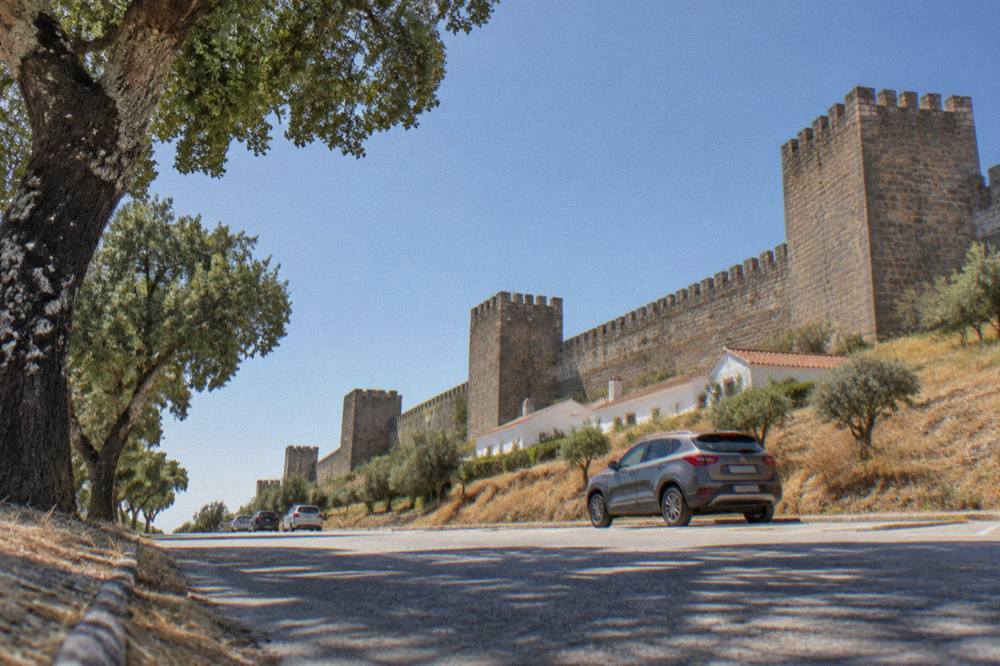
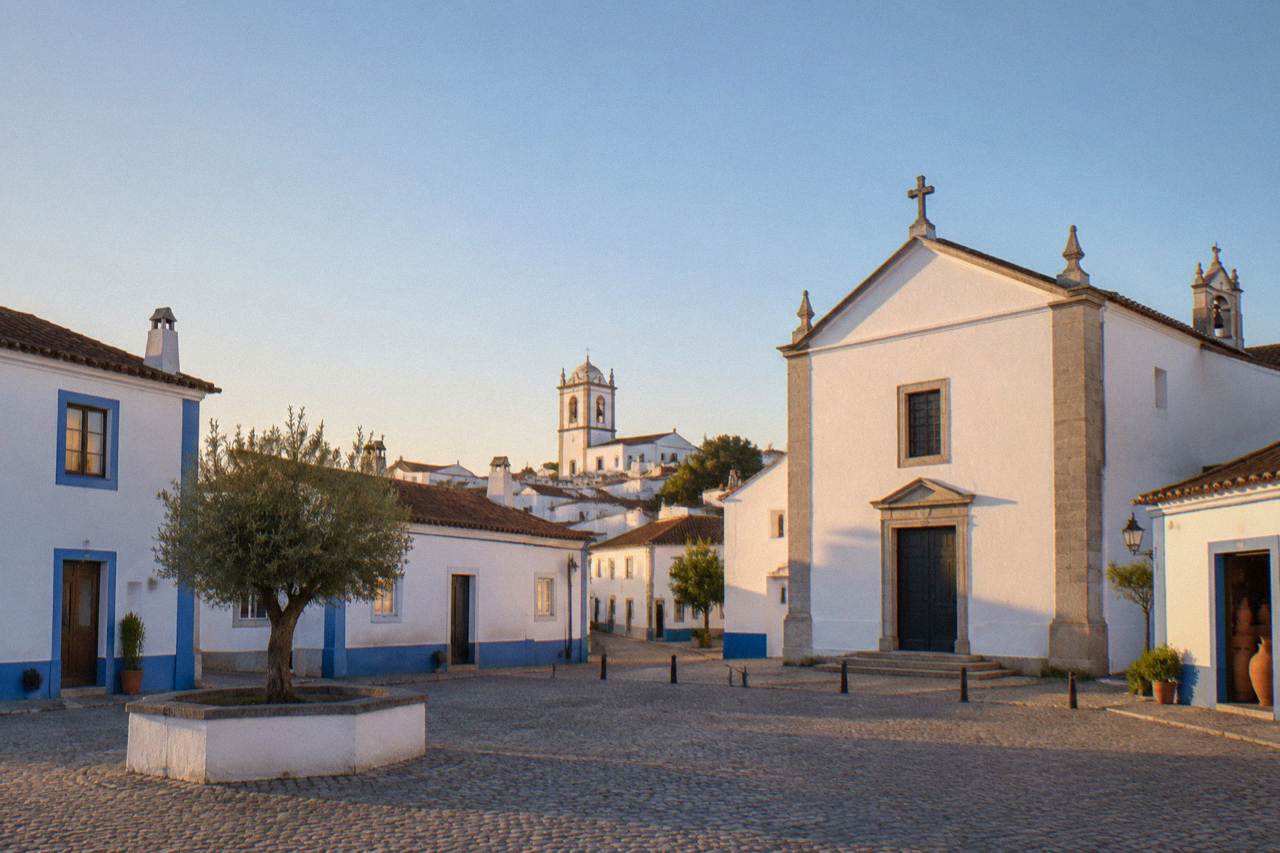
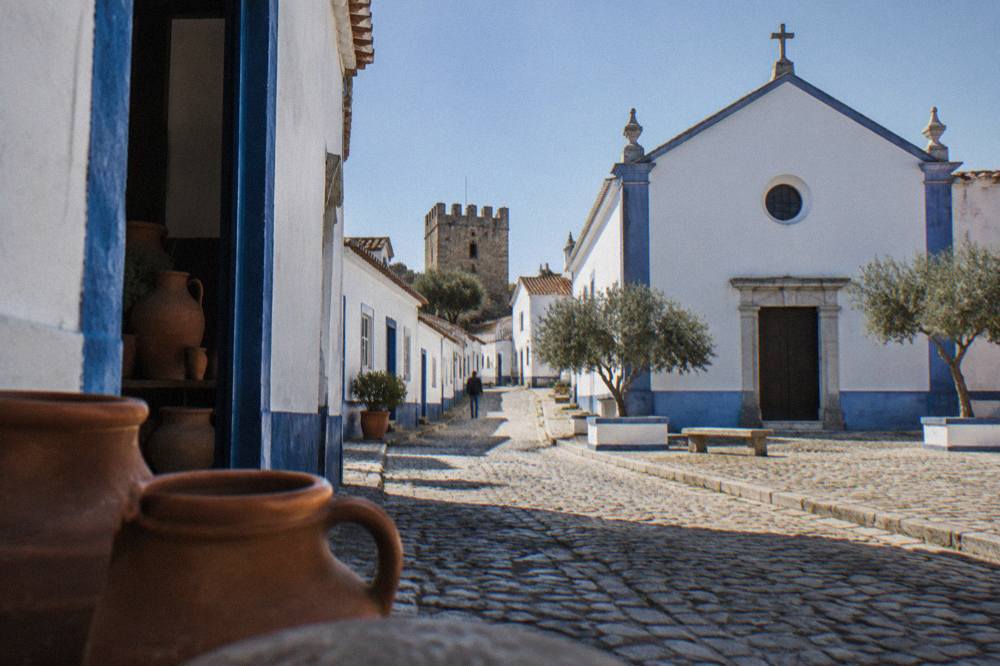
Start high. Redondo's castle keep and the old core around it give the town its shape, and the view from the upper lanes takes in the plain that produces the wine. From there, work downhill through the whitewashed streets, where the blue and ochre trim the Alentejo is famous for shows up on door frames and window surrounds. The lanes are short, so there is no route to plan: wander, and let the workshops find you.
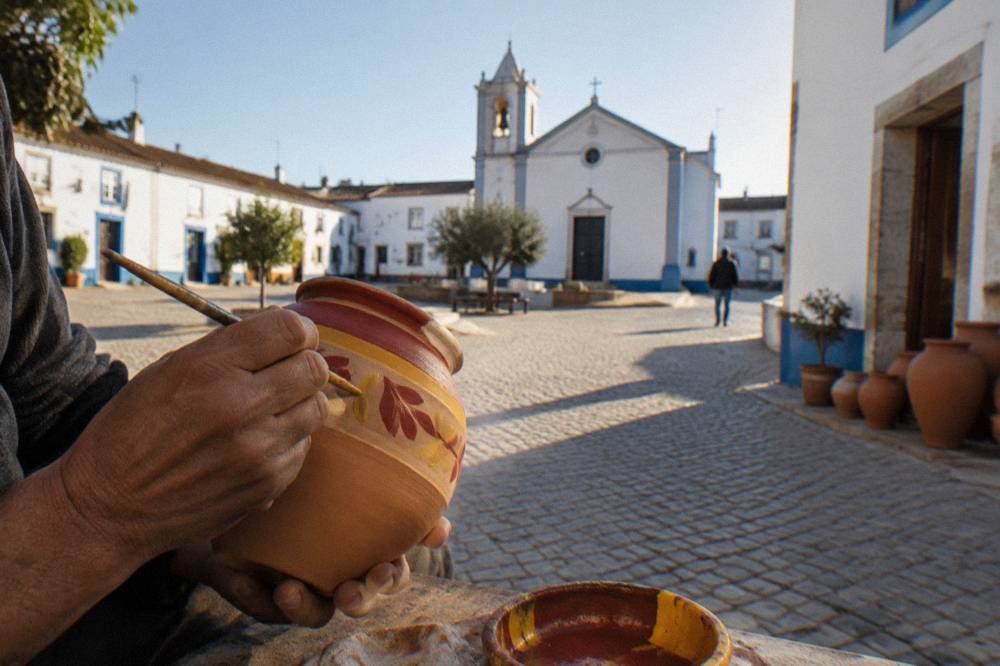
The pottery is the town's signature. Workshops in and around the centre make and sell the painted ceramics the region uses at table, and watching a piece move from raw clay to kiln to brush is the most memorable thing you can do here. Hours and prices are set by each workshop, so check the door before you plan a purchase-heavy stop. Buying direct is the version of souvenir shopping that actually supports the craft, and a wrapped plate or jug travels well if you are driving.
The middle of the day belongs to the square and the table. Alentejo bread, cheese, olive oil, pork and the local reds are the region's standard lunch, and Redondo's kitchens serve the same repertoire as the rest of the wine country. No specific restaurant in Redondo is verified in the destination facts, so treat lunch as a walk-in affair and follow the local crowd. After lunch, the countryside options open up: the tracks south and east of town run through vineyards and montado, the cork-oak landscape that defines the Alentejo, and a short drive in that country is the natural close of the day.
Why Is Redondo Famous For Pottery And Wine?
Redondo's fame in Portugal rests on its painted pottery and its wine. The town's ceramic tradition produces the practical painted ware the Alentejo eats from, and the surrounding countryside is working vineyard country within the Alentejo's wine landscape. Together they give Redondo an identity that is about making things rather than displaying them, which separates it from the monument towns on most itineraries.
The pottery deserves the longer explanation. Alentejo ceramics run from the rustic to the decorative, and Redondo's version leans practical: plates, jugs, bowls and pans in strong colour, painted by hand, made to be used. That tradition is why the town appears on craft-route maps of the region alongside Estremoz, known for its clay figures as well as its marble, and Arraiolos, known for needlework carpets. A traveller collecting Alentejo crafts could build an entire trip around that triangle, and the Arraiolos carpet town and Estremoz marble and clay town pages cover the other two corners.
The wine side is quieter but no less real. Redondo sits inside the Alentejo's wine country, the same broad landscape that produces the reds served across the region, and the vineyards begin almost at the town edge. Tasting-room hours and producer details for Redondo itself are not verified in the destination facts, so check before you plan a cellar visit, or let lunch do the tasting for you: a house red in a small Alentejo town is rarely a gamble. The wider wine picture, including the Évora area's own wineries, is covered in the region's wine guides, and a full wine-focused day out of Évora is a different trip again.
The honest framing is this: Redondo is not a destination with opening hours and ticket queues. It is a town where two crafts are still the local economy, and the visit is a matter of being there while that economy runs. Go on a weekday morning and you will likely see work in progress. Go in August and the whole plain, Redondo included, will be hot enough to empty the streets by early afternoon.
When Is The Best Time To Visit Redondo?
The best time to visit Redondo is spring or autumn, when the Alentejo plain is green or golden rather than scorched and daytime temperatures sit well below the summer peaks. The verified climate record for the region, IPMA's 1991 to 2020 normals for the Évora station, shows July and August averaging 33.3 and 33.5 C at maximum, with 31.9 days a year reaching 35 C or more, so midsummer is a morning-only proposition.
The table below is the Évora station's record, the nearest long-run verified series for the region, and it is the number set to plan around for any eastern-Alentejo day trip. Label every figure as the 1991 to 2020 average.
| Month | Mean maximum (C) | Mean minimum (C) | Rain (mm) |
|---|---|---|---|
| January | 14.1 | 4.5 | 68.6 |
| February | 15.7 | 5.0 | 52.3 |
| March | 18.7 | 6.9 | 60.8 |
| April | 20.7 | 8.5 | 62.1 |
| May | 25.0 | 10.9 | 46.6 |
| June | 30.2 | 13.8 | 10.6 |
| July | 33.3 | 15.6 | 2.7 |
| August | 33.5 | 16.0 | 6.0 |
| September | 29.5 | 14.6 | 33.9 |
| October | 24.1 | 12.3 | 81.5 |
| November | 17.6 | 7.9 | 86.0 |
| December | 14.6 | 5.3 | 85.1 |
Read the summer rows honestly. The record maximum at the Évora station is 45.4 C, set on 4 August 2018, and the averages alone put July and August out of reach of comfortable afternoon walking. If summer is when you are in Portugal, structure a Redondo day around an early start, shade by lunch, and the evening back in Évora. The region's heat is dry rather than humid, which helps, but it is still heat.
Spring and autumn carry the other practical advantage: the plain looks its best. April and May give green fields and wildflowers between the vines, and October gives the harvest-season landscape with rain returning on roughly eight days in the month, per the 1991 to 2020 averages. Winter is mild by northern European standards, with January averaging 14.1 C at maximum, but the short days and the wettest months, November and December, make it a lower-choice season for a countryside day.
Which Alentejo Towns Pair Well With Redondo?
Redondo pairs best with Estremoz, Borba and Vila Viçosa, the marble and wine towns of the eastern Alentejo, all reachable on a single day loop from Évora by car. Estremoz lies about 45 km from Évora, Vila Viçosa about 60 km, and Arraiolos about 20 km in the other direction, so the craft-and-marble circuit can be built in several shapes depending on whether the day leans pottery, marble or wine.
The rounded distances below come from the verified geography facts for the Évora region and are approximate road figures, not hard measurements. Redondo itself carries no verified distance figure, so plan that leg with a mapping service rather than a number from this page.
| Town | Known for | Distance from Évora (about) |
|---|---|---|
| Arraiolos | Hand-stitched carpet tradition | 20 km |
| Monsaraz | Walled hill village above the Alqueva country | 40 to 45 km |
| Estremoz | Marble quarries and a hilltop old town | 45 km |
| Vila Viçosa | Marble heritage and the ducal palace | 60 km |
| Elvas | Fortified border city | 80 km |
| Marvão | Mountain village on the Serra de São Mamede | 120 km |
The natural Redondo loop is Évora to Estremoz, Estremoz to Borba or Redondo, and home through wine country. Estremoz gives the day its monumental moment, a genuine old core on a hill with marble underfoot, and the Estremoz heritage walking tour is the guided version of that stop. Vila Viçosa deepens the marble story with the ducal palace and the quarry landscape, covered in the Vila Viçosa marble country guide, and the Borba wine village day trip page covers the wine stop between them. For the full menu of options, the best day trips from Évora guide ranks the whole region.
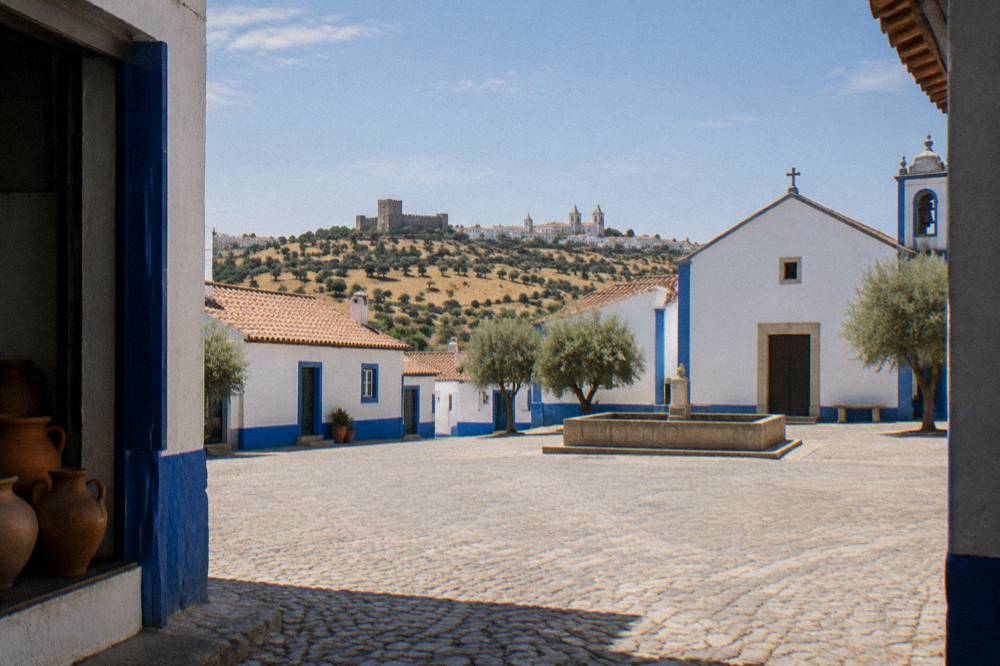
Two cautions keep the plan honest. First, no opening hours, entry fees or castle hours for any of these towns are verified in the destination facts, so treat every stop as a walk-around town and check specific interiors before you promise them to anyone. Second, the loop is a driving day, and summer versions of it should start early and end in the shade. The Alentejo rewards slow loops and punishes ambitious ones.
What Guided Tours Cover The Redondo Region?
No dedicated Redondo tour appears among the verified guided options, so the guided route into the region runs through the neighbouring towns: two marble tours in Vila Viçosa, from $28.67 and $28.14 per person, and a walking tour in Estremoz from $28.67 per person, all rated 4.8 or higher. The practical play is a guided stop in Vila Viçosa or Estremoz with a self-guided Redondo leg, or a private guide who will build the eastern loop to order.
The table below carries the verified card figures for the three guided options that fit this region, with prices in US dollars as the listings show them.
| Guided option | From price (USD) | Rating | Reviews |
|---|---|---|---|
| Marble Tour in Vila Viçosa (Marble Trail, Landscape to Archaeology) | $28.67 | 4.9 | 324 |
| Marble Tour in Vila Viçosa (2-Hour Marble Tour) | $28.14 | 4.8 | 82 |
| Walking Tour in Estremoz (Estremoz Heritage Walking Tour) | $28.67 | 4.8 | 19 |
The two Vila Viçosa marble tours cover the quarry-and-heritage story of the marble country that sits alongside Redondo's clay story, and both start in Vila Viçosa itself, so they need a car or a transfer to reach. The Estremoz walk is the same shape on foot: a heritage circuit of the old town with a local guide. None of the three enters Redondo, which is worth saying plainly, because a traveller who books a marble tour expecting pottery will be in the right region but the wrong town.
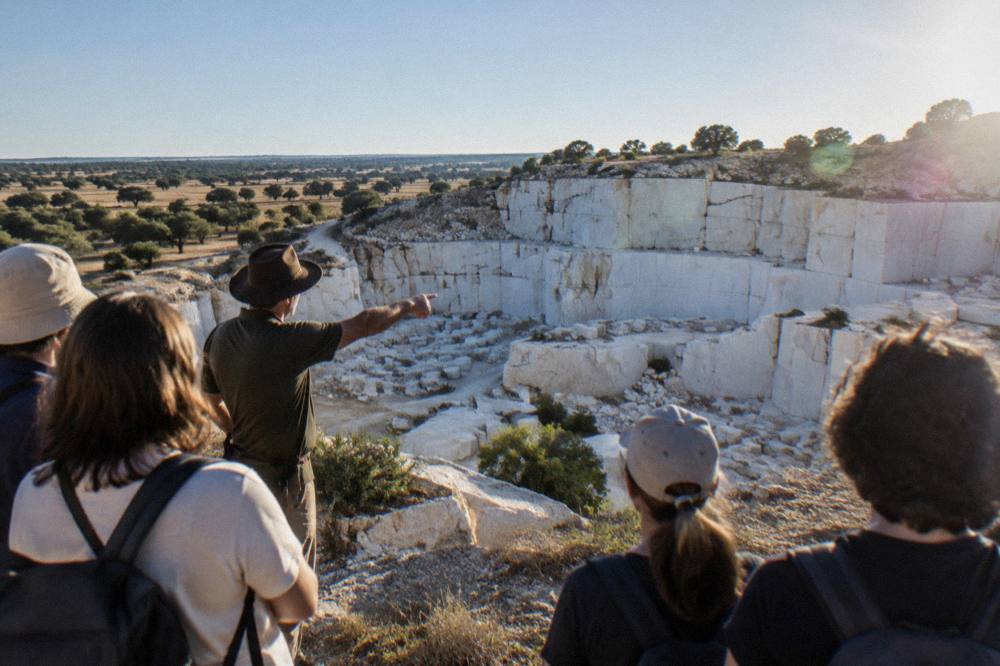
For a day that genuinely includes Redondo, the private-guide route is the one that works. Private Alentejo day tours out of the region, including Lisbon-start versions, can be shaped around the eastern loop, and the Marble Trail landscape tour in Vila Viçosa is the fixed-departure option that sits closest to Redondo's craft route. Check the operator's live listing for what each departure includes, because itineraries in this region vary more than prices do.
How Does Redondo Fit Into A Trip From Lisbon?
Redondo fits a Lisbon trip as the second-day layer: rail from Lisbon to Évora, a night in the city, then a car or guided loop east that includes Redondo. CP's timetable valid since 6 September 2026 lists six through Intercidades trains from Lisboa Oriente to Évora taking about 1 hour 40 to 1 hour 45, at 13.90 EUR second class or 18.50 EUR first, so the city-to-city leg is easy and the countryside leg is the part that needs planning.
The rail leg is the best-documented part of any Alentejo journey. The six through departures from Lisboa Oriente, per CP's timetable valid since 6 September 2026, are:
| Depart Lisboa Oriente | Arrive Évora |
|---|---|
| 07:02 | 08:47 |
| 09:02 | 10:45 |
| 09:58 | 11:40 |
| 13:35 | 15:13 |
| 17:02 | 18:41 |
| 19:02 | 20:46 |
Check the timetable's weekday remarks before assuming every departure runs every day, and check the operator's own pages for anything beyond these through services. The fare, 13.90 EUR in second class and 18.50 EUR in first for the Lisboa Oriente to Évora leg, comes from CP's price table valid in 2026. The one day in Évora guide covers what to do with the city end of the trip, and the wider comparison of approaches is in the best day trips from Lisbon guide.
If the trip starts with a morning in Évora before driving east, the city's ticketed monuments are worth knowing in one place. These are the verified official prices:
| Site | Adult price | Notes |
|---|---|---|
| Sé de Évora (complete visit) | 5.00 EUR | Cathedral, cloister, roof terrace and museum; children up to 12 free |
| Capela dos Ossos / Igreja de São Francisco | 7.00 EUR | Youth to 25 and seniors over 65 pay 5.00 EUR; family ticket 15.00 EUR |
| Museu de Évora | 8 EUR | Closed Mondays; reduced rates for youth, seniors and families |
| Évora Ticket | 8 EUR one day | 10 EUR for two days, 12 EUR for three days; does not include the Sé, the Capela dos Ossos or the Museu de Évora |
The Évora Ticket's exclusion list is the detail most visitors miss: it covers the Cidade-Museu network, not the three biggest ticketed sights, so a monument-heavy morning in Évora is usually three separate tickets. That matters on a Redondo day, because every euro and minute spent queuing in the city is one not spent in the workshops east of it.
Starting Or Ending The Day In Évora
A Redondo day starts or ends best in Évora itself, and the cheapest guided introduction to the city is a free, tip-based GuruWalk walking tour. The Essential Free Tour of Évora is rated 4.93 from 774 reviews and runs about 2 hours, and three further GuruWalk walks cover history, heritage and the Roman city, all tip-based with no fixed price.
GuruWalk is the platform to name here, because these walks are genuinely free at the point of booking and the guru is tipped at the end. The verified options:
| GuruWalk walk | Rating | Reviews | Duration |
|---|---|---|---|
| The Essential Free Tour of Évora | 4.93 | 774 | 2 hours |
| Évora Walking Tour: History & Heritage | 5 | 9 | 2 hours |
| Évora through history and how it shaped the city | 4.88 | 74 | 2 hours |
| Mystical Journeys Évora: Roman Ebora | 5 | 1 | 2.5 hours |
The Essential Free Tour, with its 774 reviews, is the workhorse: a two-hour orientation that leaves you knowing where everything inside the walls sits, which is exactly the preparation a countryside day benefits from. The Roman Ebora walk suits travellers whose interest runs to the ancient city, and the history-and-heritage walk is the quieter small-group alternative. None of them costs anything to join, and the tip is the whole business model, so budget accordingly.
The shape of the full day, then, is straightforward. A free walk in Évora in the morning to fix the city in your head, a drive east through the craft towns with Redondo as the pottery stop, and an evening back in Évora, where the Évora Travel Guide coverage picks the day back up with food, wine and the after-dark city. In summer, reverse it: Redondo at opening time, Évora in the evening, because the plain will be the cooler half of the day by mid-morning.
Common Questions About Redondo
Is Redondo worth visiting?
Yes, for travellers who want the working Alentejo rather than another monument town. Redondo's pottery workshops, castle keep and vineyard surroundings make a half-day stop, and it pairs naturally with Estremoz, Borba or Vila Viçosa. If your Alentejo time is limited to one day inside Évora's walls, Redondo is not the stop to squeeze in.
What is Redondo Portugal known for?
Hand-painted pottery and red wine. The town's ceramic tradition produces practical painted ware, and the surrounding countryside is Alentejo vineyard land. Both crafts are visible on a short walk through town.
How far is Redondo from Évora?
No verified road distance for the Redondo leg appears in the destination facts, so check a mapping service before planning. The town lies southeast of Évora on the Alentejo plain, within the same day-loop range as Estremoz, about 45 km from Évora, and Vila Viçosa, about 60 km.
Can you visit Redondo without a car?
Not easily. No rail line serves the town, and no bus timetable or fare for the route could be confirmed on an operator's page. A hired car or a private guide is the dependable way in, and the guided options through Vila Viçosa and Estremoz are the fixed-departure alternatives.
What can you buy in Redondo?
Painted ceramics, bought direct from the workshops that make them, plus Alentejo wine, olive oil and bread from the region. Workshop hours and prices are set individually, so check the door before planning a purchase-heavy visit.
When should you not visit Redondo?
In the July and August afternoon. IPMA's 1991 to 2020 normals for the Évora station show July averaging 33.3 C and August 33.5 C at maximum, with the record at 45.4 C on 4 August 2018. In summer, go early and be gone by lunch.
Redondo will never lead a list of Alentejo must-sees, and that is precisely its value: a town where the pottery is still made, the wine is still local and the day still moves at the pace of the plain it sits on.