Is There A Dark Sky Reserve In Portugal?
Yes, Portugal has a dark sky reserve in the Alentejo, the lake country south of Évora. This guide explains where it lies, when the skies are clearest and how to plan a stargazing trip.
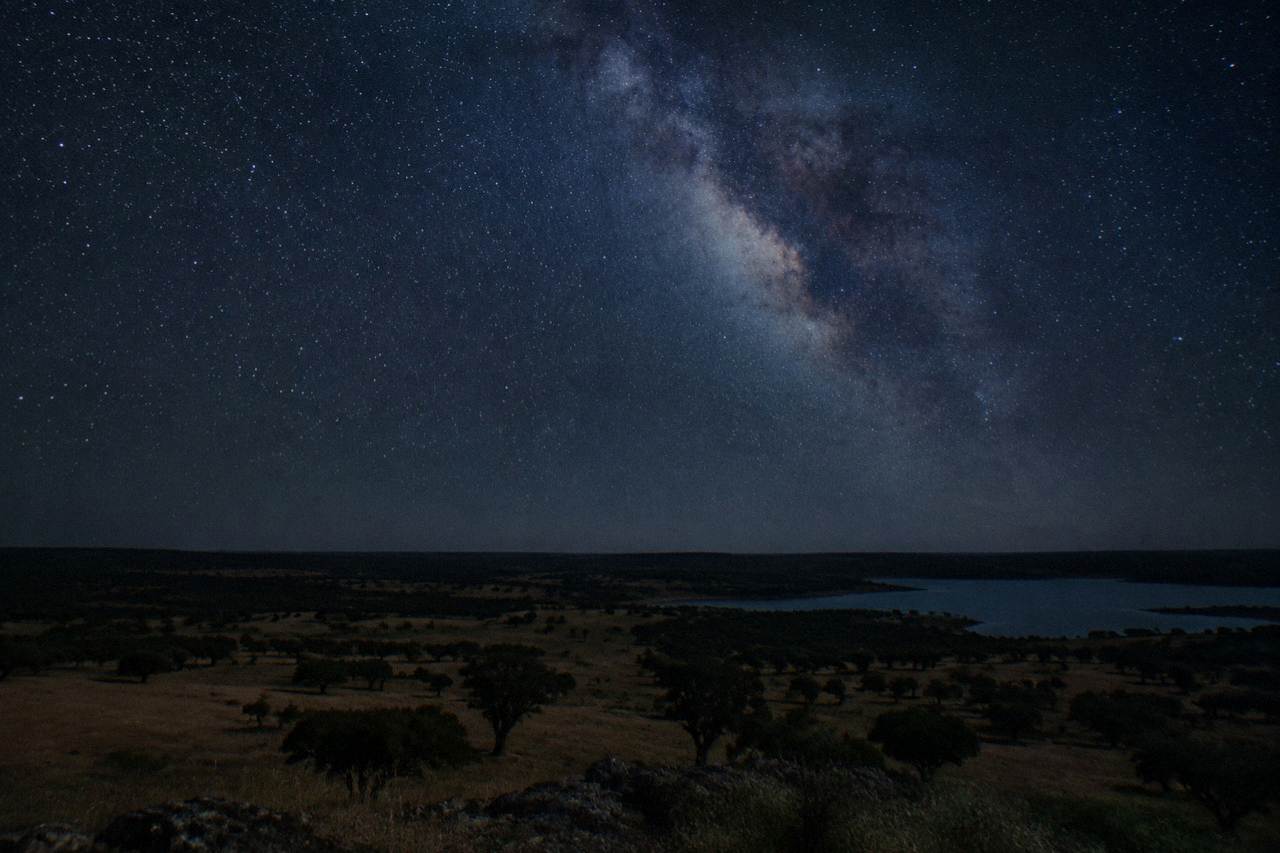
Évora, the inland capital of the Alentejo in Portugal, sits on a high plain roughly 130 km from Lisbon and about 90 km from the Atlantic, which means the city lives under genuinely dark inland air rather than the coastal haze of the Algarve or Lisbon. Portugal does have a dark sky reserve, and it lies in this same Alentejo plain, in the lake country south of Évora around Monsaraz and the great Alqueva reservoir. The Évora Travel Guide editorial desk has assembled what the region's own published material and the national climate record support, so a visitor can judge for themselves how a stargazing trip fits into a stay in Évora.
Is There A Dark Sky Reserve In Portugal?
Yes, Portugal has a dark sky reserve, and it lies in the Alentejo, the inland region whose capital city is Évora. The reserve is associated with the Alqueva lake area, a vast man-made reservoir in the country's south, near the walled village of Monsaraz about 40 to 45 km from Évora. The region promotes itself for its exceptionally dark night skies, and stargazing has become one of the Alentejo's signature experiences alongside its wine, cork and marble towns.
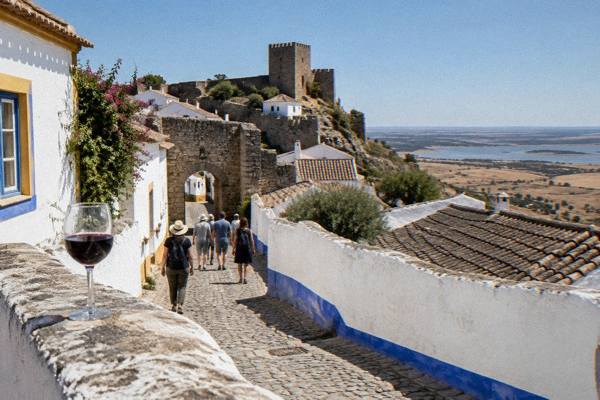
The reserve's story is really the story of the Alentejo itself. This is the least densely populated part of Portugal, a plain of cork oaks, olive groves, vineyards and wheat fields where the lights of a large city simply do not exist. The Alqueva reservoir, created by a dam on the Guadiana river, flooded a huge area of farmland and left a shoreline of small villages with almost no industry and very little night-time lighting. Monsaraz, a medieval hilltop village that looks out over the lake, became the natural centre of the stargazing scene, and today visitors find observation points, guided night walks and astronomy sessions scattered through the villages around the water.
What makes the Alentejo work for stargazing is not just darkness but dryness. The same climate that bakes Évora in July and August also scrubs the air of cloud. IPMA's 1991 to 2020 normals for the Évora station show July averages just 2.7 mm of rain across the whole month and August 6.0 mm, with only 0.6 and 0.7 days of measurable rain respectively. A sky that dry, over land that flat and unlit, is about as good as southern Europe offers.
For travellers basing themselves in Évora, the practical point is simple: the dark sky country is a comfortable half-day's reach to the south, and it combines naturally with the region's other sights. The Alqueva dark sky stargazing guide covers the lake area in detail, and the question of whether the Alentejo is worth visiting answers itself on any clear night outside the city walls.
Where Is The Alqueva Dark Sky Region Relative To Évora?
The dark sky region lies south and east of Évora, in the lake country around Monsaraz, which sits about 40 to 45 km from the city by road. Monsaraz is the best-known base, a small walled village above the Alqueva reservoir, and the surrounding villages of Reguengos de Monsaraz and the Guadiana shoreline all fall within the same dark, sparsely lit landscape. Évora itself is the natural gateway, the region's capital and the transport hub of the Central Alentejo.
Évora's position matters more than its size. It is a small city of about 53,000 people in the municipality, but it is the place where the trains from Lisbon arrive, where the main roads of the Alentejo cross, and where most visitors establish a base. From Évora the whole southern Alentejo opens up as a fan of day trips: Monsaraz and the lake to the south-east, Estremoz and its marble quarries to the north-east, Arraiolos and its needlework carpets to the north. The dark sky area is the farthest edge of that fan, but it is the one that rewards staying out past sunset.
A useful way to picture the geography is to group the Alentejo's day trips by what kind of experience they offer:
| Direction from Évora | Place | About how far | The kind of day it makes |
|---|---|---|---|
| South-east | Monsaraz and the Alqueva lake | 40-45 km | Walled village, lake views, dark night skies |
| North-east | Estremoz | about 45 km | Marble town, castle, market square |
| North | Arraiolos | about 20 km | Carpet-making village, hilltop round church |
| North-east | Vila Viçosa | about 60 km | Ducal palace, marble quarries |
| Far north-east | Marvão | about 120 km | Mountain-top fortress village |
The figures above are rounded road distances, the kind of estimate a map gives before it accounts for every bend in an Alentejo road. None of the lake villages publishes stargazing hours in a way this page can quote, so the practical advice is to check with local operators and the village tourism offices before planning a night around a specific session.
One experience bridges the daylight and the dark: the balloon. A day tour that pairs Évora and Monsaraz with a hot air balloon ride over the plain, Discover Monsaraz and Évora: Balloon Ride Adventure Included, runs from $637.12 per person and is rated 4.8 from 4 reviews on the operator's listing, and it shows the Alentejo from the angle its flatness otherwise hides. Check availability if a dawn flight over the lake country fits the itinerary.
When Are The Clearest Skies Over The Alentejo?
The clearest skies over the Alentejo come in July and August, the two driest months in IPMA's 1991 to 2020 climate normals for the Évora station, which record just 2.7 mm and 6.0 mm of rain respectively and fewer than one rainy day per month. June and September are nearly as clear and noticeably cooler. Winter brings more cloud and rain, with November and December averaging 86.0 and 85.1 mm, though clear winter nights still occur and the air is stable when they do.
The trade-off is heat. Those same normals put the July mean daily maximum at 33.3 C and August at 33.5 C, and the station records 31.9 days a year reaching 35 C or more, with the all-time record a scorching 45.4 C on 4 August 2018. Stargazing itself escapes the worst of this, because the activity happens after sunset, but anyone planning a summer trip around both the night sky and the daylight sights of Évora should build the day around the early morning and the evening, with the cathedral's 9:00 to 17:00 hours and the Capela dos Ossos's summer 9:00 to 18:30 hours leaving plenty of late-afternoon shade.
| Month (1991-2020 normals, Évora station) | Mean daily max | Rainfall | Days with 1 mm or more of rain |
|---|---|---|---|
| June | 30.2 C | 10.6 mm | 1.7 |
| July | 33.3 C | 2.7 mm | 0.6 |
| August | 33.5 C | 6.0 mm | 0.7 |
| September | 29.5 C | 33.9 mm | 3.6 |
| October | 24.1 C | 81.5 mm | 7.7 |
For most visitors the sweet spot is late spring or early autumn. The best month to visit the Alentejo depends on what the trip is for, but a stargazing-first itinerary leans toward the dry window between June and September, when the chance of a cloud-free night is highest and the evenings stay warm enough to stand outside comfortably for hours.
Can You See The Stars From Évora Itself?
Yes, and better than from almost any city of its size, because Évora is a small, low-rise inland city with no major conurbation around it. The historic centre inside the medieval walls is lit for residents and diners, so the deepest darkness needs a short walk outside the walls, but the plain begins almost immediately, and on a clear night the Milky Way is visible from the edges of town without any drive at all.
The city's own geometry helps. Évora's UNESCO-inscribed historic centre, listed in 1986 under criteria (ii) and (iv) as the finest example of a city of the golden age of Portugal after the 1755 Lisbon earthquake, is compact and walkable, and its walls mark a sharp boundary between lamplit streets and open fields. The Água de Prata aqueduct runs out of the city toward the plain, and walking a stretch of it after dusk puts the sky of the Alentejo overhead within half an evening's stroll of a restaurant on the Praça do Giraldo.
The honest caveat is that Évora is not the reserve. Its street lighting, its university population and its summer festival calendar all add light, and the truly dark shoreline of the Alqueva is a drive away. What Évora offers is the combination: a city of monuments, food and wine that doubles as a launch pad for the darkest sky in the region. Visitors deciding how much time they need in Évora often find that one night in the city plus one night or one late evening toward Monsaraz gives them both halves of the Alentejo.
How Do You Plan A Stargazing Trip From Évora?
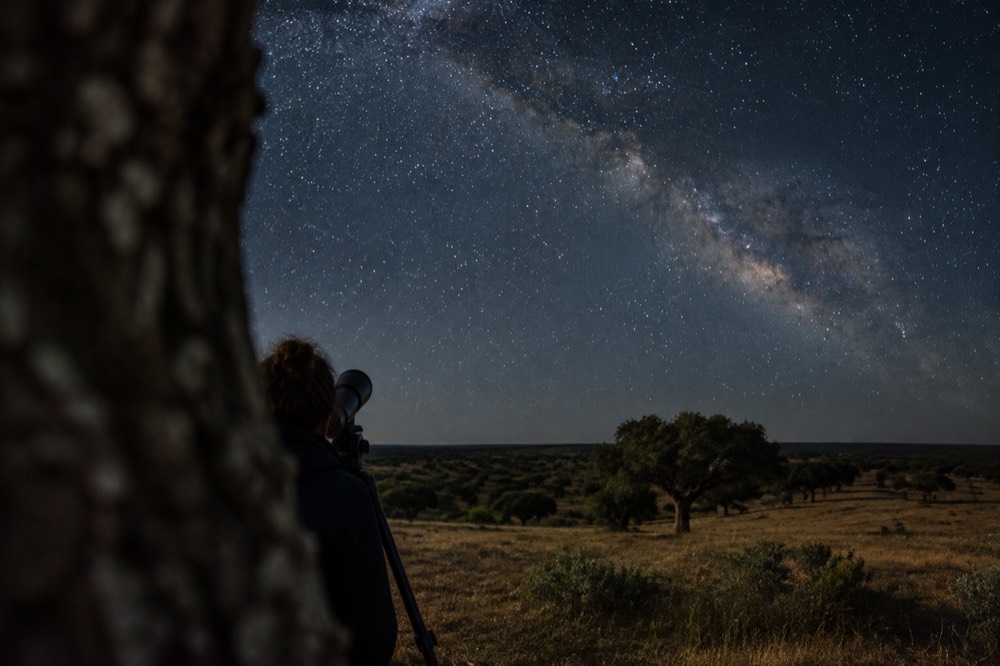
Plan it as a late-afternoon departure south toward Monsaraz, an evening in the lake villages, and either a night drive back or a stay near the water. Book any guided observation session in advance with the local operator, since sessions depend on the moon phase and the weather, and check the operator's page for meeting points and times before setting out. Bring layers, because the Alentejo plain cools quickly after sunset even in summer.
The moon is the variable most first-time stargazers forget. A full moon washes out the Milky Way from even the darkest site, so the best nights are the week or so around a new moon, and any guided session worth its name will be scheduled around that cycle. The second variable is the drive itself: the lake country is rural, the roads after dark are unlit, and the villages are small, so arriving before sunset is both safer and part of the pleasure, because the view of the Alqueva from Monsaraz at dusk is one of the Alentejo's set pieces.
For visitors who prefer a structured day, guided options cover the ground in one move. A private walking tour of Évora's monuments, such as Évora Private Walking Tour with Cathedral & Chapel of Bones, from $113.53 per person and rated 5 from 256 reviews, handles the city's daylight hours, leaving the evening free to head south. A small-group option, Évora: Small-Group Cultural Walking Tour & Chapel of Bones, from $77.66 per person and rated 4.9 from 141 reviews, does the same in a livelier format.
A balloon over Monsaraz gives the plain at dawn rather than the stars at night, but the two bookend each other well: the balloon shows the scale of the landscape that makes the darkness possible, and the night sky shows why that landscape matters. For more on what the wider region offers, see what the Alentejo is famous for.
Common Questions About Dark Sky Stargazing In Portugal
Is there a Dark Sky Reserve in Portugal?
Yes. Portugal's dark sky reserve lies in the Alentejo, in the lake country around Monsaraz and the Alqueva reservoir, about 40 to 45 km south-east of Évora. The region is promoted for its exceptionally dark night skies and is reached most easily from Évora, the capital of the Central Alentejo.
How far is the dark sky region from Évora?
Monsaraz, the best-known village of the dark sky area, lies about 40 to 45 km from Évora by road, a rounded estimate rather than a measured distance. The surrounding lake villages of the Alqueva sit in the same general area south-east of the city.
When is the best time of year for stargazing in the Alentejo?
July and August are the driest months in IPMA's 1991 to 2020 normals for the Évora station, with 2.7 mm and 6.0 mm of rain respectively, so they offer the highest chance of a clear night. June and September are nearly as clear and cooler by day, which many visitors prefer.
Can you see the Milky Way without leaving Évora?
On a clear night, yes, from the edges of the city outside the medieval walls, because Évora is small and the open plain begins almost immediately. For the darkest skies, though, the lake country south of the city is the place to go.
Do you need a guided tour to go stargazing near Monsaraz?
No, the sky is free to look at from any dark spot, but a guided session adds telescopes, explanation and a guide to the moon phase and weather. Check the operator's page for meeting points, times and what to bring before booking.
Is the Alqueva area worth more than one evening?
Many visitors think so. The lake, the walled village of Monsaraz and the region's wineries make a full day, and staying overnight means seeing both dusk over the water and the sky at its darkest, rather than driving back to Évora late.
The Alentejo's darkness is not an accident of geography alone; it is what a sparse population, a flat plain and a dry summer climate produce together, and Évora is the city that puts all of it within a single trip's reach.