How Do You Pronounce Évora In Portugal?
How to say Évora correctly: the acute accent, the first-syllable stress, and why the name of Portugal's Alentejo capital is spelled the way it is on every ticket and sign.
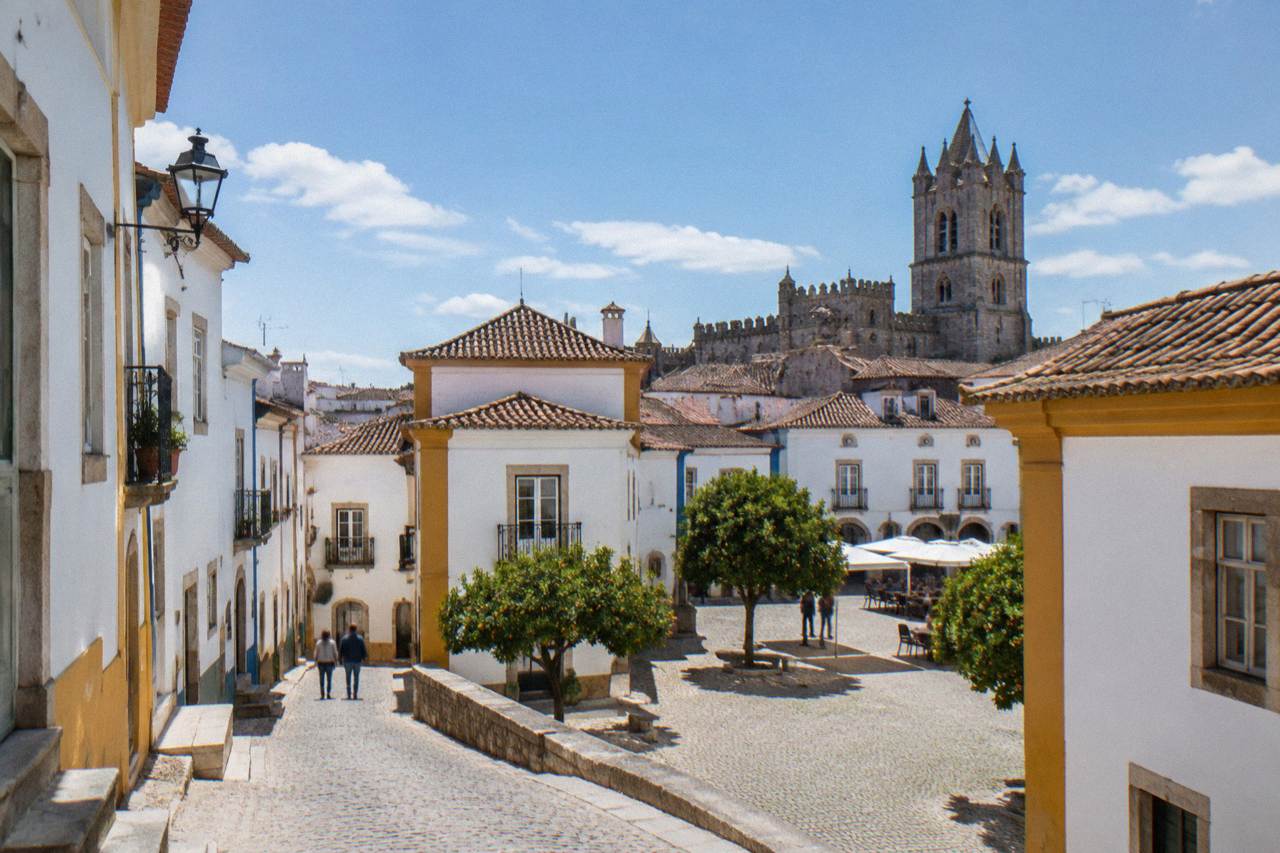
Évora, the inland capital of the Alentejo and of the Portuguese district that carries its name, is written with an acute accent over the first letter, and the stress falls on the first syllable. That single accent is doing two jobs at once in Portuguese: it fixes the vowel sound and it tells you where the beat of the word lands. The city sits about 130 km from Lisbon on the Alentejo plain, with no coast and no sea view, and its UNESCO-listed historic centre was inscribed in 1986. Getting the name right is the first small step to getting the city right.
How Do You Pronounce Évora In Portugal?
The name is written Évora, with an acute accent over the first letter, and the stress falls on the first syllable, not the second. The accent is part of the correct Portuguese spelling rather than an optional flourish, so a sign, a ticket or a booking confirmation printed without it is missing a letter of the city's name. The word belongs to the Alentejo: the Lotus Evora sports car shares the unaccented spelling and has nothing whatever to do with the city.
The mistake almost every newcomer makes is treating the accent as typography. It is not. In Portuguese orthography the acute accent routinely marks a stressed syllable that the default rules of the language would place elsewhere, and Évora is a textbook case: without the accent a reader would be tempted to push the stress later in the word, which is precisely what the accent forbids. Say the name with the weight at the front and you are pronouncing it the way the people who live there do.
The second mistake is the homonym problem. "Evora" without the accent names a British sports car, a surname, and place names outside Portugal, and search engines do not always separate them. That is why the accent matters beyond conversation: it is the cheapest available signal that the subject is the Alentejo city, home to the Sé de Évora, the Capela dos Ossos and the Templo Romano. Readers planning a visit may also find it useful to start with what Évora is famous for before working through the practicalities.
Why The Acute Accent In Évora Is Part Of The Spelling
Portuguese uses the acute accent to mark both vowel quality and stress, and in Évora it locks the emphasis onto that opening syllable. The same mark reappears across the city's landmark names, including the Água de Prata aqueduct, the Praça do Giraldo and the Cromeleque dos Almendres, so a visitor who reads the accent once starts reading every Alentejo sign correctly. Dropping it does not simplify the name; it misspells it.
The accent travels with the word. Hotel listings, railway displays and museum tickets in Portugal print Évora with the acute E as standard, and the municipal institutions do the same. For an English speaker the practical takeaway is small but real: when you write the name, write the accent, and when you read it, let the accent pull your voice to the front of the word.
The city's other names carry their own accent discipline, and the pattern is consistent. The table below gathers the ones a visitor will meet on signs, maps and tickets, with what each one is.
| Name | What It Is | Accent Note |
|---|---|---|
| Évora | The city and municipality | Acute accent on the É, stress on the first syllable |
| Sé de Évora | The cathedral, one ticket 5.00 EUR for the complete visit | Acute accent marks the stressed, open vowel |
| Praça do Giraldo | The main square, home to the tourist office at number 73 | Cedilla under the ç, a distinct letter sound |
| Água de Prata | The aqueduct threading through the city | Acute accent on the Á |
| Cromeleque dos Almendres | The stone circle on the plain outside the city | No accent, stress handled by the default rules |
| Convento dos Lóios | The convent by the Templo Romano | Acute accents on both ó letters in Lóios |
| São Francisco | The church attached to the Capela dos Ossos | Tilde over the ã, marking a nasal vowel |
None of this requires a phonetics course. It requires noticing that the marks are load-bearing, which is exactly how the Portuguese spelling system is built. A reader who has absorbed that much will find the rest of the Alentejo vocabulary, from Estremoz to Vila Viçosa, falls into place on the page.
How The Name Évora Appears On Tickets And Timetables
The name arrives printed correctly on the documents that matter. CP's Intercidades timetable for the Lisboa Oriente to Évora line, valid since 6 September 2026, lists six through trains with the accented spelling, and the fare table reads 13.90 EUR second class and 18.50 EUR first class. The cathedral's complete-visit ticket is 5.00 EUR, the Capela dos Ossos museum ticket 7.00 EUR, and the Museu de Évora 8 EUR, all printed with the city's name intact.
The train journey takes about 1 hour 40 to 1 hour 45 on those through services, which call at Entrecampos, Sete Rios, Pragal, Pinhal Novo, Vendas Novas and Casa Branca before arriving. Anyone weighing the rail option against other ways of reaching the city can compare the details in the guide to whether there is a direct train from Lisbon to Évora, and the broader question of the city as a base is covered in how much time you need in Évora.
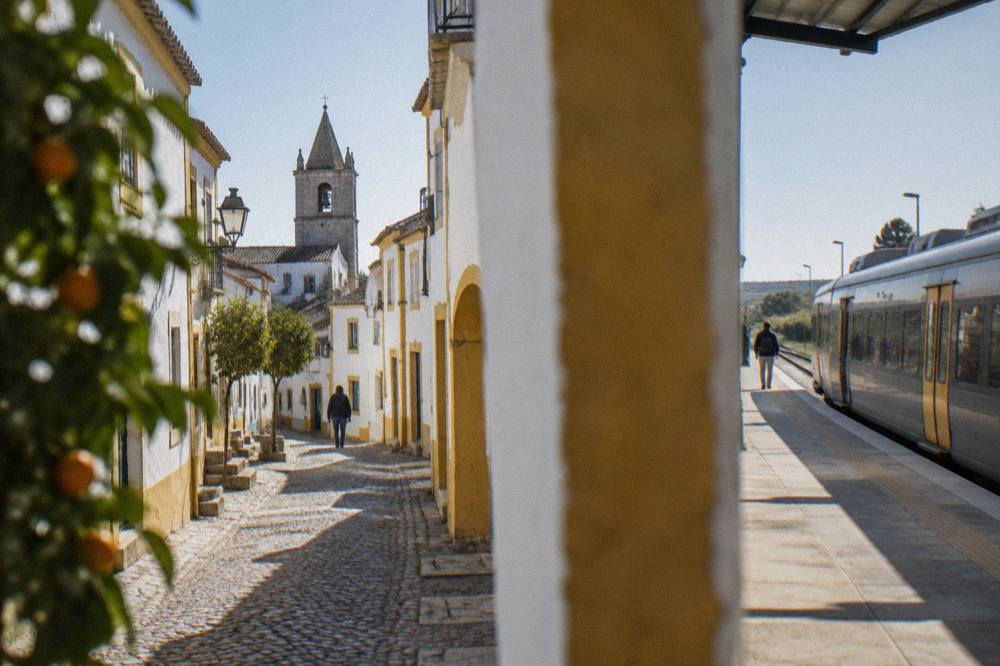
Once in the city, the accented name follows the visitor through every ticket window. The Évora Ticket, the multi-site pass for the Cidade-Museu network, costs 8 EUR for one day, 10 EUR for two and 12 EUR for three, and is free to age 12; note that it does not include the Sé, the Capela dos Ossos or the Museu de Évora, each of which sells its own entry. The summary below keeps the headline prices straight.
| Item | Price | Notes |
|---|---|---|
| CP Intercidades, Lisboa Oriente to Évora, second class | 13.90 EUR | Fare table valid for 2026 |
| CP Intercidades, Lisboa Oriente to Évora, first class | 18.50 EUR | Same fare table |
| Sé de Évora complete visit | 5.00 EUR | Cathedral, cloister, roof terrace and museum; children up to 12 free |
| Capela dos Ossos museum ticket | 7.00 EUR adult | Youth to 25 and seniors over 65 pay 5.00 EUR; family ticket 15.00 EUR |
| Museu de Évora | 8 EUR adult | Closed Mondays |
| Évora Ticket | 8 EUR one day | 10 EUR two days, 12 EUR three days, free to age 12 |
The History Behind A Name That Never Lost Its Accent
The city under the name is old enough that UNESCO inscribed its historic centre in 1986 under criteria (ii) and (iv), calling it the finest example of a city of the golden age of Portugal after the 1755 Lisbon earthquake, which Évora was largely spared. Moorish rule ended in 1165, the Jesuit University of the Holy Spirit dates from 1553, and the Jesuits were expelled in 1759. The name survived all of it, accent and all.
The Roman layer is still standing. The Templo Romano, popularly called the Temple of Diana since the 17th century, was probably dedicated to the imperial cult according to the municipal page, measures 25 x 15 m, was later reused as a municipal butcher's, and had its walls freed in 1870. The accent on the modern name is the last chapter of a much longer spelling history, and the stones are the proof that the place outlived every empire that renamed it.
For visitors who want the monuments tied together without queueing at each door, a guided option exists: the Skip-Line University, Cathedral and Bones Chapel tour with wine is a private three-hour walk from $91.39 per person, rated 5 from 48 reviews on the operator's listing, and it moves through the University, the Sé and the Capela dos Ossos with entry handled and a wine tasting at the end. Hearing a local guide say the city's name a few dozen times in an afternoon is, incidentally, the fastest way to fix the stress in memory.
Putting The Pronunciation To Use On The Ground
The name is heard most often at the moments of arrival and departure: at the ticket machine, at the hotel desk, at the start of a walking tour. A visitor who stresses the first syllable and keeps the accent in writing will be understood everywhere in the city, from the tourist office at Praça do Giraldo 73 to the platform of the railway station. The rest of the Alentejo vocabulary follows the same logic, and the region rewards the effort.
Guided walks are one place where the name is spoken continuously, and the choices are wide. The trio below covers a flexible historic-centre walk from $13.51 per person, a street-stories walking tour from $53.90, and the golden-era walk with a Portuguese wine tasting from $23.92, all starting in Évora itself.
Among those three, the skip-line walk deserves a closer look for anyone whose time in the city is short. It bundles the University, the Sé and the Capela dos Ossos into one private three-hour itinerary with entry arranged in advance, which matters most in the summer season when the Capela dos Ossos runs its 9:00 to 18:30 hours and the queues at the door are longest. The current details and live availability sit on the operator's listing.
Beyond the city walls, the same accented spelling carries across the Alentejo: Monsaraz sits about 40 to 45 km away, Estremoz about 45 km, Vila Viçosa about 60 km and Arraiolos about 20 km. The names look different but behave the same way, with the accent always pointing at the stressed syllable. The Évora Travel Guide covers each of them in turn, along with the question of whether the Alentejo is worth visiting for travellers still deciding how far inland to go.
Common Questions About Pronouncing Évora
How do you pronounce Evora in Portugal?
The city is Évora, with an acute accent over the first letter and the stress on the first syllable. The accent is part of the correct spelling, and the name refers to the Alentejo capital, not the sports car that shares the unaccented form.
Is the accent in Évora optional?
No. In Portuguese the acute accent marks both the vowel and the stress, and official signs, timetables and tickets print the name with it. Writing Evora without the accent is a misspelling of the city's name.
Does Évora mean the same as the Lotus Evora?
No connection. The Lotus Evora is a British sports car that uses the unaccented spelling. The city of Évora, Portugal, is an inland Alentejo city whose historic centre was inscribed by UNESCO in 1986.
How do the other Alentejo names work?
The same principle applies. Praça do Giraldo, Água de Prata, Convento dos Lóios and São Francisco each carry their own accent or cedilla, and each mark tells a reader where the stress or the specific consonant sound falls.
Will people understand me if I stress the wrong syllable?
Almost certainly, because context does the work in a small city that lives on tourism. Still, first-syllable stress is the local pattern, and it is the one printed on every official document from the CP timetable to the Évora Ticket.
Where does the name Évora come from?
The documented history of the place runs from Roman remains, including the Templo Romano probably dedicated to the imperial cult, through the end of Moorish rule in 1165, to the Jesuit University of the Holy Spirit founded in 1553. The accent belongs to the modern Portuguese spelling of that long-inherited name.
The name, in the end, is a small thing done exactly right: an acute accent, a first syllable, and a city that has carried both through Roman, Moorish and Jesuit chapters into a European Capital of Culture year in 2027. Say it with the weight at the front, write it with the accent, and the rest of the Alentejo opens up from there.