Why Is Estremoz Famous?
Estremoz, an Alentejo marble town about 45 km from Évora, Portugal, is famous for its white marble, its hilltop old quarter and its role in the Alentejo marble region. This guide explains what makes it known.
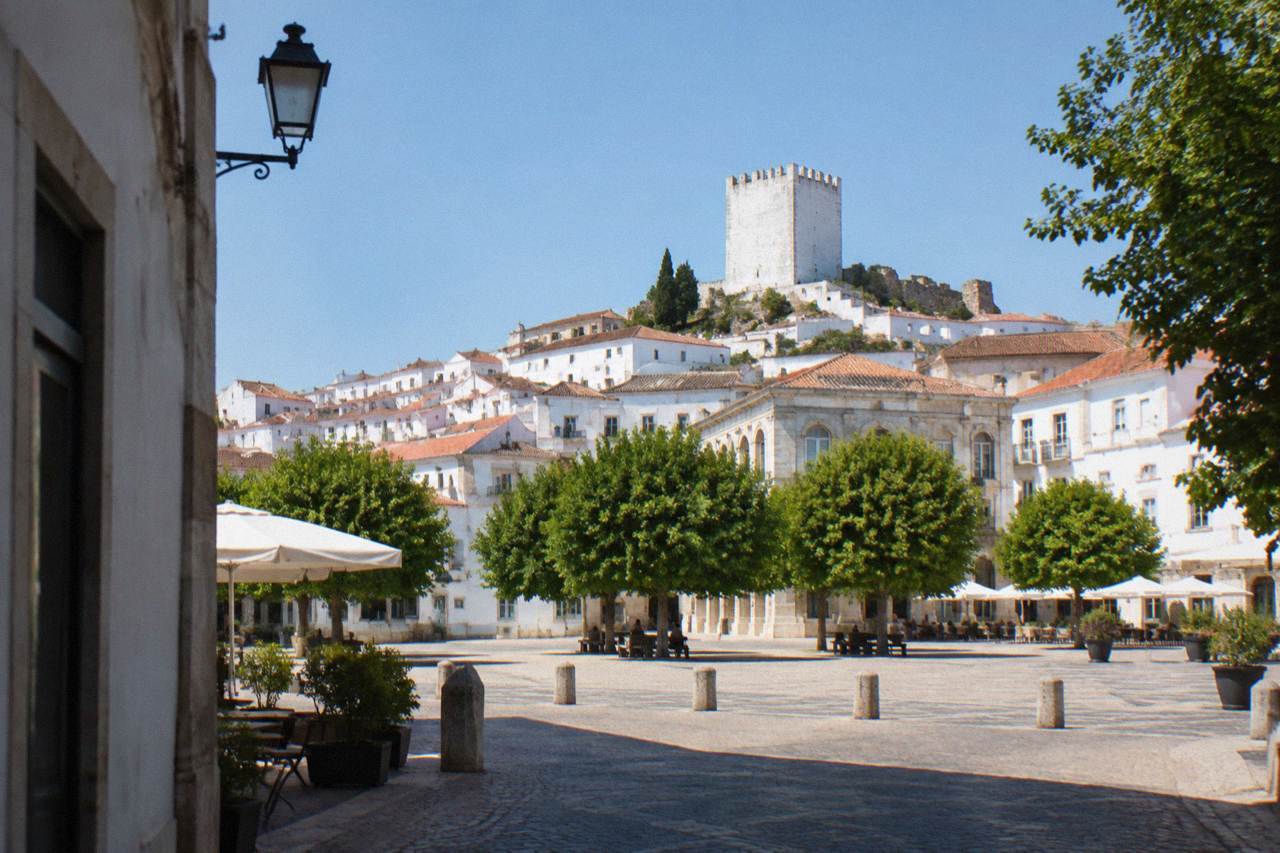
Estremoz is a small city in the Alentejo, Portugal, about 45 km east of Évora, and its fame rests on one material above all: marble. The town sits on a hill in the middle of the Alentejo plain, and the white stone that is quarried in the surrounding countryside has been used for centuries in its houses, its pavements, its doorframes and its public buildings. Évora, the historic capital of the region and a UNESCO World Heritage city since 1986, is the usual base for visiting it, and the two towns belong to the same marble-bearing stretch of Alentejo country that also includes Vila Viçosa, about 60 km from Évora, and Borba.
The question of what Estremoz is famous for comes up often for travellers basing themselves in Évora, because the marble towns sit in the same corridor of the Alentejo and are usually visited together. This page sets out what is genuinely known about Estremoz, what the region's marble heritage means, and how the guided options in the area, including the Marble Tour in Vila Viçosa, fit into a day trip east of Évora. The wider regional picture, including Évora's own claims to fame, is covered in what is Évora famous for on the Évora Travel Guide editorial desk's home base.
Why Is Estremoz Famous?
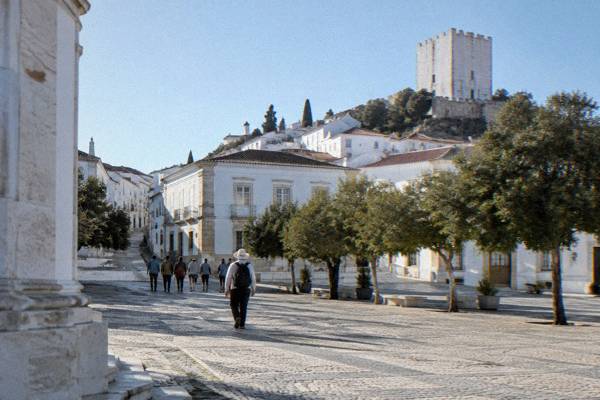
Estremoz is famous for its white marble, a stone that has been extracted from the countryside around the town for centuries and that gives its old quarter, its pavements and its monuments their pale, luminous character. The town is also known as one of the Alentejo's marble towns, a loose group that includes Vila Viçosa and Borba, and as a walled hilltop settlement with a castle keep visible for a long way across the plain. It lies about 45 km east of Évora.
That is the short answer, and it is worth unpacking, because the fame of Estremoz is really the fame of a whole landscape. The marble of this part of the Alentejo is a regional stone, not a single quarry, and the towns that grew on top of it, Estremoz, Vila Viçosa and Borba among them, all built with what lay underfoot. In Estremoz the result is a town where even ordinary houses carry marble lintels and window frames, and where the stone underfoot in the old streets is the same material that is cut and polished for export.
The town's other claim to recognition is its silhouette. Estremoz rises above the surrounding plain, and its upper town, the older part, is still partly wrapped in its medieval walls, with a castle keep at the top. The lower town spreads out below it. This two-part layout, an acropolis above and a working town below, is characteristic of several Alentejo hill towns, and it is part of what makes the region rewarding to explore by car or with a guide.
What Estremoz does not offer is a coastal scene, a beach or a sea view. The Alentejo is inland country, and the Atlantic is a long way off. Travellers who arrive expecting the sea are always surprised by how flat, dry and open the horizon is here; that openness is the point, and it is what the region's photographers come for.
What Role Does Marble Play In The Alentejo Around Évora?
Marble is one of the Alentejo's defining industries, and the towns east of Évora, Estremoz, Vila Viçosa and Borba, form the heart of a stone-working region where the material is quarried, cut and finished close to where it comes out of the ground. The stone shapes the architecture of the whole corridor: marble appears in doorframes, staircases, church interiors and public squares, and the towns are visibly built from their own landscape. Évora itself lies outside the main quarrying belt but is the natural base for visiting it.
The connection between the stone and the towns is easy to see once you are on the ground. In this part of the Alentejo, marble is not a luxury material reserved for a cathedral or a palace front; it is a local building stone, used the way other regions use granite or limestone. That everyday use is what distinguishes the Alentejo marble towns from places where marble is only imported. The region's marble has also been used further afield in Portugal, and the industry continues today, with cutting and finishing works around the towns.
| Marble town | Direction from Évora | Rounded distance from Évora | Character of the visit |
|---|---|---|---|
| Estremoz | East | About 45 km | Hilltop walled old town, castle keep, marble streets |
| Vila Viçosa | East | About 60 km | Ducal seat, marble heritage, guided marble tours |
| Borba | East | Between Estremoz and Vila Viçosa | Small marble town on the same corridor |
Distances in the table are rounded figures, not route measurements, and they are the only kind of distance figure worth quoting for day trips in this region. For travellers planning a circuit, the three towns sit close enough together that a single day can cover Estremoz and Vila Viçosa with time in each, though the pace is a matter of taste.
The marble theme also explains why the guided tours of this corridor exist. The Marble Tour in Vila Viçosa, from $28.14 per person and rated 4.8 from 82 reviews over two hours, walks visitors through the stone heritage of the ducal town, and a second marble itinerary, the Marble Trail from Landscape to Archaeology, from $28.67 per person and rated 4.9 from 324 reviews, covers similar ground with a broader reach. Both are short, half-day-friendly options that pair naturally with a morning or afternoon in Estremoz itself.
For visitors who want a guide in Estremoz rather than in Vila Viçosa, there is a dedicated Walking Tour in Estremoz, from $28.67 per person and rated 4.8 from 19 reviews, which covers the town's heritage on foot. It is a modest, low-commitment option for a day when the marble corridor is the plan.
How Far Is Estremoz From Évora And How Does It Fit Into A Day Trip?
Estremoz lies about 45 km east of Évora, close enough that the town works as a half-day or full-day excursion from the city, usually combined with Vila Viçosa, about 60 km from Évora, and Borba on the same eastern corridor. No verified timetable, drive time, bus fare or train connection applies to this specific route, so the practical planning is done by car or with a guided tour, and the distances are rounded figures.
The honest position on transport is that nothing specific about the Évora to Estremoz route has been verified in the sources behind this page, so no timetable or fare can be quoted. What can be said is the geography: the marble towns lie east of Évora, in the direction of the Spanish border, and Elvas, about 80 km from Évora, sits further along the same line. A traveller with a car can string Estremoz, Borba and Vila Viçosa into one loop; a traveller without one is better served by a guided day tour from Évora or by basing the trip in Évora and choosing one guided excursion into the marble country.
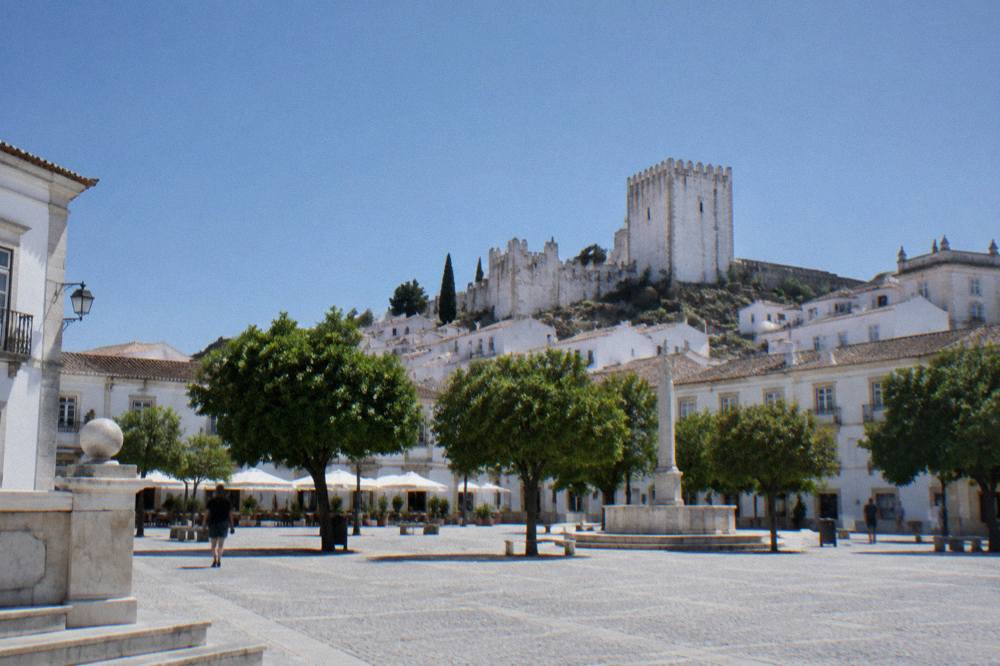
The kind of day Estremoz makes is unhurried. The town is small, the old quarter is compact, and the pleasure of it is in the detail: the stone, the light, the views from the upper town across the plain. It is a place for walking slowly and looking closely, which is exactly what a short guided walk is good at. The Estremoz heritage walking tour runs about that scale of experience, and the marble tours in Vila Viçosa cover the industrial and landscape side of the story that Estremoz's streets only hint at.
For travellers weighing Estremoz against other day trips from Évora, the comparison in best day trips from Évora covers the wider region, and what is Alentejo famous for explains the regional context that makes a marble town make sense. The Alentejo is famous for its plains, its stone, its wine and its slow rhythm, and Estremoz sits squarely inside all four.
What Else Is Estremoz Known For Besides Marble?
Beyond marble, Estremoz is known for its hilltop old town with medieval walls and a castle keep, for its position on the eastern Alentejo plain where the horizon runs flat to the border country, and for the agricultural life of the surrounding region, which is typical Alentejo country: cork oak, vineyards, olive groves and wheat. The town is also a modest regional market centre for the villages around it, and its fame in Portugal is that of a small, dignified provincial city rather than a resort.
That last point matters for expectations. Estremoz is not a beach town, not a nightlife destination and not a large city; its population, like its economy, is small and rooted in the region's stone and land. What it offers is atmosphere and material: a real working Alentejo town that happens to be beautiful because of what it is built from. The same is true of its neighbours, and the honest advice is to treat the marble corridor as one destination with three stops rather than three separate sights.
The surrounding countryside also connects Estremoz to the wider themes of the Alentejo that bring most visitors to Évora in the first place. Cork oak landscapes, wine estates and megalithic sites are the region's other signatures, and the guided products around Évora reflect them: the Megalithic and Cork Forest guided tour from Évora, from $50.65 per person and rated 4.9 from 41 reviews over four hours, is the clearest example, combining the two landscapes in one morning. Travellers who fall for the Alentejo through Estremoz's marble often go on to that side of the region next.
| Alentejo theme | Where to experience it near Évora | Guided option and price |
|---|---|---|
| Marble and stone heritage | Estremoz and Vila Viçosa corridor | Marble Tour in Vila Viçosa, from $28.14 |
| Cork oak landscapes | Cork forests around Évora | Megalithic and Cork Forest tour, from $50.65 |
| Wine | Estates around Évora and Reguengos | Alentejo Wine and Cork from Évora, from $78.78 |
| Megaliths | Cromeleque dos Almendres area | Cromlech of Almendres and Great Dolmen, from $33.76 |
Prices in the table come from the live listings of the tours named, are per person and in US dollars, and each tour card carries its own current rating and review count. They are planning figures for comparing the region's guided options, not fixed quotations.
Is Estremoz Worth A Day Trip From Évora?
Estremoz is worth a day trip from Évora for travellers with an interest in the Alentejo's stone heritage, its hill towns or its quiet regional character, and it is best visited as part of the eastern marble corridor together with Vila Viçosa and Borba. It is not worth the trip for anyone seeking coastal scenery, nightlife or a dense cluster of major monuments, because the town's rewards are architectural detail, landscape and atmosphere rather than headline sights.
The decision usually comes down to time. Visitors with only one day in the region are generally better served by Évora itself, whose UNESCO-listed historic centre, cathedral and Capela dos Ossos fill a full day on their own; how much time do you need in Évora covers that calculation. Visitors with two or more days, or those returning to the Alentejo for a second look, are the natural audience for the marble corridor, and Estremoz is the corridor's most striking silhouette.
For those who do go, the practical shape of the day is simple. A morning in Estremoz's upper town, a slow lunch somewhere in the marble country, and an afternoon in Vila Viçosa, ideally with the guided marble tour, is the classic pattern. The Marble Tour in Vila Viçosa, from $28.14 per person over two hours, is the piece that turns the corridor from a drive past pretty towns into an explained landscape, and its listing carries the current availability for any given date. Check availability
Common Questions About Estremoz
Why is Estremoz famous?
Estremoz is famous for its white marble, its walled hilltop old town with a castle keep, and its place at the centre of the Alentejo's marble region east of Évora, about 45 km away.
How far is Estremoz from Évora?
Estremoz lies about 45 km east of Évora. The figure is a rounded estimate; no verified drive time, bus timetable or fare for the specific route can be quoted, so plan by car or with a guided tour.
Is Estremoz near the sea?
No. Estremoz is an inland Alentejo town on the plain, and the Atlantic coast is far away. There is no beach or sea view anywhere in the marble corridor.
Can you visit Estremoz and Vila Viçosa in one day from Évora?
Yes, that is the usual pattern. The two towns, about 45 km and about 60 km from Évora respectively, sit on the same eastern corridor and are commonly combined, sometimes with Borba as well.
Are there guided tours of the marble region?
Yes. The Marble Tour in Vila Viçosa, from $28.14 per person and rated 4.8 from 82 reviews, runs about two hours, and a Walking Tour in Estremoz, from $28.67 per person and rated 4.8 from 19 reviews, covers the town itself.
Is Estremoz worth visiting if you have only one day in the region?
Probably not. With a single day, Évora's UNESCO-listed historic centre is the stronger choice; Estremoz suits travellers with a second or third day, or those with a particular interest in marble and Alentejo hill towns.
Estremoz earns its fame honestly: a hill, a wall, a castle keep and a town built out of the white stone beneath it, all of it an easy eastern excursion from Évora for anyone with a spare day in the Alentejo.