What Is The Oldest Megalithic Structure In Europe?
The oldest megalithic structure in Europe is genuinely debated, and the Cromeleque dos Almendres near Évora, Portugal, is one of the sites in the argument. What is actually known, and how to visit.
Évora, the inland capital of Portugal's Alentejo region, stands in one of the densest megalithic landscapes in Europe, and the question of which structure on the continent is the oldest has no settled answer. Archaeologists have spent decades arguing over the ranking, and several sites in Iberia and France each have their advocates. What the debate does confirm is that the plain around Évora matters to it: the Cromeleque dos Almendres, a stone circle about a short drive from the city, is one of the sites regularly named whenever the question comes up. This page sets out what can be stated with confidence, what remains genuinely contested, and how to stand among the stones yourself.
What Is The Oldest Megalithic Structure In Europe?
There is no agreed answer: archaeologists have never settled on a single oldest megalithic structure in Europe, because the dating of these monuments depends on methods and interpretations that keep being revised. Any exact age quoted for a specific site should be checked against current archaeological work rather than taken from a guidebook.
The honest version of the answer is that the title is contested, and it is contested for a reason worth understanding. Megalithic monuments were built over thousands of years, often in phases, and a stone circle may have been assembled on ground that was already sacred, with earlier wooden structures rotting away long before the stones went up. Dating a stone tells you when the rock formed, not when humans raised it. Dating the soil around it tells you about the last disturbance, not the first. So the numbers attached to these sites shift as techniques improve.
What is not contested is the sheer weight of prehistoric building in the Alentejo. The megalithic sites near Évora include the Cromeleque dos Almendres, the Great Dolmen of Zambujeiro and the Almendres menhir, and a visitor can see several of them in a single half-day.
For travellers, the practical conclusion is simple. You do not need a settled ranking to have a remarkable morning among stones that were raised by people who left no written record. The Alentejo delivers that experience regardless of which site a journal eventually crowns.
Where Is The Cromeleque Dos Almendres And Why Does It Matter?
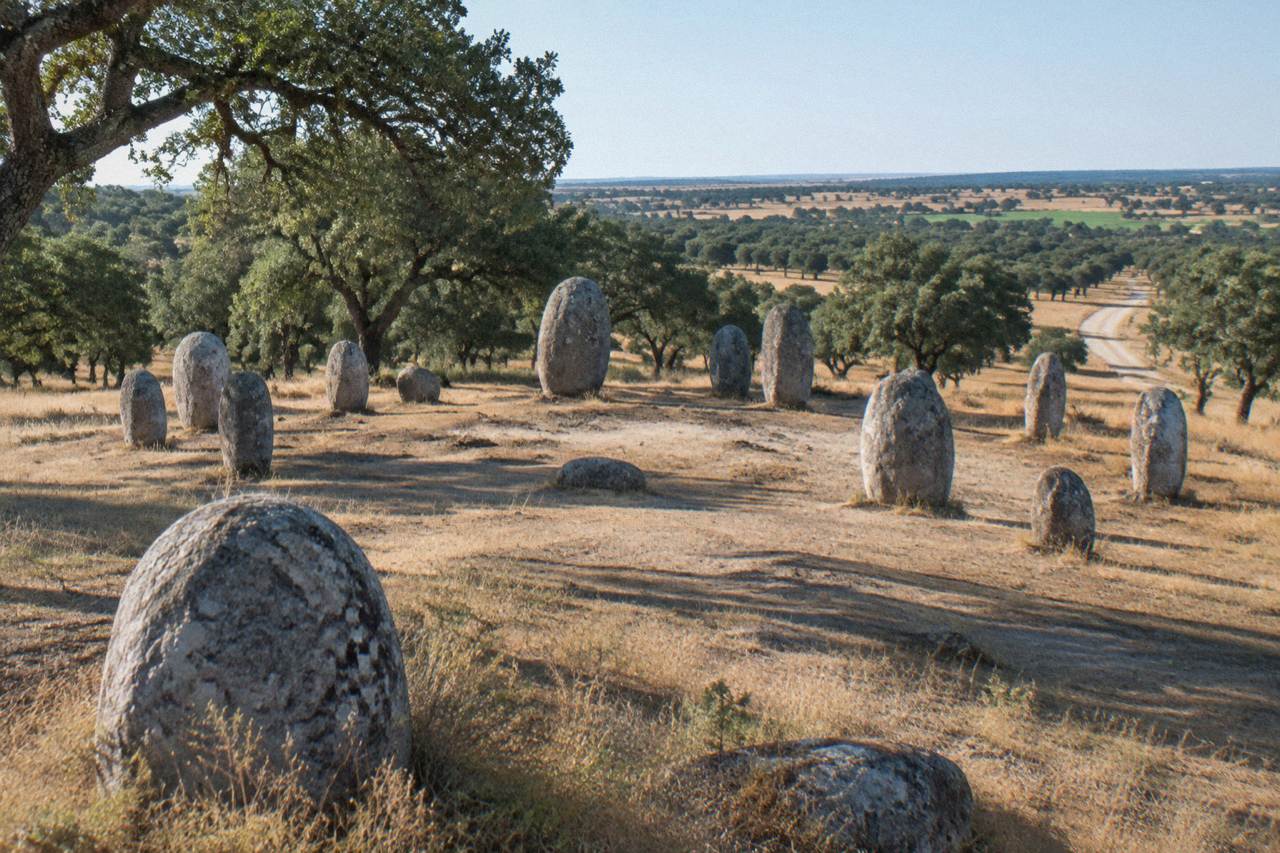
The Cromeleque dos Almendres stands in open Alentejo countryside near the village of Guadalupe, west of Évora, and it is the largest group of prehistoric standing stones on the Iberian Peninsula according to the interpretation centre that serves it. The Almendres Interpretation Centre, a partner of the Évora municipality, is located on Rua do Cromeleque in Guadalupe, at GPS coordinates 38.567801, -8.027456, and it is the official starting point for a visit.
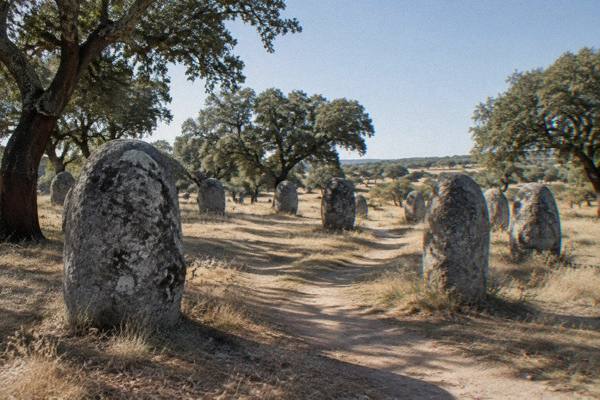
The site's importance to the "oldest in Europe" question is exactly why so many visitors make the trip. Almendres is a cromlech, a prehistoric circle or group of standing stones, and the arrangement of its stones in what appears to be an intentional pattern has made it a central piece of evidence in studies of early megalithic building in Iberia. The stones stand among cork oaks on a gentle slope, and the setting is quiet enough that the scale of the place lands slowly.
Here is what the official visitor information actually states, in one place:
| Item | What The Official Page Says |
|---|---|
| Interpretation Centre address | Rua do Cromeleque, Guadalupe village |
| GPS coordinates | 38.567801, -8.027456 |
| Summer hours (1 May to 31 Oct) | 10:00 to 18:00 |
| Winter hours (1 Nov to 30 Apr) | 10:00 to 17:00 |
| Directions from Évora | National road toward Lisbon, turn-off after 8 km |
| Entry to the stones | Reported free |
Note what is deliberately absent from that table: a stone count, an age, a ranking. The municipal and interpretation-centre pages do not publish those figures, and any number you have read elsewhere deserves a sceptical second look. The site's significance does not depend on winning a date contest, and a guide at the stones will happily explain what archaeologists do and do not claim.
The question of how long to spend in the region usually comes next, and the answer depends on how deep you want to go into this landscape. If Évora's walled centre is your base, how much time you need in Évora is worth settling before you plan the megalithic detour, because the stones sit outside the city and eat a half-day at minimum.
How Do You Get To The Almendres Cromlech From Évora?
By car, follow the national road from Évora toward Lisbon and take the turn-off after about 8 km, as the interpretation centre's own directions state; the drive is short and the site is reached on minor rural roads. Without a car, the practical route is a guided tour, because no verified public bus serves the stones directly and the interpretation centre publishes no timetable for reaching them independently.
That is the whole honest picture of access. The stones stand on agricultural land, the approach is by small roads through cork-oak estates, and parking arrangements at the site itself should be checked with the interpretation centre before you set out. Independent visitors with a rental car have complete freedom, but should confirm the centre's hours for the season they are travelling in, since summer and winter times differ. The full index of guides sits on Évora Travel Guide.
For everyone else, a guided visit solves three problems at once: transport, interpretation and access to a second site in the same morning. The Cromlech of Almendres and Great Dolmen of Zambujeiro tour runs three hours from Évora, is rated 5 from 54 reviews, and costs from $33.76 per person. It pairs the stone circle with the Great Dolmen of Zambujeiro, a chambered tomb that is the other headline prehistoric monument of the Évora plain. Check availability
That guided option is the one most first-time visitors choose, and for good reason: it covers both headline monuments in a single morning and leaves the afternoon free for the city itself.
If your day in the region is short, decide early between the stones and the city, because both compete for the same hours. Many travellers combine a morning at Almendres with an afternoon inside the walls, and what to do in Évora for a day covers the city half of that split. The timing works because the drive out and back is modest, and because the interpretation centre opens at 10:00 in both seasons.
What Is The Difference Between Stonehenge And A Cromlech?
A cromlech is a prehistoric circle or group of standing stones, which makes Stonehenge itself one example of the type rather than something separate from it: the word describes the shape of the monument, not a period or a culture. Stonehenge is a British cromlech, Almendres is a Portuguese one, and both are prehistoric standing-stone sites raised by communities who left no written explanation of their purpose.
The comparison is worth making carefully, because it is where most casual claims go wrong. The two sites share a category and almost nothing else that can be stated with confidence. No verified age, size or ranking comparison between them belongs on a page like this one, and any tour or article that declares one "older than Stonehenge" is making a claim that current archaeology does not support as settled fact.
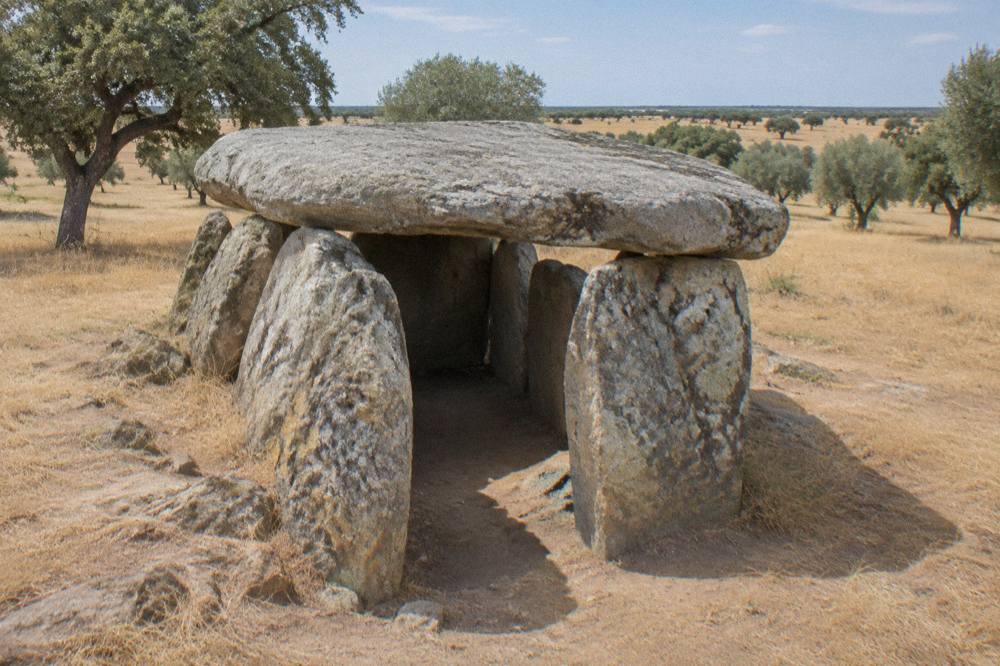
What can be said is structural. Almendres is an elliptical arrangement of stones on a slope, associated with a menhir standing a short distance away and with the wider megalithic dense zone of the Évora district. Zambujeiro, nearby, is a dolmen: a chambered tomb built from massive uprights and capstones, a different kind of monument serving a different, probably funerary, purpose. A morning around Évora can take in both types, which is precisely what makes the region so useful for understanding the range of megalithic building.
The visitor experience differs too. Stonehenge is viewed from a managed circuit; Almendres is walked among, on open ground, usually with a handful of other people at most. That intimacy is the reason many travellers who came for the ranking question leave remembering the silence instead.
Which Guided Tours Cover Évora'S Megalithic Sites?
Three guided options from Évora cover the megalithic landscape directly: a three-hour tour to the Cromeleque dos Almendres and the Great Dolmen of Zambujeiro from $33.76 per person, an archaeologist-led half-day cromlech tour from $74.54 per person, and a four-hour megalithic and cork-forest combination from $50.65 per person. Each starts in Évora, each includes transport, and the choice between them is mostly about depth and what else you want from the morning.
The comparison below uses each operator's own listing figures:
| Tour | Length | Price Per Person | Rating |
|---|---|---|---|
| Cromlech of Almendres and Great Dolmen of Zambujeiro | 3 hours | from $33.76 | 5 from 54 reviews |
| Half-Day Megaliths Cromlech Tour by Archaeologists | Half day | from $74.54 | 5 from 77 reviews |
| Megalithic and Cork Forest guided tour | 4 hours | from $50.65 | 4.9 from 41 reviews |
The archaeologist-led option is the one for visitors who arrived asking exactly the question in this page's title, because the guides work on the material professionally and can explain the state of the dating debate in detail. The Almendres and Zambujeiro tour is the fastest and cheapest route to both headline monuments. The cork-forest combination suits travellers who want the prehistory and the living Alentejo landscape, cork oaks and all, in a single loop.
Timing shapes the choice as much as content. The stones are best in morning light and cooler air, and summer afternoons on the Évora plain are hot: IPMA's 1991-2020 climate normals for the Évora station put the July average maximum at 33.3 C and August at 33.5 C, with 31.9 days a year reaching 35 C or more. If you are choosing a season for this trip, which month is best to visit the Alentejo matters more here than in the city, where streets and museums offer shade and shelter.
Common Questions About Megalithic Sites In Évora
Is the Cromeleque dos Almendres free to visit?
Entry to the stones themselves is reported free. The Almendres Interpretation Centre in Guadalupe is the official starting point, open 10:00 to 18:00 in summer (1 May to 31 October) and 10:00 to 17:00 in winter (1 November to 30 April), and it should be asked directly about any current arrangements.
How far is the Almendres Cromlech from Évora?
The interpretation centre's own directions say to take the national road from Évora toward Lisbon and follow the turn-off after 8 km. It is a short drive on minor rural roads, and there is no verified public bus service to the site.
Can you see the Almendres stones and the Great Dolmen of Zambujeiro on the same visit?
Yes, and most guided tours do exactly that. A three-hour tour from Évora covers both, and an archaeologist-led half-day option goes deeper into the archaeology of the cromlech itself.
Do you need a guide to visit the Almendres Cromlech?
No, if you have a car and follow the interpretation centre's directions. A guide adds the archaeology, though, and is the only straightforward option if you are not driving. Guided tours from Évora start from about $33.76 per person.
The ranking question will keep being argued in journals and over dinner tables, and the Alentejo's stones will keep standing in their slope of cork oaks regardless. What a visitor from Évora can count on is a landscape where the debate actually happened, an interpretation centre that publishes its hours and nothing it cannot support, and a morning among the oldest questions anyone has ever asked in stone.